

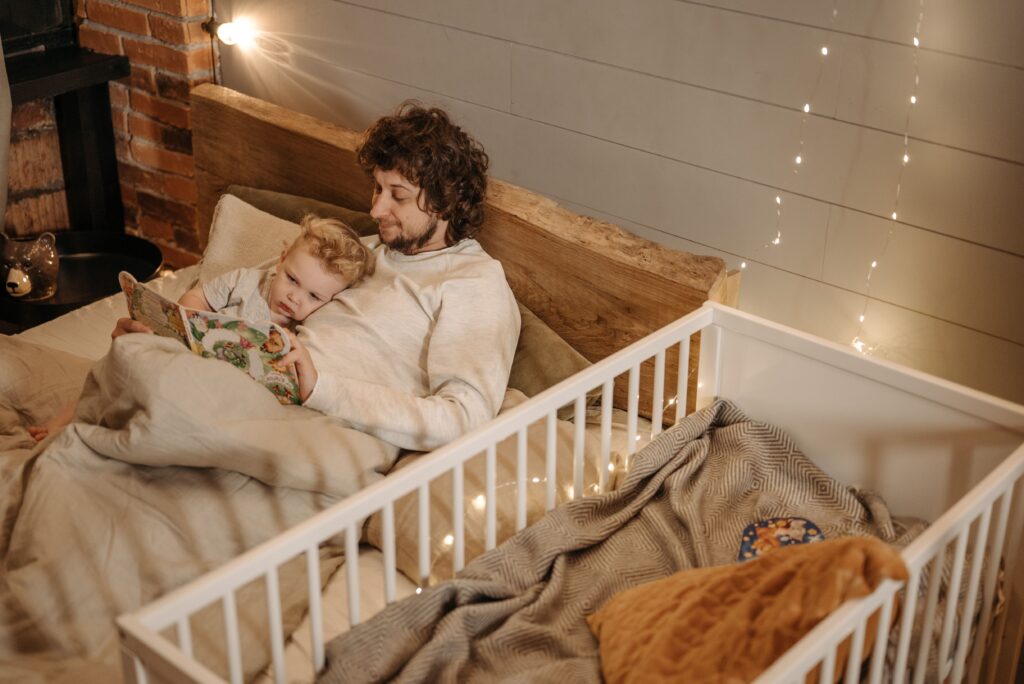

In the evening, far from Russia, a mother puts Sonya to bed and opens a book of Russian fairy tales. The familiar folk immediately come to life on the pages. A bear lumbers heavily through the forest, a fox plays tricks, a wolf snaps its teeth, a hare trembles under a bush. Sonya knows them all by heart, although she hasn't seen a single one in person yet. For a Russian child, animals don't begin in a zoo, but in a fairy tale, and each one already has its established character. Mother reads, and Sonya already knows in advance who will outwit whom and how it will all end, yet she still listens, holding her breath.
This early friendship with animals will later resonate throughout the language. Behind every animal in Russian, there is not only a name, but also a tale, a proverb, and an affectionate nickname. Anyone who later decides to seriously study Russian animal names will be surprised to discover the same second life of animals that Sonya absorbed from her mother's voice. Let's walk through this animal world through her eyes, and a full list with pronunciation will await you in the table at the end.
Who lives in Russian fairy tales
bear
Kind master of the forest
fox
cunning trickster
wolf
Menacing, but simple
hare
eternal coward
cat
keeping something to oneself
dog
accurate connoisseur
Grandma's fairy tale bear
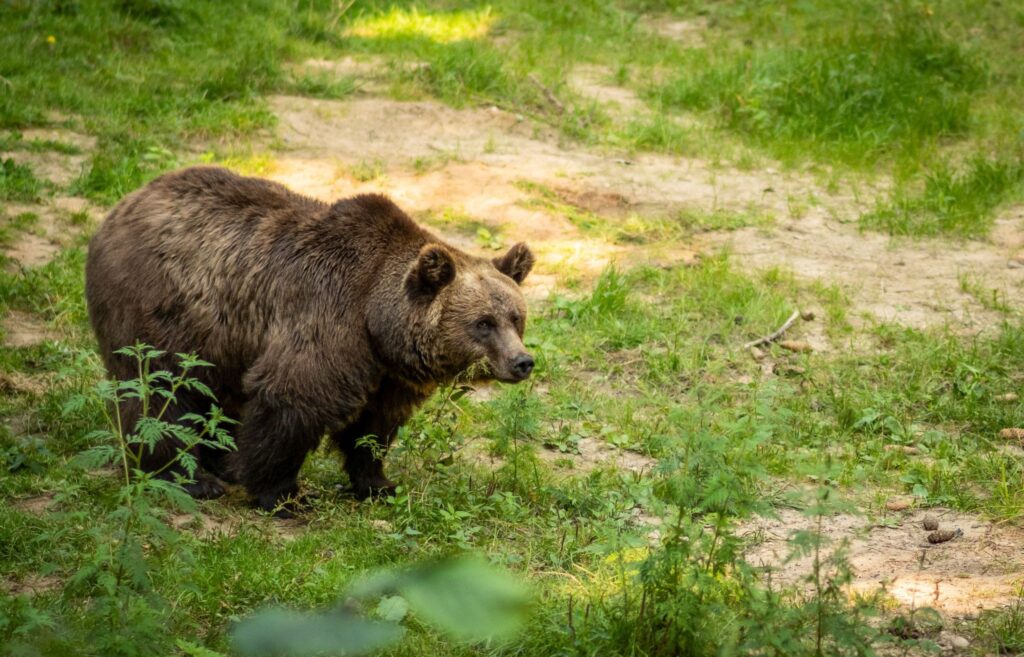
Sonya's first love was a bear. In the fairy tale about the "teremok" (small wooden house), he, clumsy and huge, ultimately demolishes the forest dwelling, simply misjudging his heroic strength, while in another story he good-naturedly endures the pranks of little Masha. The bear in Russian fairy tales is almost always like this: strong, a bit clumsy, but not evil, and therefore has long become the symbol of the entire country, familiar from coats of arms and the Olympic Mishka. The same bear looks at Sonya from the screen; she rewatches the cartoon about Masha and the Bear countless times, and the huge, kindhearted bear who looks after the mischievous girl seems like the most understandable animal in the world to her. Sonya also goes to bed hugging her plush bear, so a real fairy-tale bear seems just as big and safe to her.
Later, while visiting her grandmother, Sonya learned that the very name of the bear was also a secret. "Bear" is not the original name, but a cautious euphemism meaning "one who eats honey," a honey-eater. Ancient hunters were afraid to name the formidable master of the forest directly, so as not to invoke misfortune, and replaced the lost ancient name with an indirect nickname based on his favorite delicacy. Sonya asked again if they were really afraid to call the animal by its name, and her grandmother explained that in ancient times, people believed that if you named misfortune, it would come, so they came up with a clever, affectionate nickname. As Sonya grew older, adult expressions were also added to the "bear" theme. Incompetent help that only makes things worse is called a "bear's service," after Krylov's fable where a bear, swatting a fly from his sleeping friend's forehead, killed him with a heavy stone. A remote province is called a "bear's corner," and someone who lacks a musical ear is teased with the saying that a bear stepped on their ear.
The fox outsmarted everyone.
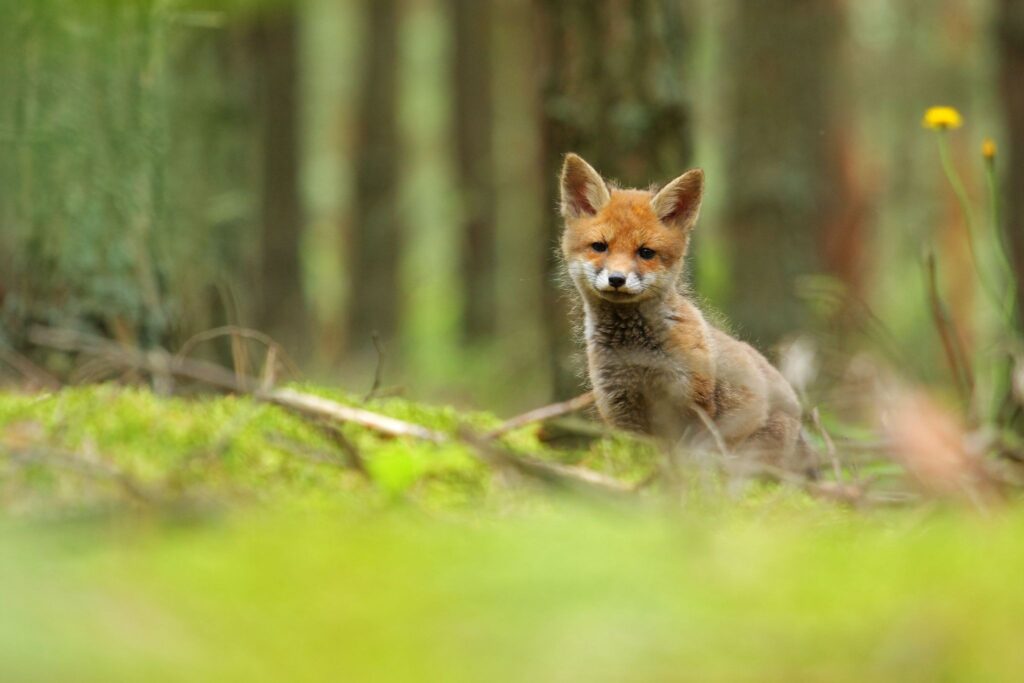
Soon Sonya had a favorite, a cunning fox. In fairy tales, she constantly outsmarts everyone, which is why she is affectionately and ironically called Lady Fox. The wolf, always hungry and a trusting simpleton, suffers the most from her. In the most memorable tale, the fox taught the wolf to catch fish with its tail in an ice hole, and the poor creature was left without a catch and without its tail, which had frozen on, by morning. And in Krylov's fable, the same trickster extracts cheese from a crow with nothing but flattery. Sonya also constantly asks for the tale of Kolobok, who ran away from his grandmother and grandfather and along the way met almost the entire forest – a hare, a wolf, and a bear. He escaped from each with a song, and in the end, only fell for the cunning fox. Since then, for Sonya, the fox and cunning have become one.
Sonya quickly grasped the setup: the fox wins with cunning, the wolf with strength, and cunning almost always triumphs. Adult expressions also emerged from these roles. A hypocrite is called a wolf in sheep's clothing, one who has to constantly hustle is said to be kept by the wolf's legs, and the need to adapt to one's surroundings is expressed as "if you live with wolves, you must howl like a wolf." And the fox is remembered in real life whenever someone is caught in a sly act. Sonya, on the other hand, felt sorry for the wolf, as he so often remained hungry and deceived in fairy tales, and she couldn't understand why he kept falling for the red trickster time after time.
Cowardly hare and forest dainties
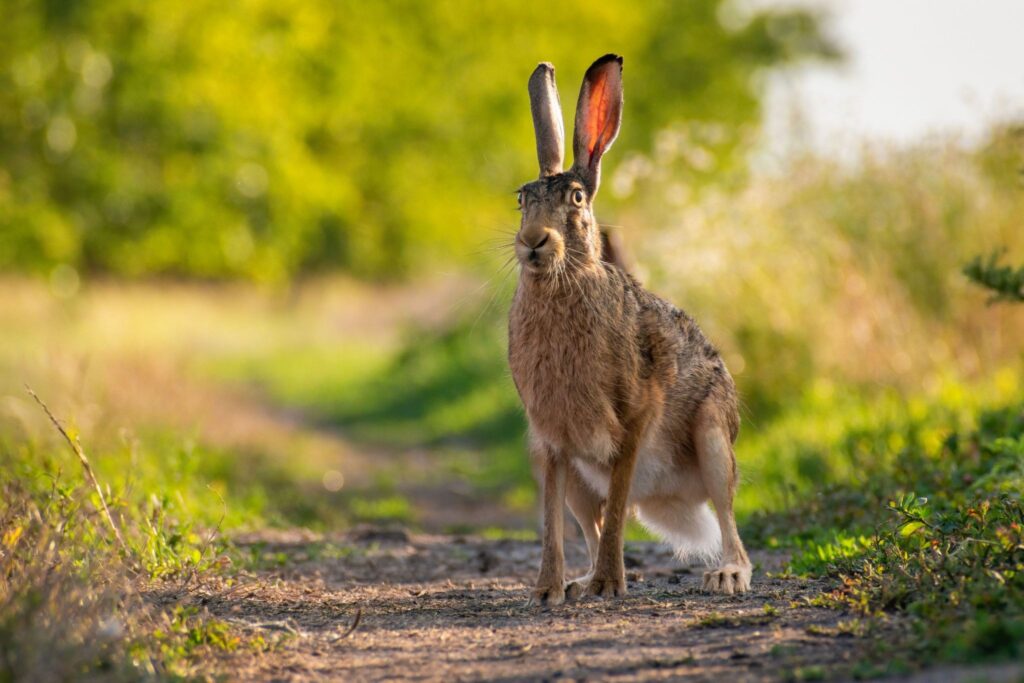
Sonya got the hare, the most cowardly of all, and it's no wonder they say "as cowardly as a hare." In the fairy tale about the bast and ice huts, a cunning fox takes the hare's house away. While the dog and bear only hesitate, a brave rooster with a scythe on his shoulder takes on the task of driving out the impudent trickster. By the age of six, Sonya found out that the hare had given the word "hare" a not-so-fairy-tale meaning. To "ride as a hare" means to travel without a ticket, secretly, because a fare dodger fidgets and looks around just like a timid animal. Sonya once heard this expression on a tram when her mother whispered that someone was "riding as a hare," and the girl at first twisted her head, searching the car for a real animal. Her mother laughed for a long time then and later would often jokingly ask Sonya if she was planning to "ride as a hare.".
Around the hare, other small creatures bustle, each with its own saying in the language. The prickly hedgehog gave rise to the expression "to hold in hedgehog mittens," meaning to be strict and without leniency. The busy squirrel gifted us the image of eternal hustle, "to spin like a squirrel in a wheel." And about a person who has become completely impoverished, they still say that he is as poor as a church mouse. Even the smallest forest brethren have found their place in Russian speech. Sonya once met a hedgehog at her dacha and was very surprised that the prickly, touchy creature really does curl into a tight ball at the first sign of danger, just like in cartoons.
The cat and dog are refueling in the house.
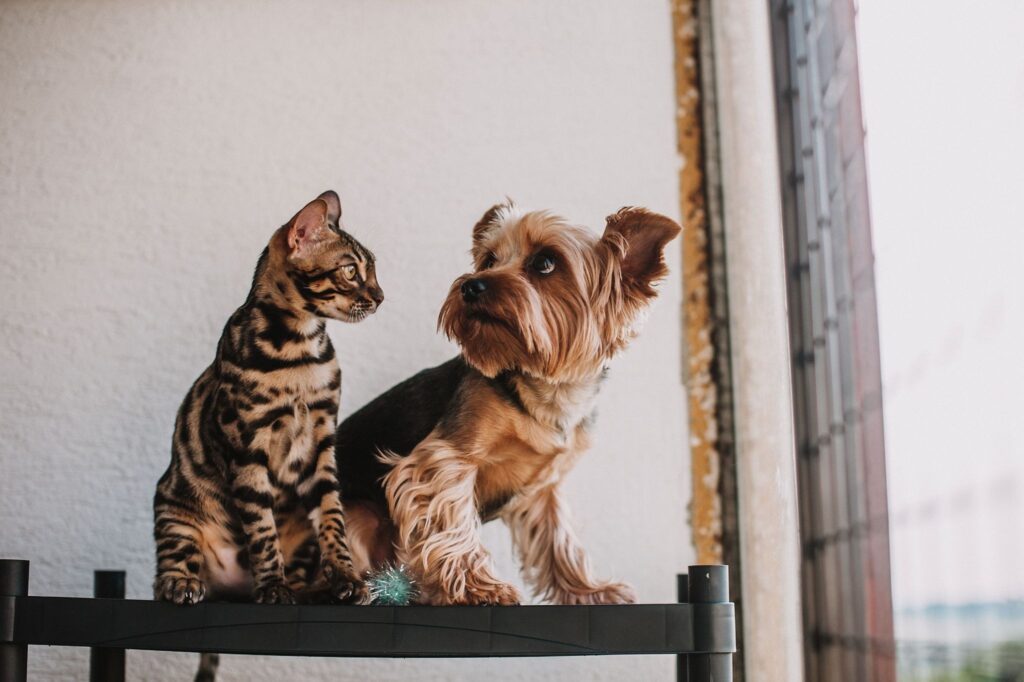
When Sonya grew up, domestic animals also appeared in her world, and the first ones, of course, were a cat and a dog. There are more idioms surrounding them than any other animal. The cat is a mysterious creature in them, with its own agenda. It's no coincidence that an unknown thing bought blindly is called "a pig in a poke," and anxiety in one's soul is conveyed by saying that "cats are scratching at one's heart." The dog, on the other hand, is primarily a connoisseur and a hard worker. They will respectfully say about a master of his craft that he "has eaten a dog" in that field, and having gotten to the bottom of something, they will exclaim, "that's where the dog is buried." These two live in proverbs as if in a house, sometimes in harmony, sometimes "like cats and dogs." Sonya also saw this real enmity at her neighbors', where the cat and dog couldn't share the yard, and the picture from the proverb suddenly came to life right before her eyes.
Visiting her grandmother in the village, Sonya also got acquainted with a whole peasant farm, where humans and livestock had lived side by side for centuries. The horse worked the hardest, and the language remembered this; it is still said about an exhausted person that they are tired as a horse, and about a hopeless klutz that they are like a cow on ice. The pig got the worst of it, a symbol of ingratitude, and to set a pig means to do a dirty trick to your neighbor. The goat and the sheep gave the most caustic labels: a scapegoat is called the one who is blamed for someone else's fault, and a black sheep is the one who spoils the whole company. Sonya's own cat lives at home, lazy and important, and looking at him, she finally understood why a cunning person is said to have a mind of their own. And in the village at her grandmother's, Sonya saw a cow, a horse, and real geese for the first time in her life, who turned out to be much louder than the ones in fairy tales.
Bunny, kitty, and other sweet nothings

What warmed Sonya the most about the animal names was that she herself was called by these names. In Russian, "bunny," "kitty," "fishy," and "swallow" are affectionate terms not for animals, but for one's dearest loved ones, be they children, and they sound warm and natural. It's easy to call a child a "bear cub" for their clumsiness or a "fox cub" for their sly cunning, and there's nothing offensive about it, quite the opposite. Diminutives go in steps, a cat turns into a kitty, a kitten, and even a little kitten, and each step sounds a little gentler than the last. Thus, an animal from the forest or yard subtly becomes the warmest word used to refer to a loved one, and for families raising children far from Russia, these little words turn out to be one of the first threads to the language. Grandma calls Sonya "bunny," then "sunshine," then "fishy," and the girl is no longer surprised that she is simultaneously a bunny, a fish, and the sun, because she hears only love in these words. As she grew, Sonya herself began to call her favorite doll and kitten "bunny," and these animal endearments started a new cycle.
How animals speak Russian
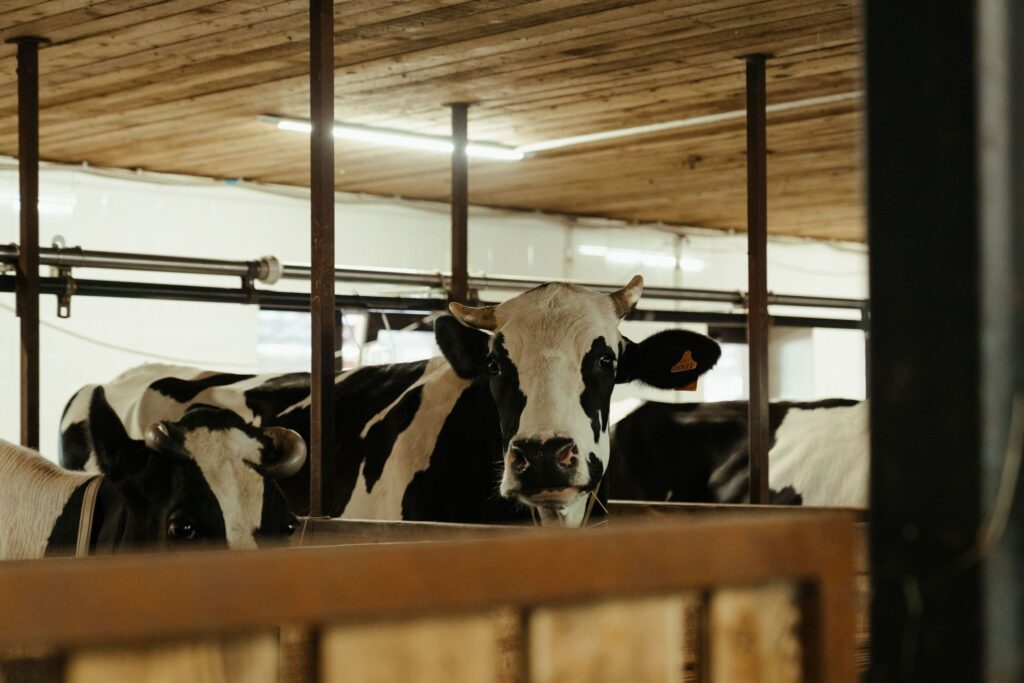
Sonya, in particular, found it amusing how Russian animals made their sounds. Onomatopoeia varies by language, and Russian sounds are noticeably different from English ones. Here, a dog says "gav-gav" where an Englishman hears "woof," a rooster crows "kuka-reku" instead of "cock-a-doodle-doo," and a frog croaks "kva-kva" where an English frog croaks "ribbit." A cow moos "mu-u," a cat meows "myau," a pig grunts "khryu-khryu," a duck quacks "krya-krya," a horse neighs "i-go-go," and a crow caws "kar-kar." Sonya loved imitating these sounds, and through them, she playfully learned her first animal words. For an adult learning the language, they become a funny testament to the fact that even cow mooing is heard differently in different languages. At home, Sonya puts on a whole concert, barking like a dog, meowing like a cat, crowing like a rooster, and her mother laughs that the apartment has become a whole menagerie. Sonya's English friends initially didn't believe that a Russian dog barked differently, and this small discovery amused both sides every time.
Birds, fish, and animals from distant lands
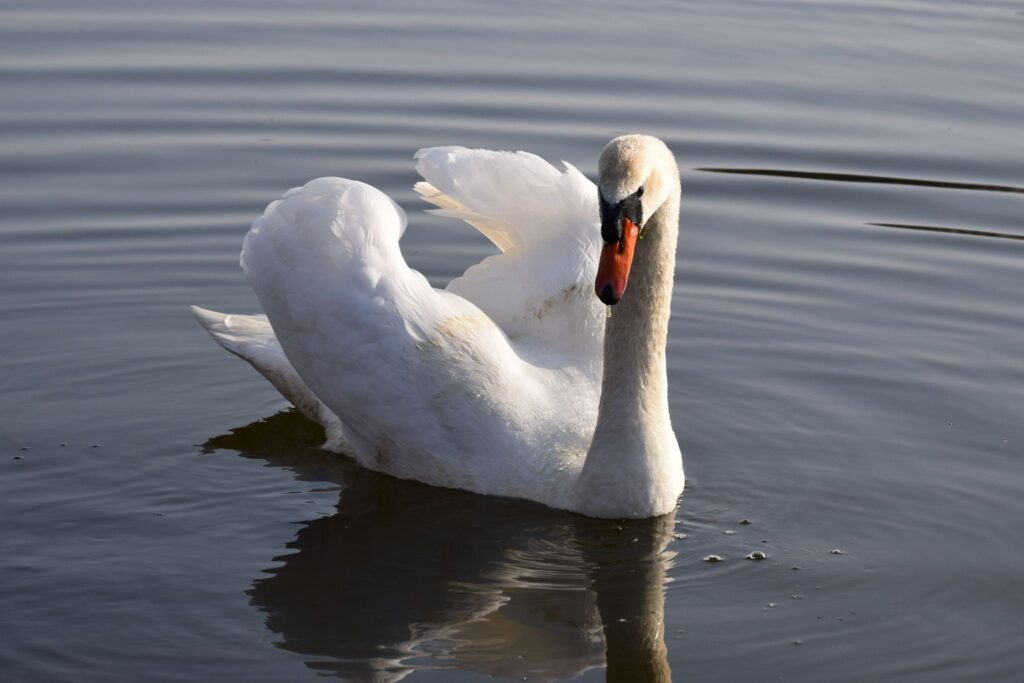
Over time, Sonya's animal world expanded beyond the forest and yard. Birds in language proved to be no less striking. The crow is considered scatterbrained, which is why "counting crows" means to be a dawdler, missing opportunities, while a "white crow," on the other hand, is someone who stands out sharply. The magpie is responsible for gossip and news; it's said to bring them on its tail. And the swan has become a symbol of fidelity, with a person's last great deed being called their "swan song." Sonya watched magpies and crows in the yard every day and quickly came to believe that the magpie was indeed the most talkative bird, as it chattered so loudly for everyone to hear. She fed pigeons bread and knew from her mother that pigeons are considered birds of peace by people.
Russian speech also features water and its inhabitants. Someone silent and imperturbable is called "mute as a fish" (немой как рыба), while someone who has found themselves in their element is praised for being "like a fish in water" (как рыба в воде). The stern phrase "to show where the crayfish spend the winter" (показать, где раки зимуют) still sounds like a promise to punish someone severely. Animals from distant lands have also found their way into idioms, so an awkward person will be compared to "an elephant in a china shop" (слон в посудной лавке), and someone who likes to exaggerate trifles will be accused of "making a mountain out of a molehill" (делает из мухи слона). Both the exotic elephant and the tiny fly have long become established here, alongside the bear and the fox. Sonya the fish would gaze at the pond near her house for a long time, always waiting for at least one to gasp "like a fish out of water" (забьется как рыба об лед), and upon seeing a real swan for the first time, she immediately recognized it as the symbol of fidelity from her grandmother's stories.
Animals that Sonya saw in person
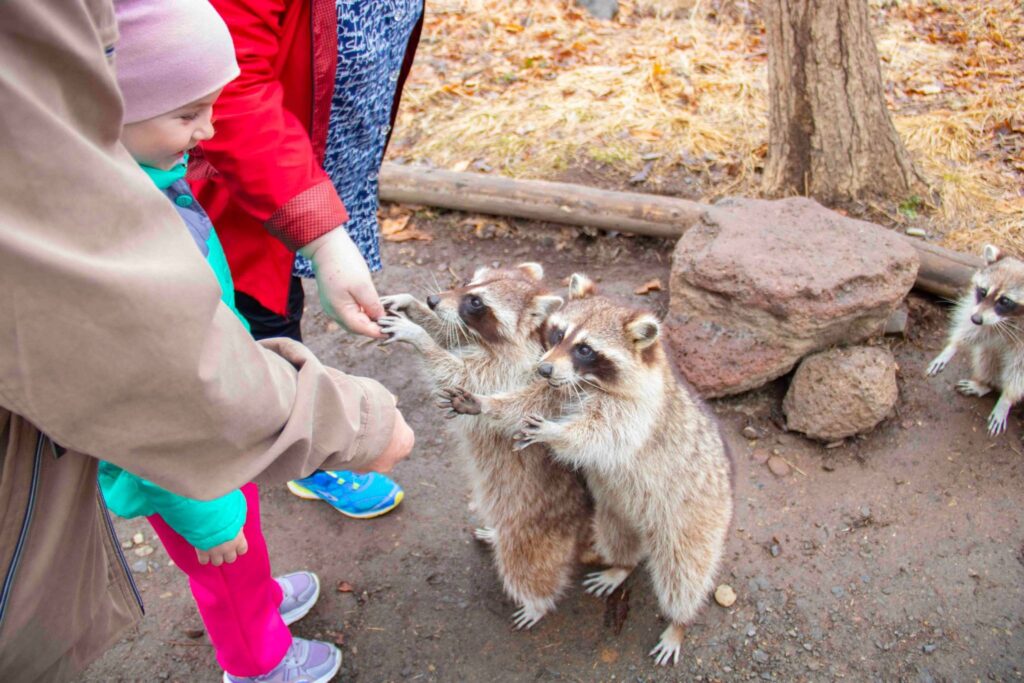
One day, Sonya's parents took her to the zoo, and it was a funny encounter between fairy tales and reality. The bear turned out to be not at all as cozy as in the book, the wolf looked warily and not at all silly, and the fox, on the contrary, was just like that, reddish and neat. In the city park, Sonya made friends with squirrels, which scurried along the branches exactly like in the saying about the wheel, fed pigeons and sparrows, and in the summer at the dacha, she saw a hedgehog and a frog up close for the first time. Thus, the animals from her imagination gradually acquired real faces, fur, and voices, and familiar words like bear, wolf, fox, squirrel, hedgehog filled with living weight. Sonya even started a notebook where she drew each new animal and labeled it in Russian, and it gradually turned into her own little menagerie on paper. There are quite a few names for these in Russian, and it is most convenient to check them in the table below, where each animal has its pronunciation and translation.
What animal will a person be called

By the time she was in school, Sonya had also grasped the main amusement of the Russian language: how generously it assigns animal labels to people, and how the animal's characteristic instantly transfers to the person. To call someone a fox means to accuse them of cunning, a donkey of stubbornness, a bear of clumsy strength, and a snake of treachery, and one short word reveals more about a person than an entire paragraph. Sonya understood these comparisons readily, as she had long known animal behaviors from fairy tales. It's also interesting that intonation often plays a key role, because the same name can be both praise and a gentle reproach. Once, in the yard, Sonya herself was called a cunning fox for a clever trick, and she wasn't offended, but realized it was more of a compliment.
How to learn all these animals
Sonia's story shows the main point. Animals turn out to be one of the most grateful themes in Russian because behind every word lies either a fairy tale, a proverb, or an affectionate nickname, and the name is remembered with them, by itself. This is how it is for a student who is looking for animals in Russian., simple word list It's wrapped in a whole world of imagery. Children learn animals particularly easily, through fairy tales, songs, onomatopoeia, and play, and for adults, animal idioms immediately add liveliness to their speech. It's most convenient to learn an animal as a whole, along with its character, voice, and a couple of proverbs, then the name itself sticks in memory more firmly. This is how it happened naturally for Sonya; she didn't cram a single animal. Each came to her with its own fairy tale, song, or nickname, and stayed that way. Those who undertake Russian as adults follow the same path, just a little later, and animals once again turn out to be the easiest and most fun words.
This is exactly how language is taught at Palme School. Russian is taught through fairy tales, conversation, and real-life examples to children from four to seventeen years old, online and in small groups. You can learn more at two free lessons. The first is an introductory session where a methodologist assesses the child's level and selects a program. The second is a trial session, which takes place in a small group with a teacher.
Home
Animals in Russian live a double life, as creatures and as linguistic heroes. A Russian child like Sonya encounters them first in fairy tales, where each has its own character, then in proverbs, and finally in the affectionate nicknames given to loved ones. The bear carries with it a secret of its ancient name, the fox and wolf embody the eternal debate of wit and strength, and the cat and dog are a scattering of idioms. Learning their names is aided not by a dry list, but by these stories, in which the animal is remembered along with its character, voice, and reputation. This is precisely why animals so firmly settle in memory from early childhood and then resurface in speech throughout life, whether as a joke, a story, or an affectionate term. A complete list with pronunciation awaits in the table below.
Stress is marked with a symbol above the vowel, and the pronunciation is given in Latin letters for those coming from English.
| Word | Pronunciation | Translation |
|---|---|---|
| Wild animals | ||
| bear | bear’ | Bear |
| wolf | people | wolf |
| fox | Lisa | fox |
| hare | hare | hare, rabbit |
| hedgehog | hedgehog | hedgehog |
| squirrel | Belka | squirrel |
| moose | the’ | elk, moose |
| deer | olen’ | deer |
| mouse | mysh’ | mouse |
| Pets | ||
| dog | dog | dog |
| cat | cat | cat |
| horse | hush’ | horse |
| cow | cow | cow |
| pig | pig | pig |
| goat | goats | goat |
| sheep | sheep | sheep |
| rabbit | rabbit | rabbit |
| Birds | ||
| bird | pitsa | bird |
| crow | crow | crow |
| magpie | magpie | magpie |
| sparrow | sparrow | sparrow |
| dove | dove’ | pigeon, dove |
| chicken | chicken | chicken |
| Rooster | Rooster | rooster |
| duck | road | duck |
| Goose | goose’ | goose |
| swan | swan’ | swan |
| nightingale | nightingale | nightingale |
| Fish and aquatic | ||
| fish | fish | fish |
| Cancer | cancer | crayfish |
| pike | pike | pike |
| whale | kit | Whale |
| frog | frog | frog |
| turtle | turtle | Turtle |
Why is the bear called that?
The word "bear" means one who eats honey, that is, a honey-eater. Ancient hunters invented this indirect name instead of the direct name of the beast, so as not to bring misfortune, replacing the lost ancient word with it. Over time, the nickname stuck and became the common name.
To travel without paying the fare.
This is said about someone who travels on public transport without a ticket, secretly. The expression is associated with the image of a cowardly hare because a fare-dodger also trembles and looks around, afraid of being caught.
Russians call people "зайкой" (zayka) and "котиком" (kotik) as terms of endearment. * **"Зайка"** literally translates to "bunny" or "little hare." It's used to describe someone who is perceived as cute, small, innocent, or endearing, much like a bunny. * **"Котик"** literally translates to "kitten" or "little cat." It's used for someone who is seen as cute, cuddly, affectionate, or perhaps a bit independent but still lovable, like a kitten. These terms are similar to how English speakers might use "sweetheart," "honey," "baby," or pet names like "kitty" or "bunny" for loved ones, children, or even close friends to express affection and fondness.
In Russian, animal names often become affectionate nicknames for loved ones and children. Names like "zayka" (bunny), "kotik" (kitty), "rybka" (little fish), and "lastochka" (swallow) sound tender and express affection rather than a comparison to the actual animal.
What animals are most commonly found in Russian idioms?
The most idioms are related to the bear, fox, wolf, hare, cat, and dog. There are also many expressions about birds, specifically the crow and magpie, as well as about fish, and even about an elephant and a fly.