Online preparation for the Unified State Exam and Basic State Exam
🎯 Sign up for a free trial lessonLearn More
Skip to main content

Palme School

Online Russian Language School in the USA and Canada
Online school in Russian for bilingual children and teenagers
💡 Get bonuses with us! Referral program rewards
Online school for bilingual children in Russian from 4 years old

Literary Reading

Reading is more than just a skill — it helps children develop thinking, speech, imagination, and emotional intelligence.

A boy with a book against the background of literary characters

Free game lesson and gentle adaptation

Let's meet the child and show you how classes are held at our school

Why Literary Reading Plays a Key Role in a Child’s Development

The child is already able to read—now he or she learns to understand, analyze, and discuss what has been read, and most importantly, to enjoy books.

📖

Develops reading literacy

🗣️

Develops proficient oral speech

🔤

Enlarges the vocabulary

🔍

Teaches how to analyze and interpret text

💡

Develops critical and imaginative thinking

🤝

Develops emotional intelligence through empathy for the characters

🌍

Enlarges the literary horizon

📚

Develops sustained motivation for self-study

What Your Child Will Learn

What literary reading gives your child

1
Thoughtful reading

Learning to read with understanding — grasping tone, meaning, and subtext

digit 2
Fluent Speaking

Children learn to articulate thoughts, retell stories, and speak publicly

3
Emotional intelligence

Through characters, children learn to understand others' feelings and motivations

4
Critical thinking

Reading encourages curiosity, reflection, and forming personal opinions

Girl reading a book wearing a crown / Freepik

How the literary reading course is organized

Literary reading is a logical continuation of learning to read. If at the initial stage the child learns to read correctly, fluently and expressively, then here they learn to understand literary text: to see the author's intention, to reason and draw conclusions.

A course for children aged 4–14+ who can read but have difficulty understanding what they read, retelling, and formulating their own thoughts. The program is divided into age levels: Kids, Junior, and Teenager.

The program is based on extracurricular literature: the best works of Russian and world children's literature. These are classic and contemporary stories, fairy tales, novels, poems, and educational literary texts.

In class, the child not only reads the work; they also discuss it: analyze the actions of the characters, compare texts, paraphrase, and express their opinion in an argumented way.

As a result, the child becomes an independent, conscious reader: they understand the literary text, analyze it, express their own opinion, and enjoy reading.

Pricing

5 steps to conscious reading

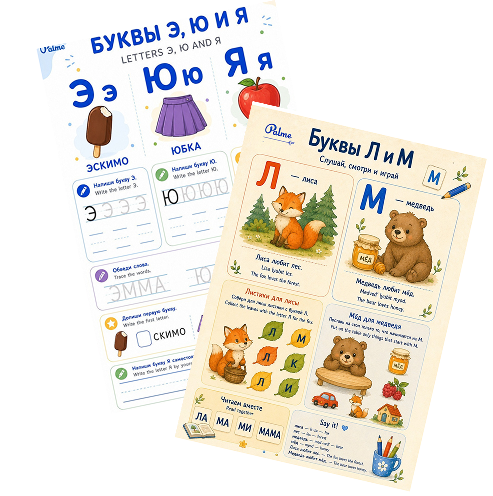
Example of assignments in the Palme school
Start with a Free Trial

1 Free Assessment

30-minute meeting with a tutor: he will determine the child's level of Russian language, suggest whether the literary reading course is suitable for them, and will tell about the Palme school.

3 Reading, discussion, and creativity

Online lessons are held twice a week for 40 minutes in a mini-group. We read the best works of Russian and world children's literature: stories, fairy tales, novels, and poems.

The child not only reads, but also discusses what he or she has read: he or she analyzes the actions of the characters, recounts them, and expresses his or her opinion in an argumented manner; he or she also participates in discussions, games, and role-playing activities.

5 Care for family and fair rules

A convenient platform with homework that the child does on their own, and we help. You will have a personal tutor and a flexible schedule to suit your time zone. Paid lessons are easy to manage and never burn you out.

2 Matching a mini-group

We select groups of up to 8 people based on age and language level. The program is divided into age levels: Kids, Junior, and Teenager.

In the group, the children discuss the books together: they compare opinions, argue in literary debates, and prepare creative projects.

4 Progress assessment

You see the results of the training: every few weeks we conduct tests and send a detailed report on the child's progress.

How to interest a child in reading?

📖

Choose books based on the child's age and interests: stories, fairy tales, novels, poems, and educational fiction.

👨‍👩‍👧‍👦

Read together and discuss what you have read: what happened, why the character acted the way he did, how a child would have acted.

🗣️

Ask them to retell the story in their own words—that way you’ll see what they understood and what needs to be discussed again.

🔍

Ask questions about the text: «What did the author want to say?» «How does this story compare to the one we read before?»

🎨

Offer creative tasks: draw a character, come up with a sequel, act out a scene based on the story.

📚

Read not only according to the school curriculum: both classic and modern children's books.

🌟

Praise them for every book they read and for every interesting thought they have about it.

✍️

Do you want your child to understand what he or she reads and to read with pleasure?

Sign up for a literary reading course: in our classes we read the best works of Russian and world children's literature, discuss them, recite them, and put on performances.

What Parents Are Saying

Start with a free trial, then choose the plan
that works best for your child

FAQ — literary reading for children

Start with a free lesson — then choose the format that works best for your child

At what age can I start literary reading classes?

The course is designed for children aged 4–14+. The program is divided into age levels: Kids, Junior, and Teenager. The younger groups are suitable for children whose reading skills are still being developed.

Will a course be suitable for a bilingual child?

Yes. The course is designed for bilingual children with an intermediate level of Russian: the child understands non-adapted speech, speaks in simple and complex sentences, and knows the entire alphabet, but he/she needs to expand his/her vocabulary and learn to understand what he/she reads.

Will the course be useful if the child reads but does not understand what they read?

Yes, the course is designed specifically for such children: they can read, but have difficulty understanding text, retelling, and formulating their own thoughts.

How is literary reading different from «School of Reading» and speed reading?

«The »Reading School" forms a basic skill: the accuracy, fluency, and expressiveness of reading. Speed reading develops technique: speed, field of vision, and concentration. Literary reading begins when a child already knows how to read and learns to understand, feel, and analyze what they read. The courses complement each other.

How is literary reading different from Russian language lessons?

In Russian language classes, a literary text is material for studying grammar, spelling, and vocabulary. In literary reading, the work itself becomes the subject of study: the main thing is to understand its content, develop reading literacy, literary taste, and interest in reading.

What is meaningful reading?

Semantic reading is the ability to understand and make sense of what is read, rather than just reciting words. In a course, a child learns to understand the meaning of the text, see the author’s intent, reason, and draw conclusions.

Do you have extracurricular reading?

Yes, extracurricular literature is the foundation of the program. It includes the best works of Russian and world children's literature: classic and contemporary stories, fairy tales, novels, poems, and educational art texts.

How are the lessons going?

Online classes 1–2 times a week. The child not only reads the work, but also discusses it: analyzes the actions of the characters, compares the texts, recounts, and articulates their opinions in an argumentative manner. Literary discussions, debates, creative projects, games, and role-playing take place in the classes.

Who teaches literary reading?

Experienced teacher-philologists with a love of books and teaching experience.

Is it possible to try it for free first?

Yes, the trial lesson is free. It helps you understand the format and get your child interested in reading.

Will there be homework assignments?

Occasionally a light retelling, drawing or discussion with parents. All in a playful way.

Do I need to buy anything for the class?

No. We will provide all the materials. Sometimes we recommend buying a book if the child really enjoyed the work.

How will the course help the child?

The course develops reading literacy, proficient oral speech, vocabulary, skills in analyzing texts, critical and imaginative thinking, emotional intelligence, and literary horizons. As a result, the child becomes an independent, conscious reader who is able to express their own opinion and enjoy reading.


Your First Lesson & Assessment Are 100% Free

Leave your contact info below. A student success manager will reach out within 24 hours to find the perfect time and teacher for your child.
✓ No commitment or upfront payment required
✓ Taught by a certified educator
✓ Receive a personalized learning plan

Leave a request for a free call

Book a free consultation with a school methodologist

We will test your child's Russian language level, select a program according to your goals, answer your questions, and sign you up for a free lesson with a teacher.

Available slots for this week:

Sign up for a free lesson.
Apply for a free introductory lesson to get acquainted, determine your goals, and find a suitable group.
Sign up for a free lesson
Submit a request for a free first session with a guidance counselor to get to know each other, determine your goals, and match your child with an educator
Sign up for a free lesson
Submit a request for a free first session with a guidance counselor to get to know each other, determine your goals, and match your child with an educator
Sign up for Russian Dictation
Sign up for a free lesson
Submit a request for a free first session with a guidance counselor to get to know each other, determine your goals, and match your child with an educator
Sign up for a free lesson
Submit a request for a free first session with a guidance counselor to get to know each other, determine your goals, and match your child with an educator
Sign up for a free lesson
Submit a request for a free first session with a guidance counselor to get to know each other, determine your goals, and match your child with an educator
Sign up for a free lesson
Submit a request for a free first session with a guidance counselor to get to know each other, determine your goals, and match your child with an educator
Sign up for a free lesson
Submit a request for a free first session with a guidance counselor to get to know each other, determine your goals, and match your child with an educator
Sign up for a free lesson
Submit a request for a free first session with a guidance counselor to get to know each other, determine your goals, and match your child with an educator
Sign up for a free lesson
Submit a request for a free first session with a guidance counselor to get to know each other, determine your goals, and match your child with an educator
Sign up for a free lesson
Submit a request for a free first session with a guidance counselor to get to know each other, determine your goals, and match your child with an educator
Sign up for a free lesson
Submit a request for a free first session with a guidance counselor to get to know each other, determine your goals, and match your child with an educator