Preparation for the Russian language exam
We cover all the exam tasks: from spelling and grammar to essays. We explain the rules in a way that makes them memorable.

Free introductory lesson and introduction to the school
This course is for you
the child, if
He knows the rules, but still makes mistakes
The rules are learned, but in the spelling and punctuation tasks the child gets confused and loses points for minor mistakes.
Doesn't understand how to write an essay
They don't know where to start, how to formulate a position, or what requirements the examiners impose.
She is preparing sporadically and is nervous before the exam
He chooses options without a plan, doesn’t see his weak spots, and isn’t sure he’ll be able to repeat everything before the exam.
1 Free Assessment
[30]-minute meeting with a tutor: the child solves tasks in the format of the State Examination, we identify the strengths and weaknesses, and we explain how the preparation will be organized.
3 Lessons and training
Online lessons [2 times a week for 40 minutes] in a mini-group. We break down each exam question: the theory, typical pitfalls, and the solution algorithm.
Between lessons, there are exercises in the format of the EGE exam and regular checking of essays with the teacher's comments.
5 Care for family and fair rules
Convenient platform with homework and a personal tutor. Flexible schedule to suit your time zone (Time Zone). Paid lessons are easy to take and never expire.
2 Matching a mini-group
We select a group [up to 8 people] based on their level of preparation and target score. The students help each other correct their mistakes and learn from common examples.
4 Trial exams and reports
Every [N] weeks, the child writes a trial version under conditions similar to the exam. You receive a report: which tasks were completed, where did the points go wrong, and what needs to be repeated.
What you will get
The student's path
From diagnosis to the exam
Free Assessment
We solve tasks in the format of the EGE exam, determine the starting level and target score.
Training plan
We make a plan for the day of the exam: which topics and tasks should be worked on first.
Lessons and practice
Classes in a group [up to 8 people] or individually, a trainer of tasks and proofreading of essays.
Trial exams
We write the options in their entirety, learn to allocate time, and approach the exam calmly.

Program Structure
The course is divided into thematic modules that repeat throughout the cycle. A student can join the group at any time, complete the missing topics in the next cycle, and study at their own pace.
Spelling of roots, suffixes, prefixes, and endings, N and NN, NE and NI, in a hyphenated, hyphenated, and hyphenated form. For each rule — a clear verification algorithm and exercises in exam-style format.
Interjections in simple and complex sentences: homogeneous members, isolated phrases, introductory words and addresses, compound, subordinate and non-conjugated sentences. We learn to quickly break down the structure of a sentence and not lose points on complex constructions.
Stress patterns, paronyms, lexical combinations, word forms, and sentence structure. We examine typical errors that are found both in exam questions and in one’s own speech.
We learn to understand the main idea of the text, find connections between sentences, distinguish between different types of speech, and learn about the means of expression. This module is a bridge to writing.
We write essays based on the current criteria of the FIPI: formulate a problem, provide a commentary and our own position. Each work is checked and commented on by the teacher. In parallel, we solve full-length versions on time and practice exam tactics.
We repeat what all the rules are based on: the composition of words, parts of speech, and clauses of sentences. We fill in the gaps in our knowledge so that we don’t have to memorize the rules word for word anymore, but rather understand them.
We systematically follow the spelling rules without haste: roots, prefixes, suffixes of different parts of speech, N and NN, NOT with different parts of speech. Lots of practice on short tasks and dictations.
We learn to see the grammatical structure, distinguish the types of sentences, and place punctuation marks consciously, relying on the structure of the sentence.
We become familiar with linguistic norms and learn to read the text carefully: identify the topic and main idea, find means of expression, and notice the author's logic.
We understand how the essay is structured and the criteria by which it is evaluated. We write the first papers and receive detailed feedback. In 11th grade, the student transfers to the year-long course with a ready-made foundation.
The student chooses the full version in the EGE format. Based on the results, we compile a list of topics that will earn the most points for the remaining time.
Quick repetition of the rules with an emphasis on topics where the student makes the most mistakes. Short algorithms and daily practice.
We practice the most common punctuation situations and learn to confidently handle complex sentences.
A clear outline for writing essays based on the FIPI's current criteria, a breakdown of typical errors, and regular checking of the work by the teacher.
Full instructions for the time, an analysis of each error, and exam tactics: in what order to complete the tasks and how to allocate time.
How is the program organized?
- The groups are organized by class and level of preparation: from those who need to fill in their gaps in school to those aiming for a high score.
- The modules go in a circle. After a while, the teacher returns to the material covered earlier, so the material is consolidated, and the student who arrived later covers the topics that were missed in the next cycle.
- The content of the modules is verified against the relevant documents of the FIP: the demo version, the codification, and the specifications. If the exam format changes, we update the program.
Why It Works
- You can start the preparation at any time, without waiting for the start of a new stream.
- The individual plan: the trials show which topics give the student the most points, and we focus on those.
- At your own pace: if the topic takes longer, the student will cover it in the next cycle. If everything is clear — move on.
- Missing classes due to illness or travel does not knock you out of training: the missed topics can easily be made up in the next cycle.
Choose the period of preparation for the EGE
The sooner you start, the calmer the preparation will be. Start with free classes, and then choose a time period that fits your exam schedule. No hidden fees.
2 free sessions to get to know the teacher and to understand whether the format is suitable for the student.
- Entrance exam format in the form of the EGE
- An analysis of the strengths and weaknesses of the topics
- Lessons in a mini-group and homework
For those who start preparing just before the exam and want to quickly fill in the main gaps.
- Repetition of spelling and punctuation
- Writing scheme and checking of works
- Final prototypes for a while
There is enough time to go through all the exam topics without rushing and to work on the essay.
- All modules of the program
- Regular checking of works
- Trial exams and reports for parents
Systematic preparation for the entire school year: from repeating the basics to confidently solving the full version.
- Individual training plan
- All modules with repetition per cycle
- Trial versions every [N] weeks
- Dedicated support manager

Our teachers

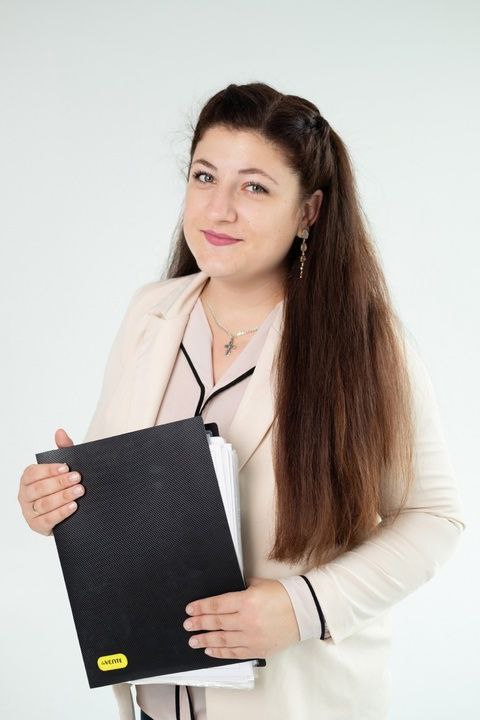
- Russian, Mathematics, Geography, more than 5 years of experience
Education
- Higher education (Pskov State University, 2019), ChOUDPO «Institute of Professional Development and Training» St. Petersburg, 580 hours.
- Professional retraining «Special (defectological) education. Logopedics». 2021.
- Professional retraining «Theory and methodology of teaching the subject „History“ and „Social Studies“. 2019.
- Professional retraining "Teacher of Geography". 2019 г.
- Professional retraining "Teacher of Primary Grades". 2023 г.
Work experience and achievements
- Winner of the qualifying round of the radio contest
young poets of the Pskov region "In Rhyme"
2019. - Finalist and bronze medalist
radio contest of young poets of the Pskov region
«In Rhyme» 2020, - The winner of the poetry
of the "First Test of the Pen" contest - Winner
of the poetry contest of the "Mine!" movement. I have
a collection of poems called "Behind the Sun" and
his group of poems.

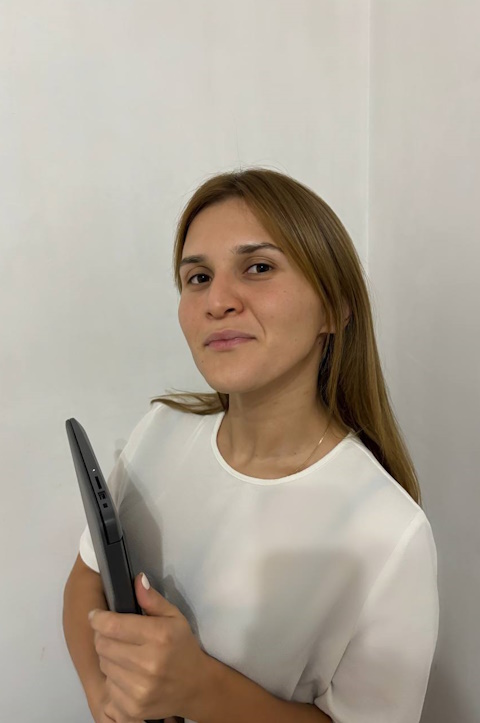
- Russian language, experience of more than 10 years
Education
Kurchorsky State University
Philology Department,
teacher of Russian language and literature,
Bachelor's degree.Kurchorsky State University
Philology Department,
philological education (language),
Master's degree.Kurchorsky State University
law school,
Jurisprudence (criminal specialization),
Specialist.School of RCT teachers of the A.S. Institute project.
Pushkin.

- Russian language, experience of more than 8 years
Education
- Higher pedagogical education at the Crimean Federal University. Faculty of Foreign Philology, «English philologist»
Work experience and achievements
- Completed courses in inclusive education (MPGU 2022)
- Six months internship at a language school in Mexico
- FCE-C1
- IELTS 8.5
Your First Lesson & Assessment Are 100% Free
Leave your contact info below. A student success manager will reach out within 24 hours to find the perfect time and teacher for your child.
✓ No commitment or upfront payment required
✓ Taught by a certified educator
✓ Receive a personalized learning plan

Frequently Asked Questions
Start with a free diagnosis — then choose a training period that fits your exam schedule.
Which class is best for starting preparation for the EGE?
It’s best to start in the 10th grade: in two years you can make up for lost time and work through all the exam topics without rushing. In the 11th grade, a one-year course is a good choice. If there are a few months left until the exam, choose an intensive course—it focuses on the topics that will give you the most points.
How do you determine the level of training?
Before starting classes, the student takes a free diagnostic assessment with a methodologist: they complete tasks in the format of the EGE exam. Based on the results, we identify strong and weak areas, select a group, and create a training plan.
How long is one class and how often are lessons held?
Classes take place online twice a week for [N] minutes in a mini-group. Between lessons, the student completes homework and practices for exam-style tasks.
Is it possible to start preparation not from the beginning of the school year?
Yes. The modules of the program repeat in a cycle, so you can join at any time; the missed topics will be covered in the next cycle.
Do you check the essays?
Yes. The teacher reviews each essay according to the FIPI's current criteria and provides comments: what worked, where the points were lost, and how to fix it.
How to know that the preparations are going according to plan?
Every [N] weeks, the student takes a mock exam in the format of the EGE. After each mock exam, the parents receive a report: which tasks are completed, where the points are lost, and what needs to be reviewed.
What should I do if a student misses a class?
The lesson can be rescheduled or completed; the paid lessons are not «lost». The student will also be able to complete the missed topic in the next cycle of the program.
Are there any free classes?
Yes, the first 2 sessions are free. The student will get acquainted with the teacher and the lesson format, and you will decide if the course is right for you.
What is included in the tuition?
Lessons in a mini-group twice a week, homework and essay checks, mock exams with reports, educational materials on the platform, support from a mentor, and the ability to freeze the course if necessary.
What are the technical requirements for online classes?
You need a device with internet access (a computer or tablet) and Zoom installed. All educational materials are provided in digital form.