

Mila is nine and lives in a suburb on the north side of Chicago. Last fall she showed her mother a streak of 142 days in a language app, green owl, gold badges, the works. The next Saturday her mother sent her to the counter at the Russian market on Devon Avenue with two dollars and one job: ask for the cabbage pirozhok, a word with forty repetitions sitting in her app history. The order itself was placed in the English language, and the vocabulary which had been accumulated in the application was not employed in any way.
Here's how to learn Russian when the study is organized around one person: * **Focus on your specific goals:** What do you want to achieve with Russian? Conversational fluency, reading literature, understanding films? Tailor your learning to these objectives. * **Identify your learning style:** Are you a visual, auditory, or kinesthetic learner? This will help you choose the most effective resources and methods. * **Find a good teacher or tutor:** A qualified instructor can guide you, correct your mistakes, and provide personalized feedback. Look for someone experienced with your learning style and goals. * **Utilize a variety of resources:** Don't rely solely on your teacher. Supplement your studies with: * **Textbooks and workbooks:** These offer structured grammar and vocabulary lessons. * **Language learning apps:** Duolingo, Babbel, Memrise, and others can reinforce vocabulary and basic grammar. * **Online resources:** Websites like RussianPod101, MasterRussian, and RT Learn Russian offer articles, videos, and audio lessons. * **YouTube channels:** Many channels are dedicated to teaching Russian, covering grammar, pronunciation, and culture. * **Immerse yourself:** Even if you can't travel to a Russian-speaking country, create an immersive environment at home: * **Listen to Russian music and podcasts:** This will help you get used to the sounds and rhythm of the language. * **Watch Russian movies and TV shows:** Start with subtitles, then gradually try without them. * **Read Russian books, articles, and news:** Begin with simpler texts and progress to more complex ones. * **Change your device language to Russian:** This forces you to interact with the language daily. * **Practice speaking regularly:** This is crucial for fluency. * **Speak with your teacher/tutor as much as possible.** * **Find a language exchange partner:** Websites like Tandem, HelloTalk, and ConversationExchange connect you with native speakers for practice. * **Record yourself speaking:** Listen back to identify areas for improvement in pronunciation and fluency. * **Talk to yourself in Russian:** Describe your surroundings, narrate your actions, or practice dialogues. * **Focus on pronunciation early:** Russian has sounds that may be unfamiliar to English speakers. Pay attention to them from the beginning. Use pronunciation guides, listen carefully, and practice mimicking native speakers. * **Learn the Cyrillic alphabet:** This is the first step to reading and writing Russian. It's not as difficult as it might seem, and many letters are similar to Latin letters. * **Be patient and consistent:** Learning a language takes time and effort. Set realistic goals, celebrate small victories, and don't get discouraged by mistakes. Regular, consistent study is more effective than infrequent, intensive sessions. * **Engage with Russian culture:** Understanding the culture behind the language can make learning more enjoyable and provide context for vocabulary and expressions. Explore Russian literature, history, art, and traditions. * **Review and revise constantly:** Regularly revisit grammar points and vocabulary. Spaced repetition systems (SRS) are very effective for memorization.
Mila's grandmother lives in the city of Tula and calls every Sunday evening. The first month of studying Russian was scheduled around that Sunday call to Tula, the one appointment of the week when the child was required to speak the language. The grandmother continued reading Winnie the Pooh in Russian over the phone, one chapter a week, and Mila learned the name Пятачок (Pyatachok) during the first of those chapters. Months later, she found out he was Piglet. Advice pages on how to learn Russian tend to open on noun charts. Mila’s plan opened on a phone call.
Here's how to learn the Russian alphabet's shapes and sounds: **1. Familiarize Yourself with the Cyrillic Alphabet:** * **Find a Chart:** Get a visual chart of the Russian (Cyrillic) alphabet. You can easily find these online by searching for "Russian alphabet chart" or "Cyrillic alphabet chart." * **Compare and Contrast:** Notice how some letters look similar to English letters but have different sounds (e.g., 'Р' looks like 'P' but sounds like 'R'). Also, notice letters that are completely unique. **2. Break it Down Letter by Letter:** * **Focus on a Few at a Time:** Don't try to memorize all 33 letters at once. Start with groups of 3-5 letters. * **For Each Letter:** * **Shape:** Write the letter down multiple times. Trace it with your finger on the screen or paper. * **Sound:** Listen to the sound of the letter. Many online resources and apps provide audio pronunciation. Repeat the sound out loud. * **Association (Optional but helpful):** * **Similar English Sounds:** If a Russian letter sounds like an English letter (e.g., 'М' sounds like 'M', 'Т' sounds like 'T'), make that connection. * **"False Friends":** Pay special attention to letters that look like English letters but have different sounds (e.g., 'В' sounds like 'V', 'Н' sounds like 'N', 'С' sounds like 'S', 'У' sounds like 'OO'). * **New Sounds:** For letters with sounds not found in English (like the rolled 'Р', the soft 'Ь' or hard 'Ъ' signs, or the distinct 'Ж', 'Ш', 'Щ', 'Ч', 'Ц' sounds), practice them specifically. **3. Use Resources for Pronunciation:** * **Online Dictionaries/Translators:** Many online Russian dictionaries (like Wiktionary, Yandex Translate) have audio pronunciation for each word and letter. * **YouTube Videos:** Search for "Russian alphabet pronunciation for beginners" on YouTube. Many channels offer clear explanations and demonstrations. * **Language Learning Apps:** Apps like Duolingo, Babbel, Memrise, and Anki often have dedicated lessons for learning the alphabet with audio. **4. Practice Active Recall:** * **Flashcards:** Create physical or digital flashcards. One side has the Russian letter, and the other has its sound and a romanized pronunciation. Test yourself regularly. * **Quizzes:** Many websites and apps offer quizzes to test your knowledge of the alphabet. * **Write Words:** Once you know a few letters, start trying to write simple Russian words. Even if you don't know all the letters in a word, try to sound out the ones you do know. **5. Phonics and Sound Blending:** * **Vowel Sounds:** Pay attention to how vowels change pronunciation based on stress. This is a crucial aspect of Russian phonetics. * **Consonant Clusters:** Practice pronouncing consonant combinations. * **Listen to Native Speakers:** Listen to Russian spoken by native speakers as much as possible (audiobooks, music, movies, podcasts). Try to mimic the sounds. **6. Consistency is Key:** * **Daily Practice:** Dedicate 10-15 minutes each day to practicing the alphabet. Short, consistent sessions are more effective than infrequent long ones. * **Don't Get Discouraged:** Learning a new alphabet takes time and effort. Celebrate small victories and keep practicing! **Breakdown by Letter Type (A Helpful Way to Organize):** * **Familiar Shapes, Familiar Sounds:** А (a), К (k), М (m), О (o), Т (t). * **Familiar Shapes, Different Sounds:** В (v), Е (ye), Н (n), Р (r), С (s), У (oo), Х (kh). * **Unfamiliar Shapes, Some Familiar Sounds:** Б (b), Д (d), З (z), Л (l), П (p), Ф (f). * **Unfamiliar Shapes, New Sounds:** Г (g), Ж (zh), И (ee), Й (y/short i), Ц (ts), Ч (ch), Ш (sh), Щ (shch), Э (e), Ю (yu), Я (ya). * **Special Signs:** Ь (soft sign - no sound, softens preceding consonant), Ъ (hard sign - no sound, separates consonant from vowel). By combining visual learning, auditory practice, and consistent repetition, you'll master the Russian alphabet shape and sounds in no time. Good luck!
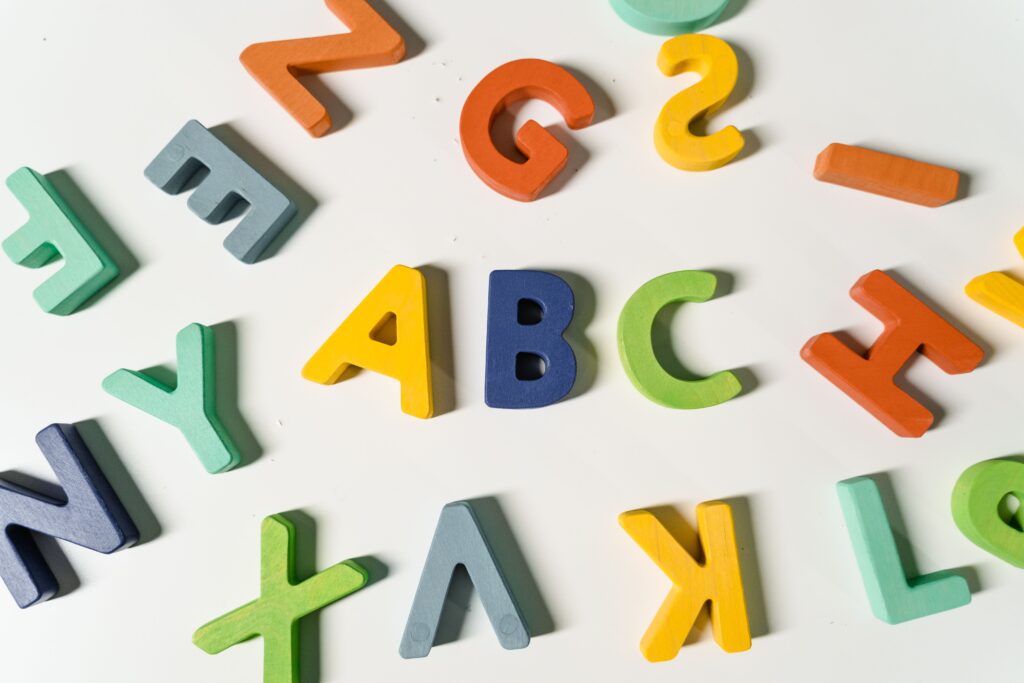
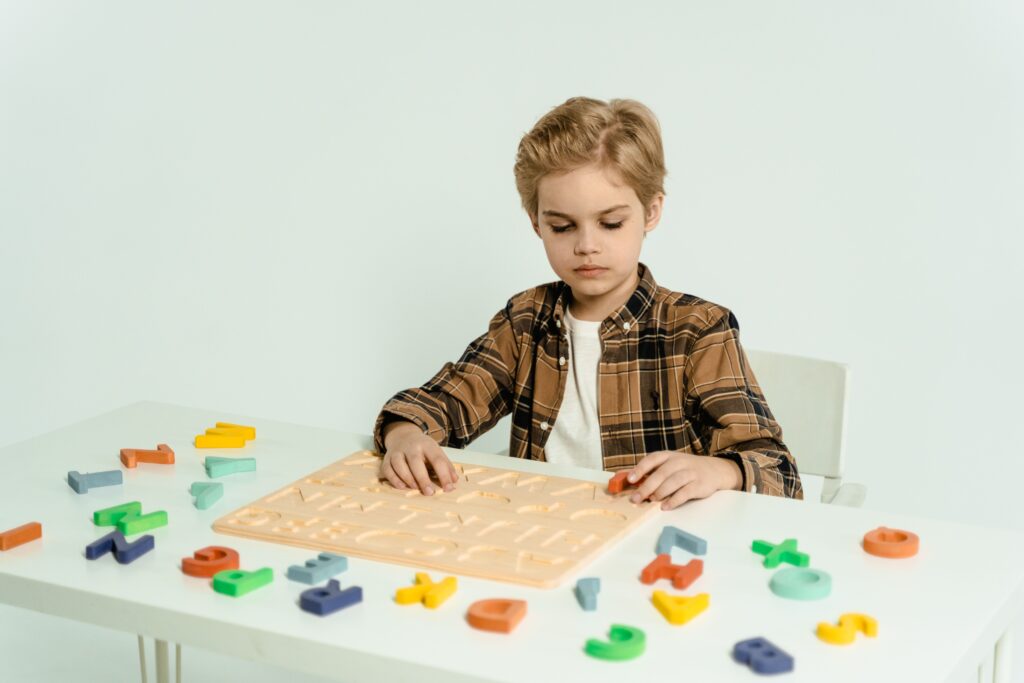
The Cyrillic alphabet has 33 letters., and five of them, А, К, М, О, and Т, come free, with both the shapes and sounds matching English. Four more look friendly and are straightforward: В says v, Н says n, Р says r, and С says s. Those four cost Mila her first week, as every В on the cereal box read as 'b' in her head. A set of magnetic letters covering the whole stage cost only a few dollars. The name Mila was assembled in magnets on the freezer door while dinner was being cooked, and she read it back before the table had been set. A child who can find herself in Cyrillic has something no worksheet provides: her own word in the new letters. Within two weeks, she was reading three-letter words like 'дом' without help, a few minutes at a time.
How to write in Russian with a pencil

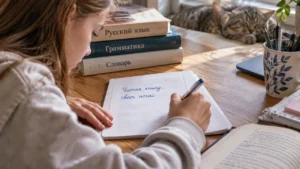
Paper did what magnets couldn't: it moved the letter shapes from her eyes to her hand. By week two, learning to write Russian words meant one word a night at the kitchen table. The phone came in about a month later, and learning to write Russian messages turned out to be one setting away; the Cyrillic keyboard was enabled, and she sent a one-word text to her grandmother most evenings.
The speaking portion begins in week one.

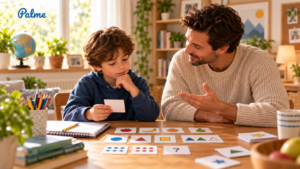
Parents ask us at most assessments, how do you speak Russian with a child when no one else in the house speaks it. We say: week one, even when the entire word list fits on one index card. New words took up posts around the house, labels on the door, the milk, the spoon drawer, the bathroom mirror. Supper became a trade, one sentence of Russian bought one of English, and the part Mila liked best was correcting her mother. Kids take to running the classroom.
Apps and tools that help, and what they can't do

Apps are good at two things: letters and daily repetition. Ten minutes a day is enough to exhaust the entire usefulness of this kind of application, and the streak Mila maintained was recorded on a chart kept on the refrigerator, which turned the habit into a matter of visible account. The cartoon Masha and the Bear was watched from the couch on most evenings with the subtitles off, an arrangement insisted upon by Mila's mother, and by late winter, Mila could follow a greater part of an episode, the porridge episode in particular, without assistance.
Here's how to learn Russian quickly on an ordinary school evening: **1. Set Realistic Goals for the Evening:** Don't try to master the entire language in one sitting. Focus on a specific, achievable goal. Examples: * Learn 10 new vocabulary words related to a theme (food, greetings, school). * Understand the pronunciation of a specific Russian letter or sound. * Learn to form 3-5 basic sentences. * Practice conjugating one common verb. **2. Create a Dedicated Learning Space and Time:** * **Minimize Distractions:** Turn off your phone notifications, close unnecessary tabs on your computer, and let others in your household know you need quiet time. * **Consistent Time:** Try to dedicate a specific block of time each evening, even if it's just 30-60 minutes. Consistency is key to rapid progress. **3. Utilize Efficient Learning Methods:** * **Focus on High-Frequency Vocabulary:** Start with the most common words and phrases. These will give you the biggest bang for your buck in terms of understanding and being understood. * **Master the Alphabet First:** If you haven't already, dedicate significant time to learning the Cyrillic alphabet. It's foundational and will unlock reading and writing. Use flashcards (physical or digital), mnemonic devices, and practice writing the letters repeatedly. * **Listen Actively:** * **Beginner Podcasts:** Find podcasts designed for Russian learners. Listen while doing chores or commuting. * **Short Videos:** Watch YouTube channels that teach Russian to beginners. Focus on understanding the gist. * **Speak from Day One (Even to Yourself):** * **Repeat After Native Speakers:** Mimic pronunciation and intonation from audio or video resources. * **Create Simple Sentences:** Even if you're just saying "Привет" (Privet - Hello) or "Спасибо" (Spasibo - Thank you) to yourself, practice speaking. * **Use Language Exchange Apps (briefly):** While a full conversation might be too much, you can try sending a quick "Hello, how are you?" in Russian and wait for a response. * **Interactive Learning Tools:** * **Duolingo/Memrise/Babbel:** These apps are great for gamified learning of vocabulary and basic grammar. * **Online Dictionaries and Translators:** Use these to look up words, but try to use them actively to build sentences, not just for one-off translations. **4. Integrate Russian into Your Evening Routine:** * **Label Objects:** Write the Russian word for common items in your room and place the labels on them. * **Change Your Phone Language (Carefully):** Once you're comfortable with a basic level of vocabulary, consider changing your phone's language to Russian. This forces constant exposure. * **Listen to Russian Music:** Even if you don't understand everything, it helps with pronunciation and rhythm. **5. Review and Reinforce:** * **Quick Review:** Spend the last 5 minutes of your study session reviewing what you learned that evening. * **Spaced Repetition Systems (SRS):** Apps like Anki use SRS to help you memorize vocabulary efficiently by showing you words at increasing intervals. **Example of an Evening Learning Session (45 minutes):** * **5 minutes:** Review yesterday's vocabulary and a few basic phrases. * **15 minutes:** Learn 5 new vocabulary words related to "school" using flashcards and listening to their pronunciation. Practice saying them. * **10 minutes:** Watch a short YouTube video on how to form simple questions in Russian. Try to understand the examples. * **10 minutes:** Practice writing the new vocabulary words and a couple of simple sentences using them. * **5 minutes:** Listen to a beginner Russian podcast episode while tidying up your workspace, focusing on picking out any familiar words. **Key Principles for Fast Learning:** * **Consistency:** Little and often is better than long, infrequent study sessions. * **Active Learning:** Don't just passively consume information. Speak, write, and engage with the material. * **Focus:** Concentrate on one or two skills or topics at a time each evening. * **Enjoyment:** Find resources and methods that you find interesting to keep motivation high.

The greater part of the work was carried by the school nights in Mila's household, in the form of a few minutes of Russian after homework was completed, supplemented by one genuine conversation each week. In practical terms, this arrangement amounted to fifteen minutes on weeknights plus the Sunday call to Tula, and the progress made in such a scheme relies on the regularity of the evenings rather than the length of any single one. The Foreign Service Institute in Arlington, the federal government's language school, gives its diplomats 44 weeks of Russian, about 1,100 hours in a classroom. Mila's group did the rest of the work, with kids her age waiting for her answers and a teacher pulling the weeds out of her Russian while they were small. Fit matters first; a class pitched over one's head teaches a kid to hide.
Three questions from new parents
A classmate asked her in the hallway, "Do you speak Russian?" and she didn't say anything. What should I tell her?
One ready line covers it, I am learning it, want to hear my name in Russian? The child's name along with one greeting is sufficient for this purpose, and both of these items are liable to be learned from the magnets on the freezer door in the course of three or four evenings.
How can I learn Russian together with her?
Her order, the alphabet before anything else, then the labels around the house. Mila’s mother learned the same letters at the fridge, and her wrong answers gave Mila somebody to correct at supper. Classes at our school enroll ages four to seventeen. Parents study at home on their own.
When will she be able to chat with her grandmother in Russian?
One group lesson per week and a few minutes at home most evenings bring greetings and school stories into her first year, and the methodologist estimates each child's pace at that first meeting.
An assessment opens a door

Our school teaches children between four and seventeen, no older, online and in small groups. The first step is a methodologist's assessment, and the result of that assessment is the child's level, put down on paper, with a true zero included among the possible outcomes. After this, the child is placed by the school in a small group that corresponds to that level. Each of the groups is led by a teacher, and the selection of class times is undertaken at the end of the procedure, which in Mila's case produced a Tuesday group that left the Sunday call to Tula untouched. Mila's group placement came in January at the true zero level, and in May the woman at the register on Devon Avenue heard the whole order in Russian, pirozhok, cabbage, please.