


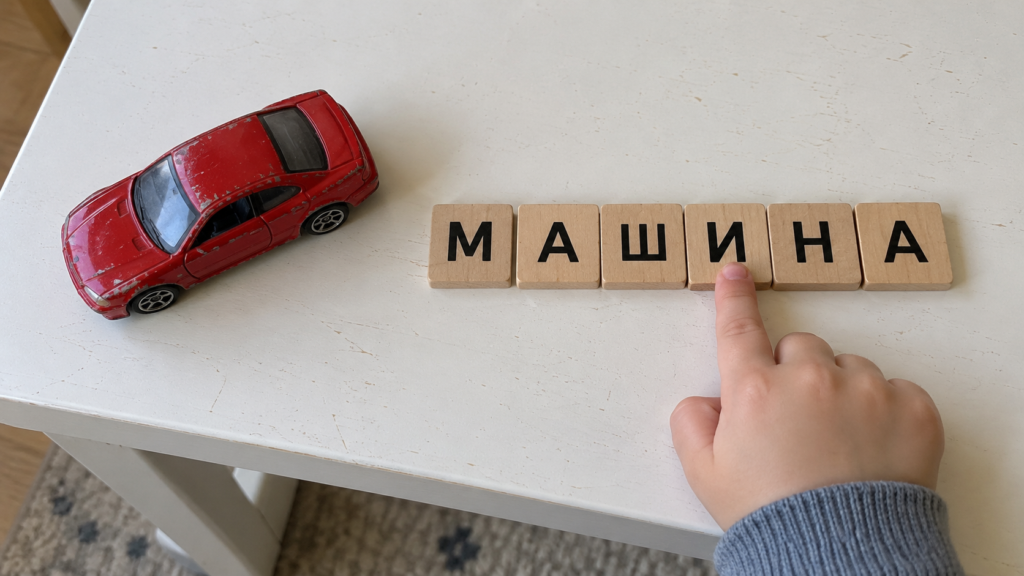
Write next to the child two familiar words in the plural, «tomatoes» and «frogs.».
Say them out loud and listen to the end. In both words, after a hard consonant, the same vowel [ы] is heard. The consonants are different; Ц in the first word and Ж in the second, but both are hard and soft; in these words, there is no way to make them soft. And the letters at the end are different. In «gogurts» there is Ы, in «ejahs» there is И.
Parents who went to a Russian school usually remember both rules separately and never put them together. «Jizhi shipi with the letter Y» sounded like a law; after the Ts, you had to remember the words that were exceptions and ask why the same sound was written differently. Meanwhile, in the autumn of 1964, exactly this question was seriously discussed by scientists, teachers, and writers, and one of the proposals at the time sounded like something that today seems like a mistake. Write «gogurtsi.».
If you look into the origins of this suggestion, it becomes clear that Y after Zh and Sh served as a model for the reformers to use to level out the rest. At the same time, it becomes clear that you have to answer a child who reads by syllables, knows a pair of «luk» and «luk», and expects a soft sound before the letter Y.
Autumn of 1964
On September 24, 1964, the newspaper Izvestia published «Proposals for Improving Russian Orthography.» They were prepared by a commission at the Institute of Russian Language of the Russian Academy of Sciences, which included linguists, school teachers, and methodologists. Its head was Academician Viktor Vinogradov. The reason was complaints about low literacy and rules that a school student had to memorize along with long lists of exceptions.
Readers remembered the strangest-looking words from these sentences. «Hare» instead of «rabbit.» «Mouse» and «doch» without a soft sign. «Yellow» with an O letter. «jury» and «parachute» instead of «jury» and «parachute.» Among these words were «pickles,» and for talking about "ji" and "shi," it was the most interesting one.
The Commission proposed that after Ц, the letter I should always be written, in any word and at any ending. «Cigans», «chickens», «pickles», «from the pig». These words should sound the same as before, with a hard [ц] and an [ы] after it. Only the letter changed.
The logic behind this proposal was simple, and it was easy to verify using the same two words. The sound [ц] is always hard, and there is no soft pair of sounds in it. That means there is no need to indicate the firmness of the consonant after Ц; everything is already known. So, one letter can be used in all words, and schoolchildren no longer have to remember in which words the Ы and the I are used. The other hard consonant suggested which letter to use; this has long been the standard way of writing Russian letters. After Ж and Ш, the letter И is always written, and this does not create any confusion.
It turns out that the JIs and SHIs in 1964 were not the ones that needed to be corrected, but rather the model to be corrected. In essence, the commission was writing its own «cucumber» based on the example of the «spiders.».
Why nothing came of it
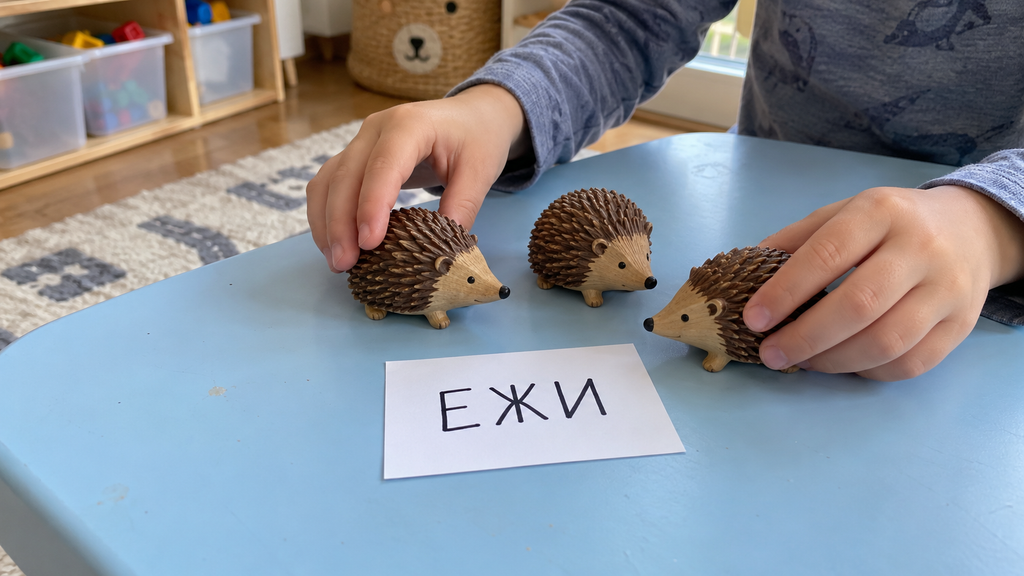
The discussion in the newspapers lasted for several weeks and was very intense. Writers and poets were mostly against it, while teachers and philologists approached the proposals more calmly. In mid-October 1964, Nikita Khrushchev was removed from office, during whose tenure the reform was being prepared, and after that the dispute quickly subsided. Soon afterwards, the discussion was discontinued, and the proposals remained merely proposals.
To many readers who had been writing about «tomatoes» and «squirrels» all their lives, the new words seemed illiterate, and the arguments about the simplicity of this impression remained unchanged. «Tomatoes» remained in history as an example of how spelling holds on to both rules and the habit of the eye.
For our question, something else is more important. The combinations of the letters J and S in the sentences remained the same; the commission did not suggest writing «zhyr» or «shina». On the contrary, according to this pattern, it suggested writing it after the letter C.
From where and after the hard J and S
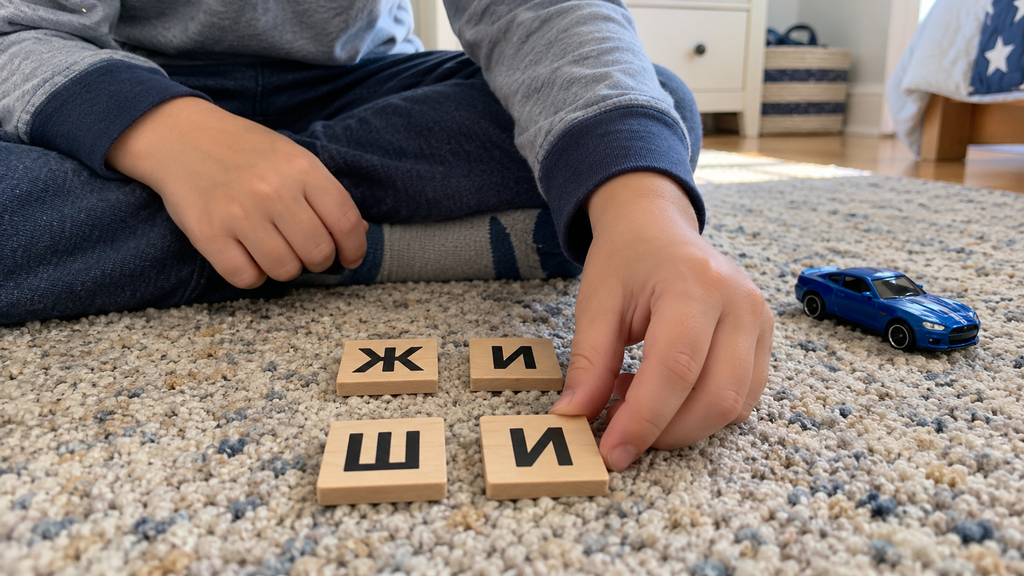
The question remains: if Ж and Ш are hard sounds, why did they start writing I after them at all? The letter that often indicates softness after other consonants?
The answer lies in the history of the language. At one time, the sounds that denoted the letters J and S were soft. After the soft consonant, the letter I was written; the combination of JÍ at that time was no different from LÍ, and the letter indicated softness honestly. Later, these sounds became hard. The pronunciation changed, but the writing of JÍ and ŠI remained the same.
In the Russian language, a similar transformation occurred with the letter Ц: it also became solid, only the spelling after it did not follow the same uniform pattern. Therefore, today we write both «cirque» and «kyblenok», and in both words the consonant is solid. The choice of I or Ы after the Ц follows a separate rule, and it was this rule that the 1964 commission wanted to abolish.
What to answer a child
A child who knows the pairs «luk» and «luik» gets used to the convenient hint. In the word «luk», the letter Y indicates that L stands for a soft consonant. The same task is performed in the word «lis» by I. We have discussed this pair in detail in the article about Solid and soft consonants.
The hint works for consonants that have a pair of softness and firmness. There is no pair for [j] and [sh], they are unpaired hard consonants, and the letter I does not indicate softness after them. In the words «tire», «fat», «car», after a hard [j] or [sh], we hear [y], although we write I. For the first conversation, it is better to choose exactly such words where the I is placed under the stress, and leave the unstressed syllables for later.
If a child asks about Ch and Sh, one sentence is enough. The [ch’] and [sh’] sounds, on the other hand, are unpaired soft sounds, and their softness also does not need to be indicated by the following vowel letter.
A child usually gets by with a short explanation that can be repeated in their own words. Previously, J and S were lowercase letters; after that, they were written with an I, and since then they have been written that way. And the story with the «cucumber» shows that even scientists who wanted to simplify things left the writing as it is. The rule itself and a small test of it are included in our article about the mysterious letter Y.
Is the hint working?
Read the syllable and the word with the child together. Which consonant is pronounced here, a hard consonant or a soft one? After the answer, a short explanation will appear.
LI
as in the word «lisp»
LY
as in the word «skiing»
LU
as in the word «hole»
SHI
as in the word «shina»
J.I.
as in the word «fat»
CZI
as in the word «circus»
CH
as in the word «cup»
JYU
as in the word «jury»
Two words on one sheet
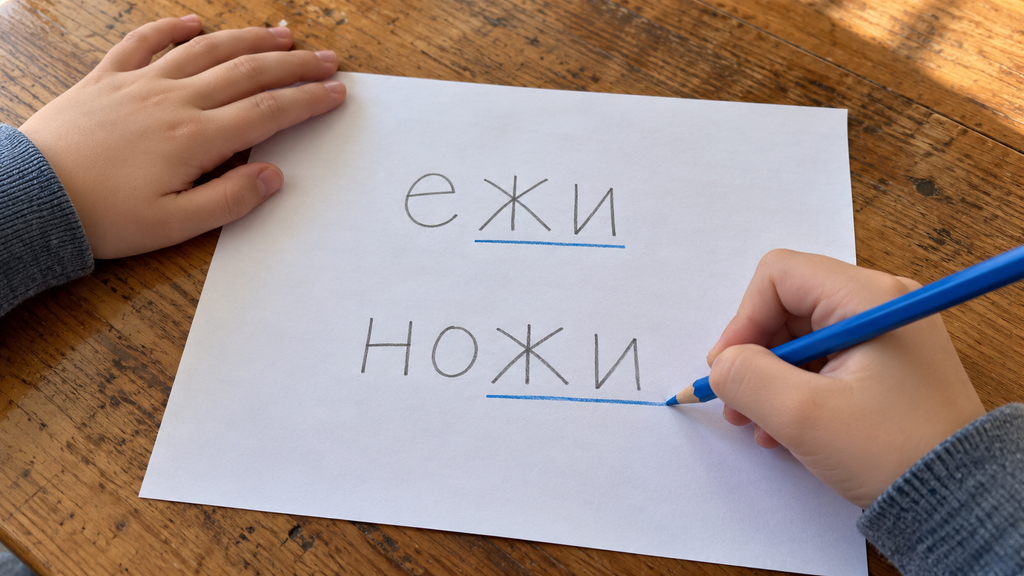
Return to the sheet that says «cucumbers» and «snakes». Now you can see more than at the beginning. Two solid consonants, the same [ы] sound after them, and two different letters, each with its own story. You can ask the child to add the third word, «knives» or «razors», and see which letter appears at the end.
Such a comparison can help the child stop waiting for a soft sound where it does not exist, while not giving up the hint that works in words with paired consonants.
And at the end, you can point at the «squirrel» and ask.
In the JIS, is the consonant hard or soft? Why do we then write I?
When the rules are explained in context, children can not only remember them but also explain them in their own words. At the «Russian for Bilinguals» course at Palme School, children aged four to seventeen are learning online in small groups.
You can start with two free lessons. First, the methodologist determines the child's level and helps choose a program; then the family meets the teacher at a free lesson.
Sign up for free lessonsFrequently asked questions about life and death
Why do the letters j and sh be written with an I?
At one time, the sounds that denoted the letters J and S were soft, and after them the letter I was written; as with other soft consonants, it was written after them. Later on, these sounds became hard. The pronunciation changed, but the writing of JÍ and ŠI remained the same.
Are the J and S solid or soft?
The sounds [j] and [sh] are unpaired hard consonants; they do not have a soft counterpart. Therefore, the letter I after J and S does not indicate softness. The sounds [ch’] and [sh’], on the other hand, are unpaired soft consonants.
What did the 1964 spelling reform propose?
The commission of the Institute of the Russian Language of the Russian Academy of Sciences proposed, among other things, that after Ц always write И («cucumber», «gypsy»), that one should write «zaec» and not put a soft sign after the plosives at the end of words («mus», «doch»). The combinations JИ and SHI remained unchanged. The proposals were published in Izvestia on September 24, 1964, but were never accepted.
Are the letters Y and SH used in Russian writing?
In ordinary Russian words, the letter И is written after Ж and Ш. Abbreviation forms are found in some foreign names and titles, for example, Shymkent.
How to explain the rule of jiji to a child?
In a nutshell. Previously, J and S were soft, after that they were written with an I, and since then they have always been written that way. For speaking, it’s better to use words with an I sound, for example «tire», «fat» or «car», where the [y] sound is heard after the hard consonant.