


Talk about the Romanovs almost never starts with 1613. It starts with the 1997 animated film that children still watch today. And right after the final credits, a question arises. Is it true that the princess escaped?
The answer to it is short. No, she wasn't saved, and this is established with the precision that is ever possible in historical matters. But a short answer usually satisfies no one, because it is immediately followed by the next question, and then another, and these questions lead back three centuries. It's easier to examine them in the order they come to mind, rather than in the order in which everything actually happened.
The woman pulled from the Berlin canal
In February 1920, a young woman was pulled from the water in Berlin without any identification, refusing to give her name. Two years later, she claimed to be the youngest daughter of the executed Russian emperor.
This story lasted for over sixty years. Anna Anderson, as she came to be known, sued for inheritance, gave interviews, acquired influential defenders, and part of the emigration believed her, while part considered her an adventuress. She died in America in 1984, neither recognized nor exposed. Genetics exposed her ten years after her death: a preserved medical sample was compared with the blood of relatives of the imperial family, and no match was found. However, another match was found, with the family of the missing Polish worker Franciszka Szanowska.
Several dozen impostors of this kind have appeared over the century, and this is explained not only by greed. The legend of the surviving princess met a simple human need for at least someone to survive this story. It persisted for so long for a purely material reason, and this reason lay in the Ural land.
Why were two people missing from the grave
The burial site near Sverdlovsk was discovered in 1979 by geologist Alexander Avdonin and film screenwriter Geliy Ryabov. They had been working privately, using archival documents. They unearthed three skulls, realized that announcing the find in those years was impossible, and returned everything back to the ground. They kept silent for twelve years.
Excavations were permitted in 1991. Nine people were found in the tomb, and three out of five of the emperor's children were identified there. The examination stretched for years, and comparison samples were collected from living European relatives. Among the donors was the Duke of Edinburgh, who was related to the empress through the female line. It did not go smoothly. The remains, identified as the imperial family's, had a rare mitochondrial DNA characteristic where two different variants coexist in one organism, and this finding cast doubt on the examination. The verification proved costly; the tomb of the emperor's younger brother, George Alexandrovich, who died in 1899, was opened in the Peter and Paul Cathedral, and the same characteristic was found in him. Later, the very shirt from Otsu, which still bore the blood of the twenty-two-year-old heir, was also brought in for comparison. The person was identified by the blood spilled in the Japanese town twenty-seven years before the execution.
In July 1998, exactly eighty years later, the remains were buried in the Peter and Paul Cathedral's burial vault, where almost the entire dynasty has been resting since Peter's time.
The two missing individuals were searched for another nine years. A small, separate grave was found in 2007 near the first one, and genetics confirmed it was heir Alexei and one of his sisters. From that moment on, the question of a surviving tsarevna was definitively closed, although the story lives on in the English-language internet under the search terms "russian imperial family death" and "russian royal family killed," where speculation still outweighs documentation.
It remains to explain why the bodies were hidden in two places and in such a hurry.
The most asked-about night

The family was woken up around 2 AM on the night of July 16th to 17th, 1918, and asked to go downstairs, citing shelling danger. The father carried his sick son in his arms, and the mother asked for a chair. Chairs were brought.
A detachment led by Yakov Yurovsky, the commandant of the house, a man who before the revolution had trained as a watchmaker and owned a photo studio in the same city, entered the basement room. The sentence was read aloud, and a few minutes later, no one was left alive. Eleven people died: the emperor, the empress, four daughters, the thirteen-year-old heir, court physician Yevgeny Botkin, cook Kharitonov, valet Trupp, and maid Demidova. The youngest daughter, Anastasia, was seventeen. The four adults who remained with the family could have left but did not.
Then began what gave rise to eighty years of confusion. The bodies were taken to a forest outside the city; the first attempt to hide them in a mine was deemed unsuitable. The remains were moved and concealed differently, some were burned, all were doused with sulfuric acid, the site was covered and filled with railway ties. They worked at night, in a panic, without a plan, because White Army units were approaching Yekaterinburg, and the city could fall into their hands at any moment. A living emperor in their hands would become a banner around which all anti-Bolshevik Russia would rally, and they were not going to risk that.
The Ipatiev House, where it all happened, stood until 1977. People flocked to it, and it was demolished overnight by a decision from Moscow. The Sverdlovsk regional committee, headed at the time by Boris Yeltsin, carried out the demolition. Twenty-one years later, he, now president, stood at the burial in the Peter and Paul Cathedral and spoke there of the guilt toward the murdered. Today, the Church on Blood stands on the site of the demolished house.
How the family ended up in the basement of a Ural house
The journey there took sixteen months and began with queues for bread.
Petrograd queues turned into strikes in February 1917, the strikes grew into street processions, and the capital defied authority within a week. Soldiers sent to restore order sided with the streets. The Emperor was at Stavka, hundreds of kilometers away; his train was not allowed into the capital, and on March 2nd, in Pskov, in his train car, he signed his abdication for himself and his son, understanding that the sick boy would be separated from him anyway. The crown was offered to his younger brother, Mikhail, but he refused to accept it without a decision from the Constituent Assembly. The dynasty's three hundred and four years ended in one day.
At that time, they were given a surname they had not used before. The imperial family did not have a surname in everyday life; they signed their names, and it was only after the abdication that “Citizen Romanov” appeared in the documents of the Provisional Government. The name by which the dynasty is known throughout the world became its official name at the very moment the dynasty ceased to exist.
Next came the arrest in Tsarskoye Selo. During those very weeks, all five children fell ill there; measles struck both the daughters and the heir, with fevers reaching forty, and that was precisely why the family couldn’t leave for anywhere during the days of the coup. That summer, the girls had their hair shaved close to the scalp because of their illness, and today everyone recognizes the photographs of them with those short haircuts.
They tried to smuggle them out to England. Uncle George V, the English king, who resembled Nicholas so much that it was impossible to tell them apart in photographs, initially agreed, but then withdrew his invitation, fearing for his own throne. This refusal was held against him for the rest of his life.
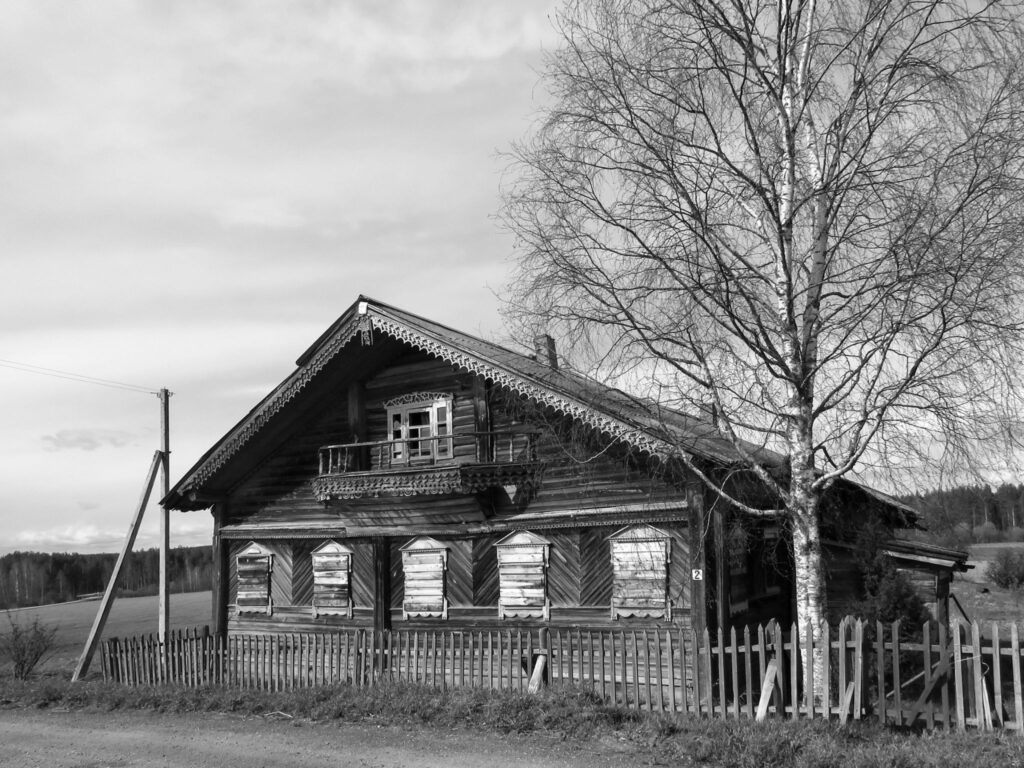
In August 1917, the family was sent to Tobolsk, a quiet Siberian city with no railway. They were housed in the former governor's mansion, which had by then been renamed the House of Freedom. There they spent their last relatively peaceful winter, during which the father chopped wood, the mother embroidered, they read aloud in the evenings, and Alexei had a severe exacerbation of his illness. After the October Revolution, the guards became hostile, money ran out, and their rations were cut. In the spring of 1918, they were moved to Yekaterinburg, to a requisitioned mansion surrounded by a high fence, with windows whitewashed. In the documents, it was designated as a special-purpose house, and that name remained in the papers forever. They lived there for seventy-eight days.
The guards at the Ekaterinburg house were changed twice, and the second was worse than the first. They were let out into a small garden for half an hour, letters were checked, and almost everything was taken away from their belongings. They were fed from a common pot with the soldiers, and dinner was served at one in the afternoon because the routine was maintained until the last moment.
The diaries from these weeks have survived, and they show how quickly the old life came to an end. The entries are short, about the weather, about the son's temperature, about how many steps were taken around the yard. The daughters wore hand-me-down dresses with jewels sewn into them, and the sewn-in stones would later play a terrible role in the cellar, because the first bullets wouldn't penetrate them.
The boy whose illness caused the throne's trust to collapse
Alexey was carried around not because he was young. The heir had hemophilia, an inherited inability of the blood to clot, which he passed down from his maternal great-grandmother, Queen Victoria. Any bruise would result in internal bleeding, blood would fill his joints, and the boy would lie in pain for weeks, from which nothing helped.
The illness was kept secret from the country; early-20th-century medicine had absolutely nothing to offer, and the parents lived in constant fear of the worst. This gave rise to a story that was later deemed courtly sensationalism.
Grigori Rasputin, a Siberian peasant with a reputation as a miracle worker, appeared at court in 1905. All that is reliably known is that after he attended the boy at his bedside, the child became better, and the mother believed him unconditionally. Explanations for this vary, from relieving anxiety that exacerbates bleeding to coinciding with the natural course of an attack, but the Empress did not need explanations.
Retribution came from a direction they least expected. The influence of an illiterate peasant on the ruler’s family became the main topic of conversation in newspapers and salons; rumors spread, each more scandalous than the last, and the monarchy’s reputation crumbled faster than it would have under any political campaign. In December 1916, Rasputin was killed by people from the innermost circle closest to the throne. The empire had only two months left to exist.
Who was the person who signed that abdication?
Nikolai Alexandrovich Who ascended the throne in the autumn of 1894, on the day of his father's death, and married three weeks later. The wedding in mourning and the coronation with a crush at Khodynka Field, where more than a thousand people died, became what people later called bad omens. The English query "Nicholas II" usually leads to this set of dates.
He married for love, which was more of an exception among monarchs. He chose Alice of Hesse himself and waited years for her consent because she was reluctant to change her faith for a long time. Still, she relented, accepted Orthodoxy before the wedding, and became Alexandra Feodorovna, and the entire English court was her relative, as Queen Victoria was her grandmother. The nicknames the couple called each other in letters did not change in over twenty years.
Before his marriage, he had managed to travel halfway around the world. In 1891, the heir to the throne was taken to Japan, and there, two things happened to him that are not written about in textbooks. In Nagasaki, he got a dragon tattoo on his forearm, and a few days later, in the town of Otsu, a local policeman struck him on the head with a saber. The scar remained for life, the shirt with traces of blood ended up in a museum, and this item would play its role more than a hundred years later.
He was a reserved man and valued order more than power. In the 1897 census, in the occupation field, the emperor wrote «master of the Russian land,» and he kept a diary almost every day starting from the age of fourteen, recording the weather, walks, and dinners, and almost never politics. This diary ended a few days before his downfall.
The daughters came one after another. Olga was born in 1895, followed by Tatiana and Maria two years later, and Anastasia was born last in 1901. Four girls in a row, and the country was waiting for an heir, and Alexei didn't arrive until 1904.
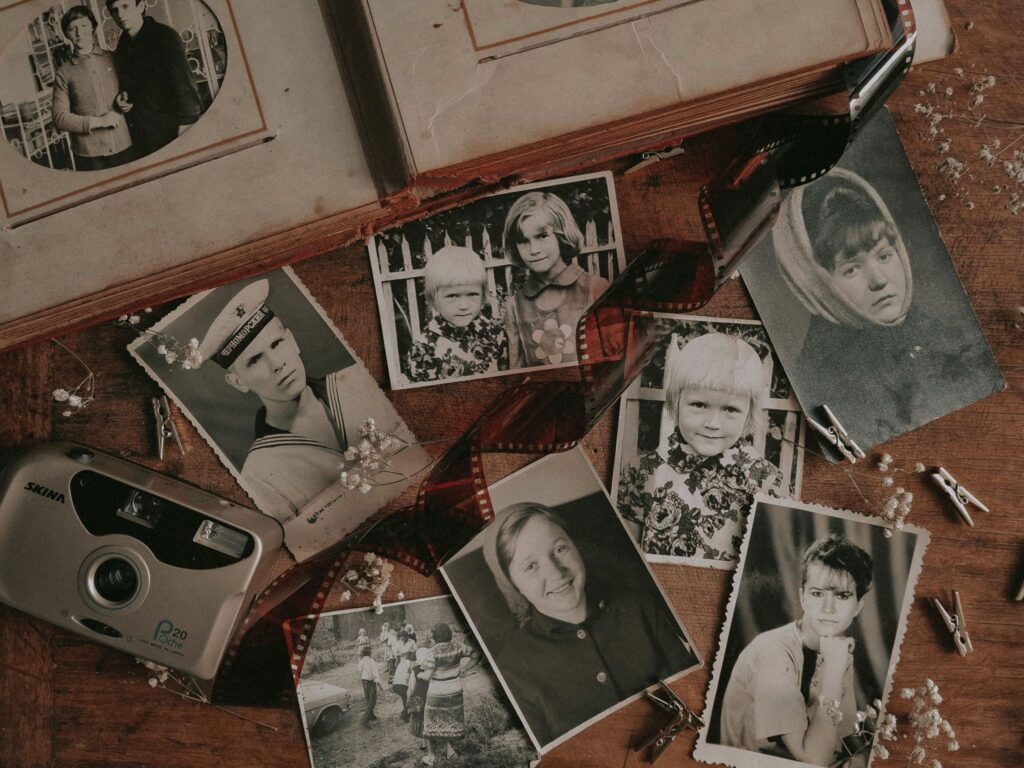
They lived not in the grand Winter Palace, but in the Alexander Palace at Tsarskoye Selo, in rooms that were more bourgeois than royal. The daughters slept two to a bed on hard camp beds, bathed in cold water, and kept diaries. The sisters stuck together in pairs, the elder and the younger, signing their letters with the common name OTMA, formed from the first letters of their names, and everyone in the house loved to be photographed. The girls had their own cameras, they pasted the developed pictures into albums themselves, and thousands of home snapshots have survived to our day, some of which are now kept in an American university collection.
The war found the older sisters as young women. Olga and Tatiana had completed a course to become nurses, worked at the Tsarskoye Selo hospital, assisted with surgeries and changed bandages, and their photographs—wearing headscarves with crosses—bear little resemblance to formal portraits.
The family of the last emperor with dates
All seven died in one night, from July sixteenth to seventeenth, 1918, in Yekaterinburg. Birth dates are given in the new style.
| Name | Born | Age | Who is in the family |
|---|---|---|---|
| Nikolai Alexandrovich | May 18, 1868 | 50 | Emperor from 1894, abdicated March 2, 1917 |
| Alexandra Feodorovna | June 6, 1872 | 46 | Wife, formerly Princess Alice of Hesse, granddaughter of Queen Victoria |
| Olga | November 15, 1895 | 22 | Eldest daughter, a nurse during the war in a hospital |
| Tatyana | June 10, 1897 | 21 | The second daughter worked at the hospital with Olga. |
| Maria | June 26, 1899 | 19 | The third daughter, together with Anastasia, formed the younger pair. |
| Anastasia | June 18, 1901 | 17 | The youngest daughter, the heroine of the legend of salvation and tens of impostors |
| Alexey | August 12, 1904 | 13 | The heir to the throne suffered from hemophilia. |
Four who remained with them voluntarily
| Name | Who was with the family |
|---|---|
| Eugene Botkin | Family doctor, son of the famous physician Sergei Botkin |
| Ivan Kharitonov | Chef |
| Aloysius Trupp | Lackey |
| Anna Demidova | The Empress's chambermaid |
The remains of nine were found near Sverdlovsk in 1979, officially exhumed in 1991, and buried in the Peter and Paul Cathedral in July 1998. Alexei and one of the sisters were discovered separately in 2007. In 2000, the church canonized the family as martyrs.
The time when the old order was crumbling
His reign coincided with years when the country's previous structure began to crack on all sides. They began a war with Japan in 1904, expecting a quick victory, but received the surrender of Port Arthur and the defeat of a squadron that had sailed to the Far East around all of Africa for eight months, only to perish at Tsushima in a single day. The peace treaty was signed in America, in the city of Portsmouth.
A year later, on January 9, 1905, workers went to the Winter Palace to request their needs, carrying icons and portraits of the sovereign ahead of them. Fire was opened on the columns. The emperor himself was not in the city that day, and he did not give the order, but this day went down in history as Bloody Sunday, and the nickname that stuck to him after that morning remained with him forever. The revolution of the same year forced concessions; by the October 17 manifesto, the country received civil liberties and a legislative Duma, and parliament appeared in Russia for the first time.
Next came a period that is most often regretted. Pyotr Stolypin initiated a land reform and asked for twenty years of peace to implement it, but only got five because in 1911 he was shot in a Kyiv theater. The years before the World War were the best for the country in a long time; industry was growing faster than in Europe, grain was exported worldwide, and the population increased by several million per year. Against this backdrop, in 1913, the 300th anniversary of the House of Romanov was celebrated with religious processions and commemorative coins.
The war had scuttled everything in three years. In the summer of 1915, after heavy defeats, the emperor took supreme command and left for Army Headquarters in Mogilev, leaving the capital to his wife. All military failures were now personally attributed to him, and the country was managed by the empress, who was trusted by neither the court, nor the Duma, nor the street.
Line of succession in the Romanov House
In English-language sources, this house is called the Romanov family of Russia. A full list of rulers would comprise eighteen names, so only key points of significant change are noted here.
1613
Mikhail Fyodorovich
The Zemsky Sobor, convened after the Time of Troubles, chooses a sixteen-year-old boyar's son. The beginning of a dynasty.
1645
Alexei Mikhailovich
The son of Mikhail. Under him, the country is being reassembled, and by the end of his reign, the future transformer is born.
1682 and 1721
Peter the Great
Mikhail's grandson. Moves the capital to the Baltic, reshapes the state, and assumes the title of emperor.
1730
The direct male line is broken.
Next, the throne passes through daughters, nephews, and German princes.
1762
Catherine the Great
Borna Princess from Stettin, German on both sides. With her husband Peter III, it is more accurate to speak of the Holstein-Gottorp-Romanovs.
1855 and 1861
Alexander II
He abolished serfdom, introduced a jury system and zemstvos to the country. He was killed by a bomb in Petersburg in 1881.
1881
Alexander III
Thirteen years of rule without a single war. Died in the fall of 1894.
1894 and 1917
Nicholas II
Ascends the throne at twenty-six years old. Abdicates on March 2, 1917, for himself and his son. Three hundred and four years end in a single day.
Places the last family has been
Tsarskoye Selo near Petersburg
The Alexander Palace, where the family lived permanently and where they were held under arrest after their abdication. The palace is open to visitors.
Pskov
The railway station where the abdication was signed in a railway carriage on March 2, 1917.
Tobolsk
The former governor's mansion, renamed Freedom House for their arrival. This was where their last peaceful winter was spent.
Yekaterinburg
The Ipatiev House, seventy-eight days in confinement, and the night of July 17, 1918. The house was demolished in 1977; now, the Church on the Blood stands on its site.
Tract near Yekaterinburg
The place where the remains were hidden twice and where they were found in 1979 and 2007. Today, a memorial trail leads there.
Peter and Paul Cathedral in St. Petersburg
The burial vault of the dynasty starting with Peter. Here in July 1998, the found remains were buried.
Three hundred years before that night
It remains to explain the origin of the surname itself, because it ended up on the throne almost by accident.
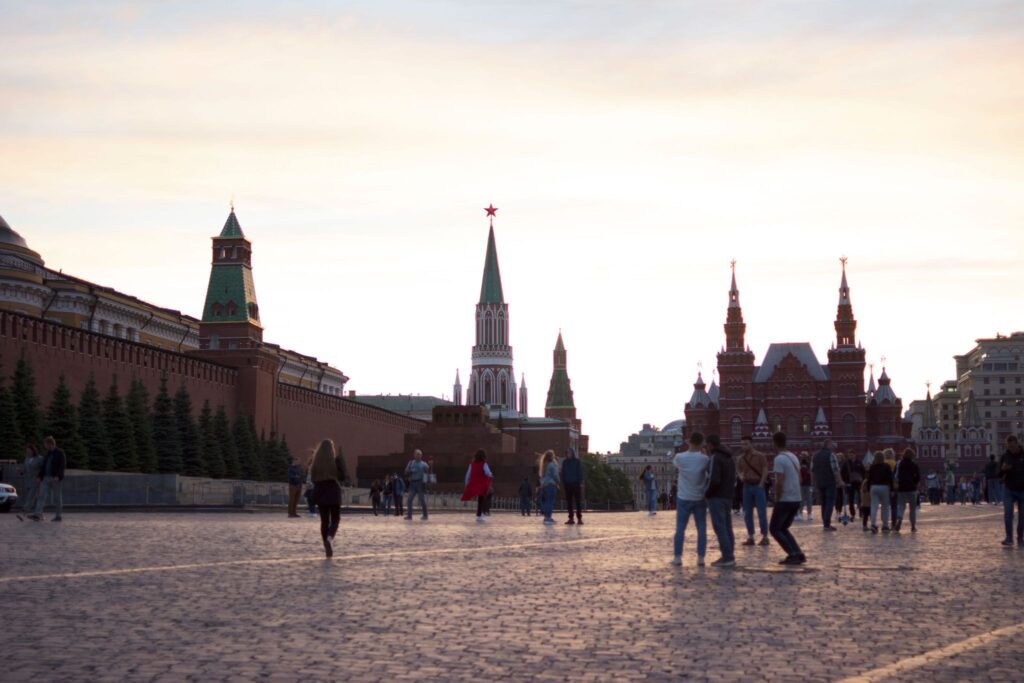
By the beginning of the seventeenth century, the country lay in ruins, the Rurik dynasty had died out, impostors succeeded one another, the Poles stood in the Kremlin, and this period was rightly called the Time of Troubles. In 1613, the Zemsky Sobor convened in Moscow, attended by elected representatives from cities, clergy, nobility, and Cossacks, and the Tsar was determined there by vote. They settled on sixteen-year-old Mikhail Fyodorovich, whose family was considered old and boyar, and he himself had not managed to get involved with any side during the Time of Troubles, which was worth more than any experience at that time.
The first Romanovs were neither conquerors nor reformers. They were reuniting the country and bringing order to the treasury. The turn occurred with Mikhail's grandson, when Peter the Great moved the capital to a swamp by the Baltic, reshaped the state along European lines, and in 1721 adopted the title of emperor. From that moment on, foreigners began to write about them as the Russian imperial family, and the word dynasty took on a different meaning.
Next begins a thing that textbooks mention in passing. The direct male line died out in 1730, the throne passed through daughters, nephews, and German princes, and starting with Peter III, it is more correct to speak of the Holstein-Gottorp-Romanovs. The most famous Russian empress was born in Stettin and had purely German origins, from both lines at once. Her grandchildren and great-grandchildren married women from German houses almost universally, so that by the end of the nineteenth century, very little Russian blood remained in the family, and she had European relatives. The First World War placed Nicholas and Wilhelm on opposite sides of the front, and this detail speaks more about the old monarchies than any textbook.
The nineteenth century brought the dynasty both its peak and a warning. Alexander II abolished serfdom, gave the country a jury trial and zemstvos, and ended up being killed by a bomb on a St. Petersburg embankment in 1881. His son tightened the screws and ruled for thirteen years without a single war. His grandson received the throne at twenty-six years old and was not prepared for it.
Ten facts about the Romanov dynasty
This is what didn't make it into the article, but explains both the beginning of this story and its subsequent repercussions.
Where did the name come from?
The surname originated from the boyar Roman Zakharin-Yuryev. His daughter Anastasia became the first wife of Ivan the Terrible, and his kinship with the extinct Rurik Dynasty gave Mikhail the main trump card in the elections of 1613.
The Age When Women Ruled
For most of the eighteenth century, the throne was held by empresses: Catherine I, Anna Ioannovna, Elizabeth Petrovna, and Catherine II. Men ruled for significantly shorter periods during this time.
Two-meter emperor
Peter the Great was about two meters and four centimeters tall, whereas the average man of his time was less than one hundred seventy centimeters tall. The surviving boots and uniforms confirm this.
The Crash Near Borki
In October 1888, the tsar’s train derailed near Kharkiv; the cars were crushed, more than twenty people were killed, but Alexander III’s entire family survived. According to legend, Nicholas’s father held up the roof of the car with his shoulders while the others made their way out.
Alapaevsk, the following night
A day after the events in the Yekaterinburg basement, other members of the family also died, including Grand Duchess Elizabeth Feodorovna, the Empress’s sister, who had founded the Marfo-Mariinsky Convent in Moscow.
The emperor's mother outlived him by ten years
The Dowager Empress Maria Fedorovna left Russia in 1919 aboard a British warship; she refused to believe her son had died until the end of her life and passed away in her homeland, Denmark, in 1928. In 2006, her remains were transferred to St. Peter and Paul Cathedral.
Nikolai's sister lived to be in her sixties
Grand Duchess Olga Alexandrovna ended up in Denmark after the revolution, and then moved to Canada, where she kept a farm near Toronto, painted watercolors, and died in 1960.
The Faberge eggs have dispersed across the world.
Of the fifty or so imperial Easter eggs, some were sold abroad in the 1920s and 1930s. The largest private collection was repurchased and returned to Russia in 2004, and it is on display at a museum in St. Petersburg.
They never finished the last egg
The artisans were unable to complete the 1917 Easter order; the work remained unfinished, and it never reached its intended recipients.
You can read them for yourself
The diaries of Nicholas and Alexandra, the couple’s letters, and their daughters’ correspondence have been published and translated into other languages. The entries are about everyday life—the weather, walks, and the children’s health—and for a teenager, they have a greater impact than any textbook.
What remains of them in Russia today
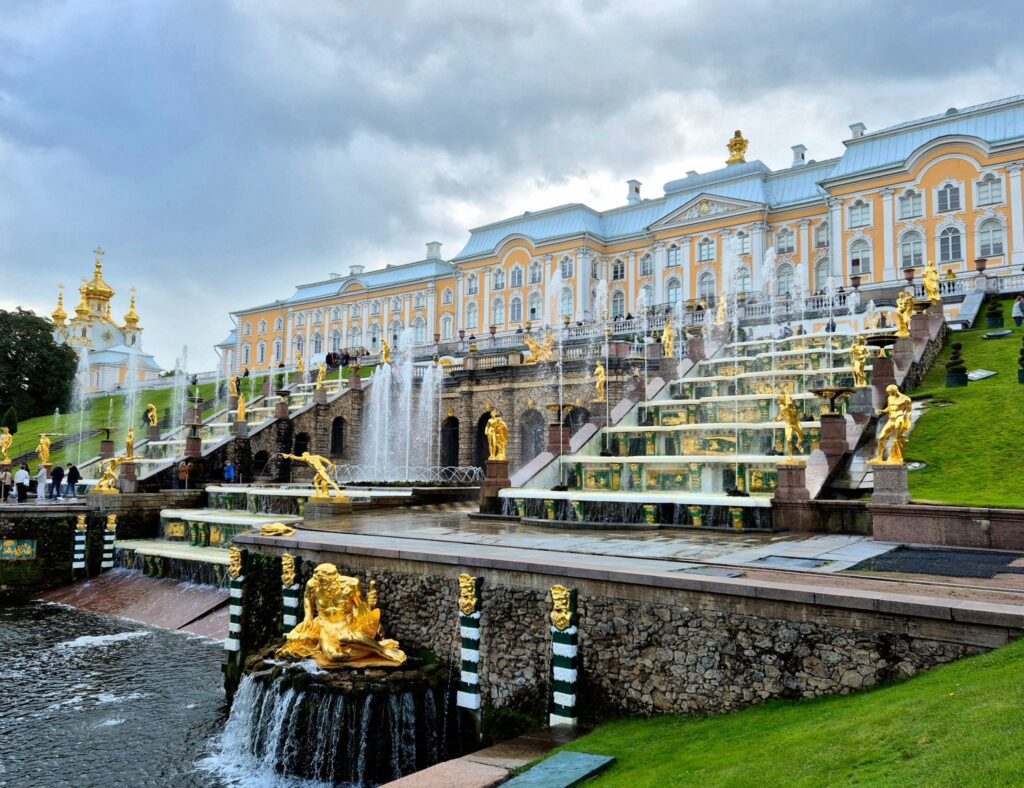
You’ll discover this heritage as soon as you arrive in the country as a tourist, because half of the itineraries lead to it.
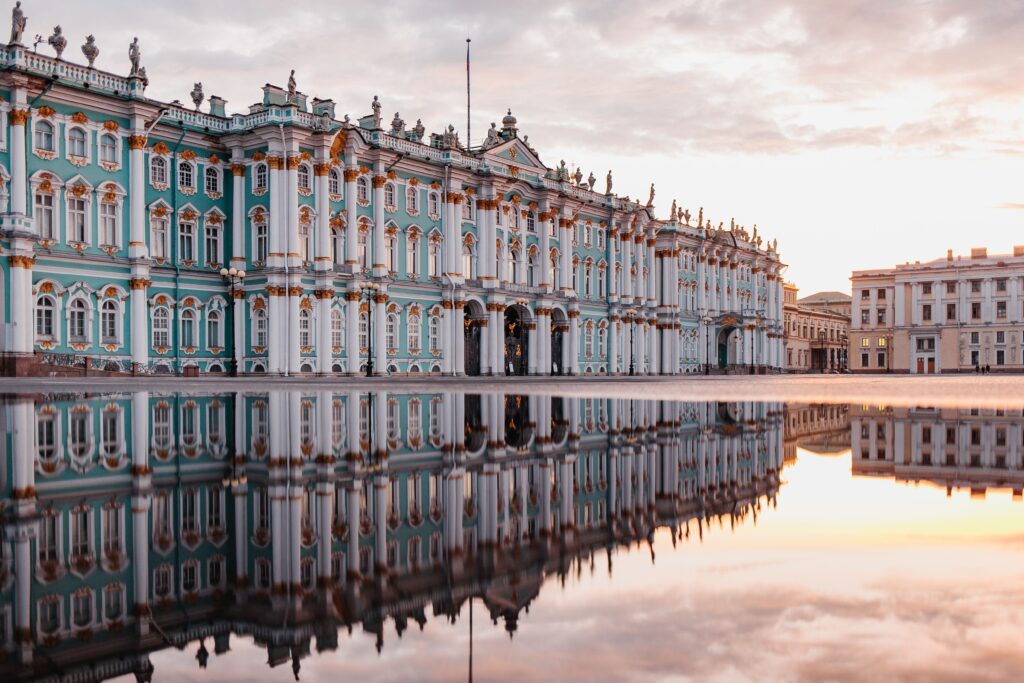
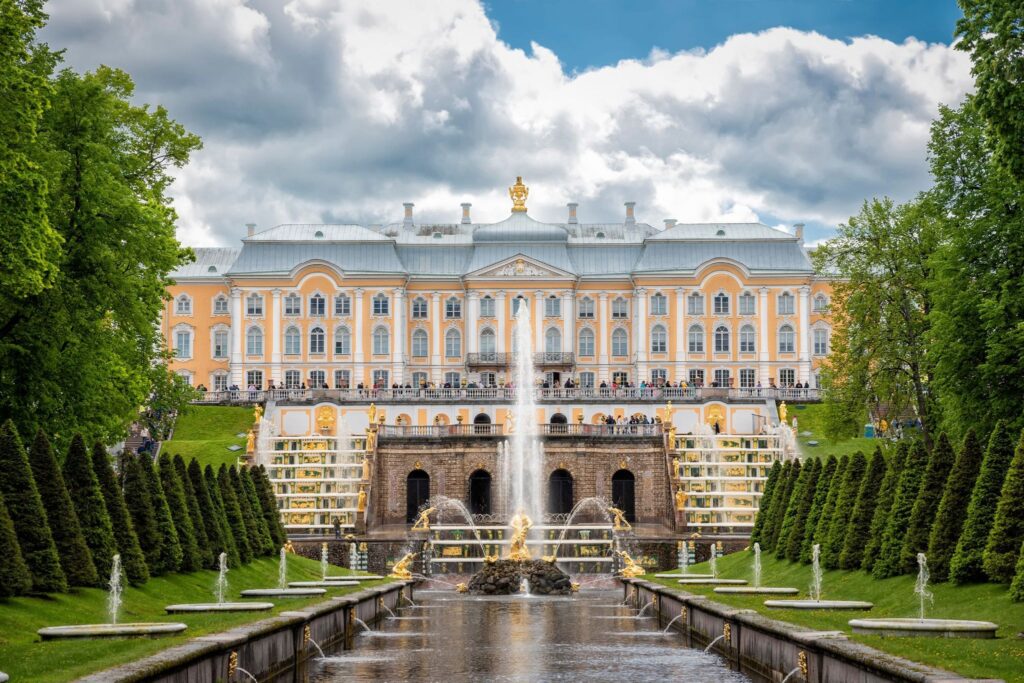
The Hermitage, including the Winter Palace; the fountains of Peterhof; the Catherine Palace in Tsarskoye Selo; Pavlovsk; and Livadia in Crimea were all built and furnished with funds from this family. The Fabergé jewelry house became famous for its Easter eggs—fifty of which were commissioned by the court—and Russian jewelry tradition has yet to give the world anything more recognizable. St. Petersburg as a whole—from its layout to the color of its facades—was conceived by them and brought to fruition by their descendants.
Some items are not on display at all. The railroad, built under Alexander III and his son to stretch from the Baltic Sea to the Pacific Ocean, remains unmatched in length to this day. The Hermitage collection grew out of Catherine the Great’s purchase in Berlin. The Public Library, the Academy of Arts, the Russian Museum, and both conservatories were established by imperial decree and remain in operation to this day.
And then there’s the subject itself, which has captivated people for a hundred years now. More films have been made about this family than about any other Russian family; its diaries and letters have been published and translated, thousands of people gather in Yekaterinburg every year around the July anniversary, and in English-language search results, the term “Romanov family” ranks among the top results year-round, on par with “Russian royal family.” The centennial of the execution in 2018 was discussed both in Russia and abroad, and the debate over what the monarchy meant for the country flared up anew.
The family is still alive and well. Descendants of the family’s collateral branches live in Europe and America, and there are disputes among them regarding seniority and who has the right to be considered the head of the family—though few outside the circle of those directly involved are concerned about these disputes. In 2000, the church canonized those who were executed as martyrs.
How to Talk to Your Child About This
Let's go back to the question that started it all, because after the cartoon, that's the first one that comes up, followed by the second, much more difficult one.
There’s no point in hiding the answer. Children learn early on that terrible things have happened throughout history, and July 17, 1918, can be explained in the same terms used to explain war. Adults died, and children died; the children were in no way to blame, and this was acknowledged eighty years later, when they were finally given a proper burial.
What helps is that this family left behind more than just the dates of their deaths. There are palaces you can visit, letters you can read, and photographs showing the four girls in white standing next to their younger brother. Nikolai and Alexandra’s diaries have been published, as have their daughters’ letters, and they read like ordinary family correspondence—which has a stronger impact on a teenager than any list of rulers ever could. Talking about them in Russian also helps you get a feel for the language. a whole layer of words, from the throne and abdication to the mausoleum—terms you won't come across in everyday speech.
At Palme School, children ages four to seventeen study Russian online with teachers, and topics like these are explored through conversation—in a relaxed manner and without oversimplification. You can learn more about the school at two free lessons, an introductory meeting with a methodologist who will assess the child's level, and a trial lesson in a small group with a teacher.
A photo taken five years before the end

Find a photograph from 1913, taken to mark the house’s 300th anniversary. There are seven people in the photo: a father, a mother, four daughters in white, and a boy in a sailor suit. Everyone is looking at the camera, and nothing in the frame foreshadows what will happen five years later.
The history of this surname is rarely neutral. Some see in it the golden age of Russian culture, others recall serfdom and the ninth of January, and both sides are half right. One can argue endlessly, but the July night of 1918 causes no disputes for anyone, and this is the only point where everyone converges.
The children in that photograph did not rule the country, did not sign decrees, and were not responsible for any of them. They were simply standing next to their father and mother, just as children do in any family photo. That is why the question about the princess who escaped is asked again and again, even though the answer has long been known and offers no comfort.
The Romanovs were a Russian imperial dynasty that ruled Russia from 1613 to 1917.
Three hundred and four years in power, from 1613 to 1917. The name of the house brought to the throne was Mikhail Fyodorovich, a sixteen-year-old boy, who was voted for by the Zemsky Sobor assembled after the Time of Troubles. Nicholas II was the last to abdicate. Representatives of the dynasty were called Tsars until 1721, and Emperors after that, with Peter the Great changing the title.
The last emperor's family included his wife, his mother, and his son.
There are seven people in total: parents and children. There is a father, a mother, four daughters, and a son. The mother, born Alice, came to Russia from a small German duchy, and her grandmother was Queen Victoria of England. Four daughters were born, from 1895 to 1901, and the son arrived in 1904. The rest of the family's life revolved around his hereditary illness. Four adults from their retinue and staff who were allowed to leave but chose not to, including their personal physician Yevgeny Botkin, perished along with them.
Is it true that Anastasia survived?
No. The legend held for almost a century because two children were missing from the first grave found. The most famous of the impostors was Anna Anderson, whose story was retold in films and cartoons, but genetic analysis showed that she had no relation to the dynasty. The remains of Alexei and one of his sisters were found in 2007 near the main burial site, and genetics confirmed the deaths of all the children.
The remains of the imperial family were found and buried in 1998.
The grave near Sverdlovsk was found by Alexander Avdonin and Geliy Ryabov in 1979, but it was impossible to speak about it openly at the time. Excavations were only permitted in 1991, and then several years were spent on genetics; samples for which were taken from relatives in Europe. The remains were interred in the burial vault of the Peter and Paul Cathedral in July 1998, and canonization took place in 2000.
Why did Rasputin have such influence over the Empress?
Alexei, the heir, suffered from hemophilia, a condition where any bruise threatened severe bleeding, and early 20th-century medicine offered no remedy. After Rasputin began attending the boy, he would feel better. His mother believed in Rasputin without any doubt. This influence came at a great cost to the monarchy's reputation, as rumors of a peasant at court undermined trust in the government more than any propaganda.
Are there any Romanov descendants today?
The direct line of the last emperor was broken in 1918, but descendants of collateral branches of the house live in Europe and America. Disputes are ongoing between them regarding seniority and who has the right to be considered the head of the house. These disputes have no legal significance. What remains of the dynasty in Russia are palaces, museums, and collections, which today form the basis of tourist routes in St. Petersburg and its suburbs.