

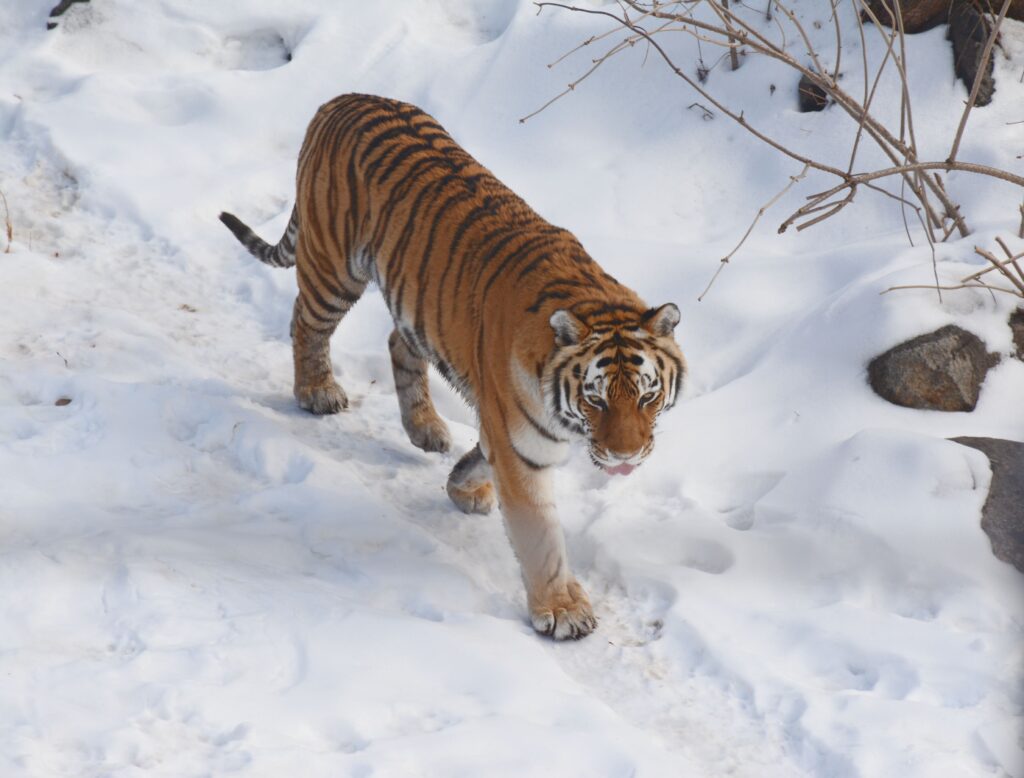

The moment you say the word "tiger," the imagination conjures up a stuffy tropical forest, vines, heat, and a striped predator stalking through tall grass. Meanwhile, the largest tiger on the planet lives where snow covers the ground half the year, where frosts crackle at thirty degrees below zero, and the taiga stands adorned in white. It's called the Siberian tiger, although it doesn't actually live in Siberia itself. Instead, it reigns supreme in the Far Eastern forests of Russia, right on the border with China. This is truly a creature that entirely defies common perceptions.
Those who first learn about it or search online for "Amur tiger," "Siberian tiger," or simply "Russian tigers" are usually struck by two things at once. First, that tigers can coexist with the Russian winter at all, and second, how huge they are. For a family raising a child far from Russia, the Amur tiger becomes a wonderful reason to tell their son or daughter about the mighty and rare beast of their homeland, and for someone learning Russian, the striped master of the taiga opens up a whole unknown world of Far Eastern nature. Read on to learn what makes this tiger so grand, where it actually lives, how its solitary life is structured, how it was saved from complete extinction, and where you can see one.
Striped giant in the snow
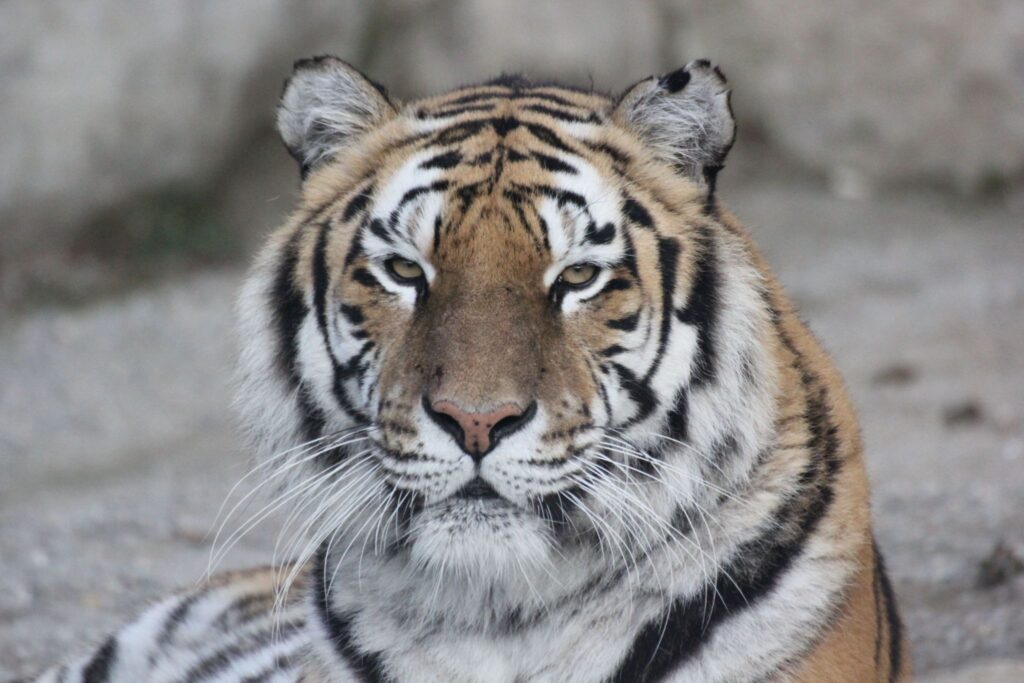
The first thing that strikes you about the Amur tiger is its size. It is rightfully considered the largest cat in the world, and only its southern Bengal relative can dispute this primacy. Large males grow to nearly three meters in length, including their tail, and weigh on average around two hundred kilograms, with the most powerful reaching up to three hundred. Next to such a giant, a common house cat seems like a toy, although in habits and stature, if you look closely, they are ridiculously similar. To imagine this animal, it's enough to say that in length it is larger than any adult human, and in weight, it does not yield to a good bear, while retaining all the feline flexibility and stealthy softness of movement.
The tiger is adapted to harsh northern life down to its last hair. Its coat is noticeably thicker, longer, and lighter than that of its tropical relatives, and by winter it becomes truly luxurious, with a lush fur collar around its neck. A considerable layer of fat accumulates under the skin, protecting it from the cold, and its wide paws with furry pads act like snowshoes, allowing it to walk on deep snow without sinking. The Amur tiger's coloration is distinctive, a bit paler with less rust than its brethren, and with fewer dark stripes on its sides, making it almost disappear without a trace in the snowy forest during winter. And among all big cats, none wears such a warm coat as this northern giant.
Not Siberian and not in Siberia
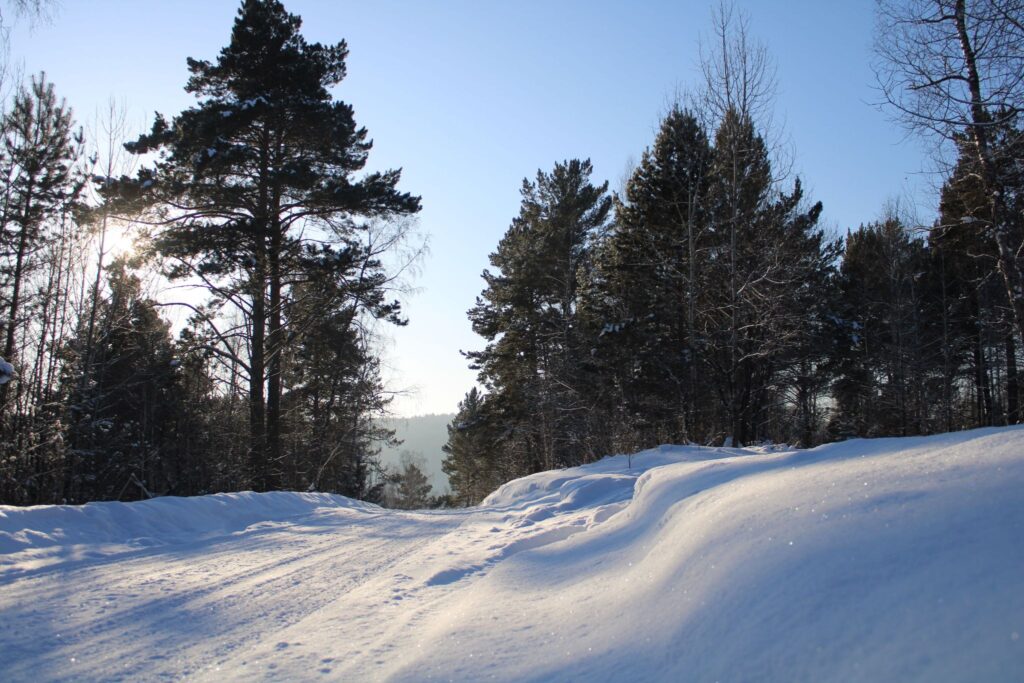
There's been considerable confusion with this tiger's name. In English, it's most often called the Siberian tiger, although it hasn't lived in Siberia for a very long time. Its true home lies much further east, at the very edge of the country, in Primorsky Krai and southern Khabarovsk Krai, in the Amur River basin, from which its common Russian name, Amur, originated. It's also called the Ussuri tiger, after the Ussuri River, so the animal has a whole scattering of nicknames, and almost every one of them carries the memory of some Far Eastern river or land.
The heart of the tiger's territory lies hidden in the Sikhote-Alin Mountains, which stretch along the coast of the Sea of Japan. These places are amazing; here, taiga firs and spruces coexist with almost southern vines and oaks, and the entire forest kingdom is ruled by the mighty cedar, whose nuts feed countless animals. It is in these secluded and deserted tracts that almost the entire tiger population remains today, while in neighboring China there are only a few dozen, and elsewhere on the planet, the striped master cannot be found at all. It turns out that the wild Amur tiger remains almost exclusively a Russian treasure, and there are simply no other places on Earth where it roams freely through the forest.
The Amur tiger lives in the Russian Far East.
Schematic map. Almost the entire wild Amur tiger population is concentrated in the south of the Russian Far East, along the Sikhote-Alin mountains near the Sea of Japan.
The lonely master of the taiga
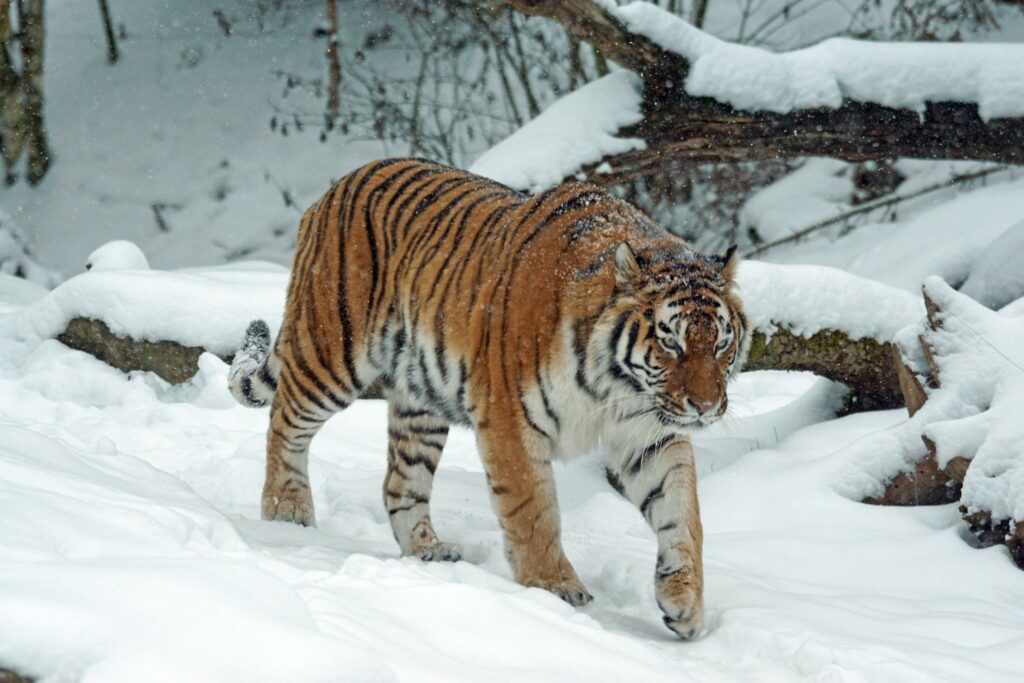
A tiger lives in solitude, by itself, and shuns the company of its own kind. Each adult animal holds its own hunting territory and jealously guards it, marking the boundaries and patrolling them. These territories are vast, as there isn't much game in the cold forests, and a single tiger needs hundreds of square kilometers to feed itself, and a mighty male even over a thousand. Over such expanses, tigers rarely encounter each other, and only during the brief mating season does loneliness momentarily retreat.
The only thing that truly breaks this solitude is caring for offspring. The tigress raises the cubs, usually two or three, alone, without any help from the father. For the first few weeks, the tiny, blind cubs are completely helpless, but they grow quickly, and once they are older, they follow their mother closely, learning the difficult art of hunting from her. The cubs spend about two years, or even more, by her side until they learn everything and set off to find their own territory in the taiga.
Everything in a tiger's life is devoted to hunting and sustenance. Its diet is based on large ungulates, the izubr deer, wild boar, sika deer, and roe deer, and on occasion, it won't shy away from smaller prey, even a badger or fish. It sometimes even manages to overcome bear. He is a formidable eater; in one sitting, the mighty beast is capable of consuming tens of kilograms of meat and then resting for several days. The tiger hunts from ambush, stealthily stalking its prey despite its immense size, and settling the matter with one short, powerful lunge. He rarely attacks humans and tries to avoid encounters, so the fearsome reputation of a man-eater is unjustly attached to him.
It is not surprising that the indigenous peoples of the Far East, the Udege and Nanai, have from time immemorial revered the tiger as the master of the taiga and respectfully called him Amba. To utter his name in vain was considered dangerous, and to kill him was a great sin. The beast also has another mysterious sign, as the dark pattern on the tiger's forehead resembles the character used in Chinese writing to denote a king, and therefore in Eastern legends, the tiger has long been considered the king of beasts.
From thirty tigers to seven hundred
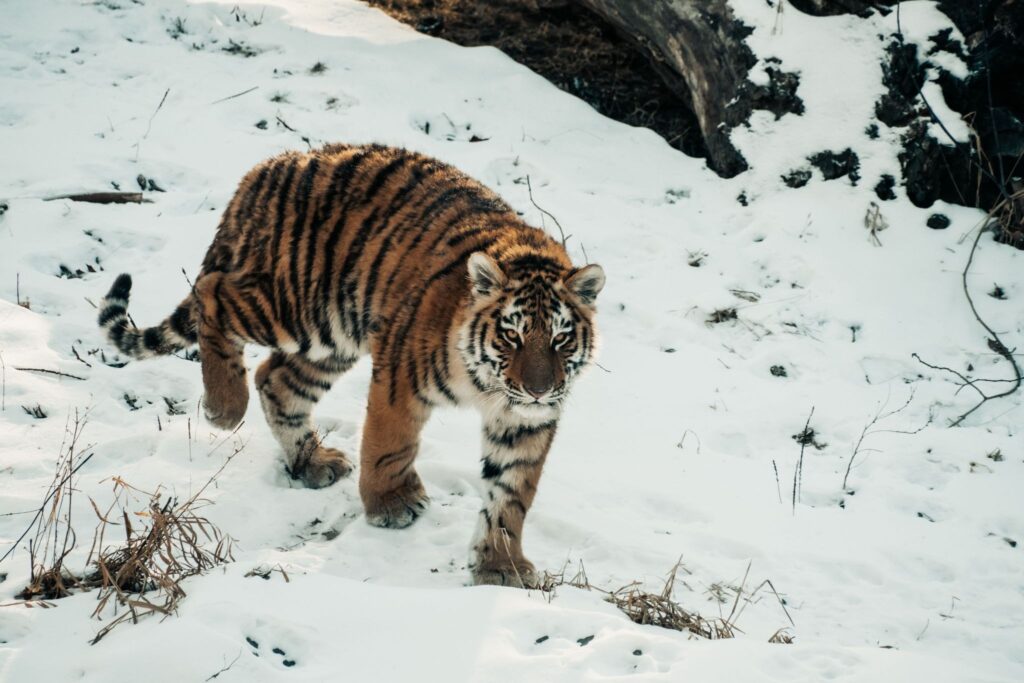
The story of the Amur tiger could have ended very recently and very sadly. Just a century ago, it was ruthlessly exterminated for its fur and beauty, its forests were cut down and burned, and the game it depended on was depleted. By the 1940s, only about thirty of these giants remained in the entire country. The animal stood on the very brink of complete extinction, and it seemed its fate was sealed.
And then something important happened. In 1947, the Soviet Union was the first in the world to place tigers under full protection, outright banning all hunting of them. Later, the striped giant was included in the Red Book, reserves were created to save it, and an irreconcilable fight was waged against poachers. Little by little, things improved, and tigers began to return. However, there was a second crisis in the nineties when, with the collapse of the country, poaching flared up with renewed vigor and killed up to a hundred animals in just a couple of years, almost nullifying all previous efforts. Tigers were saved only by new reserves, strict laws, and the persistent work of environmentalists, which was joined by scientists from all over the world. Today, there are already over seven hundred of them, and according to recent counts, as many as seven hundred and fifty, including cubs, and the return of the Amur tiger is rightly called one of the most resounding successes in saving wildlife. It is not yet time to relax, as poachers still stalk the animal today for its skin and bones, which traditional healers in China attribute healing powers to. Therefore, the protection of the striped master cannot loosen its grip for a single day.
Where tigers are protected and where to see them
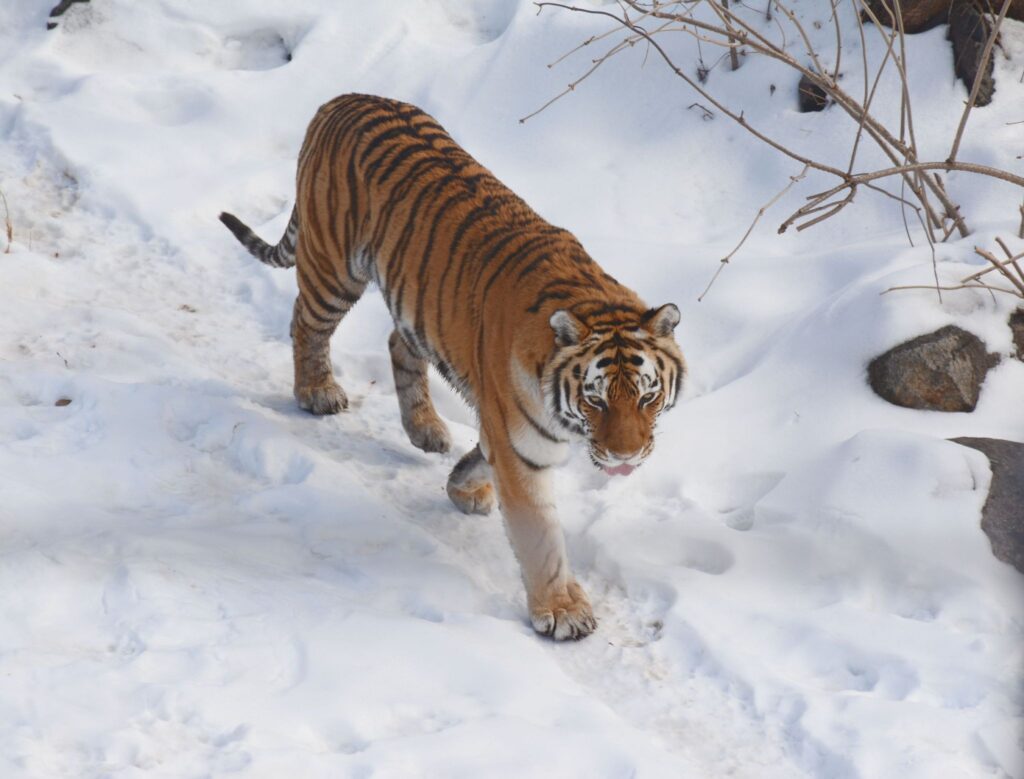
The Sikhote-Alin Nature Reserve, one of the largest in the Far East, has become the heart of tiger protection. For decades, it has been a place where the striped predator is studied and safeguarded. Other nature reserves and national parks have joined this effort, including the Lazovsky Nature Reserve and the park with the beautiful name "Land of the Leopard," located right on the border with China. Here, they simultaneously save the tiger's rarest neighbor, the Amur leopard. Together, these protected areas preserve the wild Amur tiger for the world.
Seeing a tiger in the wild is almost impossible, as they are secretive and cautious animals. Even experienced scientists sometimes only capture them with camera traps for years. For those who want to see the striped giant in person, the place to go is the Primorsky Safari Park near Vladivostok, where tigers live in spacious forest enclosures, almost as if in the wild. However, in the autumn, on the last Sunday of September, all of Vladivostok takes to the streets for Tiger Day. Residents dress in stripes, draw on whiskers, hold a procession in honor of their wild neighbor, and at the same time remind each other how fragile its well-being is. This celebration began at the turn of the century, in the year 2000, and since then, it has gathered thousands of participants year after year, from children to the elderly.
The tiger as a reason to tell a child about Russia

For a family raising a child in a foreign land, the story of the Amur tiger offers a rare opportunity for a wholesome and engaging conversation. Behind this one mighty beast lies an entire world: the wild forests of the Far East, the story of how humans almost destroyed, yet ultimately saved, this amazing animal, and quiet pride in the homeland that managed to preserve this wonder. Telling.
This is how Russian is taught, through lively and engaging activities, Palme School, where children from Russian-speaking families aged four to seventeen are introduced to the language not through dry rules, but through what truly engages a child. You can get acquainted with the school through two free trial lessons. First, an introduction and assessment with a methodologist, which will show what the child is already good at and where they need help. Then, a trial lesson in a live group, along with other children. Without any obligations, just to see if this format suits you or not.
The Amur tiger is the largest of all tiger subspecies, found in the Russian Far East and northeast China. It is an endangered species, with a small and fragmented population. The tiger primarily preys on deer and wild boar, and plays a crucial role in maintaining the health of its ecosystem. Conservation efforts are underway to protect this magnificent animal.
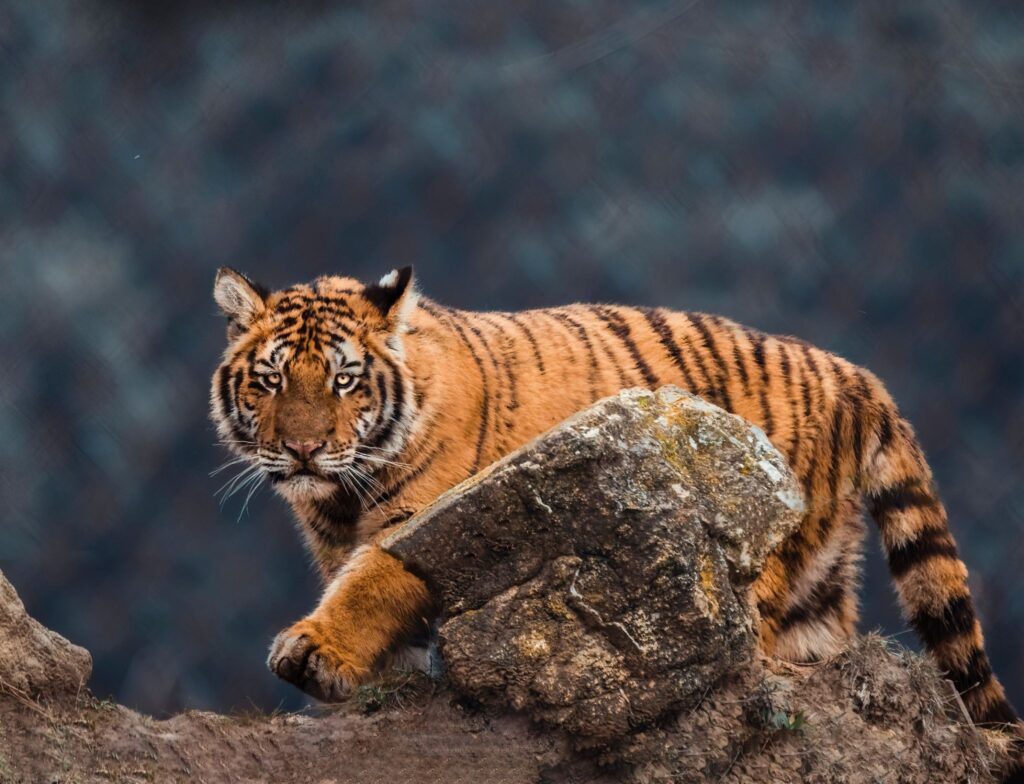
The Amur tiger is the largest cat in the world, adapted to life not in the tropics, but in the snowy forests of the Russian Far East, which is why its English name, Siberian, is misleading, as it does not live in Siberia. It is a mighty loner that maintains a huge hunting territory, feeds on sika deer and wild boar, almost never attacks humans, and has long been revered by indigenous peoples as Amba, the master of the taiga. Not long ago, the tiger stood on the brink of extinction, but the Soviet Union was the first in the world to protect it, and its population grew from a few dozen animals to over seven hundred. For a child growing up far from Russia, hearing about this striped giant becomes not only an exciting adventure but also a vivid introduction to the wild beauty of their homeland.
The Amur tiger is called the largest cat in the world because it has the greatest body mass and length among all feline species.
No other cat, wild or domestic, grows to such a size or matches it in power. Males can reach up to three meters in length, including their tail, and weigh around two hundred kilograms, with the largest reaching up to three hundred kilograms. Only the Bengal tiger comes close in size, while lions and leopards are noticeably smaller.
Where does the Amur tiger live?
Almost all wild Amur tigers live in the Russian Far East, in the mountainous taiga forests near the Sea of Japan, and a few dozen more live abroad, in China. Nowhere else in the world does this animal remain in the wild. And it was mistakenly nicknamed Siberian, because it does not live in Siberia itself, while the Russian name Amur indicates the correct location, the Far Eastern Amur River.
What does the Amur tiger eat?
His diet consists of large ungulates such as the red deer, wild boar, sika deer, and roe deer. If the opportunity arises, tigers also catch smaller prey like badgers or fish, and sometimes even take down a bear. They eat a lot, consuming tens of kilograms of meat at one sitting, and then rest for several days. Because there is little game in the cold forests, a single tiger requires a vast hunting territory.
How many Amur tigers are left?
By the 1940s, only about thirty of these giants remained, and the species was on the brink of extinction. It was saved by a hunting ban, a network of reserves, and a persistent fight against poachers. Now, there are over seven hundred tigers again, including cubs. This recovery is considered one of the most famous conservation successes, although the threat of poaching has not disappeared to this day.
Is the Amur tiger dangerous to humans?
The Amur tiger rarely attacks humans and usually tries to avoid encounters. Its fearsome reputation as a man-eater is undeserved, as humans are not part of its usual prey. The indigenous peoples of the Far East have revered the tiger for centuries as the master of the taiga, respectfully calling it Amba. Only sick, wounded, or cornered animals are dangerous, as with any large predator.
Where can you see a Siberian tiger?
It's almost impossible to see a tiger in the wild; they are very reclusive, and even scientists primarily track them via camera traps. The best place to see these magnificent creatures up close is at the Primorye Safari Park near Vladivostok, where tigers live in spacious forest enclosures. And every autumn, on the last Sunday of September, Vladivostok celebrates Tiger Day, a grand city festival in honor of its striped symbol.