


Suppose mom asks the child to help. «Should we make some compote?» A minute later, he stands at the table with a juicer and half an orange in his hand, ready to get to work.
There’s no laughing matter here; his logic is ironclad. He’s seen fruit and sweet drinks in a cup hundreds of times, at school for lunch, with friends, in a can with a straw. All of this was called juice. And he’d already made the juice himself, squeezing half an orange and collecting the juice that flowed out. He knows the word «compote,» but for him it’s still just a domestic name for the same drink.
He was wrong not in the language; he was wrong in the kitchen.
The hint is hidden in the verb.
Mom said «we’re cooking». That’s the whole difference; only the child missed it.
The juice is squeezed. The compote is boiled. And if you put «boiling» next to other words that the child associates with it, the picture immediately changes. They boil soup. They boil porridge, pasta, eggs. All of this is done in a pot on the stove, and no one drinks it from a can with a tube attached to it.
It turns out that in Russian cuisine, compote is placed in the same category as soup. Orange juice does not belong in this category. This is clearly seen in the old order of the meal, where compote is served after the soup and the second course. It came from the same pot, only sweeter.
For a child who is used to calling any fruit drink juice, this is a small discovery. The name depends on what the fruit is made into. Squeezed, meaning juice; boiled, meaning compote.
What will happen in a glass
Choose the fruit and how to prepare it—with a juicer or in a pot. The glass will fill itself, and underneath it will appear a message saying what you have done with the fruit.
Fruit
What we are preparing
What happens in the pot
Since the juicer is already on the table, you can keep it there and make both drinks. That way, the child will have a difference in their hands, not just in their words.
He will squeeze the orange himself. It’s quick, the juice comes out immediately, thick and cloudy, with pulp.
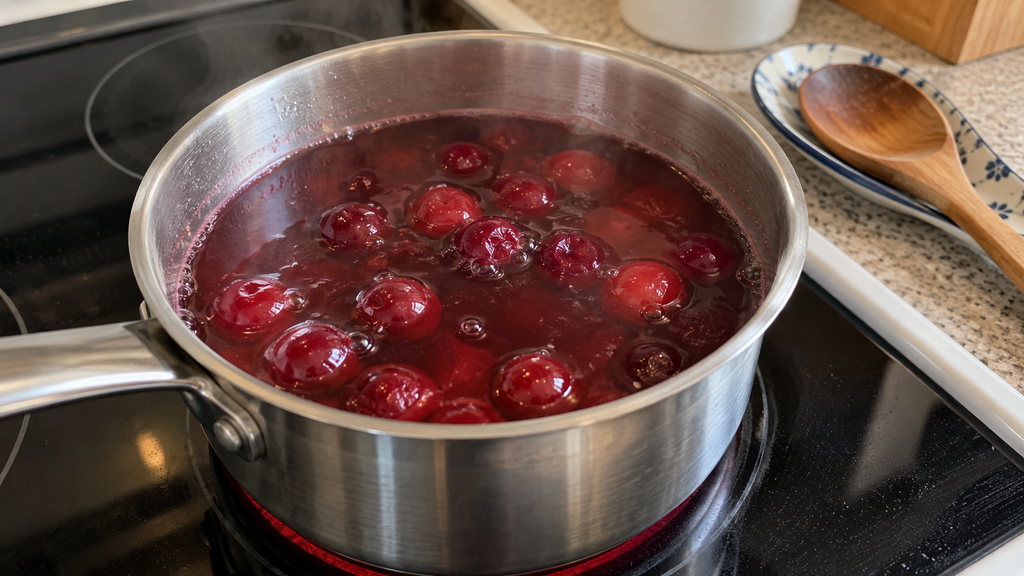
With compote it takes longer. The cherry or sliced apple is placed in a pot of cold water, set on fire, and left to simmer for a few more minutes. Whether sugar is added or not is a matter of personal preference. While cooking, the cherry colorizes the water, and the child is interested in watching it. Then the pot is removed from the heat and left to cool to a temperature at which the drink is easy to taste. This is the longest part; summer compote made with cherry juice is usually not drunk hot.
If the compote is not strained, the berries remain at the bottom. They are then scooped out with a spoon, and that is also part of the pleasure.
Two glasses in one kitchen
Make both drinks—juice and compote—with the child, and place the glasses next to each other. Below is what you need for each.
Juice
They squeezeHalf an orange and a juicer. The child squeezes the orange and collects the juice that flows out.
The juice comes out immediately, cloudy and with pulp.
Compote
boilFor 3 liters of water, use 3 or 4 sour-sweet apples, 200 g of currants and 150 g of sugar. You can use less sugar or not add it at all.
In this recipe, the water is first brought to a boil, sugar is dissolved, and apple slices are added. After 5 minutes, the apricots are added and the mixture is cooked for another 5 to 7 minutes over low heat.
Remove the pot from the heat, cover with a lid and let it steep for at least 30 minutes.
Fresh berries, such as raspberries or blueberries, are boiled for 3 to 5 minutes after boiling; for cherry fruit, it takes 5 to 7 minutes. Dried fruits take longer, from 20 to 30 minutes.
When both cups are ready, offer the child to finish two sentences.
«The juice we...»
«Compot we...»
If he still only shows with his hands or answers with a single word, negotiate for him.
Recipe for compote according to the material «7 recipes for compote» by Halva Media (media.halvacard.ru).
Two glasses next to each other
When both drinks are ready, you can place them next to each other and try them out in turn.
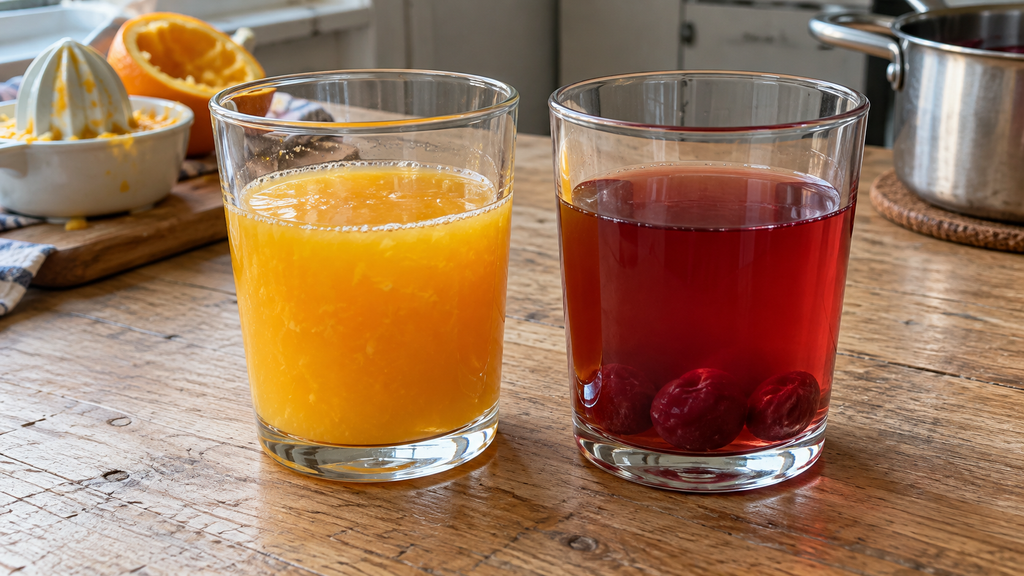
It’s better to ask what they’re different from, rather than telling them which one tastes better. The child will most likely find the words themselves. The juice is thick, the compote is liquid. The juice is more acidic, the compote sweeter, or vice versa, depending on how much sugar has been added. The juice has fibers floating in it, the compote has whole berries lying in it. If there’s not enough of a certain word, an adult can suggest it, but the first word should be a child’s word.
And then you can ask the question that all this was for. Which of these two glasses looks more like the juice that they serve at school? The child’s answer will be their own definition of the difference, without any dictionary.
If they ask at school
One day the child will tell the class that he drank compote at home. The word "kompot" in English is not understood by everyone, and he has to explain it in his own words. He now has the simplest explanation: he saw it himself.
«We make it by cooking fruit in water.
It is worth warning him about one trap. In English there is a word called compote, and the Merriam-Webster dictionary explains it as a dessert made from fruit cooked in syrup. It is eaten with a spoon. So if a child says compote, they might be understood as sweet dessert, and then you have to add that it is drunk.
The juicer can be removed
Compote is not made in every home. Some people make it all summer long, while others have only heard about it from their grandmother. But if you ever made compote together with your child in your home, the confusion with the juicer will most likely be less.
Oranges for juice, cherries for a pot of stew. Next time when Mom says, «Let’s make compote,» you can ask.
«What are we going to get, a pot or a juicer?»
The answer will make it clearer whether the child remembered the difference.
Frequently asked questions about compote and juice
How is compote different from juice?
The juice is squeezed from the fruits, and the compote is cooked. The fruits or berries are placed in a pot of water, boiled for a few minutes and allowed to cool. Sugar is added to taste or is omitted.
How do you say «jam» in English?
You can say kompot and explain it in your own words, for example, «We make it by cooking fruit in water». One of the possible explanations is a stewed fruit drink, a drink made from cooked fruit.
What does the English word "compote" mean?
The Merriam-Webster dictionary defines compote as a dessert made from fruit cooked in syrup. It is eaten with a spoon. The second meaning is a small bowl on a stand that serves fruit and sweets.
Do you drink compote cold or hot?
Summer compote made from fresh berries is usually drunk cold. Compote made from dried fruits is often drunk warm.
How long should you boil the compote?
Fresh berries are boiled for 3 to 7 minutes after boiling; dried fruits for longer, from 20 to 30 minutes. Then the compote is allowed to cool and steep.
Why do they serve compote on the third course?
In a traditional Russian meal, first there is soup, then a second course, and then a drink, such as compote. It is prepared in a pot, just like the soup.
Other Russian drinks and dishes are collected in articles. about traditional Russian dishes and About food and products in Russian.