

On the Nobel Prize website, each laureate has a short card. For physicist Alexander Prokhorov, it has two lines that argue with each other.
Born on July 11, 1916 in Atherton, Australia. Place of employment at the time of the award: Lebedev Physical Institute, Moscow.
In 1964, Prokhorov shared the prize for his work that led to the creation of the maser and the laser with Nikolai Basov and the American Charles Townes. In Russia, he is considered a true genius without any reservations. In Australia, the local press called him the country’s forgotten Nobel laureate, and a commemorative plaque was unveiled in Atherton in 1987. Prokhorov’s parents fled Czarist Russia due to persecution and returned with their son in 1923, after the revolution had already taken place.
There are dozens of results for the query "Russian Nobel Prize Winners" online, and the number of names in them is noticeably different. There may not even be any errors there. Just each compiler chose their own biographical line.
The best way to check this is to go to Prohorov himself.
According to the first line, he is an Australian.
We are counting by place of birth, and Prokhorov is left off the Russian list. Atherton was neither part of the Russian Empire nor the USSR.
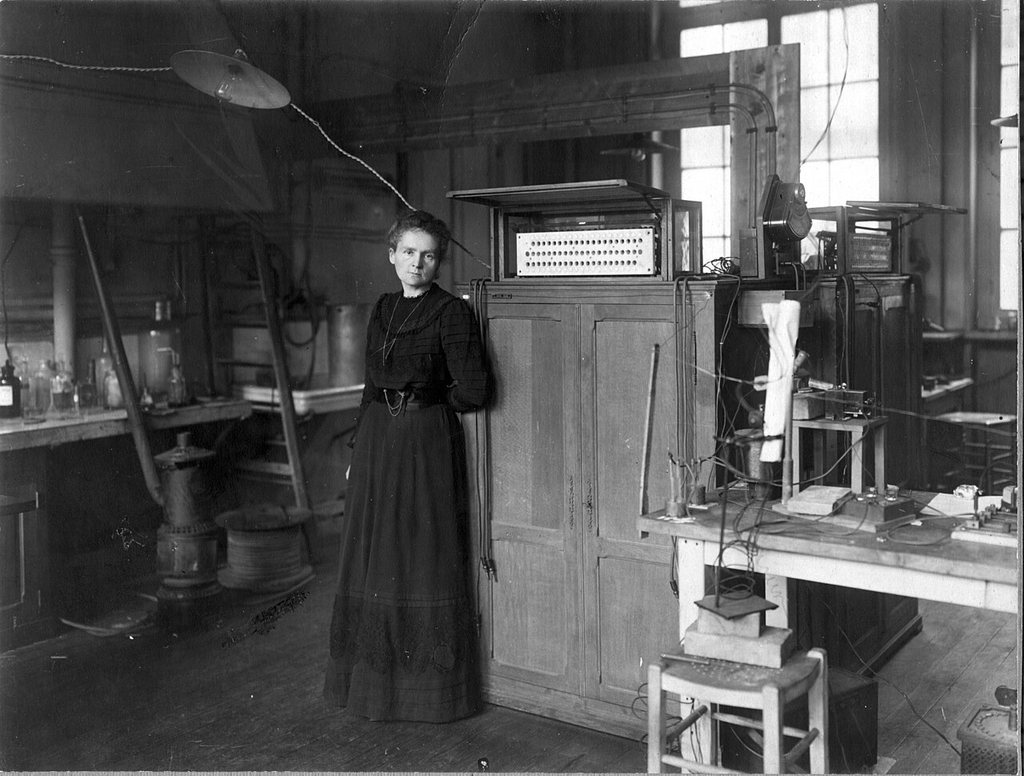
However, under the same rule, Maria Skłodowska-Curie also makes the list; by a year earlier, Ivan Pavlov with his 1904 prize. Her record includes Warsaw, the Russian Empire, now Poland; she received the prize in 1903. No one in Russia takes her seriously, but the rule is the same for everyone.
With economist Simon Kuznetsov, the same story. Pinsk, where he was born, then belonged to the Russian Empire, but is now in Belarus. Kuznetsov began his studies in Kharkiv, moved to America with his father in 1922, and his scientific career continued there. It was he who first systematically calculated the national income of the United States, so that in one of his biographies the empire, present-day Belarus, Ukraine, and America converge.
Sometimes the first line conflicts with the archive. Vasily Leontyev’s record still states that he was born in 1906 in St. Petersburg, but a later found birth certificate shows Munich and 1905.
If we forget the old borders and look at the current ones, the list is replenished in a completely unexpected way. The German chemist Otto Wallach was born in Königsberg, the present Kaliningrad. The Finn Martti Ahtisaari, the future president of Finland, was born in Viipuri, the present Vyborg. The rest of such cases are listed in the table below.
Moscow and the Argonne Laboratory
The second line of the card, the place of work at the time of the award, brings Prokhorov home. The Lebedev Physical Institute in Moscow has nothing to argue about.
Only this very rule is being taken away from someone. The work for which Alexey Abrikosov became one of the three laureates in physics in 2003 was done in Moscow in the 1950s. And in his resume, the place of work is the Argonne Laboratory in the USA. The card does not specify which country is to be credited with such a prize.
The flag that was not found
It is also possible to check it on the passport. This rule does not pose any threat to Prokhorov; he had Soviet citizenship.
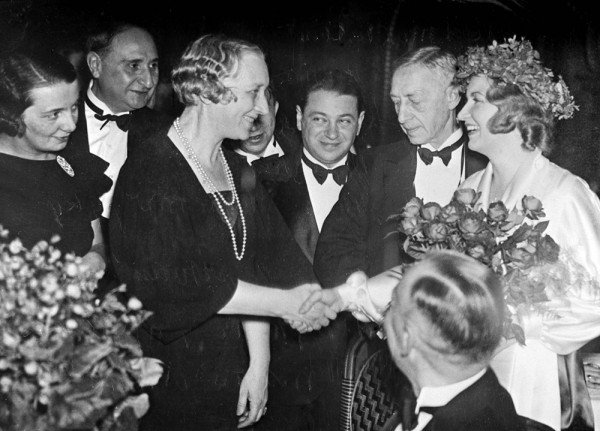
When they were preparing to present the prize to Ivan Bunin in Stockholm, the question arose of what flag to fly in his honor. The Soviet flag was not suitable, the old Russian flag in the city was not found, and in the end they ended up using Swedish flags. Bunin lived in France as an immigrant without citizenship. In his Nobel Prize speech he himself said that he had received the prize for the first time as an exile.
In this line, the first Russian laureate in literature comes out as a loser. For Brodsky, the 1987 prize came with an American passport obtained ten years earlier; he continued to write in Russian. Alexeyevich lived with Belarusian citizenship in 2015, and her books are also written in Russian. We have discussed the writers who are most often called Russian Nobel laureates, from Bunin to Brodsky. in a separate article about the winners in literature.
Two telegrams from Peredelkino
For Pasteur, the question is different. Is it even possible to stop being a laureate if you refuse the prize?
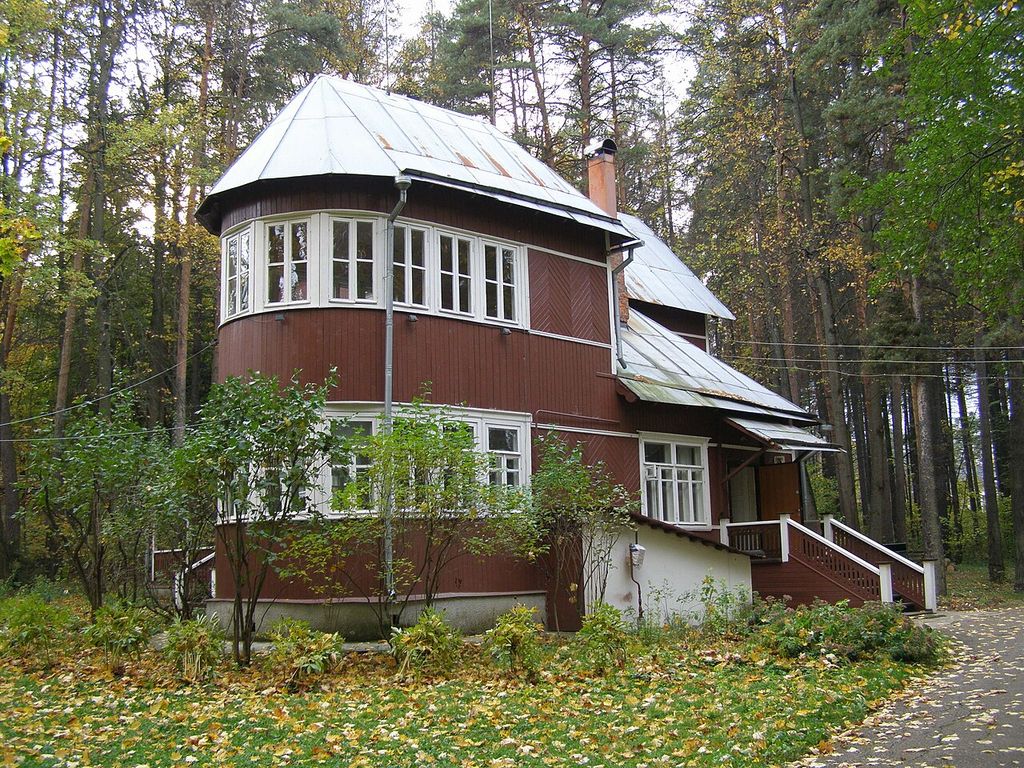
On October 23, 1958, Boris Pasternak was informed of the award, and he responded with a grateful telegram to Stockholm. Then began the harassment, and on October 29 the second telegram came, with a refusal. The Swedish Academy responded that the refusal in no way cancels the award; it just won’t be presented. His son Yevgeny received the medal in Stockholm in 1989.
It turns out that it is not possible. Pasteur was a laureate regardless of the method of calculation used.
An award that is not included in the will
The Nobel Prize in Economics was not established. It was invented in 1968 by the Bank of Sweden, and officially it is called the Alfred Nobel Prize in Economic Sciences in memory of Alfred Nobel. Its strict committee members do not take it into account, and that is why Leonid Kantorovich, the only Soviet laureate in economics who received the prize in 1975 together with the American Tylling Kupman, has been removed from the list.
Mendeleev would not include any rule in such a list. He never received the prize, although he was nominated for it. And about him and others Russian scientists who changed the world We have a separate story.
How many of them are there really?
As many as possible according to the chosen rule.
The English Wikipedia as of September 2026 lists 28 Russian laureates and directly writes about the rule it considered, and immediately below lists 18 people whom it deliberately did not include. Among them are Curie, Kuznets and Alexievich, as well as the human rights activist Ales Byalyatski, although his place of birth in the Nobel Prize certificate is Karelia, Russia.
In the table below, we have gathered all those who fit at least one of the criteria; for each of them, we have shown the year, the prize, their place of birth and work, and their place of residence or activity in the year of the award. The list is deliberately wide; it includes both Reemont and Milos, whom no one in Russia usually lists. You can choose the criteria yourself, and the table will immediately show how many laureates meet them. This forms my own list of Russian Nobel laureates.
Who can be included in the Russian list according to different rules
In Table 49, there are 100 people and one organization; all of whom meet at least one of the counting rules, including those who were born in places that were then Germany or Finland. Choose the rule, and only those who are considered Russian by that rule will remain. We take the place of birth from the card on the prize website, and for the rule about the current Russia, we compare it with today’s borders.
The winners according to the chosen rule 50
The basis is provided by cards and biographical materials on NobelPrize.org. The historical names of countries and cities are clarified in several lines using additional sources; the word «now» is used where the country is different today. For writers and laureates of the Peace Prize, the place of work is indicated instead of the place where they lived or acted in the year of the prize. The list is relevant for the 2025 awards. The economic prize was established by the Bank of Sweden in 1968 and is not mentioned in Nobel’s will.
A task for two
With a teenager, it’s better to discuss the rules in advance. Russian means: was born here, worked here, or wrote in Russian? Choose one thing and calculate according to the table.
Then change just one condition. Go from the workplace to the birthplace, and Prokhorov will disappear, and Kury will appear. Go back, and Brodsky will disappear. After a couple of such switches, it becomes clear why the complete lists of two conscientious authors diverge by a dozen names and more.
If you want to get to the Nobel Prize-winning authors' books after the table, we have a course. literature for children, We hold online classes for children aged four to seventeen, where the texts are read and discussed in Russian. You can start at any time. two free lessons. In the first method, the student will determine the level and select a group; in the second method, the student will take an ordinary class with a teacher.
Frequently Asked Questions about Russian Nobel Prize Winners
How many Russian Nobel Prize winners are there?
There is no single number because it is calculated according to different rules. If we count all those born within the Russian Empire, even Maria Skłodowska-Curie from Warsaw would be included in the list. If we count by citizenship at the time of the award, there would be another list without Bunin, who lived in France without citizenship, and without Brodsky, who became a citizen of the USA. In our table, there are 49 people and one organization that meet at least one of the selected criteria of connection with Russia, the USSR or the Russian Empire. If we take the places of birth from the award certificates and compare them with the current borders of Russia, we get 31, counting the one established in Moscow, the «Memorial», and by place of work, residence or activity during the award year 20.
Who was the first Russian to receive the Nobel Prize?
Usually the first name is given to physiologist Ivan Pavlov, the 1904 Physiology and Medicine Prize for his work on digestion. However, if we include everyone born within the Russian Empire, Maria Skłodowska-Curie, with her 1903 Prize in Physics, would also be included in the list; although no one in Russia takes her seriously.
How many Russian writers have received the Nobel Prize in Literature?
Most often they are called the five: Ivan Bunin in 1933, Boris Pasternak in 1958, Mikhail Sholokhov in 1965, Alexander Solzhenitsyn in 1970, and Yosif Brodsky in 1987. Sometimes they are added to them Svetlana Alexievich, the laureate of 2015, who writes in Russian, and in the year of the award she was a citizen of Belarus.
Why did Pasteuranski refuse the Nobel Prize?
At first he accepted the prize and sent a grateful telegram to Stockholm. After that, persecution began in the USSR over the novel «Dr. Zhivago,» and six days later Pasternak refused. The Swedish Academy stated that the refusal did not invalidate the award; his son Yevgeny received the medal in 1989.
Who from Russia and the USSR is usually called the winners of the Nobel Peace Prize?
Among the individual laureates are Andrei Sakharov in 1975, Mikhail Gorbachev in 1990, and journalist Dmitry Muratov in 2021. In 2022, the Russian human rights organization Memorial also shared the prize. Sakharov was not extradited from the country, and his wife, Elena Bonner, received the award in Oslo.
Is there a Nobel Prize in mathematics?
No, there is no Nobel Prize in mathematics. One of the most prestigious mathematical awards is the Fields Medal, and one of the most famous stories surrounding it is the Russian one: in 2006, Grigory Perelman, who proved the Poincaré conjecture, refused the medal.