

A child comes home from school somewhere in Toronto, Boston, or Melbourne and asks from the doorway, «Mom, is it true you have bears roaming the streets?» A classmate said that during recess, with a chuckle, and added two words that even elementary schoolers know in the English-speaking world. Russian bear. A scene familiar to almost every family that has left Russia and Russian-speaking countries.
The stereotype is tenacious. And almost always, a parent has two desires at once in this moment. To dismiss it. And still explain where this strange image in the heads of the whole world came from.
It's worth explaining. Because behind the joke about the bear on the sidewalk hides a story almost three centuries long, and it's much more interesting than any anecdote. And at the same time, it's a rare chance to show a child that almost any label, if you dig deeper, turns out to be someone else's fabrication with a long and convoluted biography.
Where did the Russian bear come from
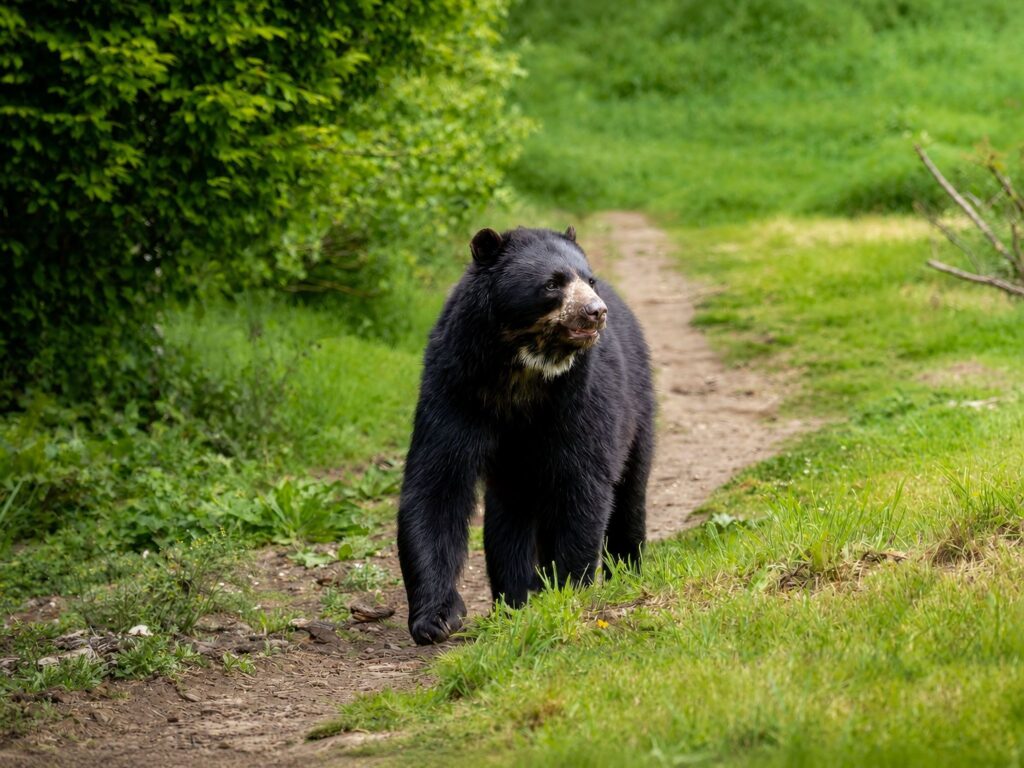
Here's the first surprise, and where it all began. Russia didn't appoint itself the land of bears on its own. The image came from the West. And it didn't come as a compliment.
The roots of this fiction go back to a very specific figure. Sigismund von Herberstein, a diplomat from the Austrian lands, visited Muscovy twice at the dawn of the sixteenth century and described what he saw in «Notes on Muscovite Affairs.» Somewhere there, according to one version, the plot began, which then traveled around the world. It is said that in winter, in the most bitter cold, famished animals left the forest, broke into izbas, and turned everything upside down, while the owners fled directly into the frost. Historian Denis Khrustalev suggests that the visiting guest either misunderstood the narrator or embellished it considerably. But the tale caught on. So tenaciously that even after five centuries, it is still told almost in its original form.
England then picked up the image, and here lies a detail that is usually forgotten. Bears were exterminated in England itself in the early Middle Ages. By Shakespeare's time, the animal was brought from abroad for the popular sport of bear-baiting. This included bringing them from Russia. Thus, the bear and Russia became firmly linked in the English consciousness long before any major politics, simply through trade and fairground entertainment.
By the way, even in their homeland, the animal wasn't treated with kid gloves. Bears were indeed led through Russian streets, but on chains and muzzled, for the amusement of the public. Buffoons trained the clumsy creatures and put on whole shows with them. And in the town of Smorgon, which was then part of the Polish-Lithuanian Commonwealth, there was a real «Bear Academy,» from which trained animals were sold to European circuses. The bear was a source of income, a novelty, a fairground performer. Anything, really, except a national symbol.
And the word itself, by the way, says a lot. According to linguists, «bear» is a metaphor meaning one who knows where honey is. The real ancient name of the animal was once feared by people to utter aloud, so they replaced it with a description so as not to unnecessarily summon the master of the forest. That's a case where fear and respect are hidden right inside a common word.
A bear's political career began in the eighteenth century. According to researchers, the first satirical engravings depicting Russia as clumsy began to appear around the 1730s, although individual early images can be found in the early seventeenth century and on old Dutch maps, where bear silhouettes are scattered across the empty expanses of Muscovy. Philologist Andrey Rossomakhin, who has studied this motif for many years, points out that the bear metaphor is almost three hundred years old.
The beast in those pictures was not known for its kindness. It was depicted wearing a muzzle, chained, and with a heavy collar. Sometimes Napoleon held it on a leash, which signified Russia's submission after the Treaty of Tilsit in 1807. The shackles hinted at lack of freedom and dependence. The bear was strong, but tamed; dangerous, but laughable.
The British satirical magazine Punch, in particular, made a great effort. Russia was depicted issue after issue as the same bear, sometimes ferocious,.
The French went their own way and took to depicting the Russian bear as white, a polar one. Some sheets even likened it to the constellation Ursa Major, as Russia's coordinates on the terrestrial globe conveniently coincided with the constellation's position on the celestial globe. It turned out to be both beautiful and insulting at once, an entire country like a huge beast, spread across half the sky.
How the bear became the «face» of Russia in the eyes of the West
| Era | What happened to the image |
|---|---|
| 16th century | Diplomat Herberstein, in his «Notes on Muscovite Affairs,» retells a story about animals entering. |
| 16th–17th centuries. | England, where bears have long been extinct, imports animals for bear-baiting from abroad, including from Russia. The bear and Russia become associated in the English consciousness. |
| from the 1730s | The first satirical engravings begin to appear, depicting Russia as a club-footed figure: wearing a muzzle, chained, or in a collar. The image takes on political significance. |
| 19th century | The British magazine Punch depicts Russia as a bear issue after issue. The French draw the animal as white and compare it to the Ursa Major constellation. |
| after 1917 | The bear is associated. |
| 21st century | In 2007, a cartoon with a bear took first place at the World Press Cartoon competition. The metaphor is almost three hundred years old. |
After the 1917 revolution and especially between the two World Wars, the bear in the West became firmly associated with the USSR, which was simply identified with all of Russia. During the Cold War, the beast was once again put to use, now as an image of the fearsome and bloodthirsty Union. And in 2007, a caricature depicting the Russian leader as a bear sharpening its claws won first place at the international World Press Cartoon competition. Three hundred years have passed, and the beast is still there, in the same role.
It’s important to understand why this image was so useful in the first place. The bear was used as a marker of a boundary, a convenient line that separated the «civilized» West from a supposedly wild, backward country somewhere in the cold east of the map. In Christian tradition, the beast also had a long-standing bad reputation, associated with vice and crude, dark power. All of this fell on fertile ground, and the image was less about the real Russia and more about how some people wanted to see it.
The most curious thing is that within Russia, the bear was not considered a symbol of the country at all for a long time. Our compatriots only recognized their own image in this beast late in the day. Russia truly began to associate itself with the bear only in the twentieth century, and massively closer to the two-thousands. Although at home, in fairy tales, and in the language itself, the beast lived side by side with people long before any politics or foreign engravings.
The Bear in Folklore and in Language Itself

And here's where the stereotype suddenly shows its underside, which foreign jokers usually don't guess. Inside Russian culture, the bear's reputation is not at all what it appears on the outside.
For the Slavs—and before them, for many peoples of Siberia and the Far East—the bear was a revered beast, sometimes even a totem. They both feared and respected it, which is why they addressed it with cautious affection. Lord of the Forest. Clubfoot. Mikhail Potapych. Toptygin. It was as if the beast had several names for different occasions, and each conveyed a mixture of fear and warmth.
In fairy tales, he's impossibly capricious. Sometimes he's a fearsome lord of the forest, whom everyone fears. Other times, he's a good-natured oaf who is easily outsmarted by a cunning peasant, as in the story of tops and roots. Sometimes the bear demolishes someone else's little house simply because he's too big and clumsy. In «The Three Bears,» he and his family frighten a lost girl, while in «Masha and the Bear,» he's the one who looks foolish. The Russian fairy-tale bear is almost never straightforward, and in this, he's surprisingly similar to his Western caricatured portrait, only with the opposite sign.
It is useful to show this difference to children who grew up on other books. The English Winnie the Pooh and Paddington Bear are soft, cuddly, and you want to hug them. The Russian folkloric bear is constructed differently; he is simultaneously mighty, simple-minded, dangerous, and funny. One creature, a whole spectrum of emotions.
The bear has also taken root in the language—so firmly, in fact, that we haven’t noticed its presence for a long time. Clumsy help that backfires is still called a “bear’s favor,” and this expression comes from a Krylov fable. People say that someone who can’t hear has had a bear step on their ear. Those who celebrate victory prematurely are admonished with the saying that you shouldn’t count your chickens before they’re hatched. A desolate, godforsaken place is called a “bear’s corner,” and a strong, unyielding grip is called a “bear’s grip.” The bear has become so deeply embedded in proverbs that it’s impossible to root it out.
Bear in Russian and expressions we don't notice
| Expression | What does it mean |
|---|---|
| A disservice | Help that backfires and only makes things worse. It comes from a fable by Krylov. |
| The bear stepped on my ear | This is what they say about a person who is tone-deaf. |
| Don't count your chickens before they hatch. | Celebrating success and distributing benefits prematurely, before the task is even completed. |
| Bear's Corner | A desolate, remote place untouched by civilization. |
| Bear hug | A strong, tenacious, unyielding grip—whether in wrestling or in business. |
The bear in Russian heraldry
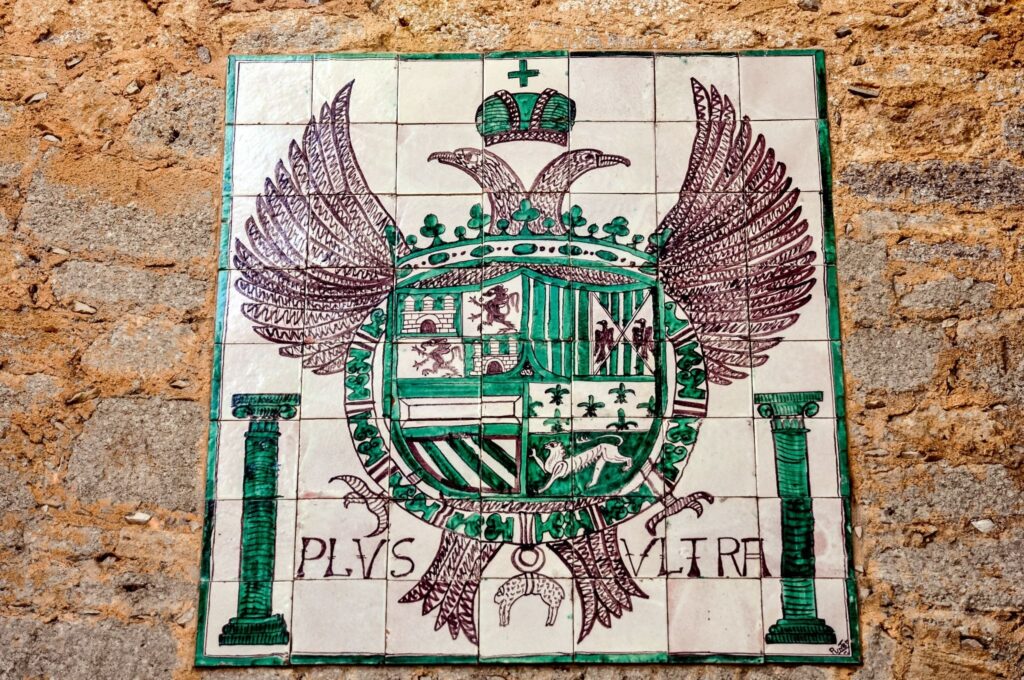
Here, the stereotype unexpectedly meets real history. On Russian coats of arms, the bear lives honestly, for its own reasons, and these reasons have nothing to do with Western caricatures.
The three oldest Russian «bear» coats of arms belong to the lands of Novgorod, Yaroslavl, and Perm. All three were once perceived as distant outskirts, and all three are associated with Finno-Ugric peoples, for whom the bear was a revered, and in some cases, totemic animal. The first general collection of these emblems, the «Titulyarnik,» appeared under Tsar Alexei Mikhailovich in 1672, and the bears were already in their places there.
An entire legend is associated with the Yaroslavl coat of arms. According to it, Prince Yaroslav arrived in the lands of the pagans, and they released a furious beast to meet him. The bear was defeated in the battle, and a symbolic victory was achieved over the old faith, after which a Christian city grew up in this place. At the same time, the bear itself on the coat of arms did not disappear anywhere. On the contrary, it remained standing on its hind legs with an axe on its shoulder, as a reminder of the former cult and respect for it. Interestingly, under Ivan the Terrible, Yaroslavl was depicted on seals as «fish-rich,» with a fish symbolizing the Volga River and local fishing, and only from the mid-seventeenth century did the beast become the main symbol of the city.
Perm has its own motif. An open Gospel rests on the back of the Perm bear. The indigenous people of this region, the Komi, have long revered the bear as a mighty creature, and the coat of arms seems to unite two worlds: a pagan past and a Christian present. And in our recent times, a bronze sculpture called «The Legend of the Perm Bear» was erected in the city itself, appearing precisely in the wake of that very tale about animals supposedly roaming freely through the streets of the Urals. The Novgorod emblem is even more complex. There, two bears stand at a throne on which symbols of power lie, and this image grew from an old seal of the Novgorod governor, which once featured a bear and a lynx. Over time, the lynx disappeared, the bears became two, and the coat of arms became part of Ivan the Terrible's Great State Seal.
And here's what's important to understand about Russian heraldry. The bear on old coats of arms didn't always signify strength and dignity. It was often interpreted differently, as a sign of remoteness, of wild backwaters, of that very «bear corner» where civilization hadn't reached. The same duality as in Western caricatures, only observed from a different perspective. Today, the bear adorns the coats of arms of a whole scattering of cities and regions, including Perm, Yaroslavl, Veliky Novgorod, Yekaterinburg, Norilsk, Syktyvkar, Khabarovsk, and Yuzhno-Sakhalinsk. The beast, as they say, has taken root firmly and for a long time.
Olympic Misha
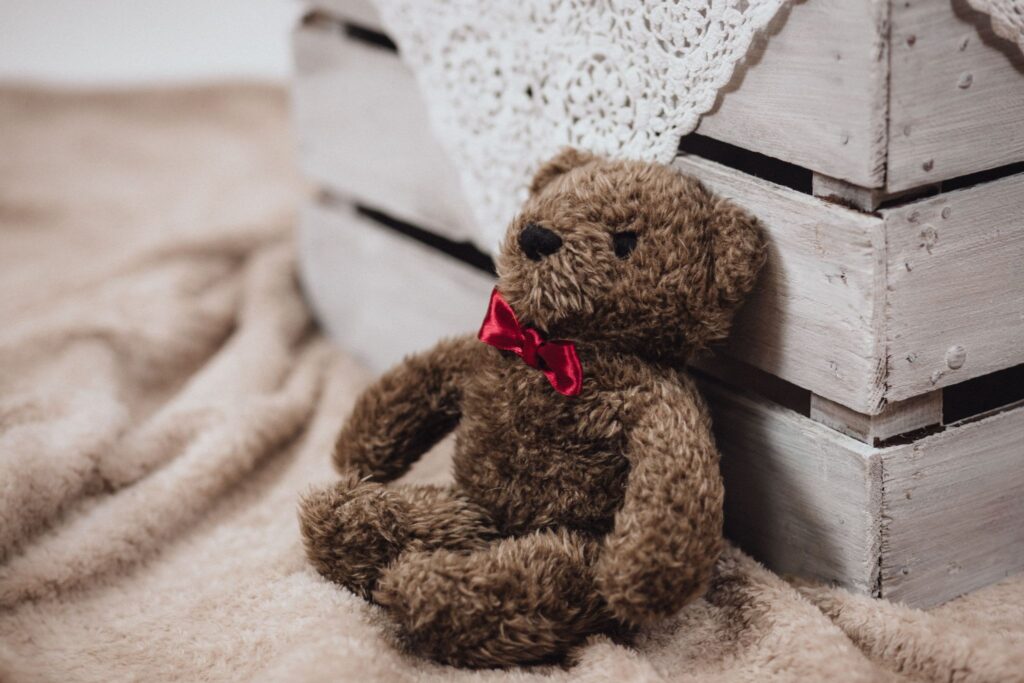
Now, that's the turning point. If you were to ask when Russia finally fell in love with its bear, many historians would nod towards the summer of 1980.
The mascot for the Moscow Olympics was chosen literally by the entire country. A poll was conducted among newspaper readers and television viewers. Tens of thousands of letters came in from all over the Soviet Union, and by majority vote, the bear, Mikhail Potapych, a long-standing hero of folk tales, won. He had, incidentally, had rivals; among the contenders were the Little Humpbacked Horse, a matryoshka doll, and Petrushka. But the people chose the beast. After that, a competition among artists was announced, and thousands of sketches were sent in. From this pile, the work of forty-two-year-old children's book illustrator Viktor Chizhikov, who drew for «Murzilka,» «Krokodil,» and «Vesyolye Kartinki» (Funny Pictures), was chosen.
Chizhikov made about a hundred pencil sketches and for a long time couldn't figure out how to incorporate Olympic symbolism into the drawing so that it wouldn't look forced. The solution, in his own words, came in a dream. He encircled the bear cub with a belt in the colors of the Olympic rings, and placed the rings themselves in a golden color on the buckle. «The bear started to look like a weightlifter who had lifted a weight and was very happy about it,» the artist recalled. On December 19, 1977, Misha was officially approved.
And then the bear cub began to be mass-produced on an unprecedented scale. It was molded from porcelain at several factories at once, and at each one it turned out a little bit different, with its own facial expression. Chizhikov, according to anecdotes, loved the Dulevo Misha the most. The animal looked out from everywhere, from stamps, badges, postcards, posters, and rubber toys, and within a few months it became truly popular across the nation even before the Games opened.
How the Kindest Bear, Olympic Misha, Was Born
| Detail | How it was |
|---|---|
| Hero selection | The mascot was chosen by the whole country: tens of thousands of letters from readers and viewers came in. The bear won, beating out the Little Humpbacked Horse, Matryoshka, and Petrushka. |
| Author | The drawing was created by children's book illustrator Victor Chizhikov, who drew for «Murzilka,» «Krokodil,» and «Veselye Kartinki.». |
| Idea in sleep | How to incorporate Olympic symbolism: an artist dreamed it up: he girded a bear cub with a belt in the colors of the rings, and it looked like a happy weightlifter. |
| Statement | Misha was officially approved on December 19, 1977. He became a national figure by the Games even before the opening ceremony. |
| Farewell | At the closing ceremony on August 3, 1980, a giant inflatable Misha flew into the sky over the stadium to the song, and the stands wept. |
And then happened what was remembered even by those born much later. Late on the evening of August 3rd, as the Games were closing, a giant inflatable bear slowly floated up above the stadium bowl, waved its paw, and drifted into the Moscow night sky, accompanied by a song about a gentle Misha. Alexandra Pakhmutova composed the melody, Nikolai Dobronravov wrote the lyrics, and the song was led from the stage by the voices of Lev Leshchenko and Tatiana Antsiferova. The stands openly wept. According to the director's vision, Misha himself shed a tear on the giant screen, and the audience responded in kind.
It wasn't a caricature and it wasn't a strict coat of arms. It was a kind, smiling, completely familiar bear, whom the whole world saw and fell in love with all at once. The turn began, in essence, with Misha from the Olympics. The beast that the West had invented for centuries to laugh at Russia or be frightened by it suddenly turned out to be warm and charming. And it was from this warmth that almost everything else grew later.
Chizhikov himself, according to various accounts, received a very modest sum for the iconic drawing, approximately the average annual salary of that time, and he recalled this more than once with a sad smile. And his little bear survived its era and became something of a model. When, decades later, mascots were chosen for the Winter Olympics in Sochi, a bear, this time white, was among them again, and many immediately recognized a familial resemblance to that same affectionate Misha.
The Bear in Politics and High Culture
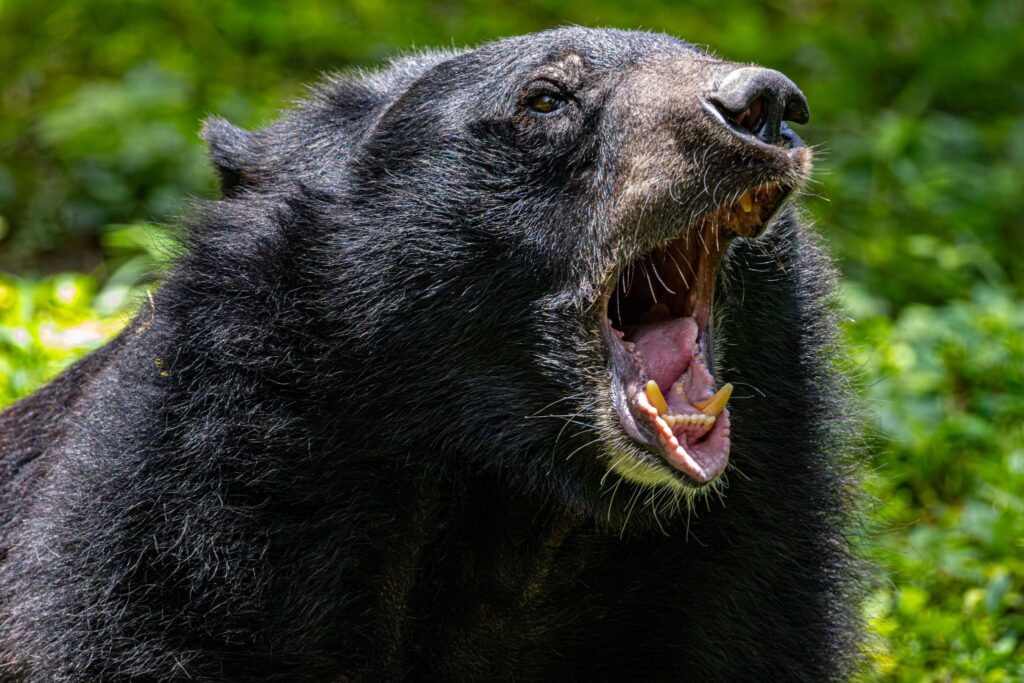
The twenty-first century cemented the image irrevocably, and from several angles at once.
In the early 2000s, the bear became the emblem of the country's largest political party. Since then, the animal has firmly established itself in the speech of politicians, both Russian and foreign. When there's a need to briefly describe Russia as strong, independent, and unwilling to back down, the same metaphor is used. It turns out to be almost irony of fate. The stereotype that enemies invented three hundred years ago, the country calmly adopted and wears like a comfortable jacket.
Here, it's worth honestly saying one thing, and it's useful to explain it directly to children. Abroad, the bear still more often works against Russia. In modern Western cartoons, it is usually an image of a dangerous, aggressive, hovering force. The old duality has not disappeared anywhere. At home, the beast is kind and mighty, externally menacing and wild. The same bear, two completely different views. For a child growing up between two cultures, this is, by the way, an excellent reason to think about how stereotypes are generally formed and why the same symbol can so easily be turned upside down.
Bear in advertising and memes
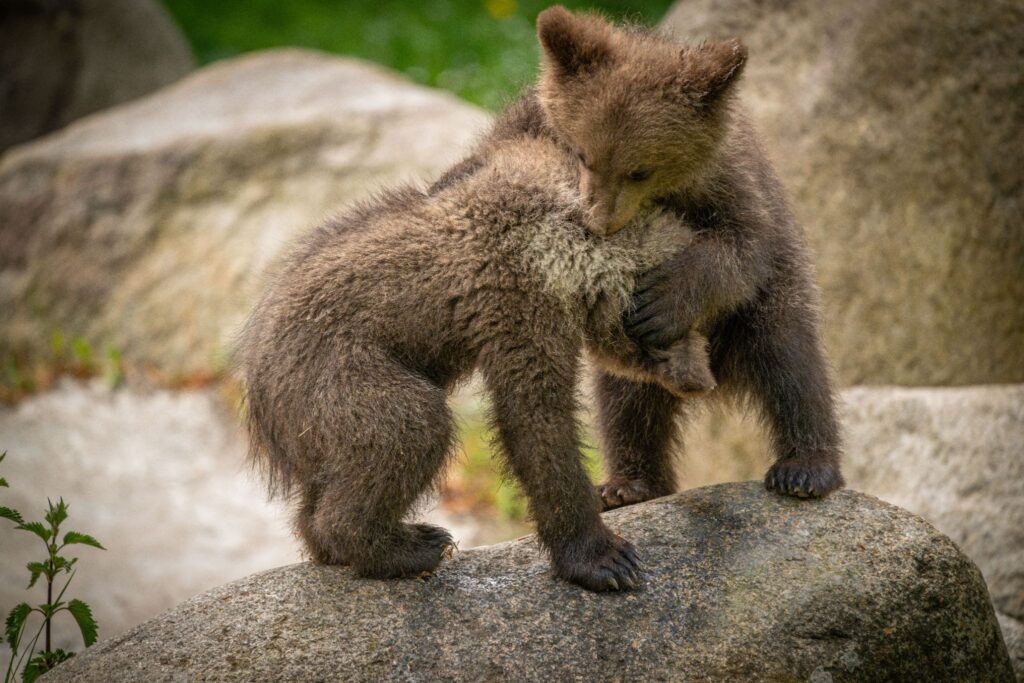
And finally, the most vibrant part, what Russian-speaking children abroad encounter every day.
The bear has long since moved into advertising and popular culture. It's depicted on packaging, made into sports team mascots, fashioned into souvenirs, and printed on t-shirts for tourists. The clumsy creature readily sells everything from chocolate to hockey to matryoshka dolls at the airport. Hockey fans even call their favorite players "bears" without any irony, and at major international tournaments, the Russian national team is often portrayed as a good-natured animal in a jersey. The image is so recognizable that it works without any caption, solely by its silhouette on its hind legs.
And on the internet, the bear has lived a separate, very lively life. English-language memes about the Russia bear stereotype play on the same ancient fable. A bear behind the wheel, a bear with a balalaika, a bear trudging to work down a snowy street past a queue of other bears. And what's most interesting is this: Russian-speaking users laugh at this along with everyone else, and often louder than anyone. This is a rare case where people don't argue with the mockery or get offended, but rather adopt it and turn it to their advantage. Saying about themselves, «Yes, we are that very Russian bear, so what?» turned out to be much stronger than being offended by the image.
This is probably the best answer to that classmate's question about bears on the sidewalk. Not to dismiss it or get angry, but to calmly tell the whole story. Then, what seems like a silly stereotype turns before your eyes into three centuries of fascinating cultural biography, and the child goes from being an easy target for a joke to someone who knows more about that joke than anyone else around.
To talk about Russian culture to peers like this, easily and knowledgeably, a child needs a lively, genuine language, not just scraps of school phrases. At Palme School, children from Russian-speaking families worldwide study in small groups with teachers who know how to explain the origin of a coat of arms, the hidden meaning of a word, and the subtleties of their native tongue in a way that makes listening truly engaging. You can get acquainted with the school through two free sessions. The first is an introductory session where a methodologist will assess the child's level and select a suitable group. The second is a trial session, already with the teacher and other children in the group. Signing up is easy on the palmeschool.com website. And let the bear from someone else's mockery become a reason for your child to quietly take pride in their own.
Why did the bear become a symbol of Russia?
The paradox is that Russia was not designated a country of bears by itself, but by the West. Since the 18th century, the clumsy bear has firmly settled in European caricatures as an image of Russia, and this metaphor is almost three centuries old. Within the country, the beast remained a hero in fairy tales and on coats of arms for a long time, and it was only recognized as its national symbol late, essentially in the 20th century.
Is it true that the bear is a Western invention?
Yes and no. The very image of Russia as a bear was indeed born abroad, in English and French satire, and was not flattering at first. But the ground was fertile. The bear was revered in Rus' from ancient times, led around at fairs, and depicted on old coats of arms. The West simply picked up on a motif already familiar to foreign guests and turned it into a political label.
Which Russian coats of arms feature a bear?
The oldest bear coats of arms belong to Yaroslavl, Veliky Novgorod, and Perm; all three were included in the 1672 «Titulyarnik» (a book of coats of arms). Today, the beast adorns the emblems of a whole scattering of cities, including Yekaterinburg, Norilsk, Syktyvkar, Khabarovsk, and Yuzhno-Sakhalinsk. On the Yaroslavl coat of arms, the bear stands on its hind legs with an axe; on the Perm coat of arms, it carries an open Gospel on its back.
Misha the Olympic mascot was created by Viktor Chizhikov.
The creator of the famous teddy bear from the 1980 Olympics is Viktor Chizhikov, a master of book illustration whose drawings are familiar to everyone from children's magazines like «Murzilka.» Before the final image was born, the artist went through nearly a hundred variations. He himself admitted that he got a hint on how to tie the Olympic theme to the animal in a dream, and that's when Misha got his belt with five rings. The mascot was approved in December 1977.
What does the expression "Russian bear" mean today?
The meaning splits depending on who is speaking. At home, it's an image of strength, good nature, and calm confidence – the affectionate Mishka. In Western cartoons, it's often the opposite; the bear usually signifies formidable and unpredictable power. The same animal, but the view from the outside and the view from the inside are almost opposite.
"It's a silly joke, honey. Sometimes kids make up funny stories just to make each other laugh. They're not really saying there are bears on the streets, it's just a made-up idea to be funny."
It's best not to dismiss or get offended, but to tell the whole story. The tale of bears wandering through Russian cities was recorded by a traveling diplomat back in the sixteenth century, who most likely got something wrong, and since then it has been circulating around the world. If a child knows where this stereotype comes from, a silly joke turns into an opportunity to show off their knowledge, and they themselves go from being a target to someone who understands the topic better than others.