


Every year on January 31st, Russian vodka is congratulated on its birthday on the internet. The date is linked to Mendeleev's dissertation, who allegedly discovered the formula for the perfect drink on that very day. It sounds nice, except that on this day, absolutely nothing happened that is commonly told. Mendeleev did not invent vodka, he did not derive the formula, and he did not set the «correct» forty degrees. And this is just the first of the myths that have surrounded vodka. Perhaps no Russian symbol is surrounded by as many legends presented as the unvarnished truth.
For those learning the Russian language and culture, here's a convenient opportunity. To delve into the history of vodka is also to understand how things are generally structured National stereotypes, where they come from, what's true about them, and what's been added in hindsight. Then, everything in order, from the origin of the drink to the question of whether people in Russia really drink the most in the world.
Drink without a birth certificate

Vodka has neither a precise date of emergence nor the name of an inventor, and there is a reason for that. The first centuries of distillation left almost no documents, and historians consider chronicles and folklore an unreliable source because they were recorded much later and rewritten many times. What is known is limited and general. A strong grain distillate, which was called «khlebnoye vino» (bread wine) in Rus', became widespread throughout the Muscovite State around the 15th and 16th centuries. The word "vodka" itself appears later and initially could refer not only to the drink but also to medicinal tinctures.
The story behind the name is a separate matter. According to one version, the word «vodka» is derived from a diminutive form of «voda» (water), used in a familiar, domestic way. However, some linguists consider it more likely to be a Polonism that came from the west, and this debate remains unresolved. This same issue fueled the long-standing dispute with Poland over who invented vodka first. It's a very real dispute. In the late 1970s, Poland contested the right to label the Russian spirit as «vodka» in the external market. The Soviet side commissioned a historical justification, which was undertaken by Vil'yam Pokhlyobkin, a well-known culinary historian. In his book, he argued for Russian primacy and vividly described a won international arbitration case. Later, researcher Boris Rodionov demonstrated that much of this account was inconsistent and that the story of the lawsuit appeared to be embellished. The calm conclusion is that strict proof of primacy for one country is impossible; strong spirits were distilled in various regions, and vodka's ancestry is more accurately considered common rather than belonging to any single entity.
How vodka became a state income
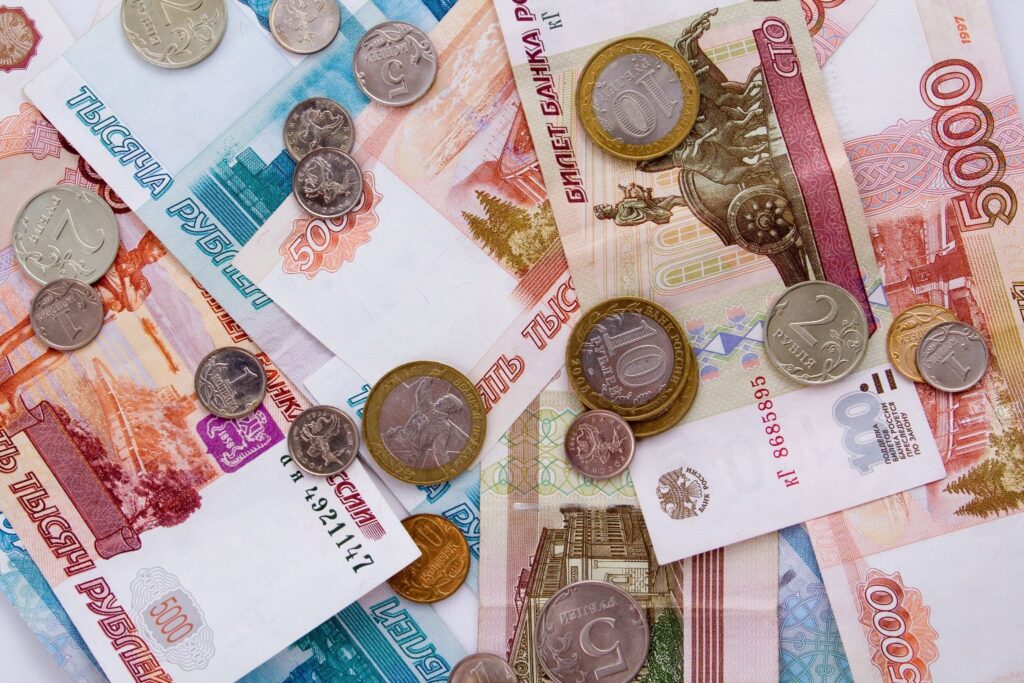
The history of vodka was truly driven not by its recipe, but by state revenue. The state took control of the right to trade strong spirits very early on. A monopoly on grain spirits was introduced as early as Ivan III in the 15th century, and the familiar "kabak" (tavern) as a place for state sales was established under Ivan the Terrible, who initially allowed only his oprichniki (personal guard) to drink openly in such establishments. The logic was simple: people would drink regardless, so let the money go to the treasury.
Next, they only tuned this machine. Peter the Great In the early 18th century, he tightened state control over the alcohol trade and imposed taxes on vodka production. At the same time, he accustomed the populace to drinking in taverns daily, not just on holidays. Crucially, he didn't invent vodka or improve its recipes; his role was purely financial. The real scale of state involvement came in the late 19th century when Finance Minister Sergei Witte, under Alexander III, introduced the state's alcohol monopoly. By the early 20th century, alcohol revenue accounted for about a quarter of the entire state budget, and the state had a vested interest in people continuing to drink. Contemporaries observed this with bitterness, writing that the treasury was largely sustained by public drunkenness.
The famous fortress was established shortly before Witte's monopoly. Rounding to forty degrees for convenient excise tax calculation is linked to excise reforms of the 1860s and subsequent years under Finance Minister Reutern, and the lower limit of forty degrees was fixed by the Charter on Drink Taxes of 1886. The exact year varies among different sources, but the essence is the same. Forty degrees was set by the state for taxation, for uniform quality and easy accounting, not for ideal taste, and certainly not based on a scientific formula, and definitely not by a chemist in a laboratory.
What did Mendeleev actually do?

Since we're on the topic of chemists, it's time to return to the main myth. Mendeleev did indeed have a dissertation on alcohol and water; he defended it in 1865, and it was titled «On the Combination of Alcohol with Water.» However, the science within it is purely physical. He was interested in what happens to the volume and density of the solution when alcohol is mixed with water in different proportions. There isn't a word about drinkable strength, let alone taste, and he was mainly interested in strong solutions, far above forty percent.
The legend most likely grew out of the same book by Pokhlebkin, where Mendeleev's role in justifying forty degrees is greatly exaggerated, without citing original sources. The myth then took on a life of its own, picked up by labels and after-dinner conversations. Mentions of Mendeleev's commission and 1894 can still be found on bottles today, but this is marketing, not history. The forty-degree strength itself was determined by the Ministry of Finance for excise tax purposes, independently of his research and entirely separately from it.
Soviet history and the anti-alcohol turn

After the revolution, private factories were nationalized, and the state monopoly on vodka returned in its Soviet form. The drink remained simultaneously a symbol, a source of income, and a constant headache for the authorities. The attitude towards it was dualistic. On one hand, national pride; on the other, the topic was considered low and not very conducive to public discussion.
A couple of episodes are worth recalling separately. In the early 1980s, cheap vodka appeared on store shelves, which the public nicknamed "Andropovka," after the surname of the then leader of the country. And in 1985, a loud anti-alcohol campaign began. Prices rose, sales were restricted, vineyards were cut down, and sugar.
Do Russians drink the most?

Perhaps this is the most resilient stereotype, and also the easiest to check. According to the World Health Organization, Russia has not been at the top of per capita alcohol consumption for a long time. The top of the rankings are usually occupied by countries in Eastern and Central Europe, and Russian indicators have noticeably decreased over the last twenty years. There is no point in naming an exact position, it jumps from year to year and depends on the calculation methodology, but the general conclusion is stable. The image of the world's heaviest-drinking country is based on inertia and literature, not on current figures.
It's also worth adding this detail: the situation within the country isn't standing still either. In cities, spirits are gradually being pushed aside by wine and lighter drinks, so habits are changing faster than reputation.
Brands known abroad
Outside of Russia, vodka is most often recognized by a couple of brands, and both have interesting stories. The Smirnoff brand grew out of the business of the merchants Smirnov, whose production, after the revolution, was taken over by emigrants and continued abroad. Stolichnaya became the calling card of Soviet exports and one of the main participants in the same dispute over the right to be called real Russian vodka. The names function as cultural markers by which the drink is recognized on shelves anywhere in the world, and knowing their history is useful for anyone seriously interested in Russian culture.
How to separate myth from fact, and what does language have to do with it
The history of vodka offers a broader lesson than the drink itself. Almost everything that people supposedly know about Russia is worth questioning, whether it's the Mendeleev birthday story, the title of the heaviest drinking country, or the legend of a single inventor. The true picture is always more complex and interesting than a flat stereotype. Distinguishing fact from fiction helps not by memorizing rules, but by understanding the living language along with the cultural context, where every word has its own story.
Home

Vodka is surrounded by myths, perhaps more densely than almost any Russian symbol. It has neither an exact birth date nor a single inventor, and its history was driven by the treasury and monopoly, not the search for the perfect recipe. Mendeleev did not set the forty-degree standard, and the title of the heaviest-drinking country has long been unconfirmed by statistics. The main conclusion isn't even about the drink itself. Stereotypes about an entire country are almost always worth checking, and living language, along with culture, provides precisely this habit of distinguishing myth from fact.
Is it true that Mendeleev invented vodka?
No. Mendeleev defended his dissertation on the combination of alcohol with water, but he was concerned with the physical chemistry of solutions, not the recipe for the drink or the choice of proof. The legend of his authorship appeared much later and is mainly based on one popular book.
Why is vodka precisely forty percent alcohol?
The state standardized this fortress for the convenience of calculating excise taxes and for consistent quality, not for ideal taste. It has no relation to Mendeleev's scientific formula, and the standard of around forty degrees existed even before his work.
Where did vodka first appear, in Russia or Poland?
It is impossible to definitively establish primacy. Very few documents about the beginning of vodka production have survived, strong spirits were distilled in different regions, and the dispute between Russia and Poland over the right to the name remained without a clear answer.
Vodka
According to one version, the word is derived as a diminutive of «vody» (water). Some philologists consider it more of a borrowing from the West. Initially, it could have been used to refer not only to a drink but also to medicinal tinctures.
Is Russia really the heaviest drinking country in the world?
More of a stereotype than a fact. According to the World Health Organization, Russia has long ceased to top alcohol consumption rankings. Countries in Eastern and Central Europe usually end up there, and Russian figures have noticeably decreased in recent years.
What is wine bread?
This is how a.