

You've surely seen this face. A round, as if inflated, ball of gray fur, tiny pressed.
In English, this cat is called a manul cat or Pallas's cat. It appears in search engines when you search for "wild cat Russia" because its homeland is in the cold steppes of Russia, not on the internet where it is most often encountered. For a family raising a child far from Russia, the manul proves to be a remarkably good topic of conversation.
What kind of creature is a Pallas's cat?
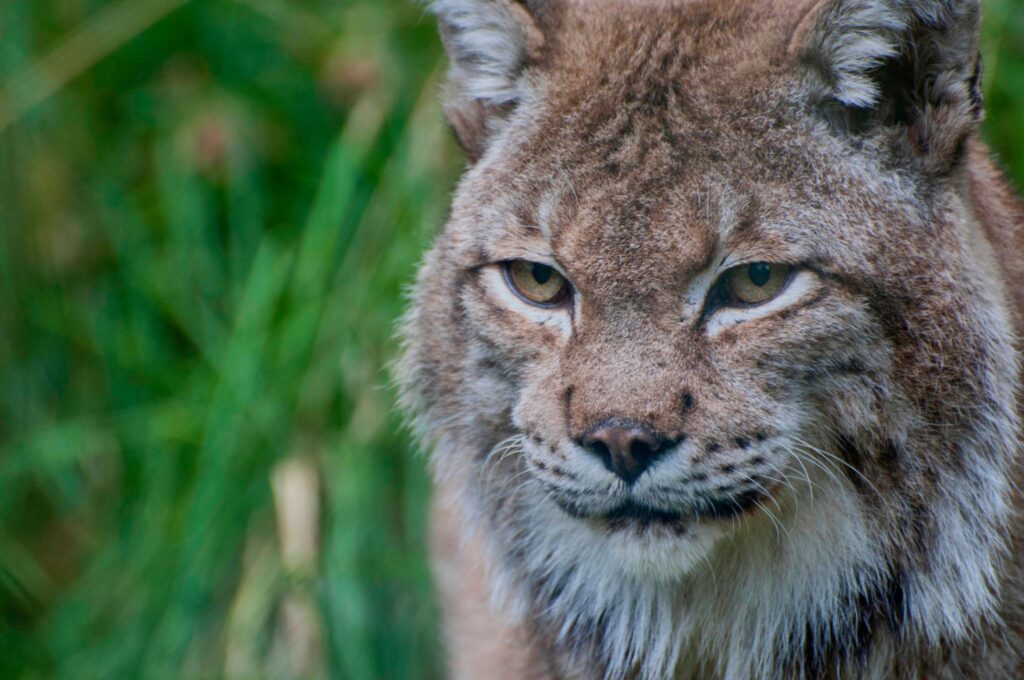
Let's start with the main revelation. The Pallas's cat is not a giant at all. In terms of height and weight, it's about the same as an ordinary domestic cat, weighing around four to five kilograms, no more. It seems twice as large, and it's all because of its fur coat. The Pallas's cat has the densest and longest fur of all cats in the world, with almost nine thousand hairs per square centimeter. This luxurious coat keeps it warm in severe frosts and also makes it look like a fluffy ball. Hence its deceptive stockiness.
And now about that very face. The manul's face is wide and flattened, its ears are small, round, and set low on the sides of its head, allowing it to peek out from behind a rock without giving itself away. Its eyes are set high, and its pupils are round, not slit-like as in other small cats, just like lions and tigers. The large yellow eyes give the manul's gaze something of an owl's solemnity, and its low-set ears are so inconspicuous that the genus's Latin name is translated from Greek as ugly ear, although looking at this fluffy grump, it's hard to believe such rudeness. All these unusual features for a cat create that very expression of eternal indignation. But the manul itself has nothing to do with it. It's not angry, it's always like this. Nature simply sculpted this grumpy physiognomy for it, and there's nothing the animal can do about it, no matter how hard it tries.
The manul's fur is remarkable not only for its thickness. The tips of its hairs are light, making the cat appear dusted with frost. Two dark stripes run down its cheeks, and the manul wraps its bushy, ringed tail around itself like a warm muff in the frost. It also has a special third eyelid that protects its eyes from the cold and the stinging steppe winds. All of this allows the animal to withstand temperatures forty degrees below zero, which would have quickly overcome any ordinary cat. The manul has carried its name for a long time. The scientific world learned of it in 1776, when the naturalist Peter Simon Pallas first described the unseen cat in the vicinity of Lake Baikal, which is why the manul is still called Pallas's cat to this day.
Master of ambush and camouflage
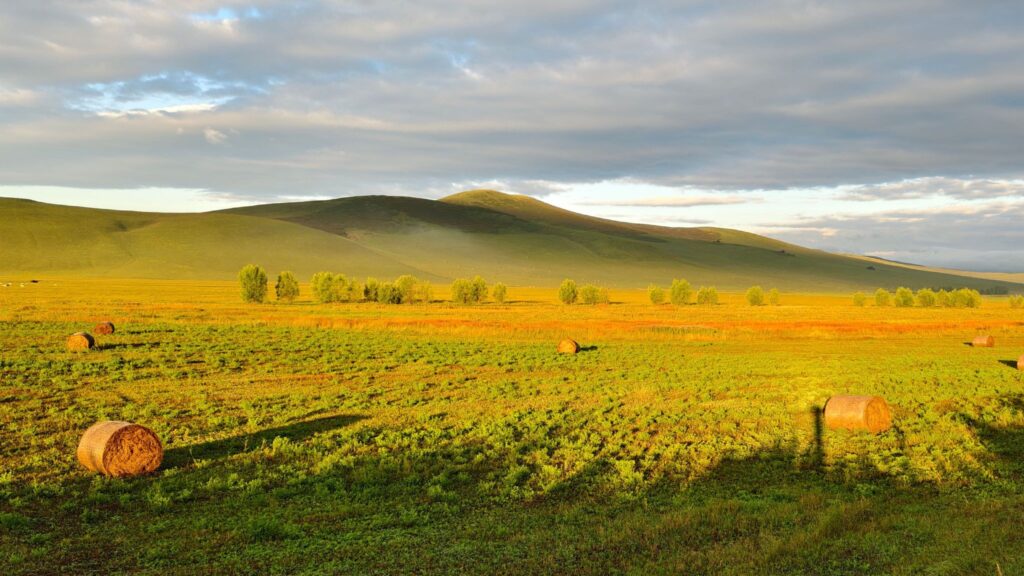
The Pallas's cat lives where survival is not easy. Its range lies in the open steppes and stony foothills of Zabaykalsky Krai, Tyva, and Altai, and outside of Russia it extends into neighboring Mongolia, where these cats are most numerous. The places are harsh, with freezing temperatures in winter, scorching heat in summer, little rain, and almost nowhere to hide. That's why the Pallas's cat has grown such a thick coat and learned to hide among the rocks. It doesn't like deep snow, by the way, because it's hard to get far in snowdrifts on short legs.
This cat lives in solitude and doesn't show itself. During the day, it hides in a rock crevice or an abandoned burrow, and it goes out hunting at dusk. And this is its main problem. The manul is a terrible runner; it's too shaggy, short-legged, and unhurried. It's not capable of chasing prey, so it relies not on speed, but on patience and cunning. The manul is a master of ambush. It waits for hours near a burrow, blending in with the rocks, and then settles the matter with one short pounce. The manul's favorite food is pikas, small relatives of hares in the steppe, and it also catches various voles, ground squirrels, and unsuspecting birds. The manul usually doesn't dig its own burrow but occupies empty marmot and badger dens, apparently reasoning that ready-made is always better.
Manuls do not favor their neighbors and live by themselves, jealously guarding their territory. They only meet with their own kind in the spring, during the mating season. Around that time, closer to summer, the female gives birth to kittens, usually from two to six, in a secluded den. They grow surprisingly fast so that they can get strong before the cold weather. This is an unusually silent animal, and if it's frightened or angry, it doesn't meow like a cat, but makes a sharp, abrupt sound more like a dog's bark. And it is incredibly good at hiding. Blending its color with rocks and dry grass, the manul repeatedly raises its head above its cover to look around, and then freezes again, making it almost impossible to spot in the steppe. The same trick helps the manul in moments of danger. It cannot run at full speed, but it has mastered the art of disappearing. Upon spotting an enemy, the cat flattens itself to the ground, hides behind the nearest rock, or dives into the closest den and freezes. The predator often passes by without noticing the camouflaged ball of fur.
How the Pallas's cat conquered the internet

And this modest steppe hermit suddenly became a world-famous celebrity, completely by chance. His unique face is, of course, to blame. As soon as pictures of the Pallas's cat spread across the internet, it instantly turned into a living meme, everyone's darling, and the internet's chief grump. People make pictures of it, shoot videos, draw stickers, and its very name has become synonymous with charming displeasure. It's funny that the Pallas's cat became famous long before the internet invented the famous domestic grumpy cat, and it can rightfully be considered its wild equal. Only, the grumpiness of domestic pets was caught by chance, while the Pallas's cat is naturally grumpy, all over, from its flattened nose to the tip of its fluffy tail. It has also appeared in big wildlife films, where rare footage of it invariably evokes laughter mixed with tenderness in viewers.
The manul has particularly taken root in the Russian internet. As early as the late 2000s, the first heartwarming memes featuring manuls spread across the web, and since then, the affection has only grown. Most importantly, this wild cat has long become the mascot and emblem of the Moscow Zoo, so it's safe to say the manul is an officially esteemed animal in Russia. This has a pleasant side effect. The manul's fame has benefited it, as the more people know and love this cat, the more willing they are to preserve it. From simply being a funny image, the manul has gradually become a symbol of caring for wildlife.
What awaits the furry grump

Behind the cute face hides a not-so-easy fate. The manul has plenty of enemies, and almost all of them are in one way or another connected to humans. For a long time, the manul was hunted for its luxurious fur. They hunted it in large numbers, by the thousands, and although such hunting is now forbidden, poachers are still active in some places. The manul sometimes also perishes due to absurd accidents, getting caught in traps and snares that steppe dwellers set not for them, but for marmots. But even more dangerous is another, less noticeable disaster. While trying to get rid of rodents that damage fields, people poison steppe pikas and voles, and the manul, having eaten poisoned prey, perishes afterwards. Thus, without intending to, humans deprive the cat of both food and life.
Add to this the plowing of steppes, the expansion of pastures, dogs roaming the area, and it becomes clear why the Pallas's cat needs protection. In Russia, it is listed in the Red Book, and worldwide, although it is not yet considered endangered, its numbers are slowly declining. Pallas's cats are protected in nature reserves, and the Daursky Nature Reserve in Transbaikalia does particularly much for them, where scientists find and care for orphaned kittens. By the way, it's impossible to keep a Pallas's cat at home, no matter how much you want to, as it is a true wild animal that doesn't tolerate handling, gets depressed in captivity, and remains wild even when raised among people. It's also difficult for Pallas's cats in zoos. Their kittens are particularly fragile and often die from diseases, as in their native high steppes, they don't encounter the illnesses that await them in captivity, and the animal has no natural defenses against them. Therefore, there are very few Pallas's cats in zoos worldwide, only a couple of hundred, and almost all of them are related. Moscow and Novosibirsk zoos have been learning to breed and study these capricious cats for a long time and persistently, and every surviving kitten here is precious.
What's behind the funny face

For a family raising a child in a foreign land.
That's right, Russian is taught based on what interests and is close to the child Palme School, where children from Russian-speaking families aged four to seventeen are led to the language not through boring rules, but through a lively and engaging approach. You can get acquainted with the school through two free sessions. First, an introduction and assessment with a methodologist, which will reveal what the child is already good at and where they need help. Then, a trial lesson in a live group with other children. No obligations, simply to understand if this format is right for you.
A brief overview of Pallas' cat
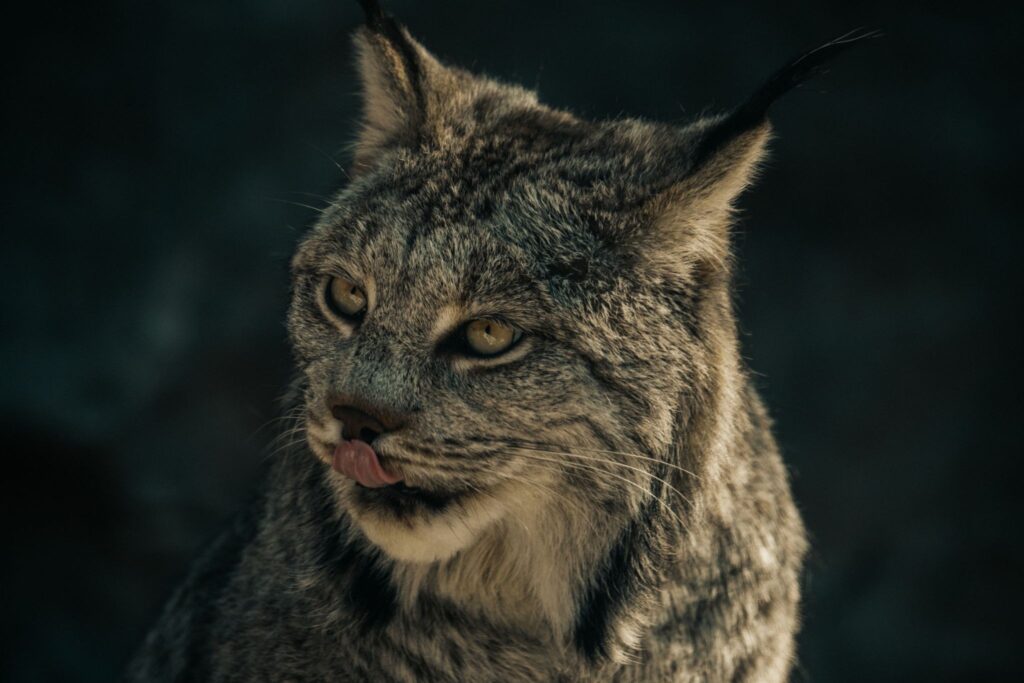
The Pallas's cat, also known as the manul, is a small wild inhabitant of the cold steppes of Transbaikalia, Tuva, Altai, and Mongolia. It's only the size of a domestic cat, but appears twice as large due to having the densest fur of any feline. It's world-famous for its flattened face with round pupils and a perpetually displeased expression, though in reality, it's not angry at all; it's just built that way. The manul lives solitarily and reclusively. It's not a fast runner, so it hunts pikas and voles from ambush. It gained fame thanks to the internet, where it became a beloved meme and the emblem of the Moscow Zoo. Behind its comical appearance hides a rare and vulnerable animal, preyed upon along with rodents and listed in the Red Book. For a child far from Russia, its familiar, funny face becomes a warm and easy starting point for a conversation about the wildlife of their native country.
What is a manul?
The manul is a small wild cat, also called the Pallas's cat. It lives in the cold steppes and rocky foothills of Central Asia, including southern Siberia, Transbaikalia, Tuva, and Altai. The manul is about the size of a domestic cat, but due to its very thick fur, it appears much larger. It is known worldwide for its flattened face with a perpetually displeased expression.
Manul cats have a naturally grumpy facial expression due to their physical features. Their broad, flat faces, along with their large, round eyes and prominent cheekbones, give them a perpetually stern or even angry look.
It's all due to the cat's unusual head structure. The manul has a wide, flat face, small ears set low, and high-set eyes with round, not vertical, pupils. Together, this creates that very angry expression. In reality, the manul is not at all angry or sullen; it's simply its natural appearance, and it can't change it.
Where does the Pallas's cat live?
The Pallas's cat inhabits the dry, cold steppes and mountain meadows of Central Asia, from Mongolia and China to Iran. In Russia, it primarily lives in Transbaikalia, as well as in Tuva, Altai, and regions bordering Mongolia. It settles where there are rocks and burrows for hiding, and avoids deep snow and open areas without cover. The largest population of Pallas's cats lives in the Mongolian steppes.
Why has the Pallas's cat become so popular on the internet?
Because of its hilarious face with an expression of eternal indignation, which seems to be made for memes. Photos of the Pallas's cat quickly spread online, and it became one of the most recognizable wild cats and the hero of countless jokes. It became especially popular on the Russian internet, and the Pallas's cat has long served as the mascot and emblem of the Moscow Zoo. Such fame has benefited the animal, as it draws attention to its conservation.
Can you keep a Pallas's cat as a pet at home?
No, the manul is absolutely not suitable as a pet. It is a wild animal that cannot tolerate touch, tolerates captivity poorly, and remains wild even if it grows up among people. Moreover, the manul is listed in the Red Book of Russia, so keeping it at home is simply not allowed. Its cute appearance is deceptive, and it's best to admire this cat in photos or at the zoo.