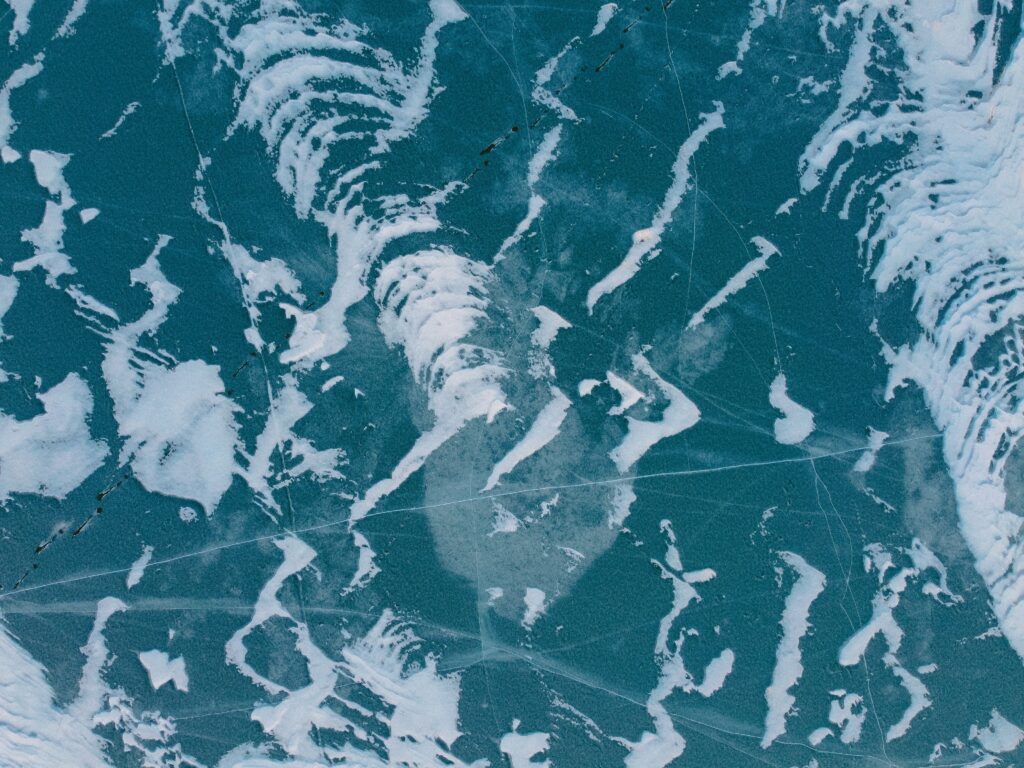

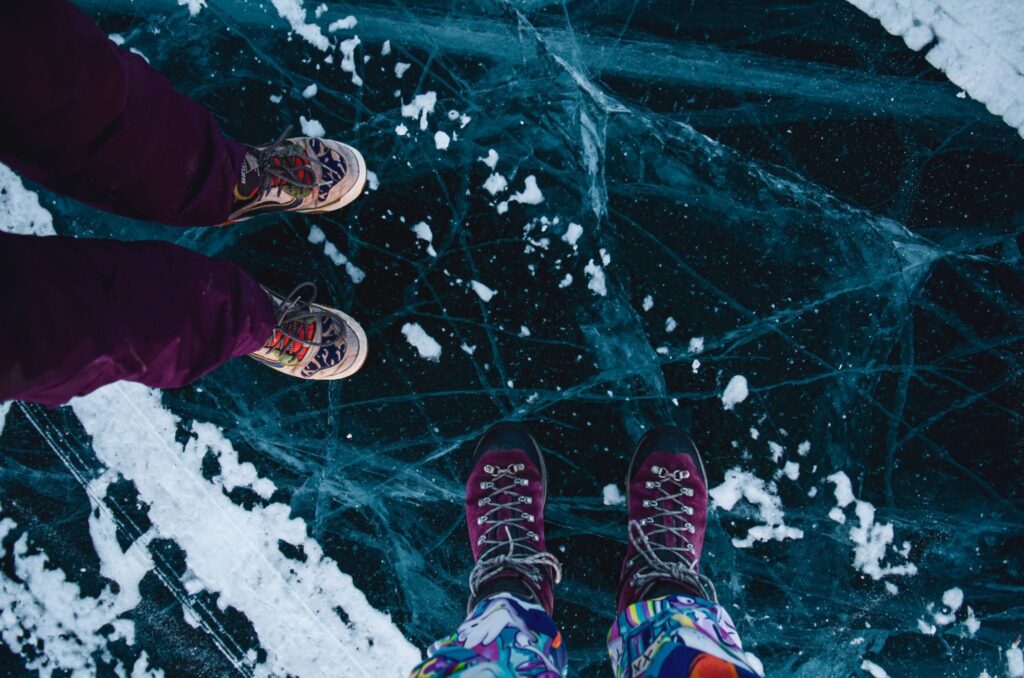
At the end of March, the ice on Lake Baikal can support a truck, while itself being so transparent that a person standing on it can see downward-leading cracks and methane bubbles frozen into pillars. Beneath one's feet there may be six hundred, eight hundred, a thousand meters of water, and it is almost impossible for the mind to comprehend this because the eye shows a solid floor.
This feeling does not deceive. To the bottom at its deepest point is one thousand six hundred forty-two meters, and three Ostankino towers placed one on top of the other would go completely underwater. No other lake on the planet approaches such marks, hence the English-language query «deepest lake in the world,» for which the search engine yields Baikal as the very first result. Its other records are gathered in the table below, and there are enough of them to make a whole list.
Lake Baikal in numbers
Twelve indicators used to describe the lake, ranging from record-breaking to strictly practical.
| Indicator | Value | Explanation |
|---|---|---|
| Maximum depth | 1642 meters | Measured in 1983. The average depth is about 744 meters, which is also a world record among lakes. |
| Age | 25-30 million years | The oldest lake on the planet. Ordinary lakes live for tens of thousands of years and get silted up. |
| Water volume | about 23,600 cubic kilometers | Approximately a fifth of the liquid freshwater on Earth's surface and about 80 percent of Russia's reserves. |
| Area | 31,700 square kilometers | Comparable to the territory of Belgium. Length 636 kilometers, width from 24 to 79. |
| Coastline | over 2000 kilometers | A significant portion of them are in rocky areas without roads or settlements. |
| Tributaries and runoff | more than 300 rivers flow in, only one flows out | The only outflowing river, the Angara, carries water into the Yenisei and further into the Kara Sea. |
| Transparency | up to 40 meters | The white disk is visible at this depth in spring, before the algae bloom begins. |
| Living organisms | about 2,600 species | The proportion of endemics, that is, species living only here, is estimated differently, from half to two-thirds, and this variance comes from the researchers themselves. |
| Freeze-up | from January to May | The thickness of the ice by the end of winter ranges from 70 centimeters to one and a half meters, and winter roads are laid across it. |
| The strongest wind | sarma, up to 40 meters per second | It bursts out of the mountain gorge on the western shore and whips up waves in a matter of minutes. |
| Rupture walls divergence | about 2 centimeters per year | The basin continues to widen, so the bottom does not silt up, but sinks. |
| UNESCO status | since 1996 | World Natural Heritage site. The ban on omul fishing has been in effect since 2017, and the pulp mill on the shore was closed in 2013. |
A twenty-five-million-year-old crack in the Earth's crust
By all the rules, this lake should not exist. A body of water fed by rivers is doomed to silt up and turn into a swamp over a span of tens of millennia, yet Lake Baikal is numbered in tens of millions of years, and it is older than many mountain systems. The reason for such longevity lies far beneath the water.
The lake occupies the floor of a rift, a massive fault where the Earth's crust is slowly pulling apart. The process is happening right now; the shores are spreading by about two centimeters a year, the bottom is sinking, earthquakes occur in this area constantly, and that is precisely why the basin does not fill with sediment, but only becomes deeper. The sediment layer at the bottom reaches several kilometers, and beneath it lies a buried basin much more ancient than the current one.
The fifth part of the planet's unfrozen freshwater
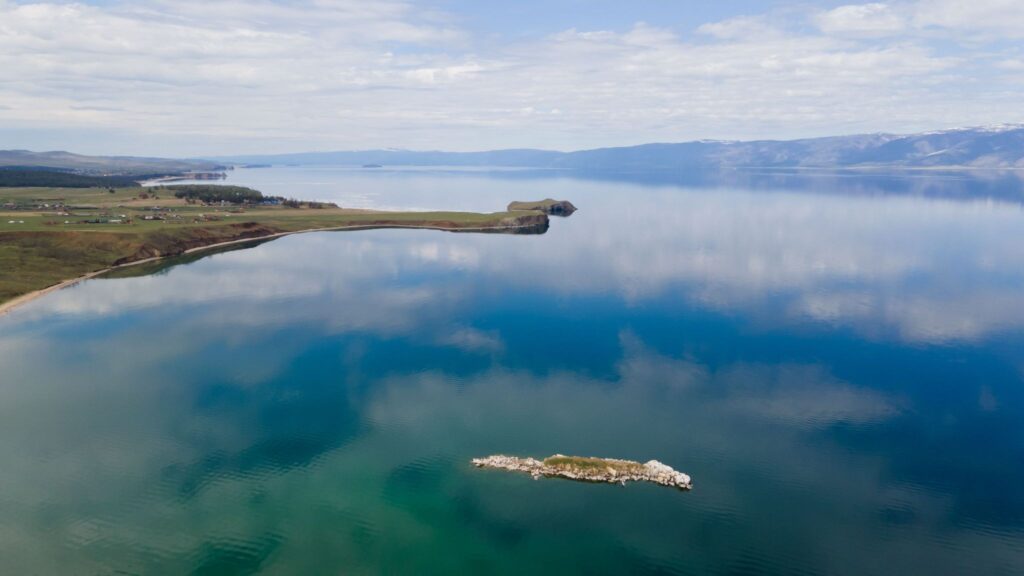
The sheer volume is more impressive than the depth, and it becomes easiest to grasp through a simple assumption. If the basin were to empty all at once, it would take all the rivers on the planet combined nearly a year to fill it back up. The lake holds roughly a fifth of all liquid fresh water on the Earth's surface, and from the shore this figure is impossible to comprehend because the opposite shore simply cannot be seen.
More than three hundred rivers and streams bring water to it, while the only outlet is the Angara, about which locals tell a legend of a daughter who fled from her stern father to the Yenisei. At the same time, the water remains so transparent that in spring a white disk is visible at a depth of up to forty meters. This purity is maintained by a tiny epischura crustacean just over a millimeter long, which passes the entire water column through itself, filtering out bacteria and algae.
Who lives here and nowhere else in the world
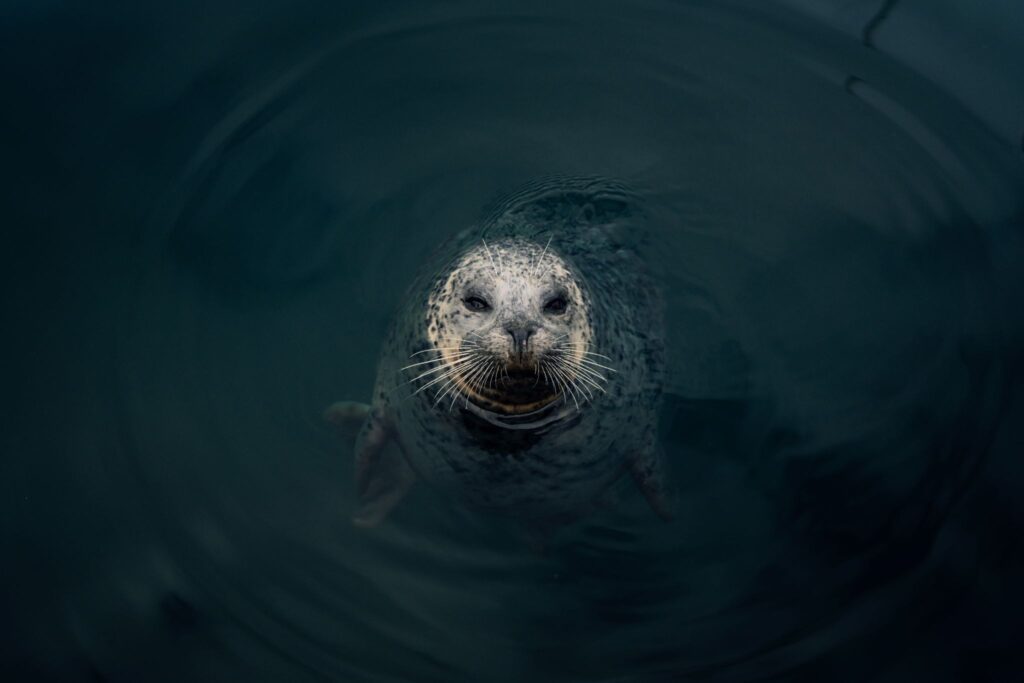
Prolonged isolation did to local life what islands do. More than half of the local inhabitants are not found anywhere outside the lake, and in terms of the density of endemic species, no freshwater body in the world compares to Baikal. The main celebrity here is ringed seal, the only seal species that lives exclusively in fresh water. Its closest relatives swim in arctic seas thousands of kilometers away, and scientists have been debating for two centuries how the seal's ancestors reached the Siberian basin.
Equally surprising is the golomyanka, a translucent, live-bearing fish without scales, whose body consists of one-third fat, and through which, when placed on paper, text can be read. It lives at depths of up to one and a half kilometers and forms the basis of the diet of that very nerpa seal. A separate local pride is the omul, a whitefish species that is smoked right at the piers and sold hot. It was fished for decades to the point where commercial fishing had to be closed, and today's market omul most often comes from afar or is grown in a farm.
We have a separate article about another Siberian endemic living nearby in the Far Eastern taiga, Amur tiger.
Who lives in Lake Baikal and on its shores
Eight residents by whom the lake is known, and what makes each of them unusual.
Ringed seal
Mammal
About a meter and a half long, large males grow up to one meter eighty, weigh from fifty-odd kilograms to a little over a hundred, and live for more than half a century. It dives to depths of hundreds of meters and holds its breath for more than twenty minutes, and in winter it makes breathing holes in the ice with the claws of its front flippers, keeping several such holes open at once.
Golomyanka
Fish
Translucent, scaleless and without a swim bladder, up to a third of its total body mass is fat. It is the only live-bearing fish of the lake, lives at depths of up to one and a half kilometers, and exceeds the total mass of all other Baikal fish combined.
Omul
Fish
Whitefish that ascends rivers to spawn, which is the origin of the division into Selenga, Posolsk, Chivyrkui, and North Baikal stocks. It is the basis of local cuisine and the main souvenir brought back smoked.
Epishura
Little crayfish
One and a half millimeters long, and the entire cleanliness of the lake depends on it. It filters water through itself, straining out bacteria and algae, and makes up the bulk of the local plankton, meaning it feeds both the fish and everyone who eats fish.
Baikal sponge
Invertebrate
It grows on stones in green columns and branches, living for several decades. The green color is provided by algae living inside, and in recent years sponges have been falling ill en masse, which is considered an alarming signal for the entire ecosystem.
Yellowfin sculpin
Fish
A small bottom-dwelling goby that is present in the lake in huge numbers. It complements the nerpa's main diet, where the golomyanka firmly holds first place, and together with small crustaceans makes up that part of the menu for which the seal goes closer to the bottom.
Baikal sturgeon
Fish
The largest fish in the lake, individual specimens grow to over a hundred kilograms and live for half a century. It is listed in the Red Data Book, fishing is completely prohibited, and its population is being restored by releasing fry.
Taiga along the banks
Vegetation
Dahurian larch, cedar, and pine grow right down to the water, and in June, wild rosemary blooms on the slopes, flooding the hillsides in pink. Certain rocky areas are occupied by steppe vegetation, which is unusual for these latitudes.
Ice that cars drive on
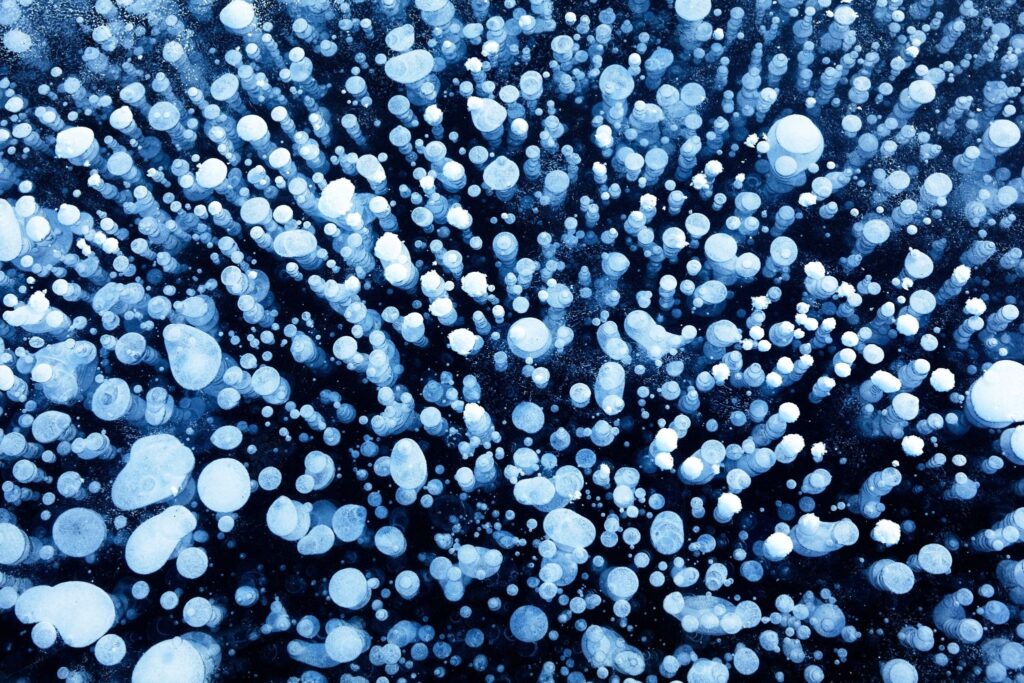
Lake Baikal freezes completely, usually in January, and stays under ice until May, with its thickness reaching a meter or more by the end of winter. Official winter roads are laid across this ice, including to Olkhon Island, and a truck carrying groceries for local stores travels across it as if it were a highway.
Winter Baikal has become a distinct tourist phenomenon precisely because of its transparency. The ice freezes slowly and in strong winds, so it turns out almost without air bubbles, and through it you can see the bottom in shallow water and the darkness plunging downwards in the depths. Add to this the hummocks, blocks of ice as tall as a person, grottoes with hanging icicles on the coastal cliffs, and the sound of a crack running through the ice, audible for kilometers.
The winds here have their own names and character. Sarma, bursting out of the mountain gorge, accelerates up to forty meters per second and has capsized vessels; Barguzin blows along the lake and is famous from the song; Kultuk comes from the south and brings bad weather. The weather changes within an hour, and anyone heading onto the ice or into a boat should remember this.
How to get to Lake Baikal
The standard route begins in Irkutsk, where a flight from Moscow takes about six hours. From there, it is about seventy kilometers and a one-hour drive to the settlement of Listvyanka on the very shore, where the Baikal Museum with aquariums and live nerpa seals operates, and it is usually visited by those who have only one day for the lake.
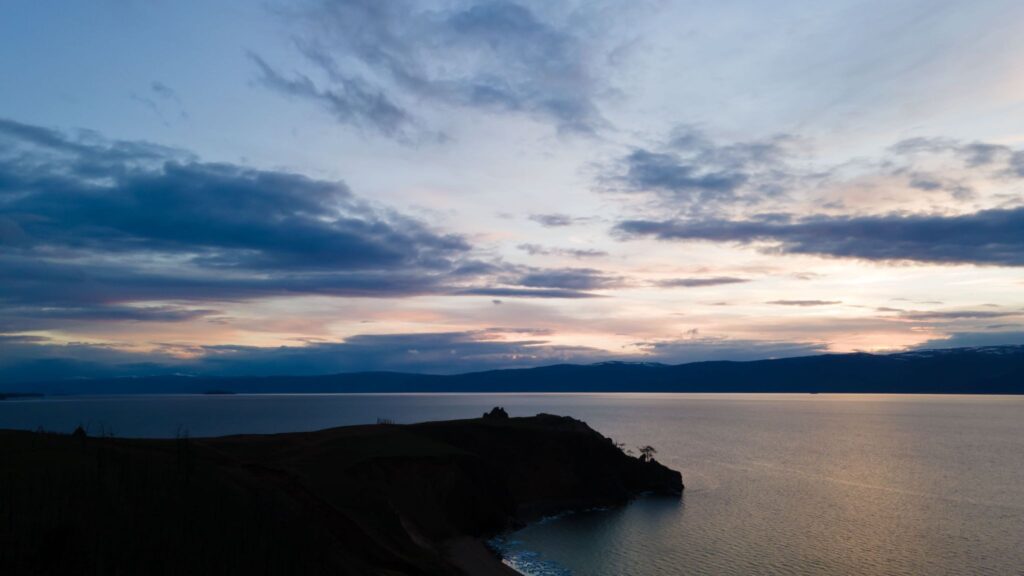
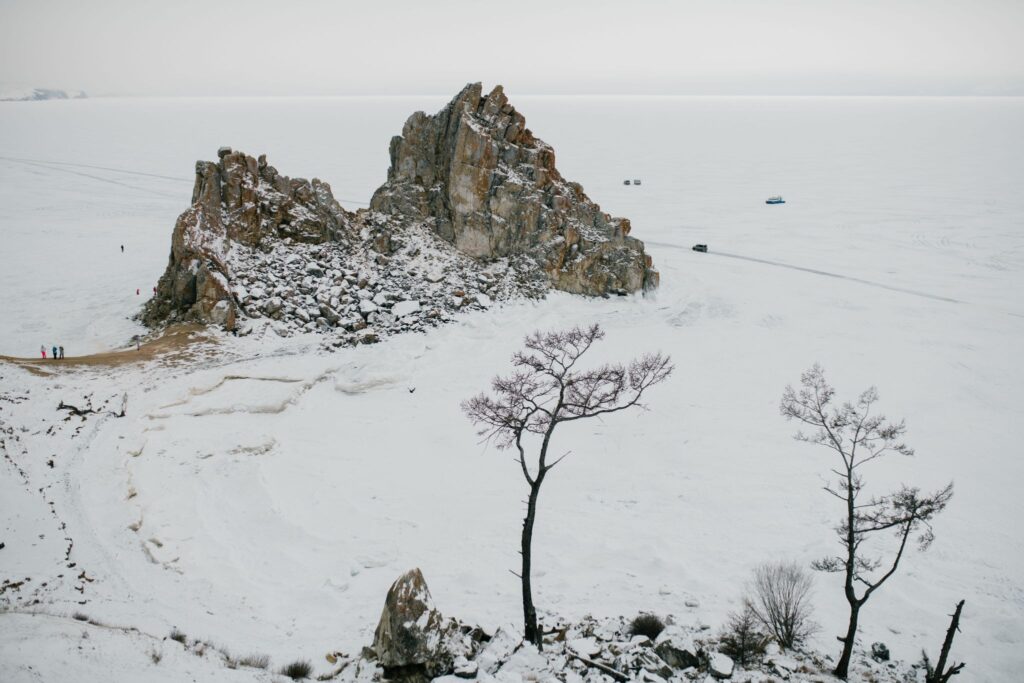
The second route leads to Olkhon, the largest island in the lake, which is a five- or six-hour journey from Irkutsk, involving a ferry crossing in the summer and an ice road in the winter. Olkhon is home to Shamanka Rock, one of the main shrines of Buryat shamanism and the most recognizable image in any search for «Lake Baikal.».
The train remains a unique way to travel and a distinct experience because the Trans-Siberian Railway runs along the southern shore, and from Slyudyanka to Baikalsk, passengers look out at the lake directly from the window for several hours. The historical part of this railway, the Circum-Baikal Railway with its dozens of tunnels and stone galleries, now operates as a weekend tourist route. From the eastern side, Ulan-Ude, the capital of Buryatia, reaches the lake, from where one can get to the Barguzin Bay and further to the neighboring Chivyrkuy Bay, where Zmeinaya Bay with its hot springs is located.
Map of the lake and approaches to it
A non-scaled diagram to understand the relative positions of the points mentioned in the article.
When to go and what to prepare for
There are two seasons at Lake Baikal, and they are structured completely differently. Summer, from July to early September, offers warm air, hiking trails along the Great Baikal Trail, and the opportunity to swim, although the water warms up only in shallow bays, while in the open lake it stays around ten degrees even in August. The winter season begins in February and ends in the first half of April, when the ice is still strong and the sun already provides light for photography.
It is also worth knowing about the more prosaic matters. Midges and ticks are common in the taiga around the lake in summer, and vaccinations against tick-borne encephalitis must be done in advance. The ecology deserves a separate discussion. For half a century, a pulp and mill plant smoked on the shore, which was only closed in the last decade; along the coastline, the alga Spirogyra, which is alien to the lake, blooms in places; and debates over how many tourists the lake can withstand are ongoing. When searching for «Baikal Russia,» English-language guidebooks write about all of this directly, and the status of a UNESCO World Heritage site works here not as a medal, but as a list of obligations.
Home
The fault beneath the lake has neither healed nor grown quiet; it is active right now, which is why the water here sits at a level found nowhere else on Earth. From this same source springs everything else: an age that numbers in the millions of years, a clarity that allows one in the spring to make out a white disc descending into the depths, and a life consisting half of creatures not found outside the basin.
What matters more to the traveler is something else. There are actually two Baikals, and you have to choose between them in advance. The summer one offers trails along the shore, ferries, warm weather, and cold water; the winter one offers transparent ice, ice roads, and temperatures approaching thirty below; and in between lie months when going there makes no sense. In both cases, the journey begins in Irkutsk or Ulan-Ude, after which distances are measured in hours along the highway or across the ice.
Russian for travelers
Lake Baikal remains a place where English is of little help: the ferry schedule, a conversation with a guesthouse owner, an ice crossing announcement—all of this is in Russian. At Palme School, children from four to seventeen years old study Russian online in small groups, and there are separate conversational practice groups for adults, where they analyze real-life situations like asking for directions or talking at the market. You can see how it works at two free lessons, the first of which is an introduction with a methodologist who selects a group based on age and level, and the second is a trial lesson with a teacher and other students.
Frequently Asked Questions
Why is the water in Lake Baikal fresh if the lake is so ancient?
Because the lake is flow-through. The salts brought in by rivers do not accumulate, but leave with the waters of the Angara, and over millions of years the system works like continuous flushing. In endorheic lakes like the Caspian and the Dead Sea, the salt has nowhere to go, hence the difference.
Is it true that Lake Baikal will someday become an ocean?
Such a hypothesis exists because the rift continues to widen, and some geologists consider the basin to be the embryo of a future ocean similar to how the Atlantic began. We are talking about tens of millions of years, so this has no practical significance for vacation plans.
Can you drink water straight from Lake Baikal?
In the open lake, the water has a very low mineralization, and locals scoop it up directly from the boat after moving well away from the shore. Near settlements, in shallow bays, and at river mouths, the picture is different—there is runoff and algal bloom, so water from those areas must be boiled.
What happened to the omul and has it returned?
Commercial fishing was banned in 2017 due to a sharp population decline, and the ban remains in effect. Recreational fishing is gradually being permitted with restrictions on gear and seasons, and the stock is recovering slowly, so smoked omul on store shelves is more often imported or from fish farms.
Who is the Baikal seal?
A seal that lives only in this lake and is its only mammal. It feeds on the golomyanka, dives to hundreds of meters, breathes in winter through breathing holes it makes with the claws of its front flippers, and its population is estimated at one hundred thousand or more individuals, according to various estimates up to one hundred and thirty thousand.
Is it possible to walk on the ice of Lake Baikal?
Official ice roads operate all winter, including the one to Olkhon, and vehicles drive on them. Off-route, the ice is checked by guides because pressure ridges open up by meters and change position within a day.
Where to stay on Olkhon and what to consider?
The main hub is the village of Khuzhir with guesthouses of various levels, ranging from simple rooms to heated cottages. Electricity only appeared on the island in 2005, there are almost no ATMs, so cash is obtained in advance, and in winter it is worth checking how the house is heated and whether there is hot water.