
In the winter of the late 1930s, a line of women carrying care packages stood outside the Kresty prison in Leningrad, and they stood there for months, sometimes from dawn. Once, in this line, Akhmatova was recognized, and a woman with lips turned blue from the cold whispered and asked if she could describe everything that was happening. Akhmatova replied that she could. She later retold this scene herself, and it begins «Requiem,» the principal book about Soviet terror, written by a person who stood in that very line.
Akhmatova lived for seventy-six years and turned out to be almost the only major Russian poet of her generation who survived the revolution, terror, war, and postwar persecution without leaving the country or falling completely silent. Her husband was executed by firing squad, her son spent about fourteen years in labor camps, and she herself was expelled from the Union of Writers and went unpublished for decades. She stayed and recorded it all.
Seventy-six years by dates
Click on the year to reveal what is behind it. What you read is marked automatically, and the analysis of the books and poems themselves is gathered in the table above.
She was born in Bolshoi Fontan into the family of a naval mechanical engineer. A year later, the family moved to the north, and her childhood was spent in Tsarskoye Selo.
She married Nikolai Gumilev after several years of his courtship. Their honeymoon led to Paris, where she met Modigliani.
The year of the first book and the year of the son's birth. Lev was taken in by his mother-in-law almost immediately, and the boy grew up with his grandmother on the Tver estate, seeing his parents only during their visits.
Her name became known beyond literary circles, her lines circulated in manuscript copies and albums, and imitators appeared in Petersburg drawing rooms.
Formally, the couple separated, but they remained friends and continued to share a common literary circle. The new marriage lasted only three years.
Her son’s father was executed on charges of conspiracy. For the poet’s son—whose name was now spoken only in whispers—that surname later cost him his freedom.
Without any official directive, the books stopped being published, and the author's name disappeared from publishers' schedules for nearly fifteen years.
Her husband, Nikolai Punin, and a student named Lev were arrested. After Akhmatova's letter to Stalin, both were released, which seemed like a miracle at the time.
Lva was arrested again and sent to the camps. That was the beginning of those seventeen months spent looking out of prison windows, from which *Requiem* emerged.
She stayed in the city during the first weeks of the siege, spoke on Leningrad radio, and took turns on watch with her neighbors. She was flown out via Moscow, with Tashkent as her final destination.
The publication in the country's leading newspaper restored her status as a published author for several years.
Her guest from Britain stayed with her until morning, and she considered that conversation a turning point in her entire future.
The party document on the Leningrad journals declared her alien to the people. Expulsion from the Union of Writers took away her earnings and ration cards.
Her husband and son were arrested in the same year, and both were sentenced to prison camps. For her, this was already the third wave of arrests in her own home.
After the Twentieth Congress, his case was also reviewed. The mother met an adult man returning from the camp, with whom she had not lived since his student years.
This last major work was completed after many years of revisiting the manuscript. It was never published in the author’s homeland during his lifetime and circulated in manuscript form.
The first literary award he received abroad, and his first trip outside the country since his youth.
A British university awarded an honorary doctorate to a woman who, for two decades, had been declared by her home country to be nonexistent in literature.
Death overtook her in a sanatorium near Moscow, and her grave in the Komarovo cemetery became a place of pilgrimage. Her main book was allowed in her homeland only two decades later.
The Girl from Tsarskoye Selo and Her Great-Grandmother's Last Name
She was born in 1889 near Odessa and grew up in Tsarskoye Selo, a town of parks and a lyceum where Pushkin had studied a century before her, and this connection found its way into everything she wrote. She attended the Mariinsky Gymnasium, where she met fellow student Nikolai Gumilev, who courted her for several years but was repeatedly rebuffed.
Her real last name is Gorenko. When the seventeen-year-old girl began publishing her poems, her father demanded that she not bring shame upon the family name, so she adopted the maiden name of her maternal great-grandmother, which was of Tatar origin. The pseudonym turned out to be more successful than anyone could have imagined. Two resonant words that are impossible to confuse, and a legend about a Tatar princess, which she herself later willingly perpetuated.
Two Books That Made a Name for Itself

Her first collection, *Evening*, was published in 1912, when she was twenty-two; true fame came with *The Rosary* two years later, and for a woman in Russian poetry, this fame was the first of such magnitude. Her poems spoke of love in a way that broke with convention—through brief scenes, a gesture, an object, a glove on the wrong hand—without a single abstract word.
Behind this style lay an entire literary program. Together with Gumilev, whom she married in 1910, and Osip Mandelstam, she belonged to Acmeism, a movement that declared war on the vagueness of Symbolism. The Acmeists demanded clarity, precise language, and the material world instead of mystical allusions, and she herself—whose emotions are always expressed through objects—embodied this program better than anyone else.
Family life did not work out well. In 1912, their son Lev was born, and he was raised mostly by his grandmother. The marriage to Gumilyov ended in 1918, leaving behind the mutual respect of two writers. This was followed by a short union with the Orientalist Vladimir Shileiko, with whom they parted ways in 1921.
What to read and in what order
Eleven things she is known for, ranging from eight-line poems to a poem written over twenty-two years.
| Product | Genre | Year | What to read and why |
|---|---|---|---|
| «Song of the Last Meeting» | Poem | 1911 | The breakup is shown in a single gesture: the heroine, in confusion, puts her glove on the wrong hand. A textbook example of how her emotion is conveyed through an object. |
| «I wrung my hands under the dark veil» | Poem | 1911 | An argument, running down the stairs, an attempt to catch up. Eight lines that contain the plot of an entire novel, making a convenient starting point for getting acquainted. |
| «Evening» | The first collection | 1912 | Three hundred copies that sold out instantly. Love poetry written in short scenes, without a single abstract word. |
| «Prayer beads» | Collection | 1914 | The book that brought true fame and went through several reprints in a row. Its style was immediately copied. |
| «White Flock» | Collection | 1917 | A book of the wartime and pre-revolutionary era, where intimate lyricism is replaced by a voice speaking of the country's fate. |
| «A voice came to me» | Poem | 1917 | An answer to those who told her to leave after the revolution. One of her most-quoted poems, explaining why she stayed. |
| «In the Year of our Lord 1921» | Collection | 1922 | The last book before a fifteen-year silence. The Latin title refers to the year of Gumilyov's execution. |
| «Requiem» | Cycle | 1935-1940 | The main book on the Great Terror, written by a mother who stood in line at a prison window. For twenty years, it existed only in the memory of trusted female friends. |
| «"Courage"» | Poem | 1942 | War poems published in Pravda, where the preservation of the native language is named as the reason for which the war is being fought. |
| «"A Poem Without a Hero"» | Poem | 1940-1962 | Twenty-two years of work, the ghosts of pre-revolutionary St. Petersburg, encrypted addressees and doppelgängers. The pinnacle of the late style and its most difficult work. |
| «Native land» | Poem | 1961 | A late poem about the land that is not carried in an amulet nor sung about, but that one simply lies down in. The culmination of a theme begun in 1917. |
The poems indicate the year they were written, the collections indicate the year of publication, and «Requiem» and «Poem Without a Hero» indicate the period of work on the text.
Fifteen years without a single book
In August 1921, Gumilyov was executed by firing squad on charges of participating in a conspiracy, and this was the first execution of such a scale among Russian writers. Akhmatova was left with the son of the executed father on her hands and with a reputation that now worked against her.
Then began what is described by the word "silence." There was neither arrest nor official ban; they simply stopped publishing her, from about the mid-twenties for almost fifteen years. Critics declared these poems to be a relic of a hostile class, books disappeared from publishing schedules, and she made a living through translations, the study of Pushkin, and the help of others. For readers, her name gradually faded into the past, despite the fact that she wrote all those years.
Seventeen months behind bars
In 1935, her husband, the art historian Nikolai Punin, and her son Lev, then a student, were arrested. Both were soon released following Akhmatova's letter to Stalin, but in March 1938 Lev was arrested again and sentenced to the camps. The mother spent the next seventeen months standing in lines at the prison windows, where care packages were accepted and where sometimes, once every few weeks, they would report at least something.
Out of these months grew «Requiem,» a cycle about the mothers, wives, and sisters of the arrested, about a country that had become one continuous queue. To keep such a manuscript meant to condemn oneself and one's loved ones, and for many years the cycle had no physical paper form at all. Lidiya Chukovskaya, one of the few initiates, described the established routine. The hostess would silently hand a sheet to the guest, the guest would read it to herself and return it, while talking out loud about the weather and trifles because the room could be bugged, and then the paper was burned. Memorized by heart by her female friends, it remained the only copy for almost a quarter of a century. Transcripts nevertheless circulated and at some point crossed the border, so the first book edition appeared neither in Leningrad nor in Moscow, but in Munich, a quarter of a century before the cycle was permitted at home. No one asked for the author's consent, and this publication brought her no joy.
The son's arrests came in waves, from the mid-thirties to the late forties, and he was only released when camp cases began to be reviewed. Camps and prisons took about fourteen years of his life. Afterwards came a major academic career with his own theory on the origin of peoples, but his relationship with his mother remained broken, and this is one of the most bitter pages of her biography.
War, a short respite, and the 1946 decree

She spent the first weeks of the blockade in besieged Leningrad and spoke on the radio with an appeal to the women of the city, after which she was evacuated, and the next two and a half years were spent in Tashkent. In the spring of 1942, Pravda published a poem in which loyalty to her native language was called the most important task of wartime, and the disgraced author was needed again. After the victory, the publishing house prepared and typeset a new book, but the print run was pulped.
The breathing spell ended in 1946 with the Central Committee's decree on the magazines Zvezda and Leningrad, which called Akhmatova alien to the Soviet people and erased her from literature along with Mikhail Zoshchenko. She was expelled from the Union of Writers, thereby depriving her of her livelihood and ration cards. The wording of that report was taught in schools and universities for almost twenty years, and an entire generation learned the poet's name from a document explaining why such a poet should not exist.
Komarovo and Later Recognition
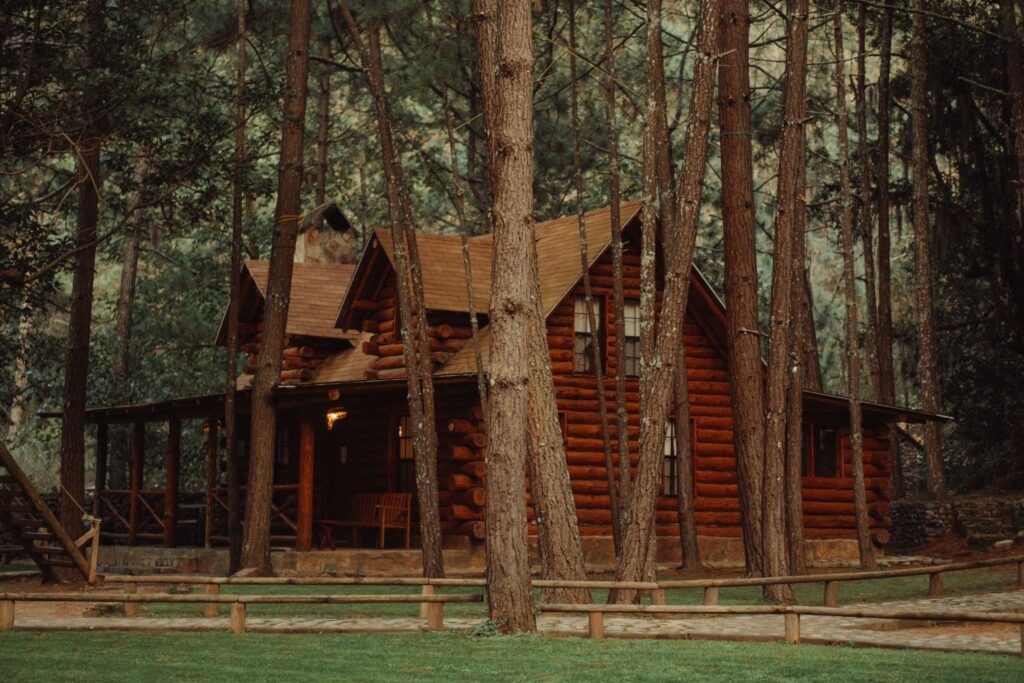
The last decade brought changes. After Stalin's death, the bans eased, and young poets began to visit her, among them Joseph Brodsky, who called her the most important person in his life. She spent her summers in Komarovo near Leningrad, in a government-owned dacha without any amenities, which she nicknamed the Shack, and young Leningrad poets, who later came to be known as Akhmatova's orphans, would also gather there.
«She completed *A Poem Without a Hero*, which had taken her twenty-two years to write, in 1962, and this was followed by an Italian literary prize and an honorary doctorate from Oxford. For these honors, she was allowed to travel abroad for the first time in half a century, and the seventy-five-year-old woman—who for decades had been declared nonexistent in her own country—received her academic gown at a British university. She died in March 1966 at a sanatorium near Moscow, was buried in Komarovo, and by that time, *Requiem* had still not been published in her native language in her home country.
Six things through which she speaks
In Akhmatova’s poetry, a feeling is almost never named directly; it is conveyed through an object. Here are the objects that recur most frequently.
Glove
Akhmatova's minor awkwardness with an object replaces any explanation of feeling, and the reader understands the heroine's state before reading the next line. This device comes from Acmeist training, where an object was valued higher than an abstract concept.
Window and door
Thresholds, windows, and stairs mark moments for her when something ends. The hero leaves, the door closes, the light in the window goes out, and with that the poem breaks off, leaving the reader to finish it themselves.
Prison window
From the queues of 1938 emerged a completely different material world. The stone base of the prison wall, a key in a lock, a small package with contraband, black cars at dawn—all these things were instantly recognizable to contemporaries without any explanation.
Tsarskoselsky Garden
The park, statues, and ponds of her hometown run through all her poetry as a place where time moves differently. The shadow of Pushkin also lives there, whom she read as a scholar and felt was a neighbor along these alleys.
Shadow and Doppelganger
In her later works, above all in Poem Without a Hero, ghosts, masks, and guests from the past appear. This device makes it possible to speak of the dead without naming them directly, which meant a great deal in censored literature.
House
The Fountain House, the Komarovo Shack, the alien corners of the war years. Her living arrangements are always temporary and always bugged, and therefore household items, the table, the lamp, the tablecloth, carry a sense of impermanence.
How to read her today and where to start

Early lyrical poetry is better suited for language learners than many other Russian poems because the lines are short, the syntax is transparent, and the vocabulary is everyday, without archaisms, and in eight lines she fits a whole novel that can be read in a minute. Later works rely on subtext, names, and dates that were understandable to her contemporaries, which is why when searching for «Anna Akhmatova,» English-language editions come with extensive notes, without which half the meaning is lost. It is also worth remembering that translation loses the sound, whereas in her poetry, sound works on a par with meaning.
For comparison with a poet of an entirely different make, songful and wide-open, the biography is useful Sergey Yesenin, and it is a good idea to start a conversation about how Russian poets read each other with a selection poems about Alexander Pushkin, whom Akhmatova studied all her life as a researcher.
Home
Anna Akhmatova lived for seventy-six years, more than half of which fell on the years when she was either unpublished or published with caution. She began as a writer of love poetry and became the first female Russian poet to achieve true fame, and she ended with a book about terror that was kept in people's memories instead of on paper for twenty years. Her husband was executed by firing squad, her son spent about fourteen years in labor camps, and she herself was expelled from literature by a party decree. At the same time, she remained in the country and continued to write, and today «Requiem» is read as the primary testimony of that era, and her early poetry is known by heart by people who have never opened a complete book.
Russian poetry in live reading
Poems are memorized when they are read aloud and discussed rather than analyzed via a textbook, and in this sense, poetry gives the language something no exercise ever will: rhythm, intonation, and natural word order. At Palme School, children from four to seventeen years old study Russian online in small groups where they read poetry, debate about it, and memorize it voluntarily. You can see how it works at two free lessons, the first of which is an introduction with a methodologist who selects a group based on age and level, and the second is a trial lesson with a teacher and other students.
Frequently Asked Questions
Why is Akhmatova called a poet rather than a poetess?
She demanded this herself and corrected interlocutors who used the feminine form. This word seemed diminutive to her, relegating what was written to a separate female category, and the tradition of speaking of her in the masculine gender persists to this day.
Is it true that Modigliani painted Akhmatova?
Yes, they met in Paris in 1910 and saw each other the following summer. By her own account, there were about sixteen drawings, of which one survived, which later hung above her sofa. Several more were found in private collections much later.
What happened to Nikolai Punin?
He was arrested again in 1949 and sentenced to the camps. He died in 1953 in the Abez camp sector in the north of Komi, not living to see his release.
How did her meeting with Isaiah Berlin influence her fate?
The English diplomat and philosopher came to see her at the Fountain House in the autumn of 1945, and they talked all night. Akhmatova herself connected this visit with both the 1946 resolution and almost the beginning of the Cold War; historians view such a connection more cautiously, but the persecution began shortly after the meeting.
What can be seen at the Fountain House?
The museum is open in the outbuilding of the Sheremetev Palace in St. Petersburg, where she lived for about thirty years. The rooms, furnishings, belongings, and manuscripts have been preserved, and a separate part of the exhibition is dedicated to the history of «Requiem».
Why did the relationship with Lev Gumilyov break down?
Having returned from the camps, the son believed that his mother had not interceded enough on his behalf and that he had paid for his parents with his own biography. Complete reconciliation did not happen, although the rupture was not final, and he himself became a well-known scientist.