

Imagine Lake Baikal in winter. The vast, deepest lake on the planet is frozen over, with hundreds of kilometers of silence, snow, and frosty haze surrounding it, and the nearest sea is almost two thousand kilometers away. Suddenly, in the middle of this icy desert, a round, whiskered head with huge, wet eyes appears in a dark ice hole. It's a nerpa, the Baikal seal, whose very existence in the heart of Siberia seems like a true miracle and mystery.
Those who hear about the Baikal seal for the first time or search for "nerpa seal" online are usually surprised twice. First, that a seal lives not in the sea, but in a freshwater lake, and second, how cute it is. For parents raising a child far from Russia, the nerpa is a wonderful opportunity to tell their son or daughter about the living wonder of their native nature, and for those learning Russian, the freshwater seal becomes a hook that catches their interest in both the language and faraway Siberia. Read on to learn about this creature, how it ended up in Lake Baikal, what it lives on under the ice, what threatens it, and where it can be seen.
What kind of animal is a seal
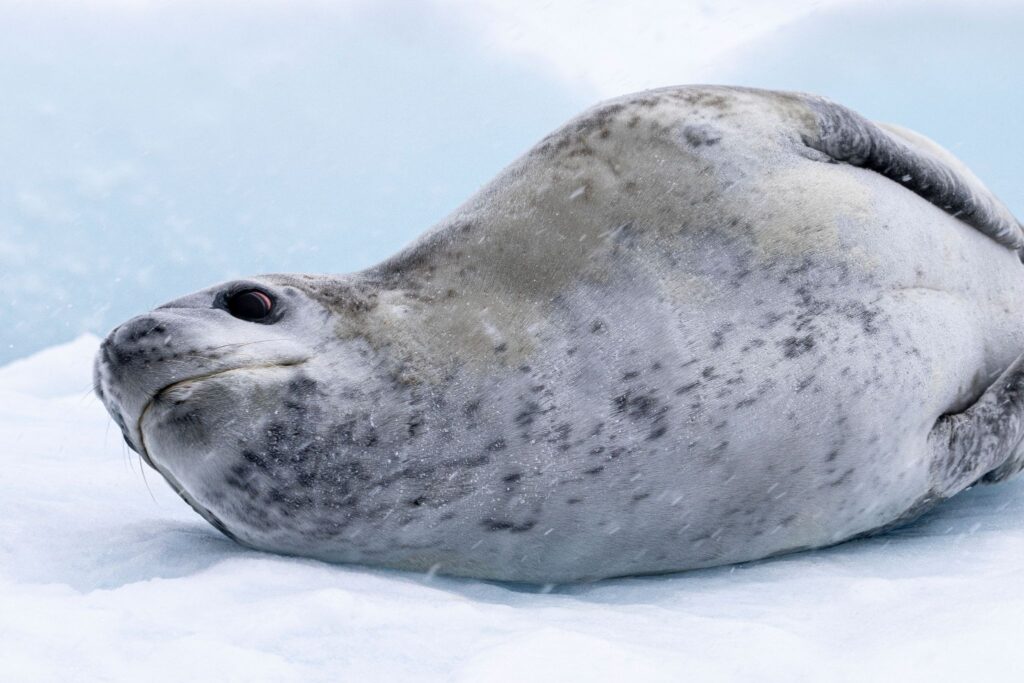
Let's start with the main wonder. The Baikal seal is the only seal species in the world that lives exclusively in fresh water. All other seals frolic in seas and oceans, and only the Baikal seal has chosen a freshwater lake as its home. It does have distant relatives in Lake Ladoga and Finland's Lake Saimaa, but those relatives are considered freshwater subspecies of the ringed seal based on their biology, while the Baikal seal stands apart as an independent species for which the sea is not necessary at all.
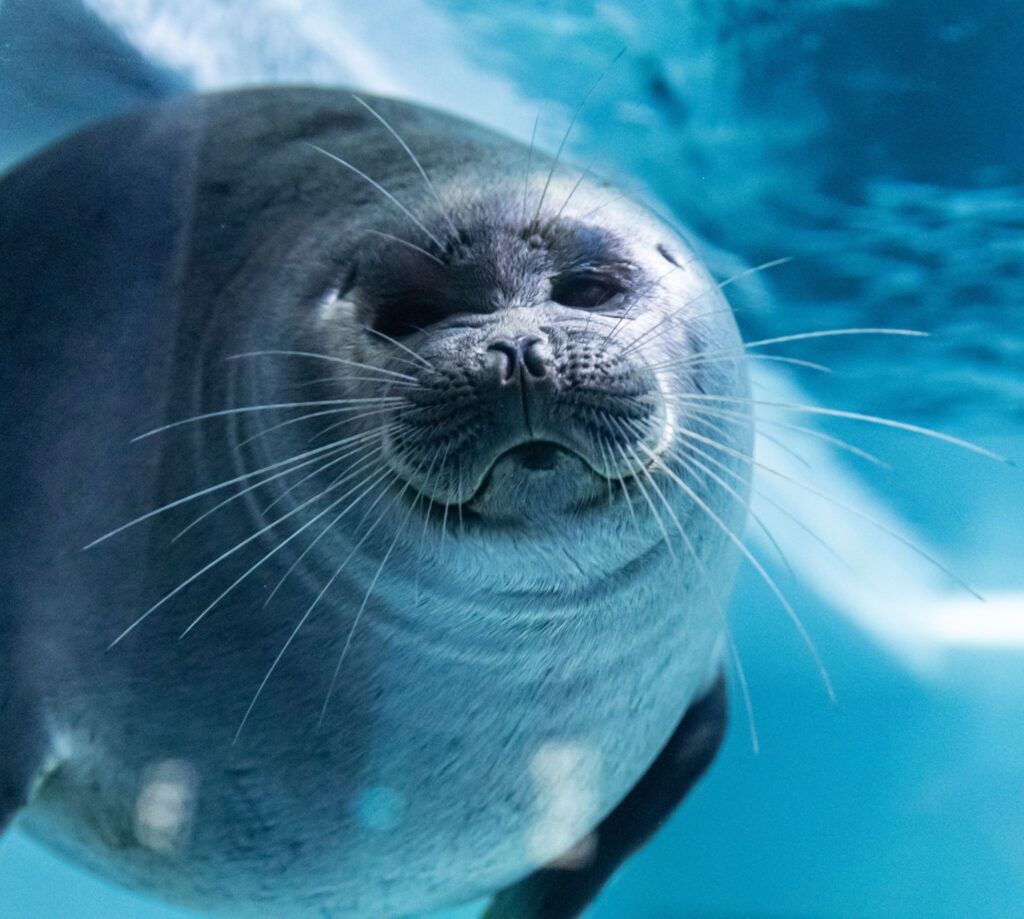
The seal itself is not large, being one of the smallest seals in the world. An adult animal grows to an average of one and a half meters, and large males up to one meter eighty, weighing from fifty kilograms to over a hundred, fattening up by autumn and slimming down by spring. Its body is round, shapely, almost streamlined, with a small, neat head, but its eyes are huge, dark, slightly bulging, and it is precisely because of them that the seal appears so touching. The fur of an adult animal is silvery-gray, with a steel sheen, and gradually turns brownish with age. Under the skin is a thick layer of fat, which both warms it in icy water and keeps it afloat, and its strong, clawed front flippers function as oars and as a tool, which we will discuss later.
The only house in the middle of Siberia
How did a creature so inherently marine end up in a lake thousands of kilometers from any sea? Scientists are still grappling with this mystery and there's no complete answer yet. According to the most common theory, the distant ancestors of the seal, similar to the Arctic ringed seal, made their way to Baikal from the north via the large Siberian rivers during the Ice Age, when the world was a different place. These rivers have long since shallowed or changed their courses, the way back was closed, and the seals remained in the lake forever, adapting to life in fresh water.
The house they received was, it must be said, a special one. Lake Baikal, the deepest lake on the planet, plunges more than a kilometer and a half in places, and it is also one of the oldest on Earth, many millions of years old. It holds about a fifth of all the unfrozen fresh water on Earth; this water is exceptionally clean and cold, and there is more life in the lake than can be found anywhere else, with a good two-thirds of these creatures found only here. The nerpa thrives in such a rich and secluded world, and today it has spread throughout Baikal, staying closer to the north in winter, where the ice is stronger and melts later.
What the seal lives on under the ice
The seal's main concern, of course, is food, and it has its own tricks when it comes to nutrition. The basis of its diet is the golomyanka, an amazing Baikal fish, transparent and so fatty that it's almost one-third fat. The golomyanka doesn't swim in schools but stays alone in the water column, which is why fishermen don't catch it, but it's easy for the seal to get and feeds it year-round. Small gobies and crustaceans are added to the golomyanka, and nearly three dozen types of fish have been counted on the seal's menu.
Separately, it is worth dispelling a long-standing slander. The nerpa is often blamed for eating the famous Baikal omul and thus reducing its numbers. In reality, omul makes up only a negligible fraction of a percent of the nerpa's diet, meaning it has almost no impact. Moreover, by eating голомянка, omul's main competitor for food, the nerpa actually helps omul rather than harms it. Thus, its reputation as a voracious bandit was undeserved.
The seal hunts masterfully, as it is a first-class diver. In pursuit of fish, it dives to depths of up to two hundred, and according to some sources, up to three hundred meters, and can stay underwater for more than twenty minutes, and up to seventy when escaping danger. The secret is that it has significantly more blood and hemoglobin than any other seal of the same size, and this reserve allows it to stay submerged for long periods without needing to surface for air. In winter, when Lake Baikal is covered by thick ice, the seal creates breathing holes in it with its claws and carefully keeps them open so it has a place to breathe, and all winter long it darts between the water and the icy roof of its world.
Whitefish on the spring ice
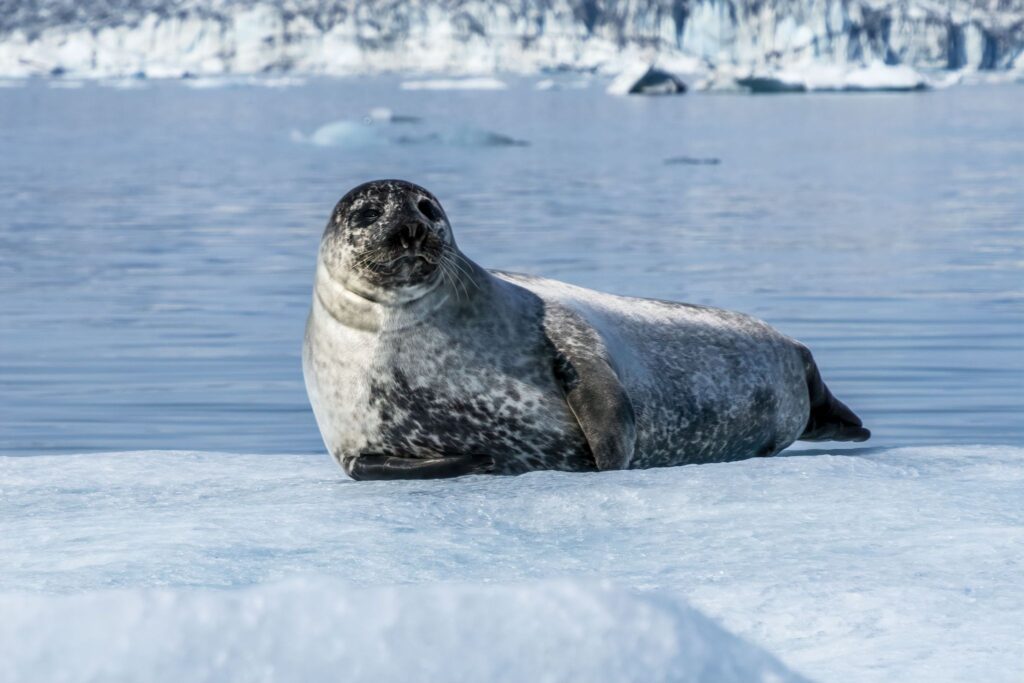
The most tender chapter in the life of a seal is connected with reproduction and procreation. Towards the end of winter, in February and March, the female creates a shelter right on the ice, digging a den in the snow and hummocks, and there, in a snowy cradle, a cub is born. Most often, it is single, although twins occur in seals noticeably more often than in true seals.
A newborn seal is called a "belk" (WHITECOAT), and its name speaks for itself. For the first weeks of its life, the cub is covered in thick, snow-white fur, making it almost indistinguishable from the snow and reliably hidden from prying eyes. The mother feeds it rich milk, and the whitecoat grows rapidly. In just over a month, it sheds its white coat, replacing it with a dark adult pelt. Everything is arranged so that the cub has time to grow and strengthen while the ice holds, because as soon as the lake thaws, its snowy cradle will melt, and the cub will have to learn to navigate the cold water on its own. Seals live long lives by animal standards, up to over fifty years, with females typically outliving males.
What threatens the seal
Despite all its prosperity, the life of a seal is not as serene as it might seem. The main danger comes not from predators, but from humans and the changes they bring. The first misfortune comes from pollution. The seal sits at the top of the Baikal food chain, and all.
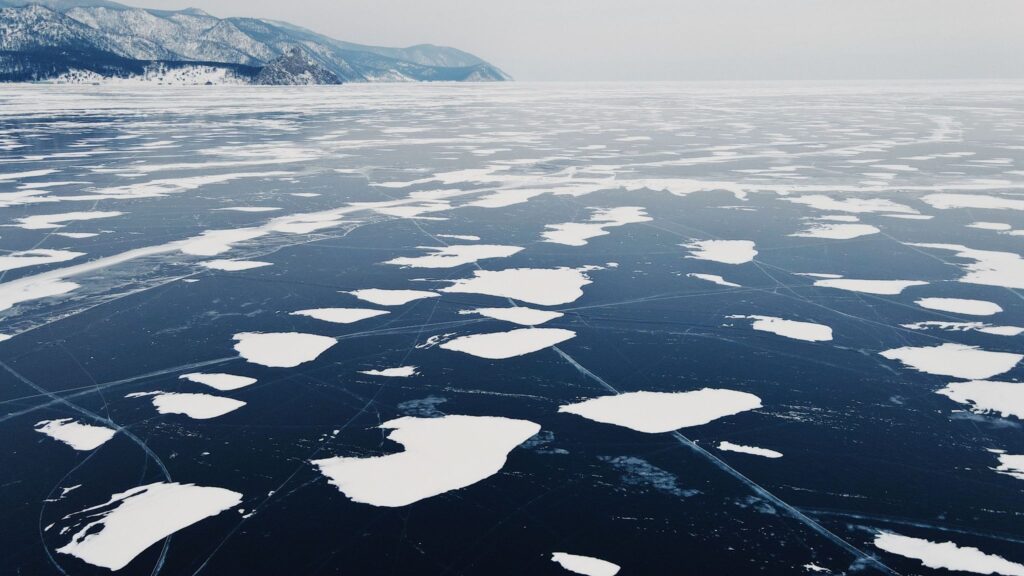
The second, increasingly menacing trouble comes with warming temperatures. The entire way of life for seals requires solid ice, as this is where their pups are born and grow. If winters become warmer, and the ice thins and breaks up prematurely, the snow dens collapse too soon, and the pups die before they can grow strong. There is also the old trouble: poaching. Seals have been hunted for centuries for their beautiful fur and blubber, and the trade in pups once numbered in the thousands per year. There have also been sudden mass die-offs, the most terrible of which occurred in the late eighties when introduced canine distemper wiped out thousands of animals.
And yet, there is no reason for despair yet. There are still many tens of thousands of seals in Lake Baikal today, with various estimates ranging from one hundred to one hundred thirty thousand, and this is already at the very limit of what the lake can sustain. Scientists consider the species to be thriving, among those that cause the least concern. The protection of seals, the monitoring of poachers and the cleanliness of Baikal's water are necessary precisely so that this well-being does not turn out to be fragile, because the world's only freshwater seal lives in one single lake, and it has no other home.
Where to see seals with your own eyes
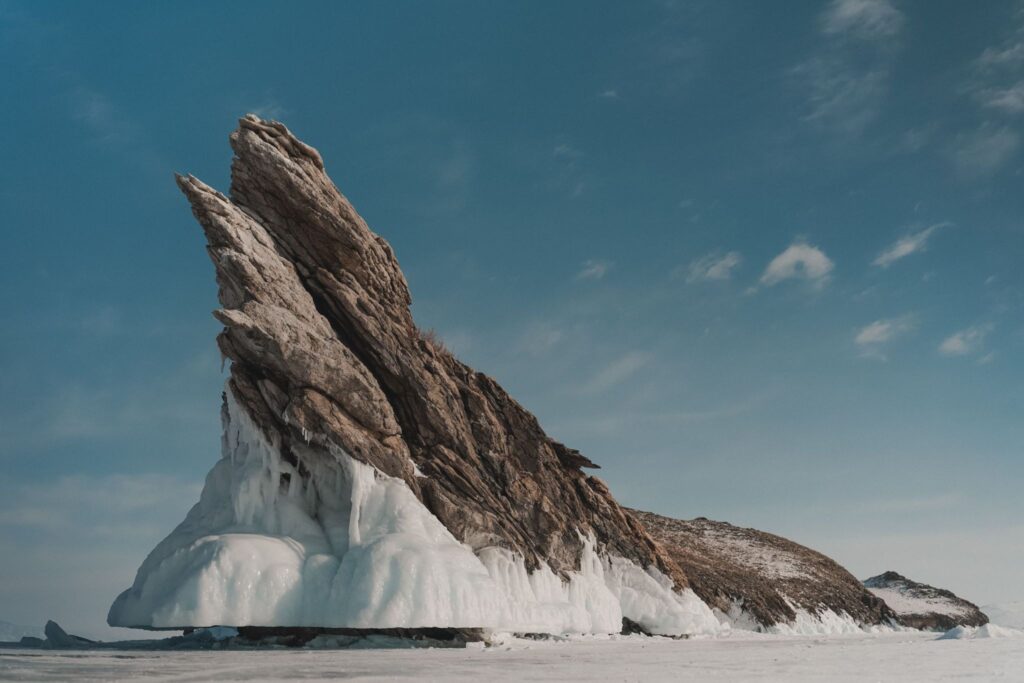
Seeing a seal in the wild is not easy, as they are cautious creatures and do not let humans get close. Yet, there is a special place on Lake Baikal, the Ushkanyi Islands, where seals gather in large numbers in the summer to bask on the coastal rocks. This is their largest rookery, and in good weather, hundreds of shiny seal backs can be counted on the rocks. It is forbidden to approach too closely so as not to scare the animals, so they are observed from a distance, through binoculars or from a hide.
For those who want to see a nerpa up close, the place to go is the nerpinarium, which operates in the village of Listvyanka and in Irkutsk. There live quite tame nerpas, and you can not only admire them but also see how agile these sea dogs are on land and how smart they are in the water. For a child, such an encounter is remembered for a lifetime, because it's one thing to read about a curious seal, and quite another to look it in the eyes.
How to show a child the living wonders of Russia
The Baikal seal is one of those stories that opens up a whole world to a child. Behind this one cute animal lie the great lake, the mysteries of nature, and questions about how to protect living things. And through all of this, it's easy to tell a child about their homeland in their native language. Children adore animals, and through their love for the touching seal, you can easily guide the conversation to the Russian language, Russian nature, and where their family comes from.
That's right, Russian is taught by starting with what truly interests the child, and in Palme School, where children from Russian-speaking families aged four to seventeen are led to the language not through boring rules, but through topics that are lively and close to them. You can get acquainted with the school through two free sessions. First, an introduction and assessment with a methodologist, where it will be clear what the child can already do and where they need help. Then, a trial class in a live group, along with other children. Without any obligations, just to understand if this format is right for you or not.
The Baikal seal, also known as the Baikal earless seal, is a true seal endemic to Lake Baikal in Siberia, Russia. It is one of the world's smallest true seals and the only exclusively freshwater seal.
The Baikal seal is one of those natural wonders that are hard to believe, as it is a true seal living deep inland, in the only lake on the entire planet. How it wandered so far from the ocean and when, science does not know exactly, but most likely, ancient rivers paved the way for its distant ancestors. The seal feeds mainly on the Baikal omul, dives for it hundreds of meters, and stays submerged for a long time. In early spring, it gives birth to a pup in a snow den on the ice, with the pup covered in a snow-white coat. The main dangers for it are pollution, melting ice, and poaching, but for now, the species is doing well and numbers many tens of thousands of animals. For a child growing up far from Russia, the story of this touching seal becomes a vivid and warm window into their native nature and language.
Baikal seals are called the only freshwater seals because they are the only seal species that lives its entire life in freshwater.
Because among all the seals in the world, she is the only one that does not need the sea and spends her entire life in fresh water, while her relatives swim in seas and oceans. Freshwater seals can be found in Ladoga and Lake Saimaa in Finland, but subspecies of the ringed seal live there, not a separate species, and this is what makes the Baikal seal particularly valuable for science. There is no other seal like it on Earth that is tied to a single lake.
How did the seal get to Lake Baikal thousands of kilometers from the sea?
Science does not yet know the exact answer, and this is one of Baikal's long-standing mysteries. According to the most common version, the distant ancestors of the seal, similar to the Arctic ringed seal, came to the lake from the north via the large Siberian rivers during the Ice Age. Later, the rivers shallowed or changed their courses, the way back was closed, and the seals remained in Baikal forever, over time adapting to life in fresh water.
The Baikal seal eats fish.
The basis of its diet is golomyanka, a transparent, fatty fish that is found only in Ba.
The Baikal seal lives for about 50-55 years. There are approximately 100,000 to 130,000 of them left in Lake Baikal.
The Baikal seal lives a long time, up to fifty-odd years, and females usually outlive males. In total, there are now many tens of thousands of them in Baikal, with estimates ranging from one hundred to one hundred and thirty thousand individuals. This is already at the limit of what the lake can sustain, so scientists consider the species to be thriving and place it among those of least concern.
What threatens the Baikal seal?
The main threats are related to humans. These include pollution of the lake, as harmful substances accumulate in the fat of seals, as predators at the top of the food chain. There is also warming, due to which the ice becomes thinner and breaks up earlier, depriving the pups of reliable shelter. Poaching for fur and fat, and rare outbreaks of diseases, the most terrible of which, distemper, killed thousands of animals in the late eighties, also play a role.
Where can you see the Baikal seal?
In the wild, seals can be seen in large numbers in the summer on the Ushkan'i Islands, their largest rookery, where the animals come out onto the coastal rocks to bask in the sun. They are observed from afar so as not to scare them away. And to get a closer look at the seals, it's worth visiting the sealarium in Listvyanka or Irkutsk, where tame seals live and where it is especially interesting for children.