
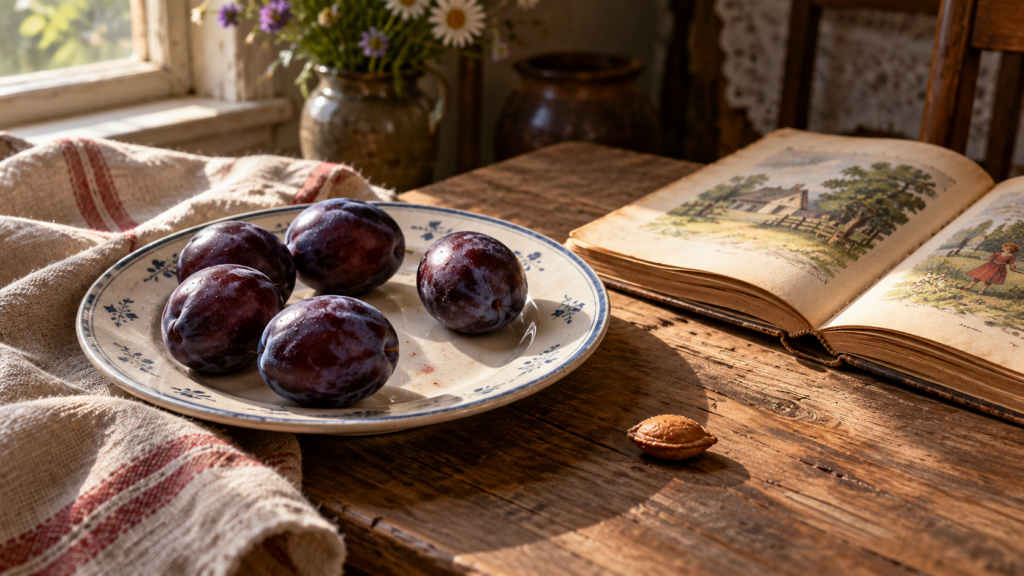

«Tolstoy published »Kostochka« in 1875, in the »First Russian Book for Reading.« After »The New Alphabet,« he published four books for reading, and this opened up a new series of them. Besides »Kostochka,” other new short stories were also included. The story is on one page, the words are simple, the sentences are short. Almost any second-grade student can read it.
And almost any second-grader, after finishing the book, starts to doubt at the last line.
«And everyone laughed, but Vanya cried.
Everything that happened before is clear. Mom bought the plums; Vanya never ate them and just kept walking around sniffing them. There was only one left in the jar; he couldn’t help himself and ate it. Mom counted them and told her father. At lunch, the father asked who had eaten the plums. Everyone said they hadn’t eaten any. Vanya too.
And then the father talks about the bone fragment. What if someone swallows it, it's dangerous. And Vanya reveals himself: no, he says he threw the bone fragment out the window.
Everyone is laughing here, but he is crying.
Where does the reading end?
If the child has read the story and can explain who ate the plum and how it was discovered, then he has understood the events. Before that, there was another big step: learning to read correctly, smoothly and expressively; we wrote about that in detail when telling about «The »Reading School".
But why did Vanya cry? The text doesn't say. Tolstoy doesn't say why. Was he afraid he would die, even though he wasn't swallowing bones? Was it embarrassing that he lied in front of everyone? It's embarrassing that they laugh at him? Or all at once?
And then the child who had read the story quickly stops talking. He has understood the events. He has not understood the person.
That's normal; that's a different skill. The reading technique won't help here; no matter how many times you reread it faster. You need to get back to the text and look for what to rely on.
Red and white
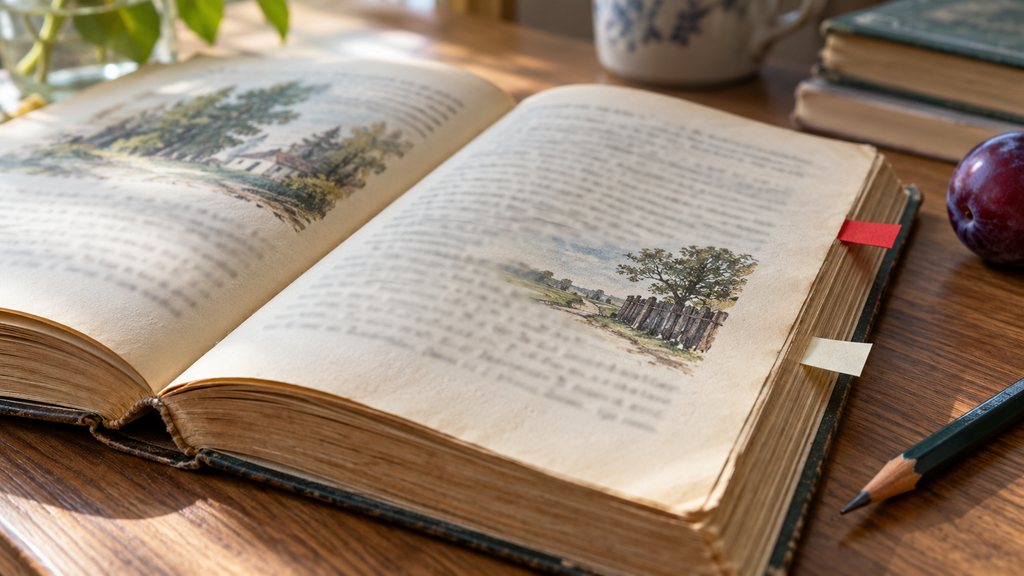
And there is something to rely on. Tolstoy, who couldn’t explain the tears, left two clues, and both of them were directed at the face.
When the father asks who ate the plum, Vanya gets red and says he didn't eat it. When the father talks about the dangerous bone, Vanya turns pale.
First red, then white. The child can simply point to these two places with their fingers and ask why their face has changed color. Why do people blush? And why do they turn pale? Usually the children answer themselves, quite accurately. They blush when they are embarrassed or when they are lying. They turn pale when they are afraid.
And immediately a version of his own emerges. Vanya cries because he was scared, and then everyone else laughs at him too. Or because they caught him lying. Or because he feels ashamed, scared, hurt, and all of that in just one minute.
Which version is correct? Tolstoy won’t say. But you can check each one by the text, find out which supports it and which doesn’t. If the child says «he was ashamed,» you can ask where in the story it is clear that he was ashamed. If he says «he was scared,» where it is clear that he was scared. If you found both, then the answer most likely isn’t one word.
Conversation after the last line
All three tasks are done orally; the story is presented to you. Before reading, you have one sentence to explain the word «porch»: the best, bright room in the house. The tasks are presented in order, but one evening is enough for all of them.
What happened
The child tells in order what happened in the story, from the purchase of the plums to Vanya’s answer at dinner. The adult does not offer any suggestions; he only asks «and then?» if the story gets interrupted.
Red and white
The child looks in the text for two places where Vanya changes his face, and points to them with his finger. Then the adult asks why people blush and why they become pale.
Why Vanya cried
The child offers their version of why everyone laughed at the end, but Vanya cried; they find a line in the story that supports their version. Then the adult offers another version, and the child checks it against the text again. At the end, you can ask if it is possible to answer with one word.
One word that hinders
In a child who grows up with two languages, one word may get stuck in this story. Gorinka. It doesn’t exist in either the school English or the usual home Russian. If it isn’t explained, the conversation about Gorinka easily turns into a conversation about what a gorinka is, and it doesn’t even get to the point of tears at the end.
It is easier to explain in advance, with one phrase: the best, brightest room in the house. And move on.
It's good if at the end the child reads the last line again, out loud. It's the same thing. Only now, after the word «cried,» he has his own guess, and he can show in the text where it came from.
That's how children learn to talk about what they have read. literary reading: Not only reading the story, but also arguing about it based on the text.
If the child already reads small texts in Russian, but it is difficult for him to talk about them, argue about them, and find reasons for his opinion in the book, they work on literary reading together with the teacher and other children.
You can start with two free lessons: an introductory session with a facilitator and a trial lesson in a group with a teacher.
Try the literary reading lessonFrequently asked questions about Tolstoy's story Kostochka
What does Tolstoy’s story «The Bone» tell us?
The boy Vanya secretly eats the plum that his mother bought for lunch. At the table, his father asks who ate it; everyone answers that they didn’t, and Vanya too. Then the father says that the swallowed bone is dangerous, and Vanya identifies himself: he says that he threw the bone out the window. Everyone laughs, but Vanya cries.
When was the first time «Kostochka» was printed?
In 1875, in «The First Russian Book for Reading.» This is the first of four books for reading that Tolstoy published after «The New Alphabet.».
Why did Vanya cry at the end of the story?
Tolstoy doesn’t explain this, and that’s the point of talking to a child. There are clues in the text: when the father asks about the plum, Vanya gets red, and when the father talks about the dangerous bone, he blushes. From this, several possibilities emerge: it’s embarrassing to have lied, it’s scary, it’s hurtful to be laughed at. Any of these can be verified by the text, and often it turns out that several of them are true.
How did the father find out who ate the plum?
The father did not name the culprit. He said that swallowing a bone was dangerous, and Vanya, frightened, replied that he had not swallowed the bone, but had thrown it out the window. This is how he admitted that he had eaten the plum.
What is a gornitsa?
The living room in an old Russian house is the best, bright, clean room. For a child who is growing up with two languages, it is better to explain the word before reading it in one sentence so that the conversation doesn’t stray from Vanya to the vocabulary.
At what age is «Kostochka» suitable?
The story is very short; the words are simple, and it is often read in elementary school. It is more important for a bilingual child not age, but whether they can already read a short text in Russian themselves. The conversation about why Vanya cried is interesting for older children as well.
How is literary reading different from reading instruction?
Reading techniques teach children to read correctly, smoothly, and expressively. Literary reading places more emphasis on characters and meaning: the child discusses what they have read and looks for reasons to support their opinion in the text.