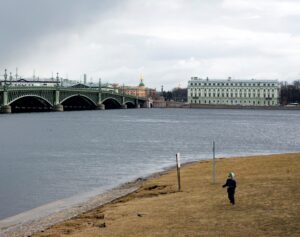


The plane from Helsinki lands at Sheremetyevo after dark, and the first Russian word Dan hears not from an app but in person is the tired «zdravstvuyte» from the border guard. For six months, Dan crammed Russian travel phrases in the evenings, saved lists, and repeated after the speaker, but it's one thing to use a phone, and another to be in a real line for inspection where people are breathing down your neck, and the board is flashing. Dan swallows and utters his rehearsed «zdravstvuyte, vot pasport.».
It turns out you only need a surprisingly small vocabulary for traveling around Russia, if they're the right words. Those looking for Russian phrases for travel usually download a phrasebook with three hundred expressions and drown in them by the third page. In reality, a trip relies on a dozen common requests: how much does it cost, where is it, a menu please, repeat please, and a couple of polite words that open almost any door. Then follows a whole day of Dan's time in Moscow, from passport control to the evening bill at a cafe, and the phrases that get him out of every snag. There’s nothing complicated among them, but each one is useful from the very first minute of the trip.
While going through passport control
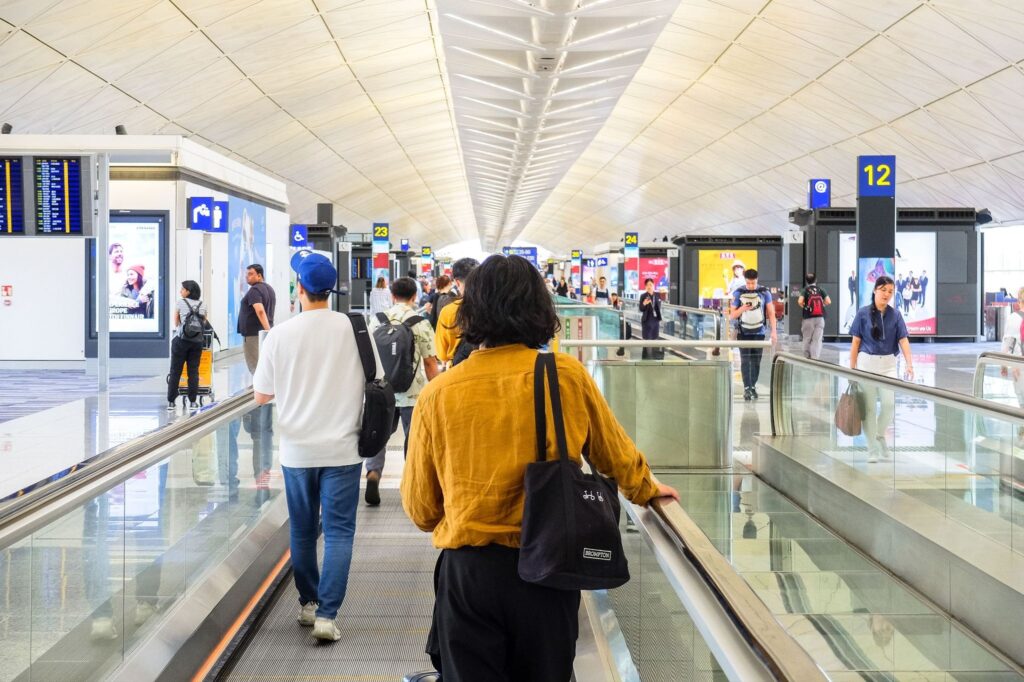
The border guard flips through the passport and asks something, quickly and without a smile. Dan doesn't understand and honestly pulls out his prepared phrase, «Sorry, I don't understand, do you speak English?» The guard shakes his head, but softens, repeats slower, and Dan understands, they're asking about the purpose of his visit. «Tourism,» he answers in one word, and that's enough. Stamp, nod, «You may pass.».
Next, you need to find baggage and the exit, and here two questions that Dan repeats like a mantra help. «Excuse me, where to get baggage» and «excuse me, where is the exit to the city.» He learned the word «excuse me» early on, and not for nothing; it softens any request and turns a stranger into an ally. In the arrivals hall, other minor needs also arise: «where is the ATM,» «where is currency exchange,» "where is the restroom," and they all follow the same simple pattern: excuse me plus where plus the desired word. At the baggage carousel, Dan is once again convinced how far spoken language has come from the announcer in the app; announcements pour out in a jumble, but he already picks out the necessary words—baggage, exit, taxi—by ear.
Simple greetings appropriate for the time of day are also useful. In the evening at the airport, "good evening" still works, in the morning "good morning" will do, and during the day the universal "good afternoon." And Dan learned one more thing in advance: in Russia, you address strangers as "vy" (you, formal) and not "ty" (you, informal), so he carefully phrases all his requests politely, and this immediately makes his conversational partners warm up to him.
First conversation with a taxi driver
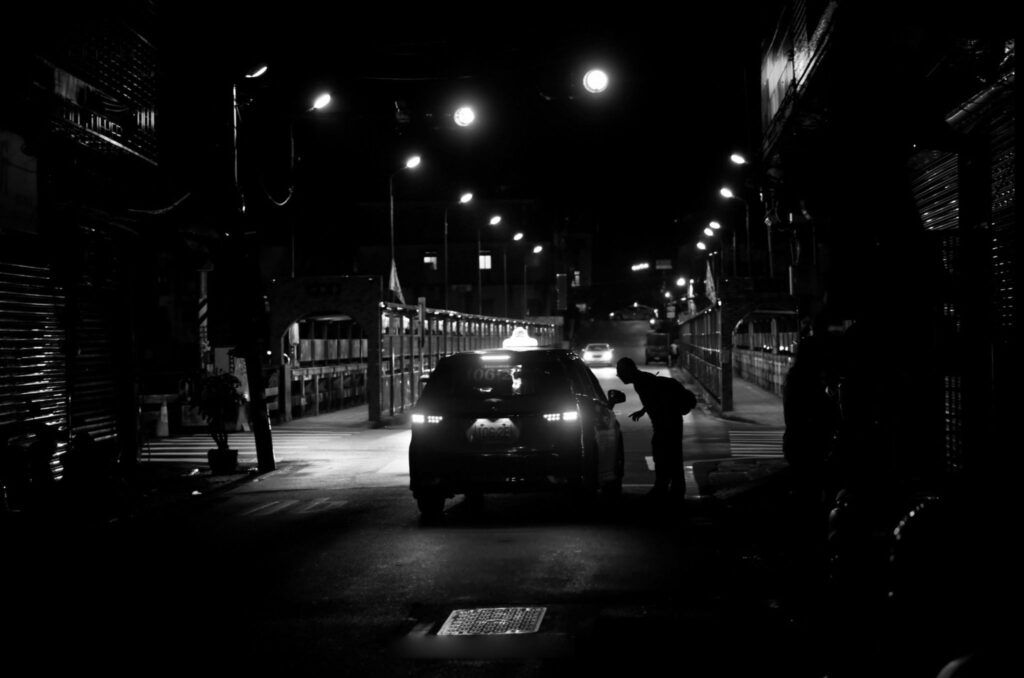
Dan is immediately scooped up by a private driver as he leaves: «Taxi, cheap, where to?» Dan had read that it's best not to deal with these types at the airport, but he decides to practice anyway. First thing's first, the main question of any traveler: «How much to get to the center?» Hearing the price, he honestly winces and tries to haggle with the words «expensive, can you do it cheaper?» The driver laughs but knocks a little off the price.
A couple more phrases come in handy in the car. «Turn on the meter, please,» although private drivers don't have meters, this phrase immediately shows that you're not a completely confused tourist. Dan simply shows the hotel address on his phone, saying «I need to go here, please,» and this works more reliably than any pronunciation of an unfamiliar street. The arithmetic with money he learned in advance also came in handy; prices are in rubles, and Dan is no longer flustered by the questions «How much do I owe?» and «Will there be change?», adding «Can I pay by card?» or «Here's cash» when paying. Along the way, the taxi driver talks animatedly about something, Dan understands every other word, but a polite «yes, yes» and «really?» keep the conversation going just as well as full answers, and before leaving, he doesn't forget «thank you, goodbye.» At the hotel, after paying, he remembers one more useful phrase, «Stop here, please,» even though the car has already stopped.
Hotel reception desk
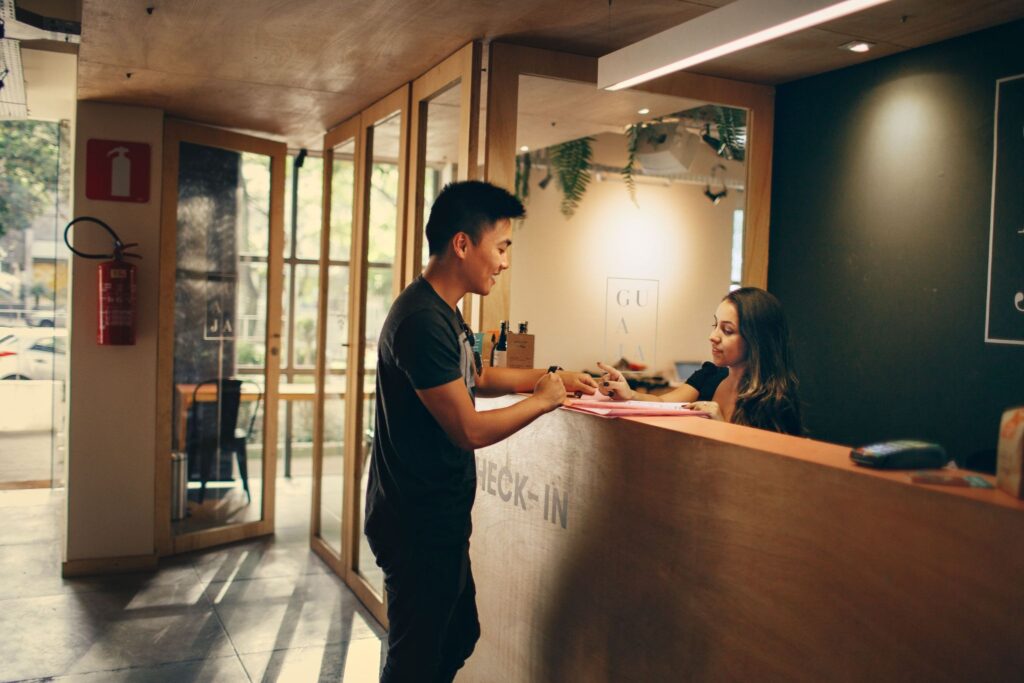
Behind the counter, a young woman greets him with the customary «Good evening, how can I help you?» Dan has a whole speech prepared for this. «Hello, I have a room reservation,» and then he spells out his last name, carefully, letter by letter, because no one ever gets it right by ear anyway. The administrator asks for his documents, «Your passport, please,» and Dan, already used to it, hands it over without argument.
While they are processing the paperwork, he uses up the remaining stock of phrases. «What time is breakfast?», «What time is checkout?», «What's the Wi-Fi password?», and for some reason, the last one is the hardest because the password is dictated in a mix of letters and numbers. «Repeat it again, but slowly,» Dan asks, and this is perhaps his most useful phrase of the day. Already in the room, there's a reason to go back down, «There are no towels in the room» and «The air conditioning isn't working,» he strings together both requests from his learned phrases and gets both towels and a repairman. He also finds out «Is late checkout possible?» and «Where is your restaurant?», just in case. Next, a brief «Your room is on the third floor, the elevator is to the right,» and the first real conversation in Russian can be considered a success. As he leaves, Dan doesn't forget the polite «Thank you, goodbye,» although with new acquaintances, he's already noticed, they get by with a simple «bye.».
When you need to ask for directions
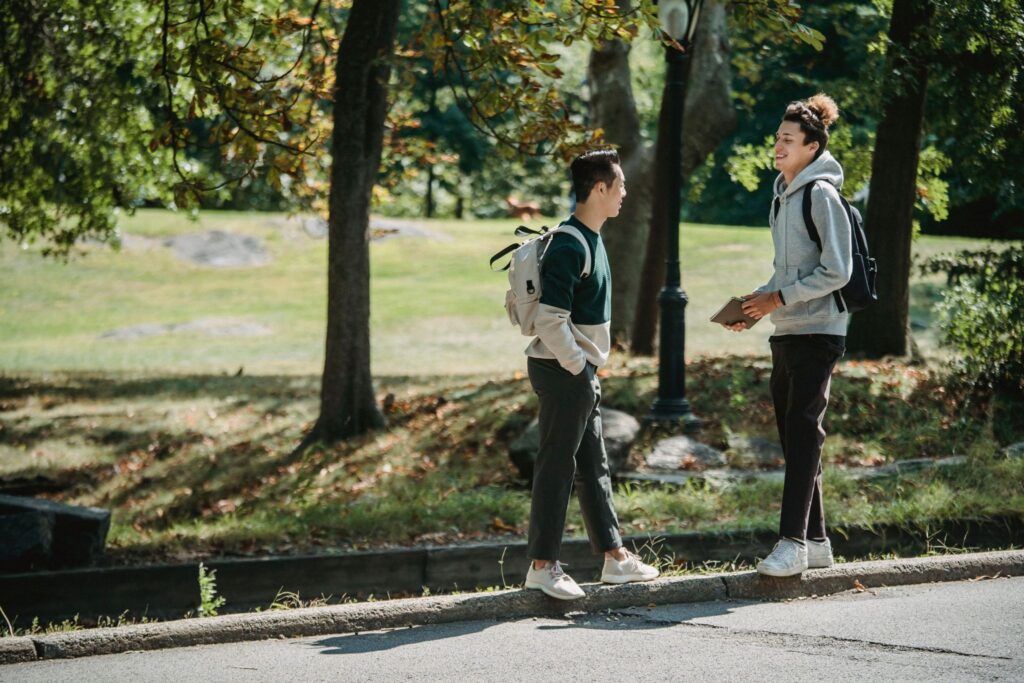
In the morning, Dan goes for a walk and almost immediately gets lost in the side streets near the center. The map on his phone is acting up, and he has to do what he feared most: ask for directions out loud. He chooses a kindly-looking passerby, an elderly woman with shopping bags, and launches into his rehearsed line: «Excuse me, how do I get to Red Square?» The woman beams, waves her hand, and rattles off, «Straight ahead, then left, you'll see it.» Dan, catching only «straight» and «left,» nods gratefully and asks, «Is it far?».
His old problem immediately surfaces: pronunciation. He never really mastered the word «zdravstvuyte» with its consonant cluster, and long ago switched to the simple "zdrastye," like half the locals. The rolling "r" in "napravo" is difficult for him, and the "y" sound in "vykhod" seems invented just to spite outsiders. But the woman doesn't laugh at all; she repeats more slowly and even shows with her lips where to go, so Dan remembers both the turn and, incidentally, how something he's been diligently practicing syllable by syllable for months sounds in real life.
Along the way, he tries out other street phrases: «Where's the nearest subway?», «Can I cross here?», «Is there a pharmacy nearby?». If the explanation gets confusing, Dan asks to «Show me on the map» or «How far is it on foot?», and things immediately become clearer. And when he's completely lost, the honest «I'm a tourist, please help» comes to the rescue, after which few people walk by. Just in case, Dan also keeps a few alarming phrases in mind that he hopes not to use: «Help», «I lost my phone», «Call a doctor», «Where is the nearest hospital?». It's more reassuring to know them and not have to use them than to be at a loss in a difficult moment without a single word. For now, however, he needs peaceful interactions more, and he gets an answer to almost every question, and once even a guide for a couple of blocks.
Subway ticket and Troika card
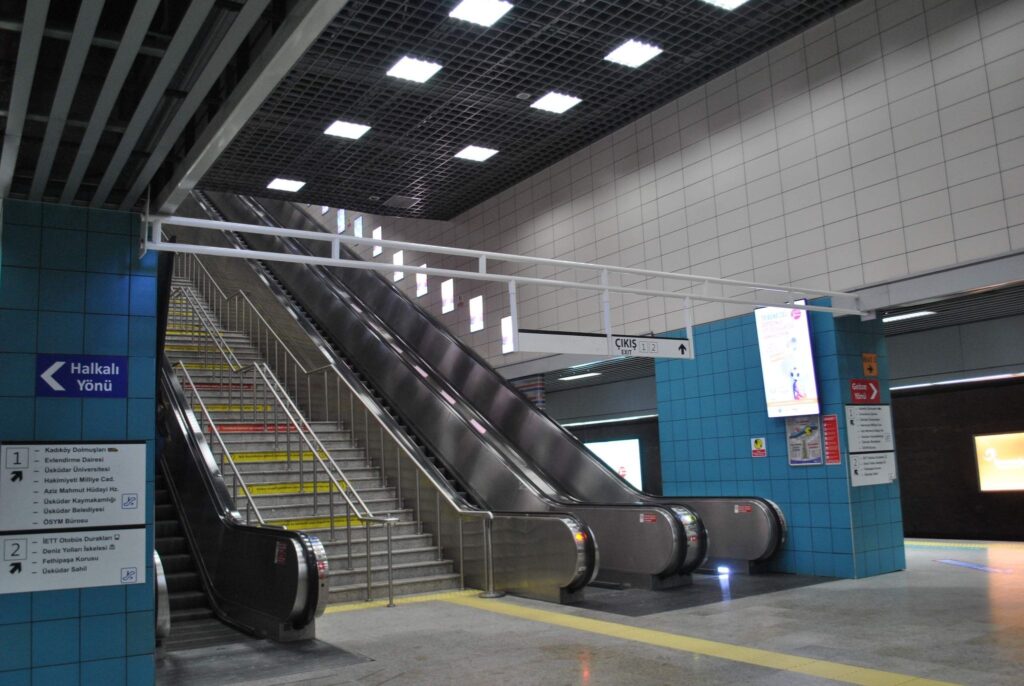
For lunch, Dan goes down to the subway, and this is where the living Russian flows in a steady stream. At the ticket booth, he asks for «one ride, please,» but the cashier advises, «take a Troika, it's cheaper,» and Dan has to figure out on the fly that Troika is the local transport card. «And how do I top it up?» Dan asks, and they explain to him, nodding towards the machine on the wall. Next is a continuous navigation process: «which station,» «where's the transfer to the circle line,» «where's the exit to the city,» and luckily, the signs are duplicated in Latin letters, so hearing and sight work together. During rush hour, when the crowd carries you along, a quick «get out» and «excuse me» comes in handy. Or you can go up to the surface and hail a taxi, telling the driver, «I need Tverskaya, please.».
On the train, Dan catches fragments of the same phrase repeated at every station, «Caution, doors closing, next station is [station name],» and by the third transfer, he already recognizes it from the first few words. The subway turns out to be the best free teacher; in one hour, you hear more spoken language than in a week with an app, and Dan catches himself no longer preparing his phrase in advance, simply asking the first person he meets, «Excuse me, how do I get to the center?» and they readily draw the route with their finger in the air.
The road to Petersburg from the train station
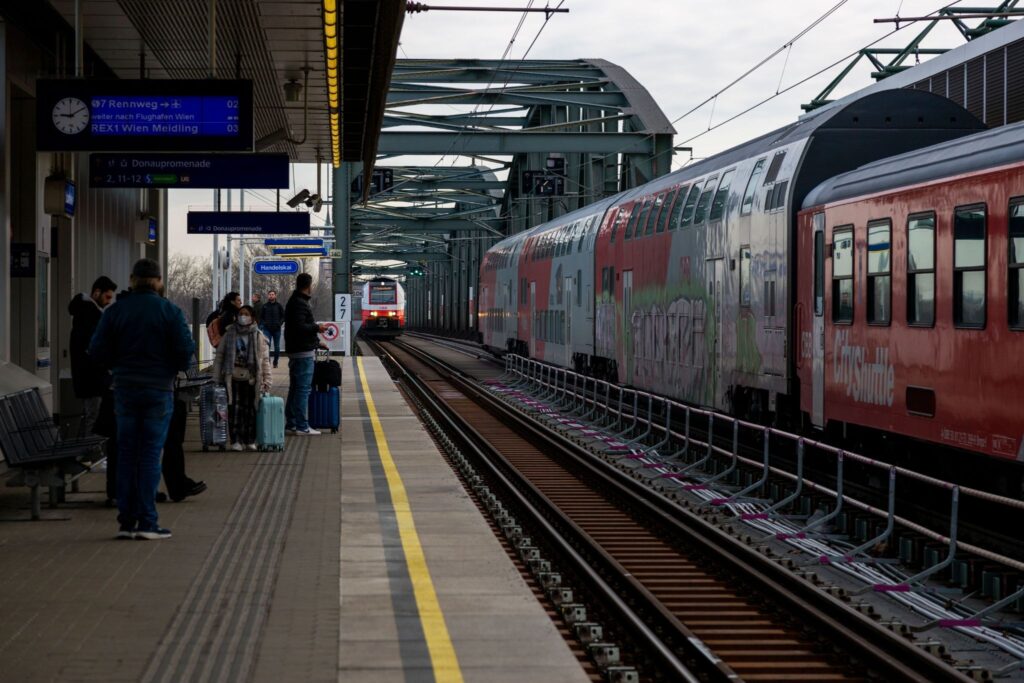
On the third day, Dan decides to travel to Petersburg and, for the first time, ends up at the train station, where there's its own vocabulary. At the ticket counter, he asks for «one ticket to Saint Petersburg for tomorrow,» specifies «do you have one for the morning,» «how much is a compartment,» and «are there cheaper places?» The ticket agent rattles off options, Dan doesn't catch everything and honestly asks to «repeat, please, slower,» and writes down the complex things with numbers on a slip of paper. Next are simpler questions, «which platform does it depart from,» «what time is the train,» «is this my carriage.» The conductor at the entrance checks the ticket and shows him his seat. Once settled, Dan, now without hesitation, asks «can I have some tea» and «please wake me before arrival.» The high-speed train rushes along for about three and a half hours, and during this time, fellow passengers manage to draw him into conversation, which includes «where are you from,» «how do you like Russia,» and an honest «I still speak Russian poorly, but I'm trying hard.» By the end of the journey, Dan realizes that the train, like the metro, turned out to be an excellent teacher; there's nowhere to escape from the compartment, and he has to speak.
At the market for souvenirs
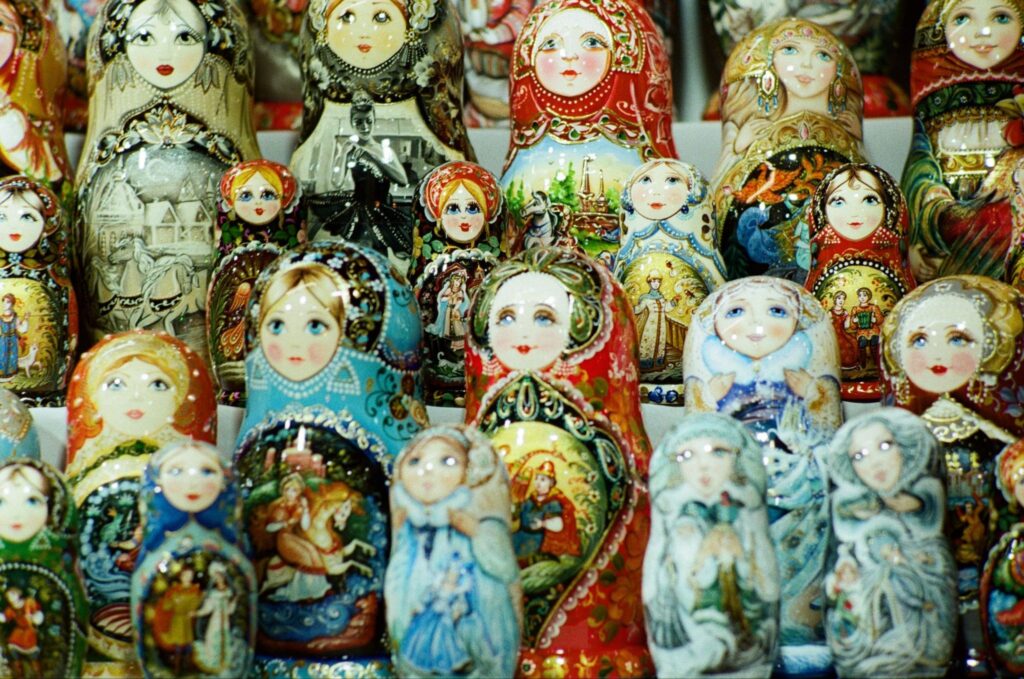
After the metro, Dan emerges into rows of souvenirs, and the bargaining offers its own set of phrases. «How much is this matryoshka doll?» he asks, and upon hearing the price, habitually tries out «Can it be cheaper?» and «Is there a discount?» The seller, encouraged, begins to praise the merchandise. Dan understands half of it, but smiles and clarifies the important things: «Show me this one,» «Give me this one, please,» «Wrap it up, please.» For gifts, he also.
Immediately, words about money and payment come into play: «Can I pay by card?», «And how much in cash?», «May I have a receipt, please.» Trying on a ushanka hat, Dan also recalls useful phrases like «Can I try this on?» and «Do you have a bigger size?». He leaves with a matryoshka doll, a magnet, and a strong feeling that the market taught him Russian faster than any textbook, because here, every correctly spoken word is immediately rewarded with a prize, a discount, or a smile.
Museum and the queue at the ticket office
In Petersburg, Dan's first stop is the museum, where he encounters a long queue at the ticket booth. His prepared phrases come in handy again. «One ticket, please,» followed by follow-up questions: «How much is an adult ticket?», «Is there a student discount?», «Are children free?». At the entrance, he asks, «What time does it close?» and «Where can I leave my jacket?». Inside, hesitating by a sign, he cautiously inquires, «Is photography allowed here?». An audio guide in English isn't always available, so he also finds «Is there one in English?» and a humble «If not, that's fine» useful. In the exhibition halls, Dan catches snippets of other tours. The guide speaks beautifully and quickly; he understands little, but isolated familiar words bring joy, like meeting old friends. By the end of the day, the phrases seem to have merged, and he no longer constructs them from individual pieces for each remark, but retrieves what he needs all at once.
Table, menu, and bill
Dan decides to celebrate the evening with dinner, and the cafe turns out to be a separate exam. At the entrance, he is met with «Hello, a table for one,» he nods, «Yes, for one, please, by the window.» Having sat down, he says his prepared «Menu, please» and, receiving it, realizes that he doesn't really know how to read Russian; the letters are familiar, but not the names of the dishes. The universal «What do you recommend?» saves the day, after which the waiter gladly takes the choice upon himself. At the same time, Dan clarifies «still water» and «no onions, please,» and these minor requests are easily understood.
Next come the phrases without which one can't get by at the table. «I don't eat meat,» Dan warns just in case, «is there anything without it?» The order is placed, and he mentally repeats the essentials for later, «the bill, please» and «can I pay by card.» The food arrives, and he doesn't forget to praise it, «this is very delicious,» and the waiter warms up in response. Dan is no longer afraid of making mistakes; a short «excuse me, I misspoke» helps out here, and even where words fail, a finger and a smile convey the rest. When it comes to the bill, everything goes almost smoothly, «thank you, everything was wonderful,» Dan says, leaves a tip, and heads out into the evening city. In one day, from passport control to this bill, he's picked up just enough Russian to be understood and to understand himself everywhere in a foreign city.
| Situation | In Russian | Pronunciation | English |
|---|---|---|---|
| Polite | Hello | Hello | Greetings |
| Polite | Good afternoon | Good day | Good afternoon |
| Polite | Thank you | Spasiba | Thank you |
| Polite | Please | PA-ZHAL-sta | Please / You're welcome |
| Polite | Excuse me | Excuse me | Excuse me, sorry |
| Polite | Goodbye | Swaddling | Goodbye |
| Basic | Do you speak English | You are very welcome in Polish | Do you speak English? |
| Basic | I don't understand | I don't understand | I don't understand |
| Basic | please repeat | Please try | Please repeat |
| Basic | How much does it cost | How much does it cost | How much does it cost? |
| Basic | where is | goodbye | where is |
| Taxi | How much is it to the center? | How much does it cost to get to the center? | How much to the center? |
| Taxi | Here | my new year | I need to go here |
| Taxi | Stop here | See you later | Stop here |
| Transport | Where is the exit | Goodbye | Where is the exit? |
| Transport | one trip | I don't understand what you mean by "ad-NU pa-YEST-ku". Could you please clarify or rephrase your request? | one ride |
| Transport | how to top up a card | card game | How to top up the card |
| Hotel | I have a room booked. | Your phone number | I have a reservation |
| Hotel | your passport | Vash passport | your passport |
| Hotel | What time is breakfast tomorrow | Good morning | What time is breakfast? |
| Street | How do I get to | practice | how do I get to |
| Street | It's far away. | I'm here for you | Is it far? |
| Street | Left, right | nalyeva, naprava | Left, right |
| Street | straight | PRIYA-MA | Straight ahead |
| Cafe | a table for one | One by one | A table for one |
| Cafe | Can I have the menu? | May I have the menu | May I have the menu |
| Cafe | What do you recommend? | What do you recommend? | What do you recommend? |
| Cafe | I don't eat meat | I don't eat meat. | I don't eat meat |
| Cafe | Check, please. | Please, count | The bill, please |
| Cafe | Can I pay by card? | MOZH-na KAR-tay | Can I pay by card? |
| Market | Is there a discount | Yes, skida | Is there a discount? |
| Market | Please wrap it up | za-vyer-NEE-tye pa-ZHAL-sta | Please wrap it up. |
| Emergency | Help | pa-ma-GEE-tye | help |
| Emergency | Where is the pharmacy | gdye ap-TYE-ka | Where is the pharmacy? |
| Emergency | Call a doctor | VY-za-vi-tye vra-CHA | Call a doctor |
Living language begins with phrases like these.
Dan's story is about an adult traveler, but the same lively phrases are crucial for a child too. A kid going to their grandma's in Moscow for the summer will get lost at the same cafe and in the same metro if Russian was only heard in classes at home. The ability to ask for directions, order, and ask for help on the street is what truly matters. Colloquial language, which is the whole reason for this endeavor.
At Palme School, Russian classes for children ages four to seventeen are structured around everyday speech—the kind you actually need in a café, on the subway, and on the street. You can learn more at two free classes, first an introductory meeting with a program coordinator, who will assess the child’s level and place them in a group, followed by a trial class in the group with the instructor. That way, your first trip to Russia will go smoothly—without any nervousness at the front desk—and with a couple of confident phrases at the ready.
Click the card to see the translation and pronunciation. The stress is marked.
Home
For a trip around Russia, fluent Russian isn't necessary; a small but well-chosen set of phrases is quite enough. "How much does it cost," "where is it located," "can I have the menu," "could you repeat that, please," and a few polite words will get you out of almost any situation, from passport control to settling the bill in the evening. Signs in the metro are duplicated in Latin script, and English is available in tourist spots. Where it's absent, pre-prepared phrases and the courage to say them will help. There are many situations during a trip: train stations, museums, markets, cafes, and the core set of necessary phrases remains the same everywhere, and learning it is achievable for anyone. For a child who will one day visit relatives in Russia, these same practical phrases are more important than any memorized rules, because they are precisely what transform language from a school subject into a real, live conversation with the people around.
What Russian phrases are needed for a trip first?
First and foremost are polite words: hello, thank you, please, excuse me, and goodbye. They are appropriate everywhere and immediately make a good impression. Next come practical questions: how much does it cost, where is it, and can I have the menu? These are the basis of almost any everyday situation. With this set, you can travel confidently. Then, for specific places, you'll add your own: at the train station, from which platform; at the museum, how much is an adult ticket; at the hotel, I have a room booked.
How much does it cost?
A universal short phrase is "How much does it cost?". You can then add what you need, like "How much is a ticket?", "How much does it cost to get to the center?", or "How much is this?". In stores and taxis, "How much do I owe?" will be useful, and "Is there a discount?". When paying in cash, "Will there be change?" will be needed.
How to order food at a cafe?
The easiest way to start is with the menu, and if the names are unclear, what would you recommend? I don't eat meat, so are there any options without it, or any dishes with restrictions? At the end, I'll need the bill, please, and can I pay by card? And as a farewell, "very tasty, thank you" is appropriate.
Do people speak English in Russia?
In large cities and tourist spots, it's quite common, especially among young people, to encounter English at hotels and information desks. Signs in the metro and at train stations are usually duplicated in Latin script. However, outside of the city center, English is less common, so a few Russian phrases and a polite "Do you speak English?" will significantly ease your journey. Staff in tourism and young people often switch to English themselves as soon as you start a conversation.
How do I buy a metro ticket?
In Moscow and St. Petersburg, it's more convenient to get a local transport card. In Moscow, it's the Troika. You can add money to it via an automated machine or ticket booth. You can also ask for a single ride. Useful phrases include "how to top up the card," "which station," and "where is the exit to the city." Signs are helpful as they use Latin letters. For intercity trains, you buy tickets at the train station or online. There, phrases like "which platform," "what time is the train," and "this is my carriage" will be useful.
What to say when checking into a hotel?
Hello, I have a room booked under the last name [spell out last name]. The administrator will ask for your passport. Next, you'll need to know what time breakfast is, what time checkout is, and what the Wi-Fi password is. If they're speaking too quickly, "Could you please repeat that, more slowly?" always helps.
Is it mandatory to know Russian to travel in Russia?
No, a free language isn't necessary. But a dozen prepared phrases greatly simplify a trip, and polite words open almost any door. English is found in tourist areas, and where it's not, a couple of expressions and the willingness to say them, even with mistakes, will help.