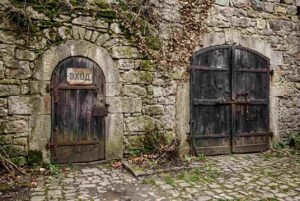
In 1903, a passenger could get on a train, travel across all of Siberia, and get off on the banks of Lake Baikal.
The rails are gone.
On the other side, they started again, and between the two pieces of the country's longest railway lay a lake. In the summer, a steam-powered icebreaker sailed through it, carrying not only people but also the carriages themselves. In the winter, the picture became even stranger.
That is, Transsib was already operational, but there was no continuous Transsib yet. The hole in the middle of the country's main road lasted for several years.
Why the road got stuck in the lake
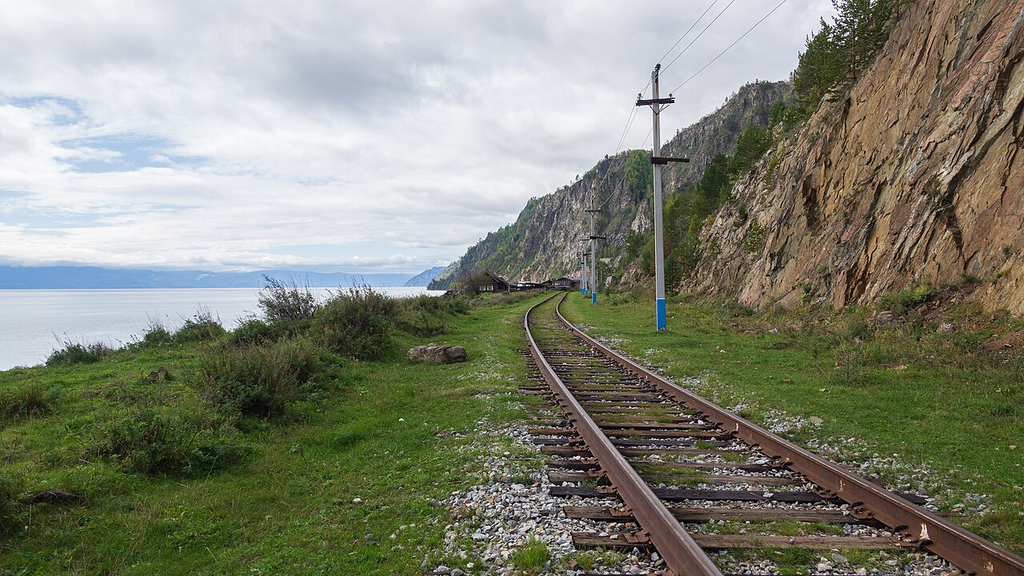
Construction began in 1891 and was carried out from both ends, from Chelyabinsk to the east and from Vladivostok to the west. The journey of more than nine thousand kilometers lay through taiga and barren land, to the rivers where no bridge had yet been built.
The southern bank of Lake Baikal became for the builders almost the most difficult place along the entire route. The rocks are close to the water; there is nowhere to go around them, which means tunnels, retaining walls, and galleries are needed, and that takes years of work.
The decision was simple: continue on the road, and for now, cross the lake by water.
We examined the Baikal itself, its depth, and how to get there today. in a separate article. Here, he is interesting in a different role, as a barrier that for several years cut off the main road of the country.
The ferry that carried the trains
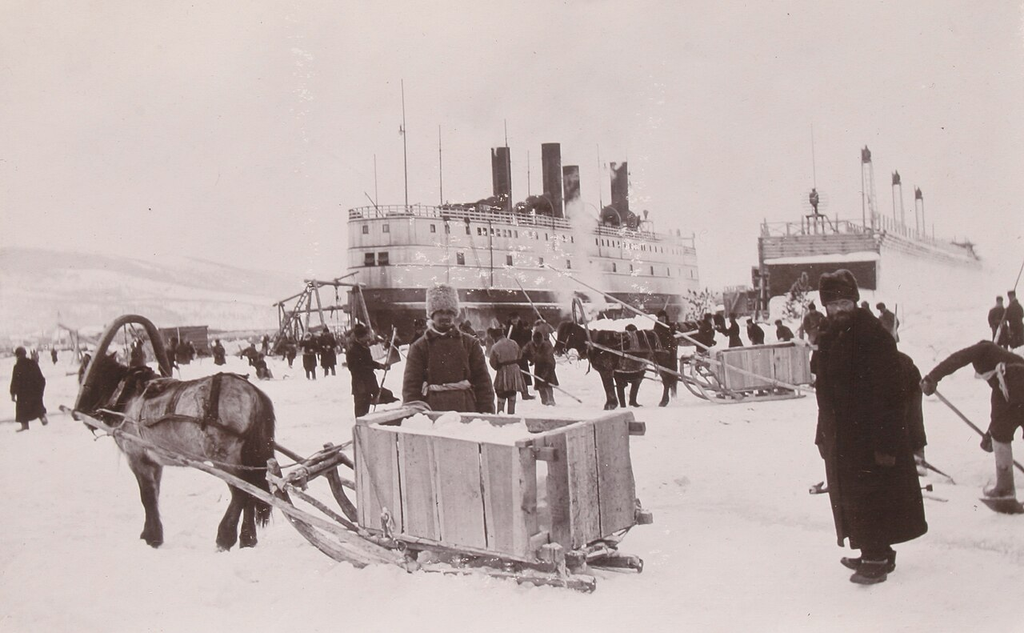
In 1900, the Baikal Railway Ferry Bridge was put into operation.
The icebreaker-ferry was called «Baikal», and it made its first working trip in the spring of 1900. The carriages entered it along the tracks directly onto the deck; the ferry passed through the lake, and on the opposite bank the carriages disembarked and continued on. The second one was the icebreaker «Angara».
It looked impressive, but the crossing depended on the weather and the ice; in winter, Baikal freezes over.
Winter of 1904, the tracks right on the ice
The Russo-Japanese War was underway, and the flow of troops and supplies to the east increased sharply. The icebreakers coped with fresh ice, but the thick winter cover was beyond their capabilities. Even the sea crossing of such a volume was not enough.
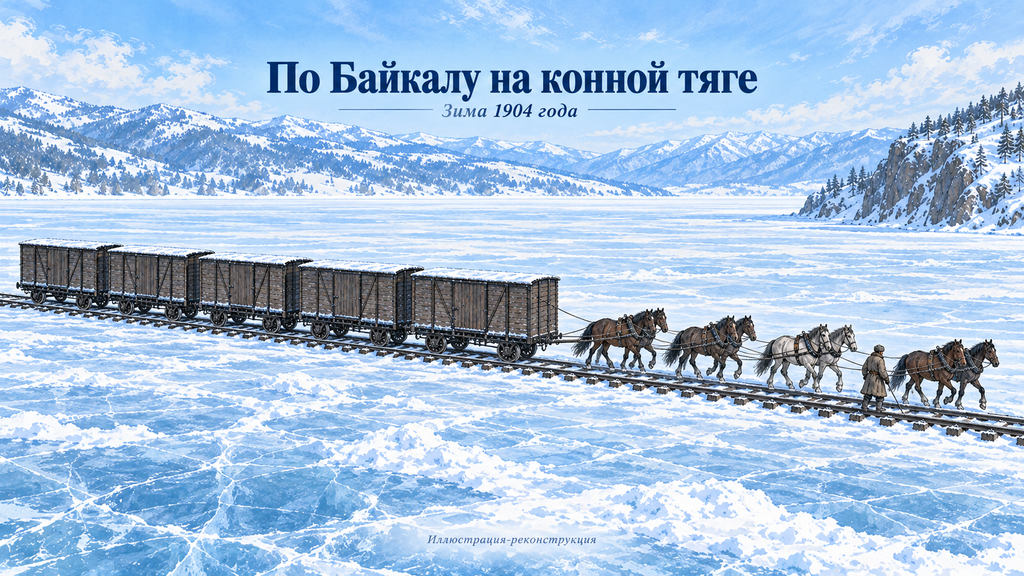
Then the tracks were laid directly on the ice of the lake.
On February 17, 1904, the first train left the Baikal station on ice in the old style. Before departure, a prayer service was held, and the opening ceremony was attended by the Minister of Railways himself, Prince Hilkov. According to a newspaper report from those days, the train consisted of twenty-five carriages, and each of them was drawn by eight horses.
The steamers also crossed the lake, all sixty-five of them, but as cargo. To ease the load on the ice, a boiler was removed from each one and transported to the platform, and the frame with the wheels was transported on the rails separately.
The ice rink operated for exactly one month and closed in March when the ice became too weak. The rails and tracks were dismantled and taken back by horse.
Gold buckle
The working traffic around Baikal was opened in the autumn of 1904, and the Krugobaykal Road was put into permanent operation in the autumn of 1905.
The Krugobaykal line was called the entire route from the Baikal station to Myosovsky, which is approximately two hundred and sixty kilometers long. But all the complexity was concentrated on the western section from Baikal to Kultuk, which is eighty-four kilometers long. There were four hundred and twenty-four engineering structures built here, including thirty-nine tunnels, fourteen kilometers of retaining walls, and stone galleries over the tracks. The work here was so difficult that a kilometer of road cost significantly more than on the average main line, for which reason the section was nicknamed the golden buckle of Russia’s steel belt.
Now it’s clear why it wasn’t built immediately. It turned out to be easier to build a line through the taiga than to lay eighty-four kilometers of road along the rocky shore.
Today there are no holes, but there is a week of travel ahead of us.
The modern passenger on this line won't even notice the difference. The train takes about a week to travel from Moscow to Vladivostok, and by the end of the journey it is seven hours ahead of Moscow time. It travels through Baikal at night or during the day, without thinking about the crossings.
The entire route along the support points, with kilometers and time differences, is shown in the diagram below; below it, for comparison, is the 1904 ice bridge.
Transsib along the support points
How many kilometers from Moscow and by how many hours local time is ahead of Moscow time. The points on the line are represented in a distance scale.
The kilometers are given based on the main route of the Trans-Siberian Railway from Yaroslavl Station; these are calculated using the poles along the route. Some trains travel in a different direction, for example through Nizhny Novgorod, so the route and fare kilometers may differ.
If you want to see the country not in one line from west to east, but in a different way, we have a selection of places worth seeing.
What the passenger does notice, however, is something completely different. Over the course of this week, the carriage transforms into a separate world with its own rules, and that world has a language of its own.
Words that cannot be translated
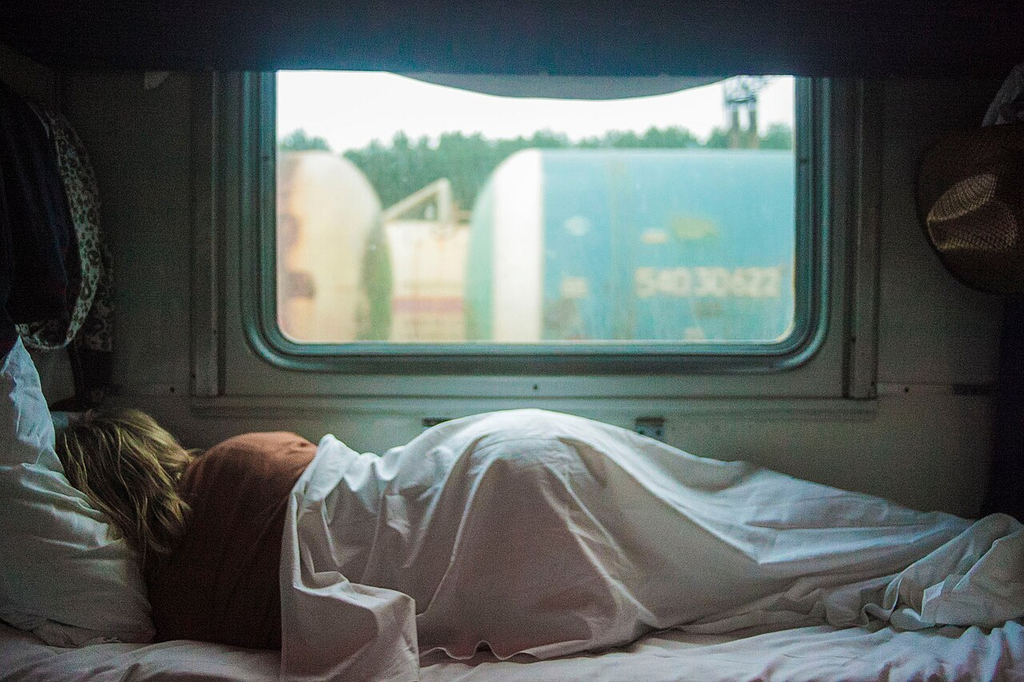
The hardest thing to explain is the word «placarkart».
Not a coupe, not a sedan, but an open-top carriage with fifty-four seats, no doors, but compartments; you live for a week in the open air in front of half a hundred people. There is no exact equivalent in English.
Then the same procedure again. The conductor, who is not a guide or a conductor, but a person responsible for the entire carriage, from the bedding to the hot water. Actually the hot water, which is carried around with a cup at the end of the carriage. The standing place, that is, the side seat, which everyone understands without explanation. Twenty minutes of standing, which you have to manage to get out of, buy something, and get back in.
This is not tourist exoticism. In the train these words form a unique combination, where the platkaart and the bogie are almost entirely railway tracks, and the conductor and the station are familiar even outside the train, but here they get their specific meaning that cannot be found in a textbook. A similar set of words is needed even when traveling in general., useful phrases for travel we collected it separately.
What to do with it
The simplest task for a child is like this: Tell me how to get from Moscow to Irkutsk.
I’ll have to name the direction, count the days, choose a compartment and explain in my own words what couchettes are different from first-class compartments. I’ll come up with a coherent speech on specific material, with numbers, the order of actions, and words that aren’t in the textbook.
With a teenager, another task is more interesting. Construction began in 1891; the railway line near Baikal was closed in 1904, and the complete Russian route without a section through Manchuria was completed only in 1916, when the bridge over the Amur was opened. At that time, the kilometer along Baikal cost about one hundred and thirty thousand rubles, and on average along the entire route from Chelyabinsk to Vladivostok it was ninety-three thousand rubles. Let him calculate by how many percent the embankment cost more, and explain where the difference went.
The same route for an adult
For an adult who teaches Russian, Transsib provides a reason to read.
The schedules, station names, reviews from fellow travelers, forums about what to bring on a trip. The texts are short, the vocabulary repeats, and they’re more interesting to read than the exercises.
There is a separate department for adults at the school., Russian for adults, Classes there take place individually with a teacher. We teach children from four to seventeen years old online in small groups, and you can start at any time. two free lessons. First, the methodologist will determine the level and select a group, and then a regular lesson with the teacher will take place.
Frequently Asked Questions
What is the length of the Trans-Siberian Railway?
It’s more than nine thousand kilometers from Moscow to Vladivostok. This is the longest railway in the world; the train travels along it for about a week, and by the end of the journey it is seven hours ahead of Moscow time.
When was the Trans-Siberian Railway built?
Construction began in 1891 and was carried out on both sides, from Chelyabinsk in the east and Vladivostok in the west. Regular transcontinental transport began in 1903, but the Baikal was still crossed by ferry. The continuous rail route around the lake was opened in the autumn of 1904, and the fully Russian route without a section through Manchuria was completed in 1916.
Why were trains ferried across Lake Baikal by ferry?
The southern shore of the lake was almost the most difficult part of the route for the builders. The cliffs come close to the water, and you can only get around them by tunnels and galleries. While this section was being built, the road was extended to the shore, and the lake was crossed by water. In 1900, the Baikal Railway ferry service was established; the Baikal icebreaker ferry, the Angara, operated on it.
Is it true that an iron road was laid across Lake Baikal?
Yes, in the winter of 1904, during the Russo-Japanese War, when it was urgently necessary to transfer troops to the east. The first train set out on the ice on February 17th in the old style; the opening ceremony was attended by the Minister of Railways, Prince Hilkov. The carriages were towed across the ice by horses, and all sixty-five locomotives were transported as cargo, removing each boiler and rolling the frame with the wheels on the rails separately. The crossing lasted about a month, until March, when the ice weakened.
What is the Krugobaykal Railway?
The historical line from the Baikal station to Myosova is about two hundred and sixty kilometers long. Operation began in the autumn of 1904, and it was put into permanent operation in the autumn of 1905. All the complexity is concentrated on the western section from Baikal to Kultuk, which is eighty-four kilometers and four hundred and twenty-four engineering structures, including thirty-nine tunnels, retaining walls, and stone galleries over the tracks. The work here was so difficult that a kilometer of road cost significantly more than on the average mainline, for which reason the section was nicknamed the golden buckle of Russia’s steel belt.
How long does it take to drive on the Trans-Siberian Railway today?
From Moscow to Vladivostok, it takes about a week without transfers. If you travel with stops in major cities and at Lake Baikal, the journey can take two or three weeks.
What is a platzkart?
The open carriage has about fifty-four seats, without doors and a compartment. There is no exact one-word equivalent in English; one has to describe it in words: an open sleeping carriage without doors. Along with it, the train includes a conductor, a kettle, a side table, and a parking space; words that are rarely encountered by a child outside the Russian railway system.