



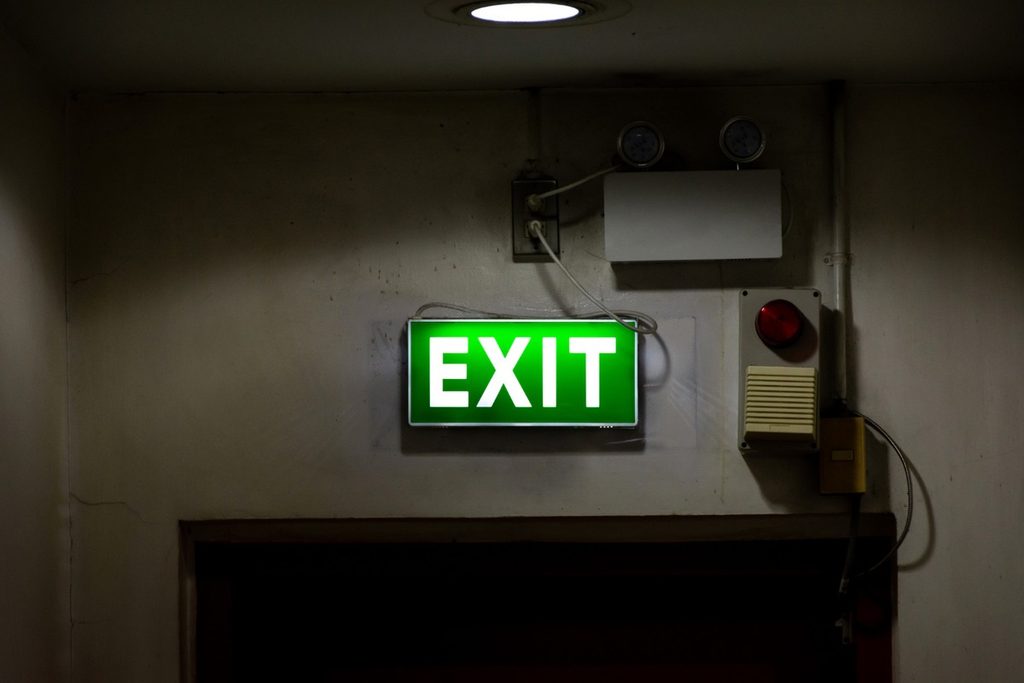
In an old Petersburg palace, you can read the grammar right on the walls. Above one door is written «Entrance,» and above the other «Exit.» The gate has a sign that reads «Entrance closed,» and around the corner begins an underground passage. The root is the same everywhere: «passage.» Only the small detail in front of it changes, and the passerby knows where to go before he has time to think about it. That detail is the prefix.
In Russian, the prefix almost always operates so quietly that people only remember it during a lesson when they are asked to find it.
For a parent who is involved in Russian at home, such a beginning is more convenient to define. One can take a familiar word and see what happens to it when a new detail appears in front of it. In this article, that word will be the verb «to walk,» and we will go through it until the last section.
What the add-on can do

«Walking by itself leads nowhere. Let’s put »in-« in front of it, and the person already enters the room. With »out-« he leaves, with »in-« he completely disappears, with »under-« he approaches closer, and with »over-« he walks down the street. The root remains the same. The direction changes, and every time a new word with its own meaning appears.
School textbooks briefly state that new words are formed by prefixes. The prefix stands before the root and adds a nuance to its meaning, most often a direction, the beginning of an action, repetition, or the absence of something.
The plugin also has a second, less obvious duty: «Do» answers the question «what to do?», while «do» already answers the question «what to do?». The same applies to «read» and «read». Here the plugin hardly changes the meaning; it simply indicates that the action has been completed. This is discussed in detail in the article about the form of the verb in the Russian language. To talk about adjectives, one thought is enough. In Russian verbs, the adjective often also determines the meaning and the type.
Prepositions also appear outside of verbs, for example in the words «suburb», «sill», and «great-grandfather». But in verbs, their function is most clearly visible.
The meaning of the prefix is often guessed by the direction it takes. «In-» pulls inwards, «out-» leads outwards, and this is clearly seen in the pairs «in-» and «out-». «At-» in «come in» brings closer, and «out-» in «go out» takes away. Further, straight pairs do not work well. «Under-» in some words indicates a place at the bottom, as in an «underground» passage, while in others it indicates an approach, as in «to come in». «Over-» sometimes means «again», sometimes «through», and when a person crosses the street, the second one is at work. The prefixes «without-» and «free-» indicate that something is missing, and the «silent» step is not heard by anyone. Many prefixes have several meanings, so any compilation remains a clue.
Values of frequent prefixes
| The prefix | Value | Examples |
|---|---|---|
| in- | movement inwards | to enter, to break in |
| you are | movement outward | to go out, to go out |
| pre- | Approximation | to come, to arrive |
| y- | deletion | to leave, to go away |
| under- | location at the bottom or proximity | Underground, get close |
| re- | Repetition, re-doing, or moving through something | to rebuild, to change |
| from- | removal to the side | Step back |
| Раз-, рас- | movement in different directions | scatter, scatter |
| without-, without- | the absence of something | cloudless, silent |
Many prefixes have multiple meanings, so the table is a guide, not an exact rule.
How to highlight the prefix in a word

Where does the prefix end and the root begin? The first clue is given by related words.
Let’s take «to approach.» The homonymous word without an affix is right there, «to walk.» Everything that precedes «to walk» claims the role of an affix; in our case, «under-.» It’s useful to look for the same affix in other words, «underground» or «under-stander.» But the coincidence of the letters in themselves proves nothing. «Under-stander» also has an initial «under,» but there’s no affix there. The word came into the Russian language entirely, and there’s no «under-stander» in it.
The first method doesn’t always work. In some words, the root without the prefix simply doesn’t exist. Take the word «obute». It has relatives: «obute» and «reobute», but the verb «obute» doesn’t exist in the language. Such a root is called a derivational one; it lives only in the company of prefixes. With a word like this, a child can get lost, because the usual «find a word without a prefix» test gives no results. Then the second method comes to the rescue.
The second way is the opposite. We leave the root unchanged and replace the prefix with another: «to approach,» «to enter,» «to leave.» If another prefix can easily take its place in its place and the root retains its meaning, this is a strong argument in favor of the boundary. Strong, but not final either.
The main rule here is one. The adjective is searched for from the root, not from the beginning of the word, And it is useless to cut off the first two letters at random. Why? The section on false prefixes will show you that.
When two prefixes are in a word
Prepositions can be placed one after another. In the word «re-assemble,» the initial syllable is «re-,» followed by «so-,» and only then the root. The verification is simple. «Assemble» exists as a separate word, and «re-» adds the meaning «re-assemble.» We remove the «so-» and «re-» remain “assemble.”.
The word «to make» is constructed similarly. «Po-» and «na-» stand one after the other in front of the root «del,» familiar from the word «to do.» Remove the first prefix, and you get the actual word «to make.» The method of removing prefixes one at a time and seeing what remains often helps to understand long verbs. But even that runs into related roots, so a dictionary handy won’t be superfluous.
An adjective or adverb, if they sound the same
«Ran into the house.» In this short phrase, the [v] sound is heard twice. The first is attached to the verb, and the second stands alone before the noun. It sounds the same, but the roles are different. The first «v» serves as a prefix, it is part of the word. The second appears as a preposition, a separate function word.
Two characteristics help distinguish them. The prefix is written with a hyphen and lives inside the word; the preposition is written separately. And between the preposition and the next word you can insert another one; and «into the house» easily turns into «into a new house,» «under the table» into «under a large table.» With a prefix like that, the trick won’t work. You won’t insert anything inside «ran in» or «came in»; the word will fall apart.
Preposition and adverb
| Sign | The prefix | preposition |
|---|---|---|
| What is that | part of a word | a separate official word |
| Как пишется | together | отдельно |
| Можно ли вставить слово | нельзя, «вбежал» не разделить | можно, «в дом» и «в новый дом» |
| Examples | вбежал, подходил | в дом, под столом |
На письме у ребенка эти роли могут перепутаться, и тогда появляется «в бежал» вместо «вбежал» или, наоборот, «подстолом» вместо «под столом». Разрыв вроде «в бежал» у билингва, возможно, связан с привычкой к английскому, где маленькое слово при глаголе стоит отдельно. Но по одной ошибке причину не установить. А слитное «подстолом» эта версия не объясняет, такая путаница может встретиться у любого ребенка. Проверка вставкой работает в обоих случаях, и ее легко превратить в маленькую игру.
С приставками связан и твердый знак. После приставки на согласный перед гласными, которые обозначают два звука, например «е», «ю», «я», пишется «ъ», как в словах «подъезд», «съесть», «объявление». Подробнее это правило разобрано в статье про soft and hard sign.
Ложные приставки и слова, где приставки нет
Слово «забота» начинается с тех же букв, что и приставка «за-». Ребенок, который только что нашел «за-» в «заходить» и «забежать», с удовольствием отрежет ее и здесь. И ошибется.
Родственники все расставляют по местам. «Заботиться», «заботливый», «беззаботный». Ни в одном из них «бот» не встречается без «за». Значит, весь отрезок «забот» относится к корню, а приставки в слове «забота» нет совсем.
Похожая история с «зданием». Начальное «з» напоминает приставку, тем более что приставка «с-» в «сделать» звучит как [з]. Но в «здании», как и в «здоровье», эта буква входит в корень. Слова «доровье» в языке нет, а «Дания» с большой буквы называет страну и к «зданию» отношения не имеет.
Здесь и пригодится правило искать приставку от корня. Если остаток после мнимой приставки не встречается ни в одном родственном слове, а сама приставка от корня не отделяется, скорее всего, ее там и нет. В спорных случаях последнее слово остается за морфемным словарем. Правда, и словари порой размечают одно слово по-разному, поэтому для школьника надежнее всего тот разбор, что принят в его учебнике.
Найди приставку
Приставки в русском и английском языках
В английском тоже есть приставки, и некоторые из них по смыслу близки к русским. Английское re- в rebuild делает то же, что «пере-» в «перестроить», и просит построить заново. Under- в underground опускает вниз, как «под-» в слове «подземный». В таком сравнении ребенок может узнать знакомый механизм.
Сложнее с другим. Многие значения, которые в русском прячутся в приставке, английский выносит в отдельное маленькое слово после глагола. В go out направление стоит в хвосте, а русское «выйти» держит его впереди и пишет слитно.
Отсюда в смешанной речи иногда рождаются кальки. Ребенок может сказать «написал вниз», имея в виду write down, то есть «записал». Возможно, тут влияет английская модель, но по одной фразе причину не установить. Дома такие пары удобно сравнивать вместе с ребенком, и для билингва это наглядный мостик. Та же мысль просто живет в другом месте.
Игры с приставками дома

Самая простая игра обходится без карточек. Берете «ходить» и по очереди добавляете приставки, получая «входить», «выходить», «уходить», «переходить», «подходить». Если у игрока новое слово не находится, очко уходит сопернику, и он же выбирает следующий глагол. После каждого круга полезно спросить ребенка, чем «уходить» отличается от «приходить». Отвечая, он объясняет значение приставки своими словами.
Для второй игры понадобятся карточки. На одних написаны приставки, на других глаголы. Ребенок соединяет их и решает, получилось ли живое слово. Несуществующие сочетания тоже хороши, над ними можно посмеяться и разобраться, почему так не говорят.
Третья игра подойдет для поездок и чтения. Годятся указатели в метро, русская книжка, упаковка из магазина русских продуктов. Ищите слова с приставками. «Вход», «выход», «переход», «подъезд» разбираются прямо на месте, где корень, где приставка и что она добавила. Так любая поездка превращается в прогулку по тому самому петербургскому двору с надписями.

Free material
10 simple games in Russian
Free PDF for bilingual children from 4 years old. Games for home, walks, and the road, without preparation or special materials. Leave your contact information, and we will send you the file.
Сколько дверей открывает одна приставка перед корнем «ход», ребенок замечает, когда русский звучит рядом не от случая к случаю. В Palme School курс «Russian for bilinguals» идет онлайн и принимает детей с четырех лет. Занимаются в небольших группах до восьми детей одного возраста и уровня, урок длится 40 минут. Для знакомства с программой и преподавателем в школе есть два бесплатных урока, а уровень ребенка без оплаты определит методист. Если между уроками хочется больше письменной практики, загляните в Russian language training program.
Частые вопросы про приставку
How is the prefix different from the preposition?
The prefix is part of a word and is written with it as a whole, as in «went in» or «came in». The preposition stands alone, and between it and the next word you can insert another one, for example «into the house» and «into the new house». You cannot do this with a prefix.
Can there be two prefixes in a word?
Maybe. In the word «re-assemble,» the words «re-» and «so-» follow one after another; in «to put together,» there are «po-» and «na-» in the word. To check whether the suffixes are removed one at a time and to see if the actual word remains, we have to look at the following example:.
Are there words without an affix?
There are many such words: for example, «table,» «house,» «go,» «care,» «building.» There may not even be any prefixes in the word. In school homework, only the root is considered mandatory.
Why are some words prefixed with «ras», while others are prefixed with «raz»?
With the suffixes on the «z» and «s» the choice depends on the following sound. Before a sonorous consonant and before a vowel, «z» is written, as in «break» and «cloudless». Before a nasal consonant, «s» is written, as in «paint» and «noiseless». The «s»-suffix does not change at all, therefore «make» is written, although [z] is heard.
In what class is the suffix studied?
According to the «School of Russia» program and the textbooks of V. P. Kanakina and V. G. Goretsky, learning begins in two steps. In the second grade, the suffix is studied at the level of observation, along with the other parts of the word. In the third grade, the program includes a separate section on the meaning of the prefix and suffix in a word.