

The main difficulty with traveling in Russia is that the country is enormously vast, and a single Russia simply doesn't exist for the traveler. There's the imperial St. Petersburg with its palaces and the mirror-like surface of its canals, and there are the quiet wooden churches of the Russian North. There's the golden-domed antiquity of tiny ancient towns, and there are the smoking volcanoes of Kamchatka, which are reached by helicopter. Between Moscow and the Far Eastern coast, there are as many as eight time zones and seemingly several completely different countries.
Therefore, it is more honest to speak not of one mixed list of places, but of several different Russias, each with its own unique character. Those who are looking for places to visit in Russia or simply things to see in Russia usually get lost in endless lists of attractions where Red Square is juxtaposed with volcanoes, and they have no idea where to start. Let's bring order: we will break down the main places in the country not as a dump of names, but into several broad themes, so that it becomes clear which Russia is closer to you and where to begin your acquaintance with it.
Several different Russias
To avoid getting overwhelmed, it's convenient to mentally divide the vast expanse of Russia into several distinct worlds. There's Imperial Russia, the ceremonial one, with palaces, museums, and the grand squares of the two capitals. There's Ancient Russia, the one that greets you with golden domes, white-stone cathedrals, and wooden churches that hark back to pre-Petrine times. And then there's Wild Russia, the natural one, with lakes, mountains, and volcanoes near which humans feel utterly tiny.
These three Russias scarcely overlap and require different kinds of travel, different mindsets, and at times, different equipment. It's impossible to see both the balls in palace halls and bears at Kamchatka's geysers on a single trip. Therefore, the most sensible approach is to choose what resonates most with you now and not try to bite off more than you can chew. Next, we'll go through each of these Russias and peek into their most vibrant places.
Imperial capitals, Moscow and Petersburg
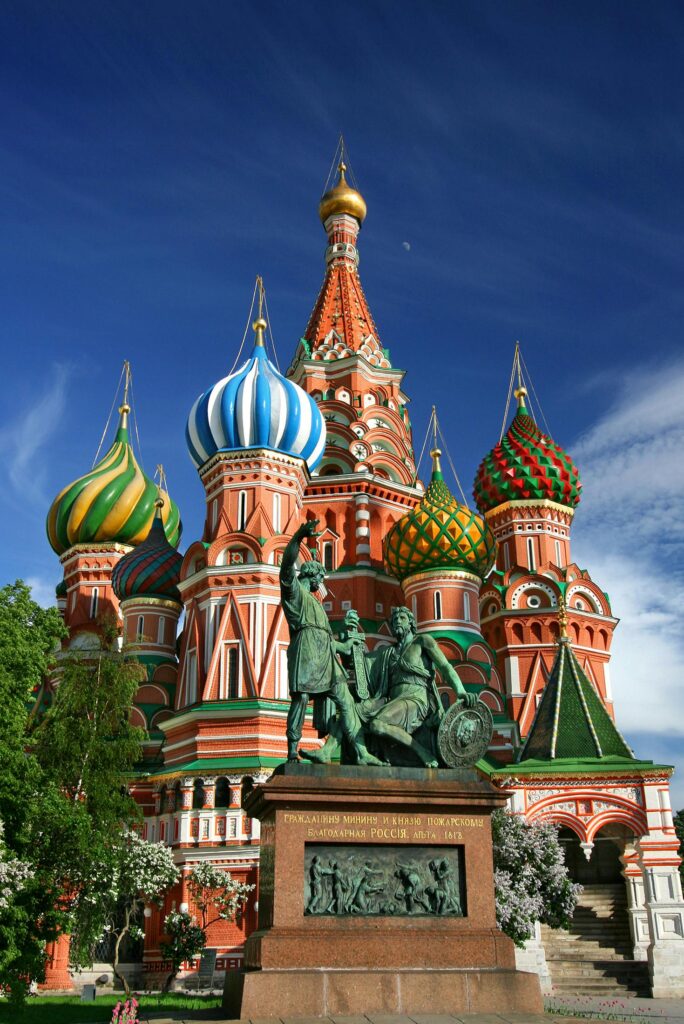
People most often begin their acquaintance with a country with its two capitals, and rightly so. The heart of Moscow is, of course, Red Square, one of the most recognizable squares in the world. Everything important is here at once: the red brick walls and towers of the Kremlin with its ruby stars, the colorful, almost gingerbread-like domes of St. Basil's Cathedral, and the imposing Historical Museum. The Moscow Kremlin itself is a city within a city, an ancient fortress with cathedrals, palaces, and the famous bell tower from which Russian rulers governed for centuries.
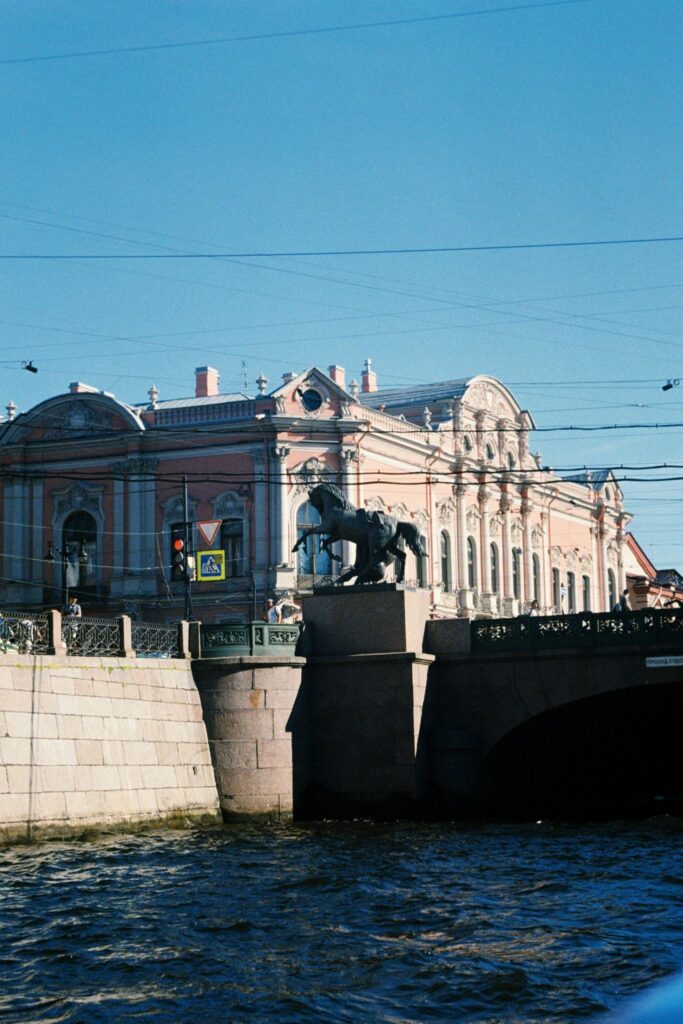
Petersburg, on the other hand, is completely different. It's a city of strict, measured beauty, a city of palaces, rivers, and canals, which is why it's not for nothing that it's called the Northern Venice. Its greatest treasure is the Hermitage, one of the world's greatest museums, housed in the luxurious Winter Palace on the banks of the Neva. You can wander through its halls for a whole day and not see even a fraction of the masterpieces collected there. Petersburg is also the grand Nevsky Prospect, drawbridges over the Neva, and magnificent suburban palaces with fountains, which we'll talk about a little later. The two capitals complement each other perfectly, showcasing two different faces of imperial Russia: the business-like and ceremonial Moscow, and the refined, artistic Petersburg.
Ancient Rus', the gold of the domes
If you drive a bit northeast from Moscow, you find yourself in a different Russia, ancient and unhurried. Here lies the renowned Golden Ring, a string of old towns that have preserved the look of pre-Petrine Rus'. Perhaps the most fairytale-like is Suzdal, an entire open-air museum town where dozens of churches and monasteries, along with a sturdy kremlin, are crammed into a tiny area, and time seems to have stood still for centuries. Nearby is ancient Vladimir, with its white-stone cathedrals that still remember the pre-Mongol era.
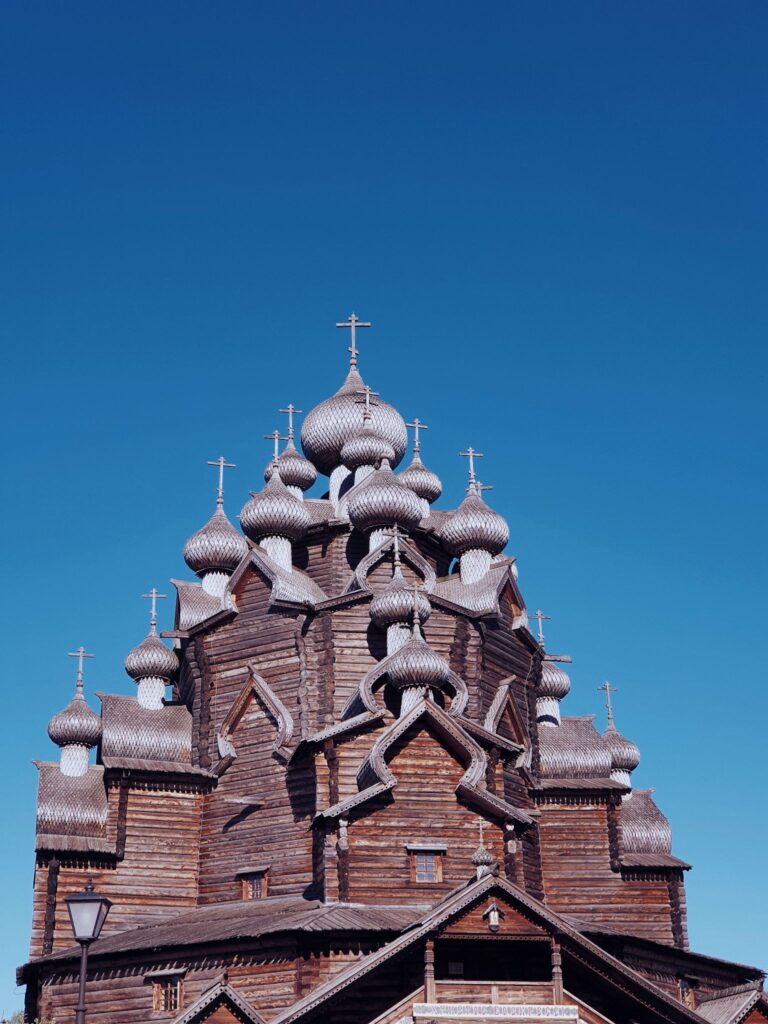
But a special wonder of ancient Rus' is hidden in the north, on an island in the middle of Lake Onega, in Karelia. It is Kizhi, a true masterpiece of wooden architecture. The main church of the local parish was built in the early eighteenth century without a single nail and was crowned with two dozen wooden domes that shimmer in the sun. The sight is breathtaking, and Kizhi is rightly included in the list of World Heritage sites. All this ancient Russia, both stone and wood, speaks to us of roots, of faith, and of the amazing ingenuity of our ancestors.
Wild nature, from Baikal to volcanoes
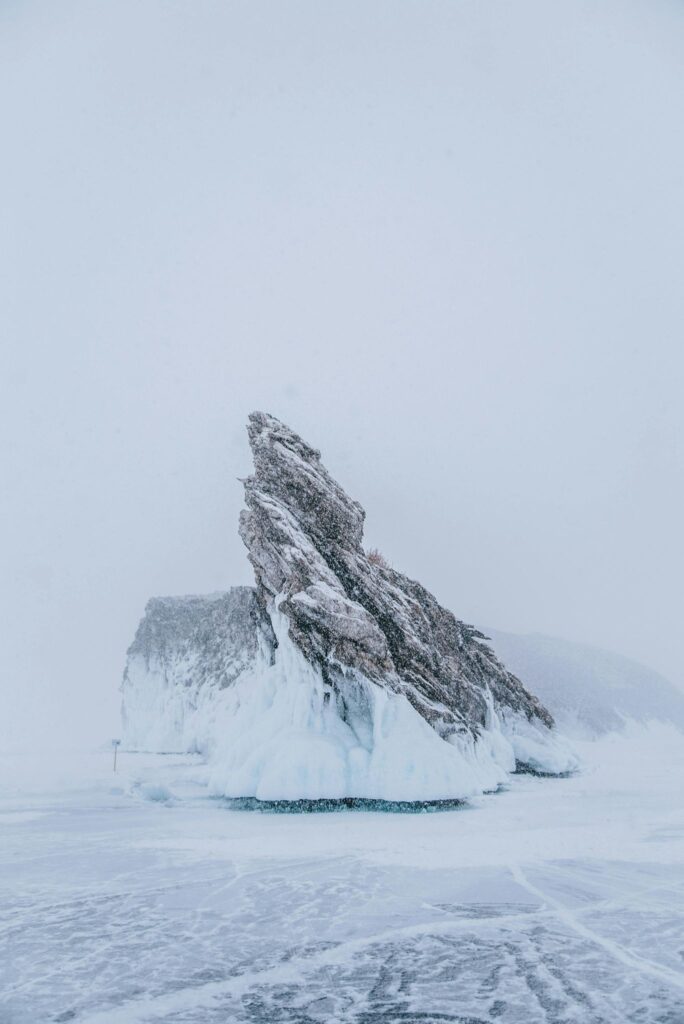
And now, about Russia, what amazes in a different way, not by the work of human hands, but by the power of nature itself. Its first shrine is, of course, Baikal, the deepest lake on Earth and the greatest reservoir of fresh water on the planet. Its water is so transparent that in some places the bottom is visible for tens of meters, and the lake itself is millions of years old. Baikal is beautiful at any time of year, both in summer and in winter, when it freezes into transparent, ringing ice.
The very edge of the world awaits those who reach Kamchatka. This is a land of volcanoes, dozens of which tower over the peninsula, and some of them are active. Kamchatka's main wonder is the Valley of Geysers, one of the largest geyser fields in the world, which can only be reached by helicopter. Streams of hot steam and boiling water erupt from the earth there, and wild bears roam around, all of which resembles a living fairy tale about the creation of the world. For those who love mountains, there is Altai with its turquoise rivers and snow-capped peaks, and the majestic Elbrus in the Caucasus, the highest mountain in all of Europe. Wild Russia lets you feel the true scale of this land.
Russia, the one you don't expect
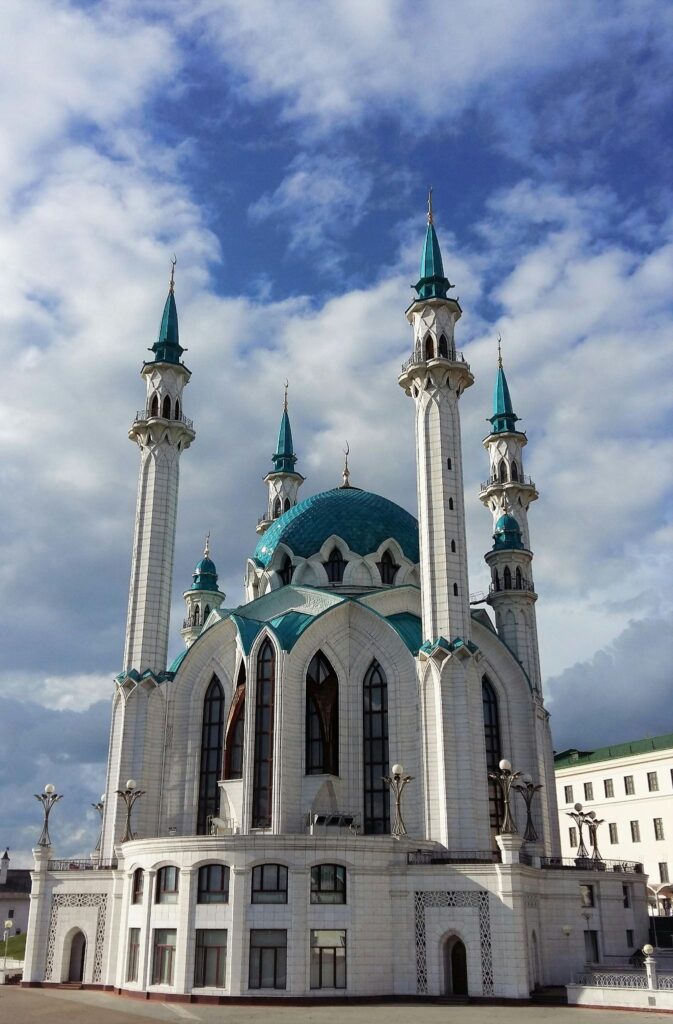
But that's not the whole country, because Russia is much more diverse than it seems, and it has many places that shatter common perceptions. Take Kazan, the capital of Tatarstan, for example, where amidst the white-stone Kremlin, a Orthodox cathedral and an ornate mosque stand side by side, and Russian and Tatar cultures have lived together for centuries. This is a completely different, Islamic, yet inherently Russian beauty.
And in the very south, in Dagestan, stands Derbent, one of the country's most ancient cities, whose fortress and walls date back to antiquity. Karelia, with its thousands of lakes, waterfalls, and restrained northern nature, looks completely different. This unexpected Russia shows that the country is made up of many peoples, faiths, and landscapes, and this is its special wealth. You only need to stray from the beaten tourist path, and discoveries will not be long in coming. A complete list of the country's most striking places with their brief descriptions can be conveniently compiled in a separate table.
20 places in Russia worth seeing
| Place | Where | What is it famous for |
|---|---|---|
| Red Square | Moscow | The country's main square, the heart of the capital |
| Moscow Kremlin | Moscow | Ancient fortress with cathedrals and palaces |
| Saint Basil's Cathedral | Moscow | Famous cathedral with colorful domes |
| Tretyakov Gallery | Moscow | The largest collection of Russian painting |
| VDNKh | Moscow | Huge park and exhibition ensemble |
| The Hermitage | Petersburg | One of the world's greatest museums, located in the Winter Palace |
| Nevsky Prospect | Petersburg | The city's main thoroughfare |
| Peterhof | Petersburg | A country estate with famous fountains |
| Peter and Paul Fortress | Petersburg | The historic heart of the city on the Neva River |
| Suzdal | Golden Ring | Museum city of ancient Russia under the open sky |
| Vladimir | Golden Ring | White-stone cathedrals of the pre-Mongol era |
| Yaroslavl | Golden Ring | An ancient city on the Volga River, with churches and a riverfront promenade |
| Kizhi | Karelia | Wooden architecture on the island, a UNESCO heritage site |
| Lake Baikal | Siberia | The deepest lake on Earth |
| Valley of Geysers | Kamchatka | One of the world's largest geyser fields |
| Kamchatka Volcanoes | Kamchatka | Dozens of volcanoes, some of them active |
| Altai Mountains | Siberia | Turquoise rivers and snowy peaks |
| Elbrus | Caucasus | Europe's highest peak |
| Kazan Kremlin | Tatarstan | Cathedral and mosque next to each other, a fusion of cultures |
| Derbent | Dagestan | One of the oldest cities in the country |
How to fit all this into the itinerary
It's understood that you can't grasp it all at once, so it's worth approaching a trip around Russia thoughtfully. The most sensible advice, especially for a first acquaintance, is to start with the two capitals. Moscow and Petersburg offer the maximum impressions with minimum travel difficulties. They are connected by a high-speed train, and you can see a great deal in a week. This is the ideal starting point, a classic that should be mastered first and foremost.
Once the capitals are behind you, you can choose your next Russia to your liking. For lovers of antiquity and tranquility, a leisurely journey through the cities of the Golden Ring will be suitable, as they are all not far from Moscow. Those who yearn for nature should aim for Baikal. And the most coveted, wild Kamchatka, is usually left for later, as a special, unlike any other adventure, requiring both time and effort. The main rule is simple: do not try to see everything at once, but travel thoughtfully, according to your mood and interest, then the impressions will be deeper.
Why show Russia to a child growing up far away?

For a child growing up far from Russia, all these places are not just dots on the map, but a key to understanding where they come from. It's one thing to hear the words Baikal or Red Square at home at the dinner table, and quite another to see them with your own eyes, or at least in vivid photographs and films. When living images stand behind the words, the abstract country of ancestors turns into something close and real, something they want to be proud of.
Getting acquainted with the geography and attractions of Russia is a wonderful way to bring both the language and culture to life for a child. You can watch films about Russian nature together, look at maps, dream about future trips, and read about the cities and peoples of this vast country. All of this subtly weaves the Russian language into a living, interesting context for the child, and the language ceases to be an abstract study, becoming a path to their own roots.
Here are some ways to help a child feel connected to Russia: * **Introduce them to Russian culture:** * **Food:** Cook traditional Russian dishes together, like borscht, blini, or pelmeni. Visit Russian grocery stores or restaurants if available. * **Music and Arts:** Listen to Russian folk music, classical composers like Tchaikovsky or Rachmaninoff, or contemporary Russian artists. Explore Russian art, ballet, and literature (age-appropriately, of course). Watch Russian animated films or movies. * **Holidays and Traditions:** Celebrate Russian holidays like Maslenitsa (Butter Week), New Year's, or Orthodox Christmas. Share stories and traditions associated with these. * **Language and Stories:** * **Speak Russian:** If you are a Russian speaker, speak Russian with your child regularly. Even a few words or phrases can start building a connection. * **Read Russian Books:** Read fairy tales, children's literature, and stories from Russia. * **Share Family Stories:** Tell them about their Russian ancestors, family history, and memorable experiences. * **Visual Connections:** * **Maps and Geography:** Show them Russia on a map, talk about its size, landscapes (mountains, rivers, forests), and major cities. * **Photos and Videos:** Share photos and videos of places in Russia, especially those relevant to your family's history. * **Community and Travel:** * **Connect with other Russian speakers:** If there's a Russian community in your area, encourage participation in cultural events or language groups. * **Visit Russia:** If possible, take your child to visit Russia. Experiencing the country firsthand can create a powerful and lasting connection. * **Tangible Objects:** * **Matryoshka dolls, Khokhloma crafts:** These traditional items can be fun and educational introductions to Russian artistry. The key is to make it engaging, enjoyable, and relevant to your child's life. Start small and gradually introduce more elements as they grow and show interest.

It’s easiest for a child to feel a connection to a faraway country through a lively and engaging story about it, through its histories, images, and language. When Russian isn't just a subject, but a key to an entire world, to places, people, and stories, one wants to study it in an entirely different way. It's good when language and culture go hand in hand, complementing and bringing each other to life.
At Palme School, we strive to introduce Russian to children through the culture, history, and imagery of their homeland, rather than through dry grammar alone. This approach makes the language come alive and gives it meaning. Our students range from four to seventeen years old, and for those with Russian roots, there are Program for bilinguals, and for those for whom language is closer as foreign, their own. All lessons are online, in small groups, for forty minutes.
You can check if it's suitable for your child for free. The school offers two trial lessons. During the first, a methodologist gets acquainted with the child, assesses their level, and explains the program. The second is a full lesson in a group, with a teacher and other children. After these, it's immediately clear how comfortable the child is in the Russian environment and what interests them most.
In short
The main thing to understand about traveling in Russia is that there isn't one single Russia; there are several, and they are all different. There are the imperial capitals, Moscow with Red Square and the Kremlin, and the palace city of St. Petersburg with the Hermitage. There's the ancient Rus' of the Golden Ring with Suzdal and Vladimir, and the wooden wonder of Kizhi. There's the wild nature: the deepest Lake Baikal, the volcanoes and geysers of Kamchatka, the mountains of Altai, and Elbrus. And there's the unexpected Russia: Kazan, Derbent, the lake region of Karelia, woven from many cultures. You can't embrace it all at once, nor is it necessary. It's wiser to choose the Russia that is closest to you now and start with that. And for a child growing up far from their ancestors' homeland, such a journey, even if only through maps and photographs for now, becomes a living and warm bridge to their native roots.
What are the must-see places in Russia for a first-time visitor?
The best way to get acquainted with the country is to start with its two capitals, as they are the most impressive and the easiest to get to. The main Moscow and St. Petersburg sites that are worth starting with are listed and described in detail in the article itself and in the table, so we won't repeat ourselves here. This classic approach is ideal for a first trip.
What are the most famous natural places in Russia?
Russia's most famous natural wonder is Lake Baikal, the deepest on the planet. Kamchatka, with its volcanoes and Valley of Geysers, is also incredibly popular, though it's not easy to get there. Mountain lovers are drawn to Altai with its turquoise rivers and Elbrus, the highest peak in Europe. And in the northwest, lake-filled Karelia enchants. Each of these places shows the power of Russian nature in its own way.
The Golden Ring of Russia is a common name for a circular route that runs through the ancient cities of northeastern Moscow. It includes several cities: Sergiev Posad, Pereslavl-Zalessky, Rostov Veliky, Yaroslavl, Kostroma, Ivanovo, Suzdal, and Vladimir. The Golden Ring is a collection of some of the most historically significant and beautiful cities in Russia.
This is the name of a famous tourist route through ancient towns northeast of the capital, which have preserved the face of old Rus'. Among them are Suzdal, Vladimir, Yaroslavl, and others, glorious for their kremlins, ancient temples, monasteries, and a special unhurried atmosphere. Traveling the Golden Ring is perhaps the best way to touch the primal, pre-Petrine Russia.
Is it worth going to Baikal?
Lake Baikal can give those who love nature one of the most powerful experiences of their lives. It is the oldest and deepest lake in the world with crystal-clear water, framed by mountains and taiga. It is beautiful at any time of year, both summer and winter, under a cover of transparent ice. The journey there is not short, but the views and the very spirit of these places more than make up for all the travel hardships.
Kamchatka is famous for its volcanoes, geysers, hot springs, and diverse wildlife, including bears and salmon. It's also known for its stunning natural landscapes and opportunities for adventure tourism.
Kamchatka is a remote volcanic land in the far east of the country, truly a land of fire. Dozens of volcanoes rise here, including active ones, hot springs gush forth, and the renowned Valley of Geysers, one of the planet's largest geyser fields, stretches out. The nature here is wild, almost untouched, with bears and seals. This is a destination for thrill-seekers who are not afraid of a challenging journey.
What to see in Russia besides Moscow and St. Petersburg?
A lot. You can drive around the ancient cities of the Golden Ring, see the wooden wonder of Kizhi Island in Karelia, and reach Lake Baikal or Kamchatka. It's also worth visiting Kazan, where Russian and Tatar cultures intertwine, and the ancient city of Derbent in the south. Russia is vast and diverse, and beyond the two capitals lies a whole world of unique and vibrant places.
What is Kizhi?
This is a famous open-air monument of wooden architecture on an island in Karelia's Lake Onega. Its heart is a multi-domed wooden church, built in the early eighteenth century without a single nail. More details about Kizhi and its place among the wonders of ancient Rus' are told in the article itself.
Is Russia a big country for travel?
Indeed. It's the largest country on the planet, and the distances within it are commensurate with its size; a flight from west to east takes many hours. It's simply impossible to see it all at once, so knowledgeable people advise choosing one thing for each trip, rather than trying to do everything at once.
When is the best time to go to Russia?
It all depends on your goals. For exploring cities and palaces, the warm months from late spring to early autumn are best. St. Petersburg is especially beautiful during the White Nights in June. Lovers of a winter wonderland travel for the snowy beauty and the frozen Lake Baikal. However, it's more sensible to plan trips to far-off Kamchatka and nature trails for the short northern summer, when the weather is most favorable.
Why should a child know about Russia's landmarks?
For a child growing up far from Russia, getting acquainted with its places is a journey to their own roots and a living connection to their family's culture. When abstract names transform into vivid images, the ancestral country becomes close and understandable. And conversations about travels, cities, and Russia's nature wonderfully enliven the Russian language for a child, weaving it into an interesting and meaningful context.