
Homeland. Relatives. Parents. Relatives. From the homeland.
A child may know all five words and never notice that they have the same «family» within them. Especially if he/she mostly hears Russian at home and studies geography in another language. For him/her, relatives are people, the homeland is a place on a map, and the question «where are you from?» is a separate phrase that adults, for some reason, ask when meeting someone.
Meanwhile, the connection here is long-standing. The word «homeland» is derived from «rod», and in the past the meaning of “family” and the meaning of “home” were much closer to each other. This tradition has also persisted in other Slavic languages: for example, in Polish rodzina today means family.
It’s better not to start with a family map. You don’t need to first explain the boundaries of the regions and teach the city names. You can start with people the child already knows, and then see where their places are on the map.
The homeland was first near the tribe.
Put the words «homeland» and «relatives» next to each other, and the child will almost certainly be able to see a common piece of information. With «parents» and «relatives,» he or she will understand it quickly. But «from the homeland» usually has to be said separately: «Grandma is from…,» that doesn’t mean the same thing as «Grandma is living in… now.».
It is on this difference that the first map appears.
Where a person lives now can sometimes be learned without talking. The city is indicated by the address on the postcard or the package; it is mentioned during a phone call; it is signed with a photograph. But the word «from» sends you back. You have to ask the person themselves where they are from, where they were born, where their childhood took place.
The answers may coincide. Or they may not.
A person was born in one place, spent their first years of schooling in another, began their adult life in a third place, and now lives in a fourth. For an ordinary map, these four are equal-value names. For a family, each point has its own significance.
Therefore, it is more convenient to write not the date, but two or three words next to the city: «Grandma was born,» «Grandpa grew up,» «Mom went to school.» The map immediately ceases to be a list of geographical names.
One relative has one point, another has four.
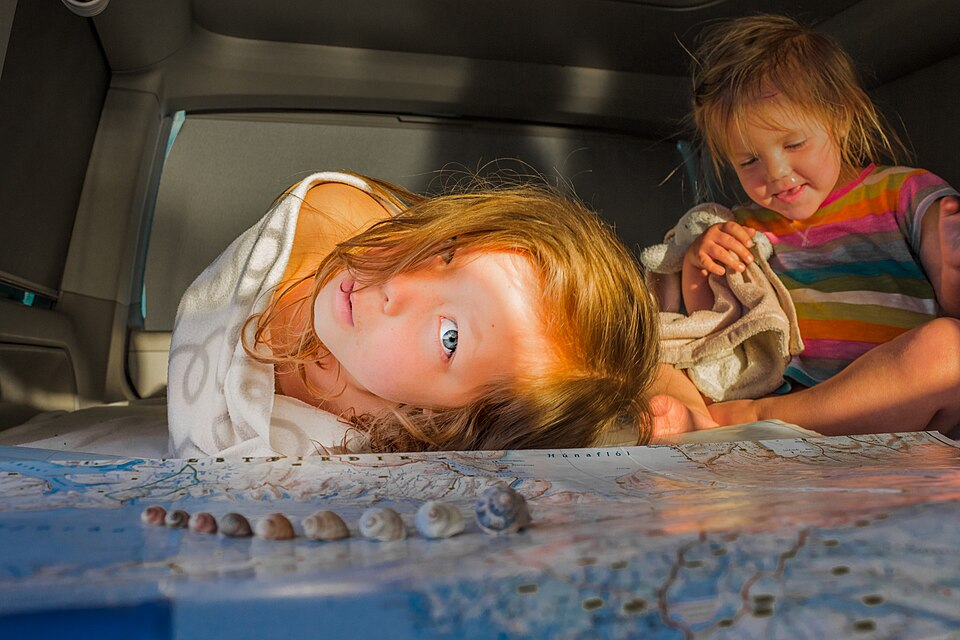
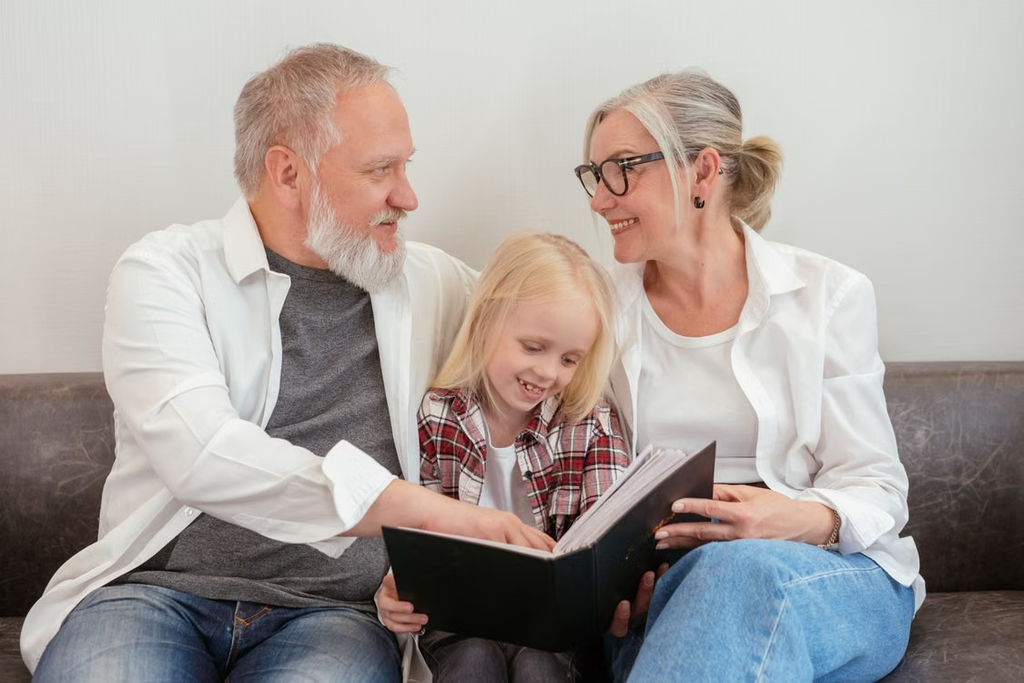
You can start with four questions with your grandmother, but you don't have to ask them in a row. They can easily be incorporated into several ordinary conversations: where you were born, where your childhood passed, where you went to school, whether you always lived where you live now.
The most interesting part begins when the answers are transferred to the board.
In one case, everything will be in the same city. In the other, a line will have to be drawn between the first and last point, passing through half the country. The third will name a small settlement that doesn’t even appear on the wall map, and a regional map will be needed.
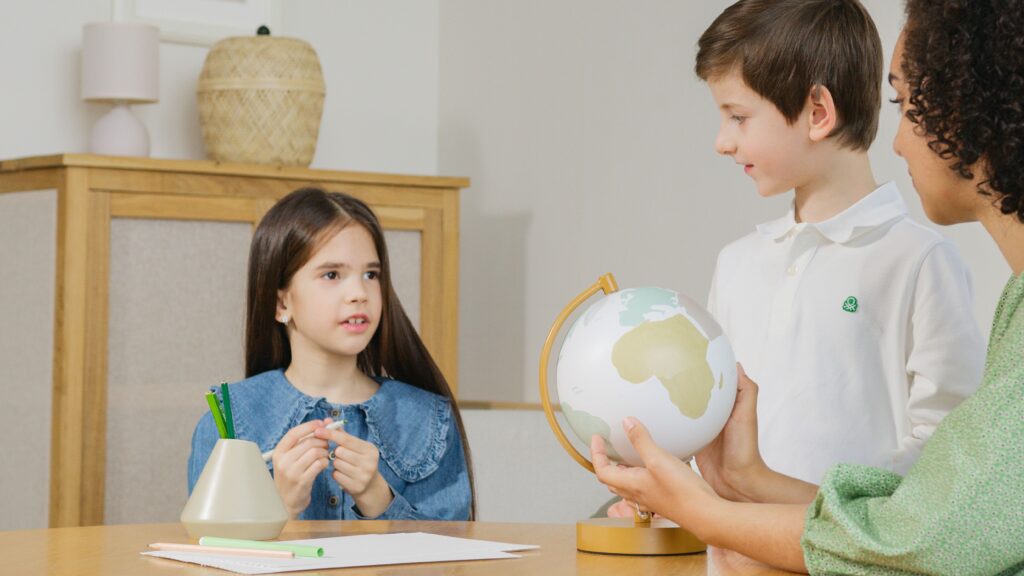
Then the child encounters the scale for the first time, not because a chapter titled «Map Scale» has been added to the textbook; rather, the necessary space for the family has simply not been available on the map that hangs in the house.
Here, the expression «small homeland» becomes more understandable. In a family, they may call the city, village, or another place with which a person connects their childhood and a sense of belonging. This does not necessarily have to be the current address. And even the place of birth is not always the place that the adult would first name if asked, «Where is your small homeland?»
Thus, on one map, different types of family points appear. Some are taken from documents and addresses, while others exist only in a person's memory.
Then the cities start to repeat themselves.
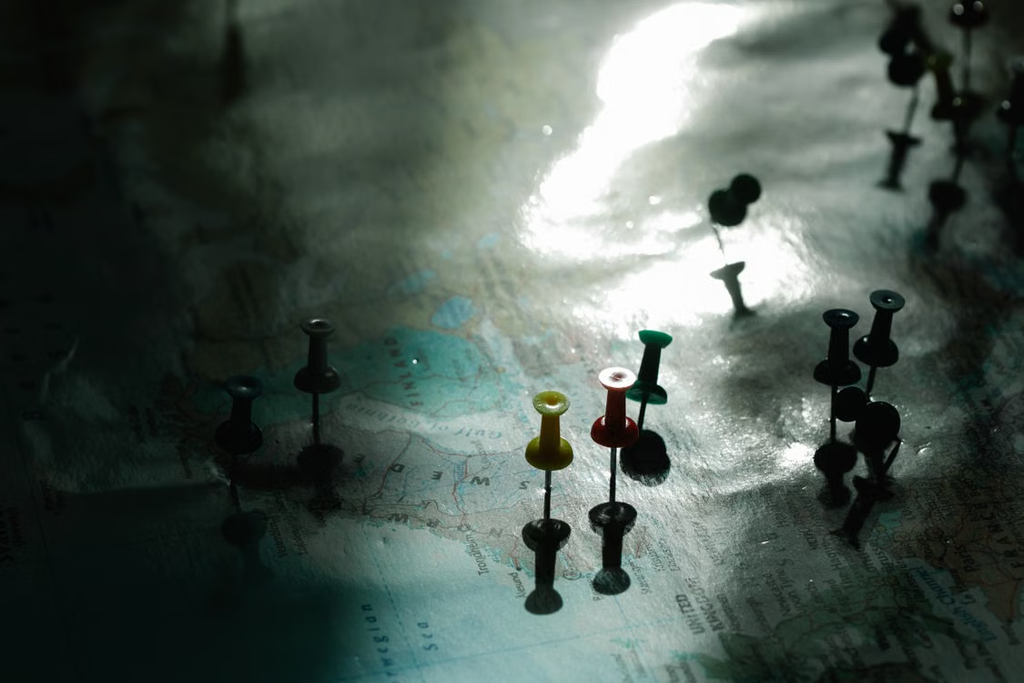
After one relative, the card still looks like a biography. After several, the family becomes apparent.
Some cities may appear only once. Another one may suddenly reappear in the grandmother’s house, her sister’s house, and in the house of one of the parents. Somewhere, several generations lived there, although now no one is there anymore. Sometimes it happens the other way around: each relative names their own place, and the points quickly spread out over a large area.
This is where questions arise that are difficult to anticipate in advance.
Why do relatives from two neighboring cities speak a little differently? What river runs near the place where my grandfather grew up? Why is one family town visible on a map of Russia, while another has to be searched for for a long time? How long does it take to travel between places that seem almost adjacent on the map?
It’s not necessary to answer everything at once. Sometimes a child notices only one thing: «Did they really live so far away from each other?»
That's enough to open the map again.
In the article about home geography We were just putting together a class in which the question comes before the explanation. The family card works the same way, only the question brings not a textbook, but one’s own family.
On the map of Russia, the family looks different than on the phone.
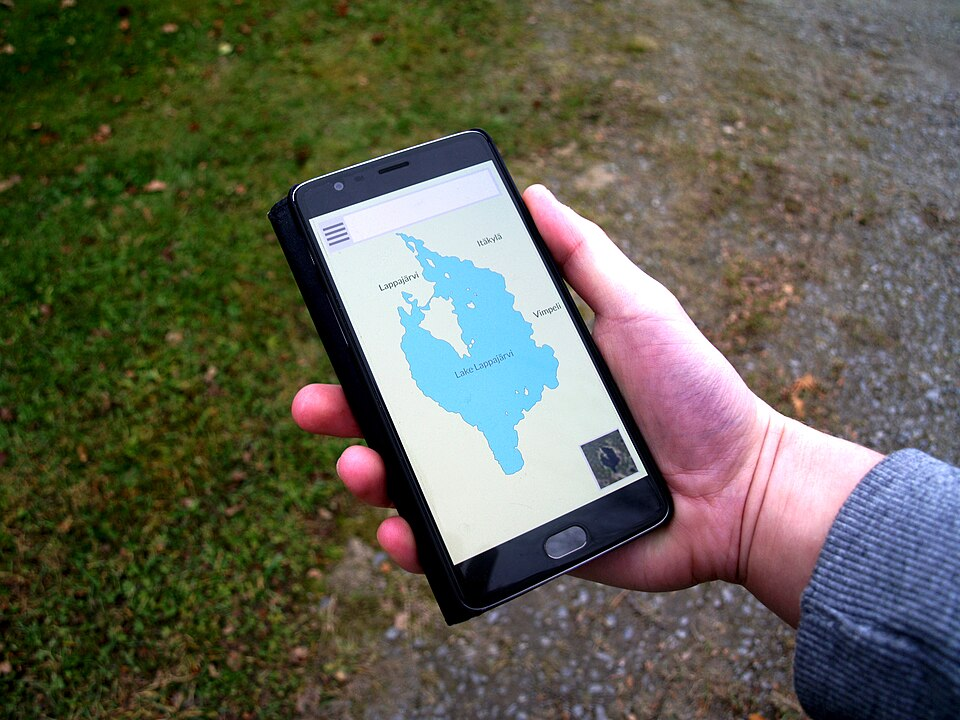
In the contact list, relatives are next to each other. Grandma may be right below the grandfather, the aunt is two lines down, and the cousin is even lower. There are no distances between them there.
The map returns it to him.
Sometimes two family points are located very close to each other. Then a large map of Russia is almost useless, and it is more interesting to open a map of a region or province. Sometimes one point remains in the European part of the country, while the other is located far beyond the Ural Mountains. Then even a small regional map will not explain anything.
You can never tell a child in advance about parts of the world, time zones, or major natural features. If your family line crossed the Ural Mountains, they will ask what that long strip on the map is. If the point appears on the Far Eastern coast, an ocean will be nearby. If a relative grew up near a large river, the river will finally stop being just a blue line on a map.
The family map does not have a mandatory set of geographical facts. In one family it will lead to the Volga, in another to the Caucasus, and in a third to the northern seas. This depends not on the curriculum of the classes, but on where people actually lived.
The Russian name sometimes has to be searched for a second time.
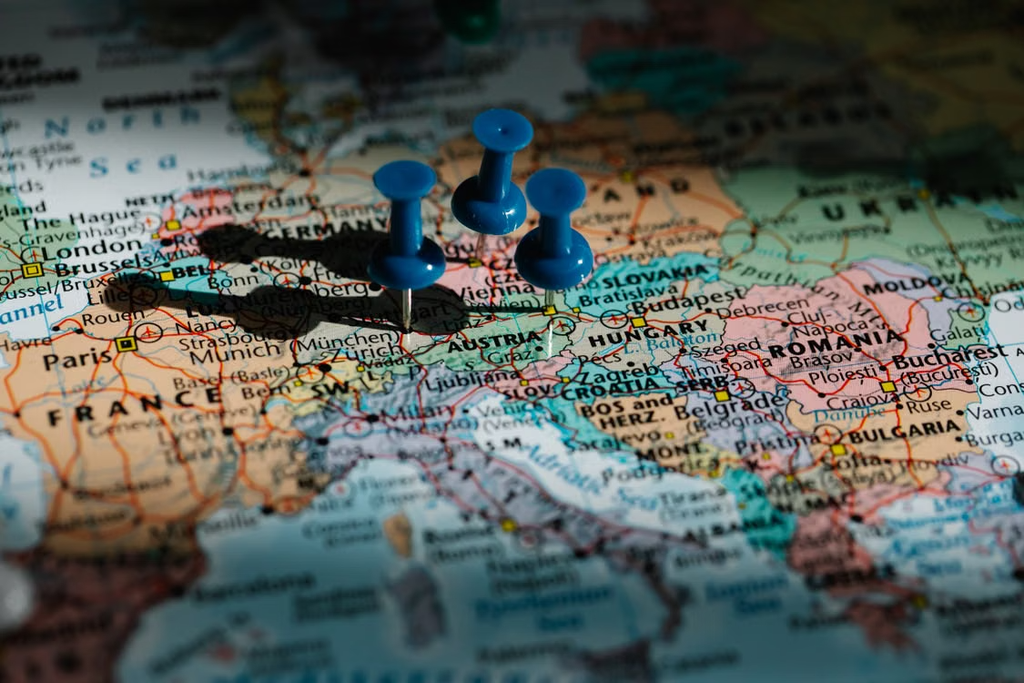
For a bilingual child, there is another little mystery. The city is familiar to him, but not under that name.
He saw the school map in English. They also discussed the trip in English. And during the call, the grandmother called the place in Russian, and the child first has to understand that it is the same place.
With Russian cities, the difference is often small and boils down to a different spelling of the letters. But if the family history extends beyond Russia, the pairs become more noticeable: Munich and Munich, Vienna and Vienna, Florence and Florence.
On the family card, you can write both names next to each other once. Then you can use the Russian one.
In this way, the child receives the Russian geographical term not from a list to memorize, but together with the person to whom it refers. Vienna becomes not just one of the European capitals, but a city where an aunt lived for several years. Such a name is acquired in a completely different way.
A full address is not required on the card.
When the family card is ready at least half way, you usually want to show it to someone. Send a photo to your grandmother, bring it to a class, hang it up at home.
Therefore, it is better not to move to this area at all. For family geography, a populated area is sufficient. If you want to keep the exact address or other family details, you can keep a separate notebook that won’t be hanging on the wall and will not be included in the photos.
On the map itself, there are only places and short captions left. After a while, the word «relatives» begins to look almost literally: these are people of the same kind, scattered across different points.
And next to it is the word «homeland».
Both begin with the same root word.
Only one of them tells you who belongs to you, while the other helps you ask what place you consider to be your own.
The Family Map in Three Steps
For all three steps, you need a map of Russia with the regions marked, and pencils in three colors. You can take the steps on different days, one conversation with a relative at a time.
The first point
An adult names the city where their grandmother or another relative currently lives. The child finds the region on the map where that city is located, places a dot and signs it with two words, for example «Grandma is here now». If the city is small and not shown on the general map, they open the map of the region.
Several points of one person
After talking with a relative, the child marks the places where he was born, where his childhood passed, and where he currently lives. For each type of place, there is a different color; it is the same for the whole family. The points of one person are connected by a line in the order in which they were there.
Two names for the same place
For each city on the map, the child writes the name in Latin next to it, as it appears on the English map or on the US envelope. If the family has points outside of Russia, the pairs become more interesting, for example Munich and Munich.
Every new point on the family map raises questions: what kind of river is that nearby, why are there mountains here, how far is it from here to the sea? At the geography course at Palme School, children aged four to fourteen tackle such questions in Russian, with a map and a teacher.
You can learn more about the course on free trial lesson. Classes are held online, in mini-groups or individually, and the materials are adapted to the child's age and level.
Frequently asked questions about the Family Card of Russia
From what age can a family card be issued?
From the age of six or seven, if an adult helps find the region and mark the points. Younger children can start with simpler activities, such as photos of relatives attached to the map around the city, and threads to the relevant cities. Other activities for younger children are listed in the article about home geography.
What card is required for the Russian family card?
The Russia map is the best option; the regions are colored and labeled in different colors. These maps are available in school atlases and sold separately. For small villages and settlements, a map of the region will be needed; it is convenient to first look at the map on your phone and then transfer the point to paper.
What should I do if a relative lives in Moscow or St. Petersburg?
There is no need to look for a separate region. Moscow and St. Petersburg are considered regions of Russia themselves, so the point is placed directly on the city. The Moscow and Leningrad regions are other regions around them.
How to find out how much time the relative has left in Russia?
In Russia there are eleven time zones, and clocks do not change seasonally. In Kaliningrad it is an hour less than in Moscow, in Omsk it is three hours more, in Vladivostok seven more. While in Toronto and New York it is summer time, seven p.m. in Omsk means five a.m. the next day, and in Vladivostok nine a.m. In winter the difference becomes an hour longer.
How to send a letter to my grandmother in Russia?
In the US, the address is written in Latin letters and Arabic numerals, and the last line is separately marked with RUSSIA. From Canada, it is not possible to send a letter to Russia for the autumn of 2026; Canada Post is temporarily not accepting mail there. In response, the grandmother writes your address in Latin and adds the country's name in Russian.
What to do if relatives do not live in Russia?
Take a world map or place a second one next to the map of Russia. A family map does not have to be placed in one country; the points in Germany or Israel are also legally placed on it. It is especially useful to write the Russian and English names next to such cities.
What should I do if a relative doesn’t remember or doesn’t want to talk about it?
Don't insist. Only what the person himself has told is taken into account. Sometimes the details are remembered later in another conversation, and the map develops gradually; that's normal.