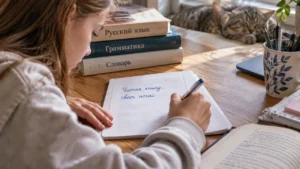


Mila is nine and lives in a suburb on the north side of Chicago. Last fall she showed her mother a streak of 142 days in a language app, green owl, gold badges, the works. The next Saturday her mother sent her to the counter at the Russian market on Devon Avenue with two dollars and one job, ask for the cabbage pirozhok, a word with forty repetitions sitting in her app history. The order itself was placed in the English language, and the vocabulary which had been accumulated in the application was not employed in any way.
How to learn Russian when the study is organized around one person
The grandmother of Mila is resident in the city of Tula, and a telephone call is made by her on every Sunday evening. The first month of the study of the Russian language was scheduled with reference to the Sunday call to Tula, which was the one appointment of the week at which the language was demanded of the child. The reading of Winnie the Pooh in the Russian language was continued by the grandmother down the telephone at the rate of one chapter in a week, and the name Пятачок was acquired by Mila in the course of the first of those chapters. She found out months later that he was Piglet. Advice pages on how to learn Russian tend to open on noun charts. Mila’s plan opened on a phone call.
How to learn Russian alphabet shapes and sounds
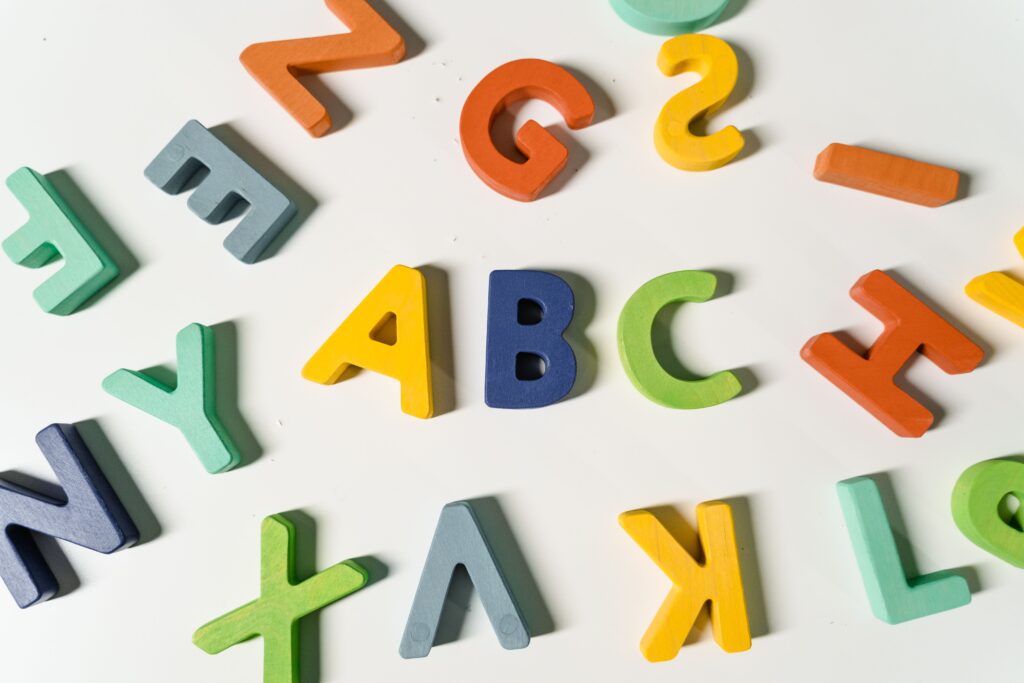
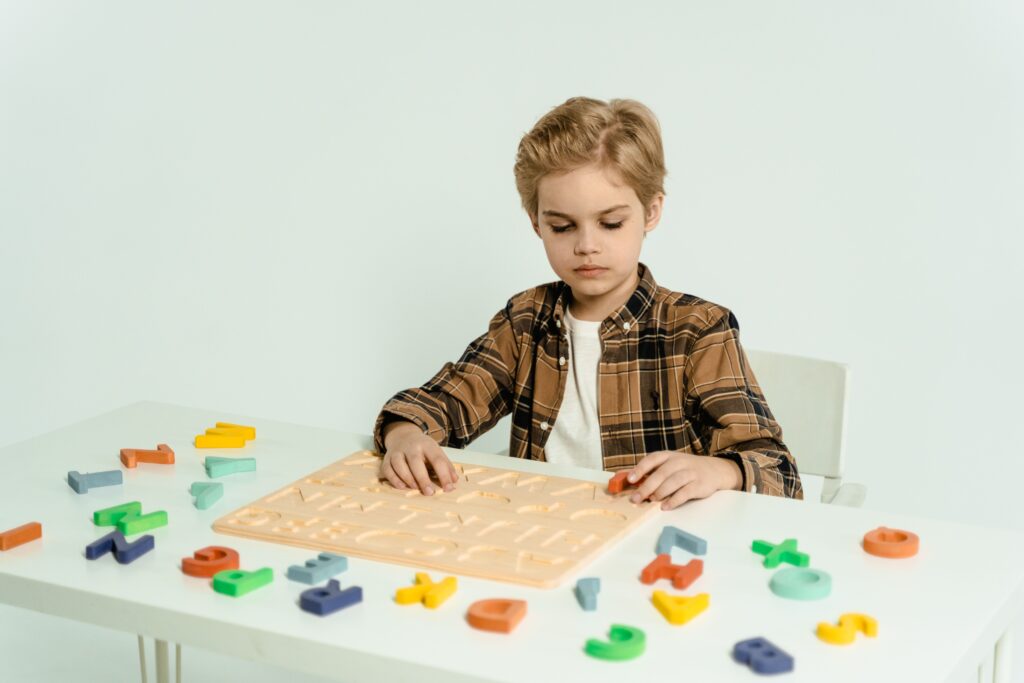
Cyrillic holds 33 letters, and five of them, А, К, М, О, and Т, come free, the shapes and the sounds both match English. Four more look friendly and lie, В says v, Н says n, Р says r, and С says s. Those four cost Mila her first week, every В on the cereal box reading as b in her head. A set of magnetic letters covers the whole stage for a few dollars. The name of Mila was assembled in magnets on the door of the freezer while the dinner was being cooked, and the reading of it back was accomplished before the table had been set. A kid who can find herself in Cyrillic has something no worksheet gives, her own word in the new letters. Inside two weeks she was reading three letter words like дом without help, a few minutes at a time.
How to write in Russian with a pencil
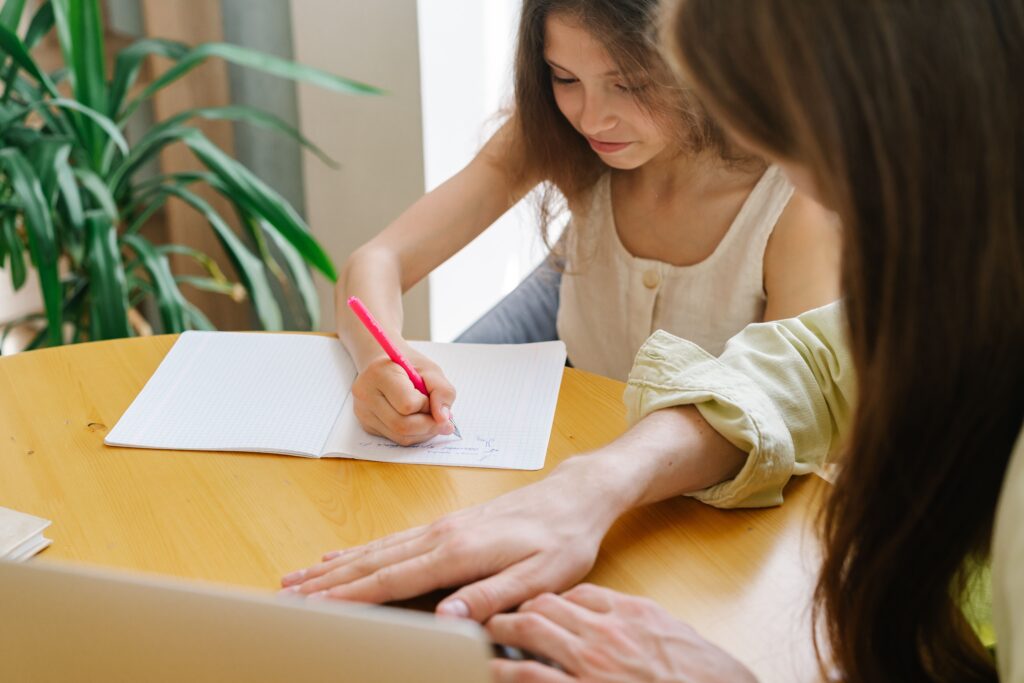
Paper did the part the magnets could not, it moved the letter shapes from her eyes into her hand. By week two, how to write Russian words meant one word a night at the kitchen table. The phone took over a month in, and how to write Russian language messages turned out to be one setting away, the Cyrillic keyboard went on and a one word text went out to her grandmother most evenings.
The speaking part starts in week one
Parents put the question to us at most assessments, how do you speak Russian with a kid when the house holds no other speaker. We say week one, even when the whole word list fits on one index card. New words took up posts around the house, labels on the door, the milk, the spoon drawer, the bathroom mirror. Supper became a trade, one sentence of Russian bought one of English, and the part Mila liked best was correcting her mother, kids take to running the classroom.
Apps and tools that help, and what they can’t do

Apps are good at two things, letters and daily repetition. Ten minutes in a day are sufficient to exhaust the whole usefulness of an application of this kind, and the streak which Mila maintained was recorded on a chart that was kept on the refrigerator, which turned the habit into a matter of visible account. The cartoon Masha and the Bear was watched from the couch on most evenings with the subtitles in the off position, an arrangement which was insisted upon by the mother of Mila, and by the late winter the greater part of an episode, the porridge episode in particular, could be followed by Mila without assistance.
How to learn Russian fast on an ordinary school evening

The greater part of the work was carried by the school nights in the household of Mila, in the form of a few minutes of the Russian language after the completion of homework, to which one genuine conversation in every week was added. In practical terms this arrangement amounted to fifteen minutes on the weeknights together with the Sunday call that was made to Tula, and the progress that is made in such a scheme turns on the regularity of the evenings rather than on the length of any one of them. The Foreign Service Institute in Arlington, the federal government’s language school, gives its diplomats 44 weeks of Russian, about 1,100 hours in a classroom. Mila’s group did the rest of the work, kids her age waiting on her answers and a teacher pulling the weeds out of her Russian while they were small. Fit matters first, a class pitched over her head teaches a kid to hide.
Three questions from new parents
A classmate asked her in the hallway, do you speak Russian, and nothing came out. What do I tell her?
One ready line covers it, I am learning it, want to hear my name in Russian? The name of the child together with one greeting is sufficient for this purpose, and both of these items are liable to be learned from the magnets on the freezer door in the course of three or four evenings.
How do I learn Russian along with her?
Use her order, the alphabet before anything else, then the labels around the house. Mila’s mother learned the same letters at the fridge, and her wrong answers gave Mila somebody to correct at supper. Classes at our school enroll ages four to seventeen. Parents study at home on their own.
When will she be able to chat with her grandmother in Russian?
One group lesson a week and a few minutes at home most evenings bring greetings and school stories inside her first year, and the methodologist estimates each child’s pace at that first meeting.
An assessment opens the door

Our school teaches children between four and seventeen, no older, online and in small groups. The first step is an assessment which is performed by a methodologist, and the result of that assessment is the level of the child set down on paper, with a true zero included among the possible outcomes. After this the child is placed by the school in a small group which corresponds to that level. Each of the groups is led by a teacher, and the selection of the class times is undertaken at the end of the procedure, which in the case of Mila produced a Tuesday group that left the Sunday call to Tula untouched. Mila’s group placement came in January at the true zero level, and in May the woman at the register on Devon Avenue heard the whole order in Russian, pirozhok, cabbage, please.