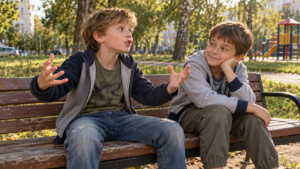

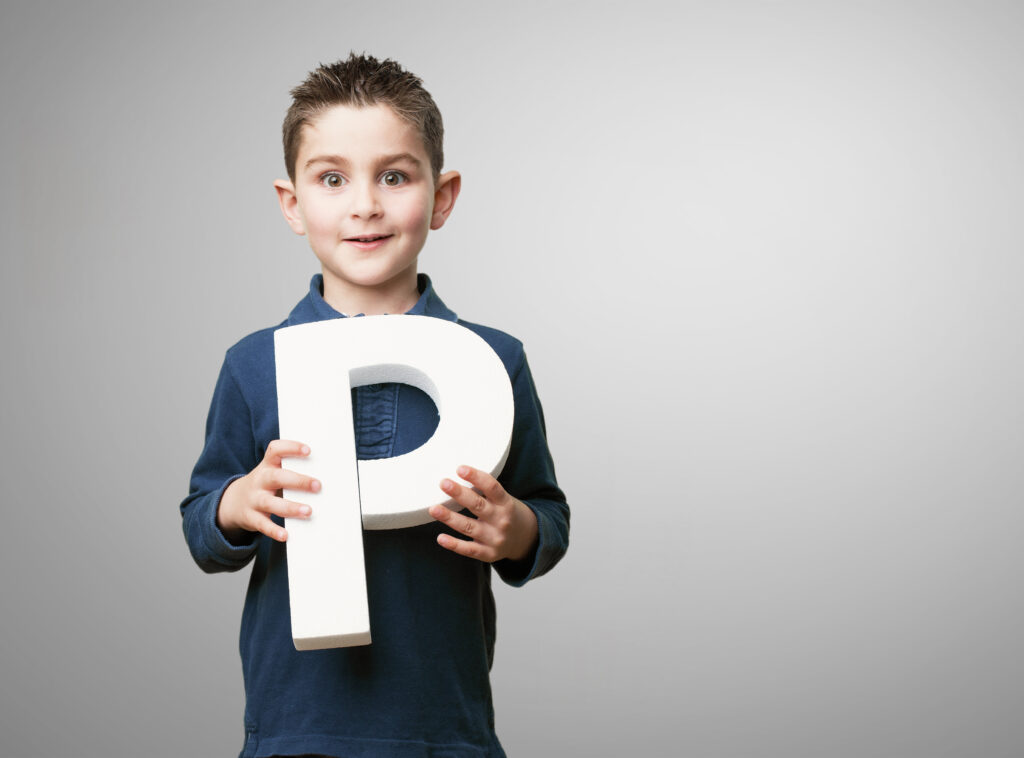

The child is looking at the letter B. Confidently says, «That's bee.» Pause. Mom looks at Dad. Dad looks at Mom.
No, not «bee.» It's «vee.» A completely different sound.
The child is acting on understandable logic. They see a familiar sign and make a familiar sound. The brain is doing what it has already learned in English.
What does it look like in class
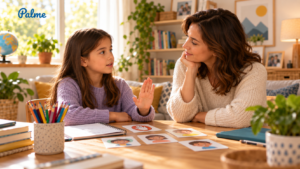
When a child starts learning the alphabet at Palme School, the first letters are: A, U, M. Simple, without tricks. Then K, T. Then O, E. The letters are introduced not in alphabetical order, but in an order that allows them to read the first syllables as early as possible. MA. KO. TU. The child reads without knowing all the letters yet. The first word read appears before the entire alphabet is learned, and this is very motivating.
«False friends» appear gradually. Each time with an explanation: this letter looks like an English one, but sounds different in Russian. The child doesn't just memorize. They understand why this particular letter needs to be remembered separately.
Many parents think that first Alphabet, then reading. In practice they go together. New letters immediately enter syllables, withLogs form words. One supports the other.
How much time does it take? With lessons twice a week, children aged five to seven usually know all the letters by the end of the third or fourth block. That's three to four months. Reading appears along the way, not just at the very end.
One child memorizes using flashcards. Another uses games. A third uses songs and rhymes. There is no single magic method. Often, it's not the length of the lesson that helps, but its regularity. Ten minutes almost every day yield more than an hour once a week.
At Palme School, we divide all letters into three groups. Not because it's prettier. Because it's more convenient and faster.
First group: Almost familiar
There are letters that look like Latin letters and sound similar. A, E, K, M, O, T. A child who knows the English alphabet already knows almost all of them.
A: Like the «a» in «art». K: Like the «k» in «kit». M: Like the "m" in "mom". O: Like "o", but a little shorter. T: Like "t", but without the puff of air. E: Almost like "ye" in "yes".
Six letters are almost in your pocket from the first lesson. Bilingual children grasp this group quickly. After one lesson, they can already read MA, OK, TO. It's important that the first success comes early and is noticeable.
| Letter | Transliteration | Sound | Group |
|---|---|---|---|
| A a | A | A in «art» | Acquaintance |
| B | B | b in «book» | New |
| In the | V | how V in «very» | Trap |
| G | G | How G in «go» | New |
| D d | D | d in «dog» | New |
| Yes | YES | as YE in «yes» | Acquaintance |
| Zh | ZH | how S in «measure» | New |
| With | Z | like Z in «zero» | New |
| And and | I | ee in «see» | New |
| Y y | Y | how Y in «boy» | New |
| To, to | K | how K in «kit» | Acquaintance |
| l | L | L in «lamp» | New |
| M m | M | how M in «mom» | Acquaintance |
| N n | N | How N in «no» | Trap |
| Oh oh | O | Like O, but shorter | Acquaintance |
| Pp | P | How P in «pan» | New |
| R | R | R in «red» | Trap |
| With | S | How S in «sun» | Trap |
| T t | T | as T in «top» | Acquaintance |
| In | U | oo in «moon» | New |
| F f | F | f as in «fun» | New |
| H h | KH | how H in «hat» | Trap |
| Ts | TS | How to TS to «bits» | New |
| Ch | CH | ch« | New |
| Sh | SH | sh in «shop» | New |
| Sh | Shch | soft SH | New |
| Y | « | hard sign, does not sound | Sign |
| Y | Y | looks like the I in «bit» | New |
| "soft sign" | ‘ | soft sign, does not sound | Sign |
| Uh uh | E | like E in «bed» | New |
| You | U | how are you | New |
| I am | YA | ya in «yard» | New |
Second group: traps
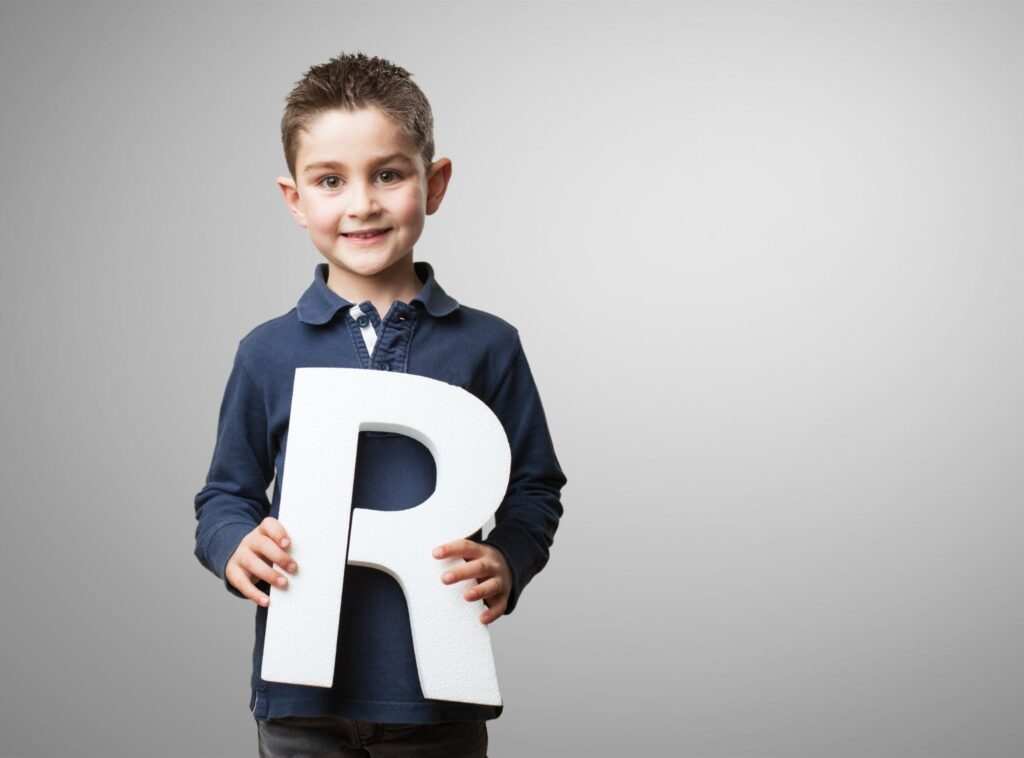
This is where the real work begins. There are five letters that look like Latin, but sound completely different.
V looks like B: but it is «ve», the sound is like V in the word «very». N looks like H: but it is «en», the sound is like N in the word «no». R looks like P: but it is «er», the sound is like R in the word «red». S looks like C: but it is «es», the sound is like S in the word «sun». Kh looks like X: but it is «kha», the sound is like H in the word «hat».
A child sees a familiar sign and misreads it. Automatically. Without malicious intent. The brain simply repeats a familiar path. This is a predictable difficulty, not a memory problem. Many children confidently say «bi» for some time, even if they have already heard «ve.».
There are only five. Five letters that need to be worked on separately, specifically, with repetition. This is a workspace that can be handled.
| Letter | Looks like | Error | In reality |
|---|---|---|---|
| In the | B in English | pronounced «b» | «veh» - like V in «very» |
| N n | H in English | read as «h» | «en» - like N in «no» |
| R | P in English | read as «pee» | «er» - like R in «red» |
| With | C in English | read as «see» | «es» - like S in «sun» |
| H h | X in English | pronounced as «ex» | «kha - like H in »hat« |
Third group: new and honest
There are letters that have no counterparts in Latin. B, G, D, Zh, Z, I, Y, L, P, F, Ts, Ch, Sh, Shch, Hard sign, Y, Soft sign, E, Yu, Ya. There are twenty of them.
There's no trap here. An unfamiliar sign, an unfamiliar sound. The brain just records the new, without the confusion of «this was in English.».
Some of them children memorize very quickly. Zh and Sh: because the sounds are unusual, there are none like them in English. Children often giggle at them, draw them out on purpose to feel the sound. Yu and Ya: because they have two sounds at once, and this is interesting. Y: because there is almost nowhere else to find it.
And separately: Ъ and Ь. These are signs, not letters in the usual sense. They cannot be read on their own. The first child almost always asks: «If you can't hear them, why are they needed?» Without them, many words would be read incorrectly. They change the sounds around them, but are silent themselves.
At Palme School, letters aren't taught in alphabetical order from A to Z. The child doesn't memorize the alphabet like a list. They begin to read, and the alphabet appears as a tool. The first Two lessons are free.
How many letters are in the Russian alphabet
Thirty-three. Ten vowels, twenty-one consonants, and two signs: the soft sign and the hard sign. These two don't make sounds on their own, but without them, reading Russian will quickly go awry.
From what age to start the alphabet with a bilingual child
It is most often convenient from five to six years old, when the child has already seen letters in their primary language. It's possible earlier too, but then the main thing is not «memorize the letter,» but «hear the sound,» through games and listening.
Why do bilingual children call «V» «bee» and "R" "pee"?»
Because some of the letters look exactly the same as in English but sound different. The brain takes a shortcut: familiar symbol – familiar sound. It's not «bad memory» but a predictable trap.
The most commonly confused letters with English letters are: * **Russian:** В (V) with English **B** * **Russian:** Н (N) with English **H** * **Russian:** Р (R) with English **P** * **Russian:** С (S) with English **C** (though it sounds more like 's') * **Russian:** У (U) with English **Y** (though it sounds more like 'oo') * **Russian:** Х (Kh) with English **X** (though it sounds more like 'h')
V, N, R, S, H. They are also the «false friends.» They look familiar, but sound Russian. These five letters usually require a little more time and practice than the others.
Is it necessary to learn the alphabet in order from A to Z?
Not necessarily. For reading, it's more useful to start with letters that can immediately form syllables. Many children in Palme first get acquainted with A, U, M, K, T, O, and from these, they read their first small words.
How long does it realistically take to learn all the letters?
With lessons twice a week, most children aged five to seven feel confident with the alphabet in three to four months. Reading syllables and short words usually starts earlier, even before the «final» A-Z.
What to do with the soft and hard signs
Calmly accept that they have no sound. The soft sign softens the preceding consonant. The hard sign helps separate sounds. Children almost always ask, «Then why are they needed?» And this is a normal question.
Is it true that the Russian alphabet is much more difficult than the English one?
It's different. There are slightly more letters, but the main difficulty for speakers of the Latin alphabet isn't the quantity, but precisely those five «similar but not quite» letters. The brain masters the rest like any new alphabet.
How to help a child memorize letters at home
The simplest things work: picture cards, labels on objects, games like «find this letter on the page.» The important thing is not the quantity of materials, but regularity. Five to ten minutes almost every day yield more than a long session once a week.
The Russian alphabet is called the Russian alphabet. It is not necessary for a child to know this word.
The Russian alphabet is called Cyrillic. The name itself is usually just explained to children for general knowledge, once. Learning to read and write in Russian is much more important than memorizing the term.