



There’s a children’s game called «Find the Differences.» Two pictures that seem identical, but the second one has no tail and the curtains on the window are different.
With proverbs about the Russian language, you can play almost the same game.
The first picture from the school collection that is requested in a minute.
«Do not repel the enemy with a spear; repel them with the good Russian language.».
The second of Dal's «Proverbs of the Russian People,» from the section on language and speech.
«Don't stop with a spear; stop with a tongue!»
Find the differences.
There are three of them. In the second line, there is no enemy, no word «good» and no word «Russian». Dal’s proverb is almost twice shorter and ends with an exclamation mark, as if it were shouted out.
If we look at these differences closely, we can see that the two lines speak of different things. And that the «proverbs about the Russian language» in the form in which they are used in the lesson do not seem to exist at all in Dahl’s work.
If the assignment needs to be submitted tomorrow, the compilation of proverbs about language and speech with explanations is below. The game follows it.
Proverbs about language and speech for school assignments
30 proverbs from the section on language and speech in «Proverbs of the Russian People» by V. I. Dal, transcribed by Dal. With a brief explanation for each.
When to speak and when to remain silent
«God gave us two ears and one tongue.»
Listen twice as much as you talk.
«Know much, but know little!»
You can know a lot, but you can talk less. «To babble» means to talk.
«Much has been said, but little has been said.»
There are many words, but little meaning.
«It's better not to agree than to negotiate.»
Saying too much is worse than not saying enough.
«Say less, hear more.»
Whoever keeps quiet learns more.
«What is said is silver, what is not said is gold.»
Sometimes keeping quiet is more expensive than speaking out.
«A good silence is better than a bad rant.»
It is better to keep quiet than to grumble.
You can't take back what you said
«The word is not a dove: if it flies away, you won't catch it.»
You can't take back a spoken word.
«My tongue is my enemy: first the mind roams, seeking trouble.»
The image of the organ, the meaning of speech. Language precedes the mind and finds trouble on its own. Dahl has a short note too: «My tongue is my enemy.».
«A tongue without bones is a mess.»
A quick-witted person talks without stopping.
«No one is pushing for the language.»
He said it himself, answer him himself.
«Language won't get you anywhere.»
Talk often ends in trouble.
«Don't let another word slip past your ears!»
Not every word is worth getting angry about.
Small tongue, but great power
«A small tongue, but the whole body is under its control.»
Small, but it controls a person.
«The tongue is small; a great man speaks with it.»
A word can even influence an important person.
«A small tongue can move mountains.»
The word has enormous power.
«Language is a banner, it leads the army.»
People follow the speech like an army following a banner.
«Don't stop with a spear; stop with a tongue!»
It is better to persuade with words than to take it by force.
«Winning with a live word.»
The one who managed to convince wins.
«Language is the anchor of the body.»
Language holds a person down, just as an anchor holds a ship down.
«The tongue talks with God.»
In prayer, man addresses God with the word.
It helps and leads the way
«The language up to Kiev will lead (and up to Kiev, i.e., to sticks and beatings).»
Dal published the explanation in brackets himself. If you ask for directions, you will reach Kiev. If you say the wrong thing, you will get a stick.
«Language feeds on bread and ruins things.»
Talking helps you earn money and can ruin everything.
«Whoever attacks with words will not achieve much.»
You can't do anything with just a few words.
«Do not rush with your tongue; be quick with your work.»
First the business, then the talks.
«Don't rush with language, and don't be lazy with your work.»
Speak slowly, but work without laziness.
As we talk to each other
«Sing well together, but talk separately.»
It is better to talk in turns.
«One says red, two say multicolored.»
When everything is said at once, you don’t understand anything.
«Without language and the bell, there is no German.»
The language here is bell-like. Without the ability to speak, a person is like a bell that remains silent.
«My own language, my own way of speaking (pronunciation, reprimand).»
Dal explained the parenthesis himself. Everyone has their own way of speaking.
If you need proverbs about work, friendship, or the homeland for your assignment, check out our selection. Russian proverbs on other topics and their English equivalents.
The spear and the tongue

Let's start with the Dale line, without any additions.
«Don't stop with a spear; stop with a tongue!»
To pass by here means to break through, to get to the person. You can do this with a sword, but it’s rough. But you can do it with a word. You can persuade, convince, make someone laugh, or make them feel sad, and the person will give in on their own, without a fight.
The language in this proverb is the ability to speak. A speech that is more powerful than a weapon. Next to Dal’s is a line with the same thought: «Winning with a living word.».
What is important here for the child is not the language used to persuade them. The saying does not specify which language should be used; it is equally suitable for any person who has managed to persuade someone who would otherwise fight to their side.
The most interesting thing about this collection of poems is that Dal doesn’t let language win outright. A little further along in the same section is a proverb with the opposite meaning. «Whoever attacks with words will not gain much.» That is, one cannot take a fortress with just words.
Both are recorded nearby, and both are true, each in its own situation. The people did not choose one; they remembered both.
Three words that weren't there

Now the second picture.
«Do not repel the enemy with a spear; repel them with the good Russian language.».
The first difference, enemy. Dal's confusion is about whom to target. Maybe a neighbor, maybe a stubborn relative, maybe a merchant at the market. The word «enemy» narrows the proverb to war. It becomes more heroic and at the same time already present.
The second one is «good.» Dahl’s language is simply language; you can both tickle and hurt him with it. The added adjective immediately tells you what it should be like. A proverb based on observation becomes advice.
The third difference is the most important one: it is «Russian.» With it, the meaning of the word «language» itself changes. There was the ability to speak; the language of the people became the language of the Russian people, and it became the Russian language among other languages. And the entire line turns from a proverb about the power of words into a line about the power of the Russian language.
Where did these three words come from? It's impossible to determine from a single compilation. Some might have been reciting the proverb by heart, others might have adapted it to the topic of the lesson, and some might have copied it from another compilation where it had already been rearranged. For the assignment, this isn't that important.
What is important is that after the three words we already have another line in front of us. If the child brings it to the lesson as a folk saying about the Russian language, he will not be bringing exactly what Dal published.
A difference in one word

The second pair is simpler; there is only one difference in it.
In the compilation «Russian Language Talks with God».
In Dal's «Language talks with God», in one line with the short proverb «Language is a anchor for the body».
One word at the beginning, and the proverb has changed its subject again. In Dale’s tongue, God speaks with man; that is, man prays, and the word is the highest thing he has. The neighboring proverb about the anchor is the same. The tongue holds the body, just as the anchor holds the ship. It is small, but it holds.
The addition of the word «Russian» starts to suggest that the Russian language is suitable for talking with God. This is a completely different claim, and it is not mentioned in the Dalya section.
If you search for the word «ruski» in this section, you won’t find it. It contains several hundred proverbs and sayings about language and speech, gossip and silence, and the good and bad of words. There is no Russian language among them. There are no foreign languages either, German or Tatar. The one line closest to the topic is «Your own language, your own speaker,» and Dal himself explains in parentheses that «speaker» means pronunciation, a reprimand.
This conclusion applies only to one section of one, although the largest collection. But for playing it is more than enough.
Line without a pair

The same selection also includes «Great and Powerful Russian Language».
It will be impossible for Dale to find the second picture. In the section about language there are the words «Language is small; a great man turns it into a big thing» and «Small language, it moves mountains.» The language there is actually small, and that’s the whole point. It’s small, but it moves mountains and big people.
But the words «great» and «powerful» are familiar to the Russian reader from another text, next to each other.
In June 1882, Turgenev wrote a prose poem titled «Russian Language.» There are words in it that almost everyone who attended a Russian school knows. «About the great, mighty, truthful, and free Russian language!»
Here the language is exactly the one needed for the assignment. It is neither a language of organs nor a language of speaking. It is the language of the people on which Turgenev wrote and which he relied on away from home.
Only this phrase has an author and a date. Proverbial sayings are not structured like that. They have been repeated so many times that no one remembers the first person who said them.
It seems that the line from the anthology grew out of Turgenev. The great and powerful became «great and powerful,» the author's name was lost along the way, and the phrase became a folk saying.
What exactly does Dale's language mean?
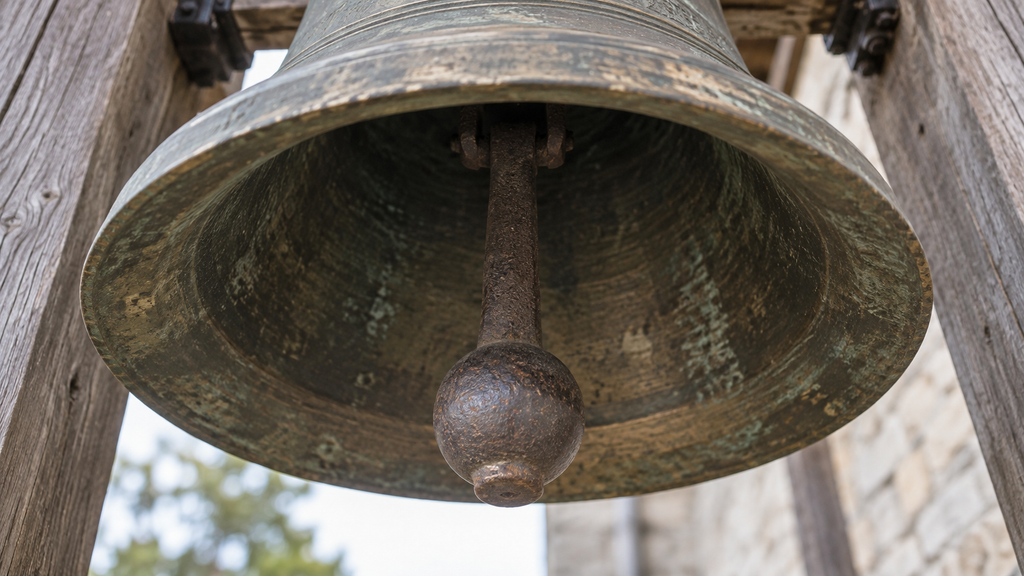
If we skip the rearranged lines and read the section in sequence, we can see that Dale’s language almost always falls into one of two categories: either the ability to speak or the ability to use the organ in the mouth, but more often both at once.
«My tongue is my enemy.» The image is of a body, with the tongue in its mouth. But what makes the tongue the enemy is what it says. The person blurted out something, and the consequences caught up with the person himself.
«The tongue without bones crumbles.» The organ is affected again, and again, with talk.
«God gave us two ears and one tongue.» Listen twice as much as you speak.
There is also the language of the bell: in the line «Without a tongue, the bell is German.» This is how they call the metal rod that strikes the walls of the bell. Without it, the bell hangs and remains silent. Next to the sayings about speech, this line is immediately clear. A person who cannot speak is like a bell without a tongue.
The most famous proverb about language by Dalia deserves to be read to the end. «The tongue will take you to Kiev,» and then, in brackets, «and to the Kiev region, i.e., to sticks and beatings.» If you ask for directions, you will reach Kiev. If you say the wrong thing, you will get a stick. Usually, only the pleasant half of the sentences is printed in collections.
The same double thought of Dal's is not found only once. «The tongue feeds with bread and ruins the business.» Those who know how to speak earn money, make agreements, and sell things. And the same tongue can ruin everything that is made with its hands. In school textbooks this thought also lives, only in a different guise: «The tongue feeds and nourishes, and devours the back.» It is not worth comparing these two lines word for word; proverbs have many variants written in different places. But the thought is one, and it is more important than the form. The tongue helps and guides, and it is always the one who speaks who decides this.
The word has an old meaning too, folks. It doesn’t appear in proverbs in the section, but it’s well known from Pushkin. «The word about me will spread throughout the great Russian land, and every tongue in it will call me by name.» Next in the 1836 poem are the proud grandsons of the Slavs: the Finns, Tungus and Kalmyks. Every tongue means every nation. The word «heretic» is associated with this same meaning.
There are many meanings. But language as a system, Russian language with words and grammatical forms, does not appear in folk poetry from this section.
If the task asks for proverbs

The compilation at the beginning of the article is just for this occasion. It contains only proverbs from Dal's section on language and speech, without any modifications, and each one is accompanied by a brief explanation.
If the topic of the lesson is «language and speech,» they are perfect. «The word is not a dove,» «The tongue will take Kiev,» «God gave us two ears, but one tongue.» For a discussion about when to speak and when to remain silent, there are no better examples to be found.
If the topic is specifically «Russian language», you can honestly label the proverbs as proverbs about speech. The quote from Turgenev with the author's signature can be added separately, next to the proverbs.
And the rewritten lines, if they have already been used, shouldn’t be thrown away; they should be shown alongside the original ones. «Don’t run away with a spear, run away with a tongue!» and «Don’t run away from the enemy with a spear, run away with a kind Russian tongue.» This is the same game, only the child will see that something has changed.
Tongue and language

The child who also speaks English has a clue in this game.
In English, there is a separate word for the language as a system: language. Tongue is primarily an organ in the mouth. But tongue also can mean language; mother tongue means native language.
When a child says that in a proverb the enemy’s tongue is more often called tongue, and in «Russian language» it’s more often called language, he is already able to distinguish the meanings of the word. And the meaning of the proverb can be verified by asking the question «In what situation would they say that?».
In «Don't let the sword pass you by, let it pass through your tongue,» the answer will be found quickly. When two people are about to fight, one of them offers to talk first.
Find the differences
The second picture
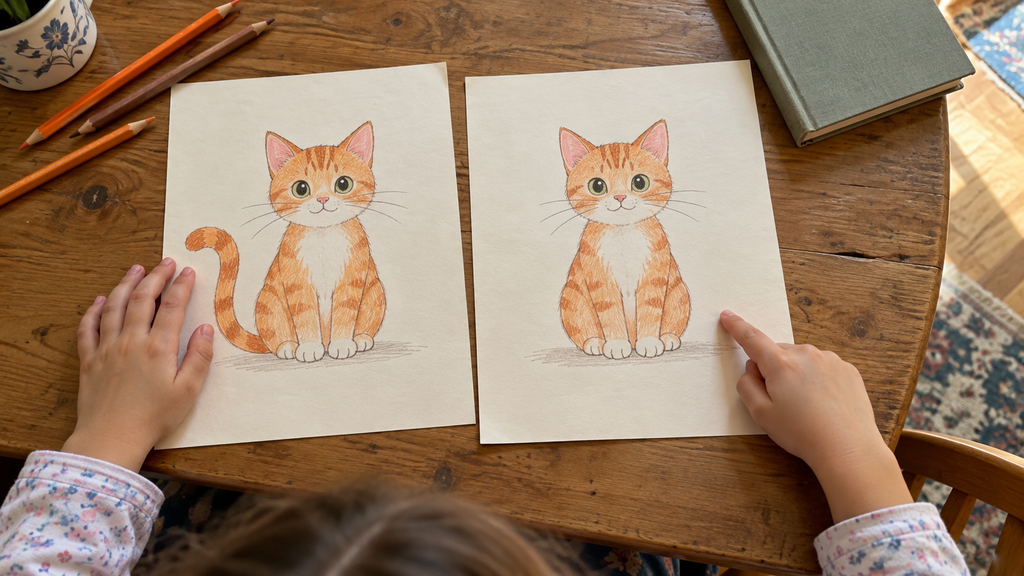
Collections of proverbs about the Russian language will never go out of style, and they can be used.
Just keep the second picture nearby.
If a line in the compilation pops up where the language suddenly becomes Russian, great or kind, don't rush to rewrite it. First ask the child:
«What have they added here?»
The proverb comes to life when a child understands every word in it and can say for themselves in what situation it applies. In the «Russian for Bilinguals» course at Palme School, children aged four to seventeen engage online with a teacher and discuss such lines in conversation.
You can start with two free lessons. First, the methodologist determines the child's level and helps choose a program. Then you can meet the teacher during a free lesson.
Sign up for free lessonsFrequently asked questions about proverbs about the Russian language
Are there any folk sayings that specifically refer to the Russian language?
In the section on language and speech in «Proverbs of the Russian People,» there are no words «Russian» in Dalia's work. There are several hundred proverbs about speech, talk, and silence. In school textbooks, lines with the word «Russian» are sometimes transformed into proverbs or phrases by writers. For the assignment, it is better to sign such lines or show them next to Dalia's note.
What does the proverb «The tongue will take you to Kiev» mean?
Language here means the ability to ask: whoever asks for directions will get anywhere. Dal’s saying after the proverb is accompanied by the explanation that «and even to the kiya, i.e., to a stick, beatings.» The same language can also lead to trouble.
How is a proverb different from a writer's quote?
The proverb has no known author; it has been repeated so often that no one remembers the first narrator. The author does have a quote. Turgenov wrote the words «great, mighty, truthful and free Russian language» in 1882, so their signature is his name on the assignment.
What does the phrase «Without a tongue, a bell is useless» mean?
The language is called the metal rod inside the bell that strikes against the walls. Without it, the bell does not sound. The proverb is among the sayings about speech and compares a person who cannot speak with a silent bell.
Why proverbs have different images in different languages, we explained in the article Why proverbs and jokes are difficult to translate literally.