


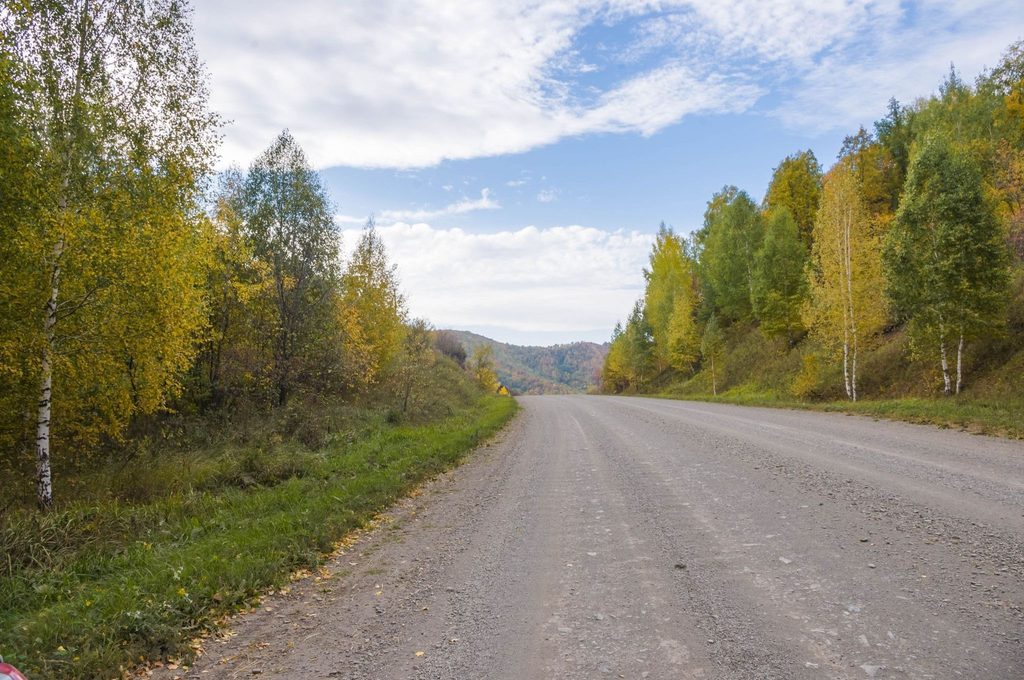
In the autumn of 1967, a Moskvich was driving along the Vladimir highway, with a reporter for the newspaper «Soviet Culture» behind the wheel. Yuri Bychkov had traveled to these parts before, but this time he was carrying an idea he had conceived two years earlier: instead of turning back home from Suzdal the same way, he would head further north, through Rostov and Yaroslavl, so that the road would form a closed loop. The trip resulted in a series of essays, one for each city. When the editor asked for a general title for the series, Bychkov called it «The Golden Ring.» In November and December of that same year, the essays were published in the newspaper, the name was picked up, and soon Soviet and foreign tourists were already being driven along this route.
An interesting thing turns out. The cities here are ancient, some are nearly a thousand years old or more. Yet the route itself, its composition, and its name are younger than Gagarin’s flight; they were born in an editorial office and behind the wheel of a private car. It is worth knowing this if only to avoid viewing the ring of eight cities as something established once and for all. On July 4, 2026, a monument to Bychkov, created by his son, the sculptor Sergei Bychkov, was unveiled in Yaroslavl, so the tourist legend now has both an author and a monument.
Eight essays from which the route grew
The ring was formed from the following circle: Moscow, Sergiev Posad, Pereslavl-Zalessky, Rostov, Yaroslavl, Kostroma, Ivanovo, Suzdal, Vladimir, and Moscow again. It is precisely these eight cities between the two Moscow points that are considered the classic composition of the ring. The circle is conveniently arranged: it leaves the capital to the northeast, rises to the Volga, descends back, and returns to Moscow from the east, so not a single section has to be driven twice. It is almost always started from Moscow, and if several days are allocated for the capital, it will be useful separate city route.
How the circle closes
The whole loop is about seven-hundred and fifty kilometers. You can also ride in the opposite direction, from Vladimir to Sergiev Posad, then the longest stretch will be at the beginning of the trip rather than the end.
You can change the order, drive in the opposite direction, or take only half of it. The roads here are short, usually an hour or two between neighboring towns, and the whole loop can be done in four days if desired. It is more relaxing to do it in a week, because the point of the trip is precisely the leisurely pace, rather than the number of checked-off spots.
How much time to spend in each city
| City | For inspection | Overnight stay |
|---|---|---|
| Sergiyev Posad | two or three hours | not needed, you have enough time to go further |
| Pereslavl-Zalessky | Half a day | optionally, for the sake of the lake |
| Rostov | three or four hours | usually not needed |
| Yaroslavl | full-time | yes, a convenient base in the north of the circle |
| Kostroma | Half a day | as desired |
| Ivanovo | two or three hours | drive right through more often |
| Suzdal | day and better with evening | yes, the main thing here starts after the buses |
| Vladimir | Half a day | optionally, if you are returning by train |
The estimates are given for a relaxed pace. If you do the whole loop in four days, each city's time will have to be cut by about half.
The lavra where the circle begins
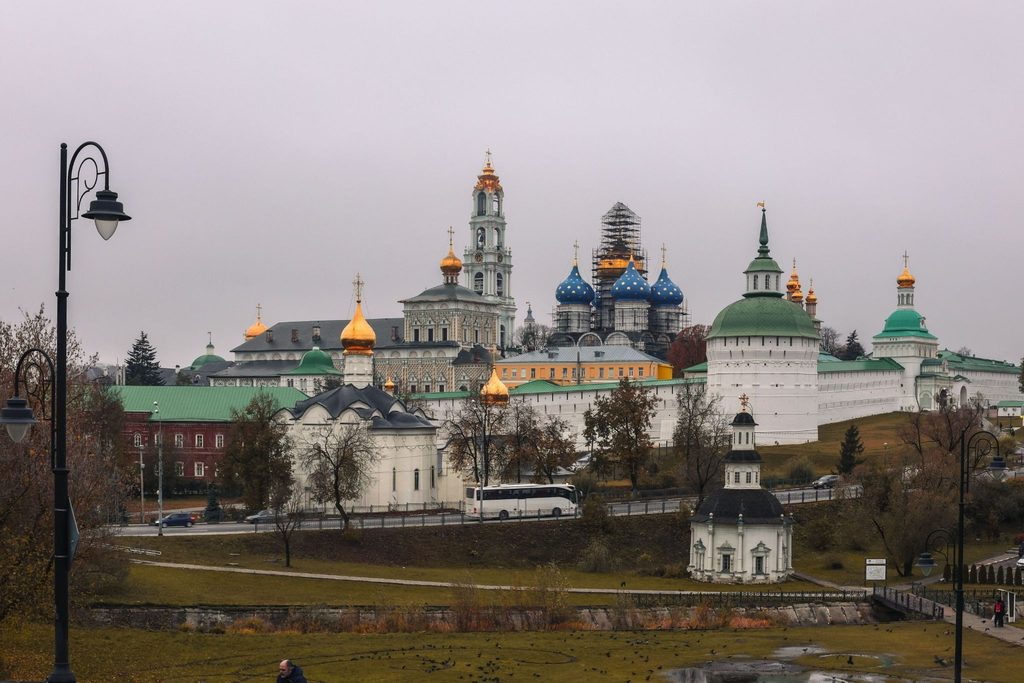
Sergiev Posad is closer to the capital than any other city in the ring, and it is the only one left in the Moscow Region. People come here for the Lavra. The monastery was founded in the fourteenth century by Sergius of Radonezh, in time it became the country's main monastery, and a whole collection of cathedrals built in various centuries gathered within its walls. The bell tower is visible long before entering the town, and the entire ensemble is listed among World Heritage sites. The domes here are of different colors and patterns, and about that, why do they look like onions, we have a separate review.
For a child who has never seen an active monastery, this is a strong impression even through photographs. It's convenient here to explain why the Russian language has so many words related to monastic life, from the refectory to the bell tower, and why they appear in the books he reads in Russian.
Two cities by the water
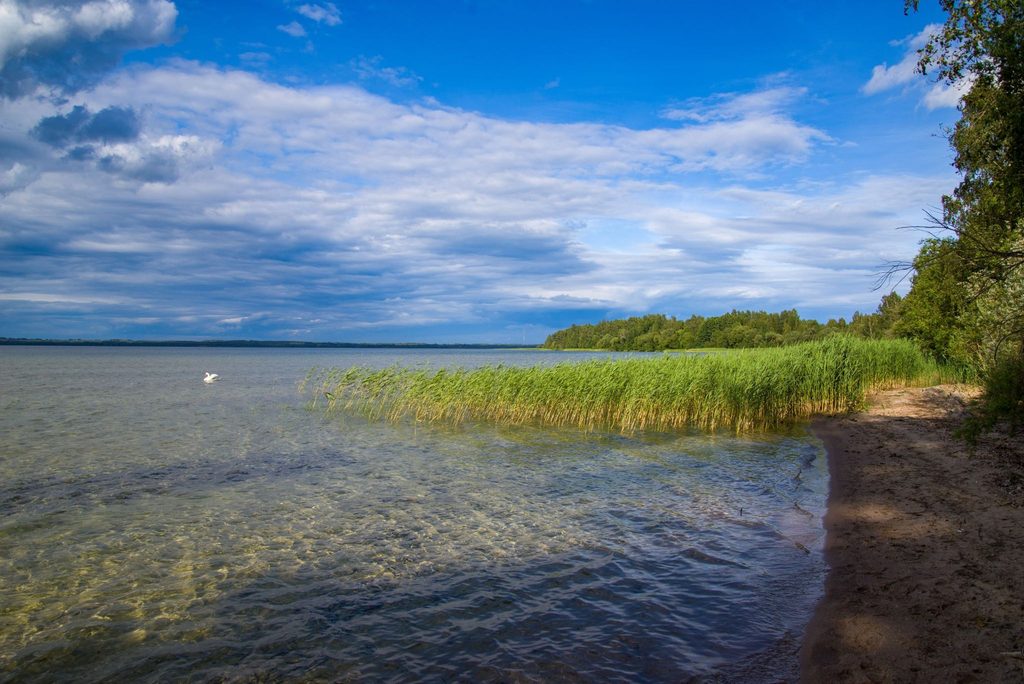
Pereslavl-Zalessky was founded by Yury Dolgorukiy in 1152 and stands on the shore of Lake Pleshcheevo. Alexander Nevsky was born here, and much later, the young Peter [the Great] built his toy flotilla on this lake. Only one boat has survived from it, the «Fortuna,» for the sake of which the museum on the shore exists. The lake is famous for the small vendace fish, which was once brought to the tsar's table, and it still graces the city's coat of arms.
Rostov, which is called Veliky, rises above Lake Nero. Its kremlin is deceptive: it looks like a fortress, but was built in the seventeenth century as a ceremonial residence for the metropolitan, and no one ever intended to fight behind these walls. Hence the lightness of the entire structure: galleries, passageways, turrets. It was here that Ivan the Terrible's chambers were filmed in the comedy «Ivan Vasilyevich Changes His Profession,» so many people are familiar with this kremlin since childhood, even if they don't realize it. Rostov has gained separate fame for its chimes, ancient bell-ringing tunes that have been preserved and recorded here, and for finifť, enamel painting, which deserves a separate discussion.
Volga middle of the ring
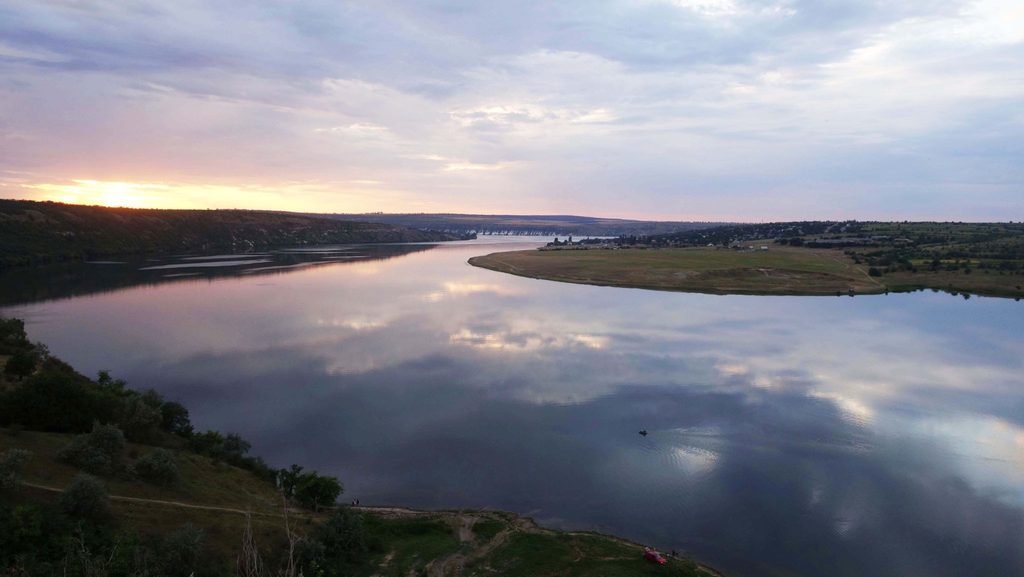
Yaroslavl was founded by Yaroslav the Wise, and the city remembers this. It stands at the spit where the Kotorosl flows into the Volga, and this spit offers the best view of the river. The old center is protected by UNESCO as a rare example of how Russian cities were redesigned under Catherine the Great. And in 1750, a local merchant's son, Fyodor Volkov, gathered a troupe, which is considered the starting point of the history of professional theater in Russia. If you happen to have a thousand-ruble bill on hand, you can spot the Yaroslavl chapel and the monument to Yaroslav the Wise on it.
Kostroma is further down the Volga and has its own trump card. In 1613, sixteen-year-old Mikhail Romanov was found in the Ipatiev Monastery and informed of the Zemsky Sobor's decision, so the three-century history of the dynasty began right here. The city itself is curiously laid out, its streets fan out from the central plaza, and about this layout there is a local legend regarding the Empress and a dropped fan, which is charming but does not withstand scrutiny.
Ivanovo, which stands out from the crowd
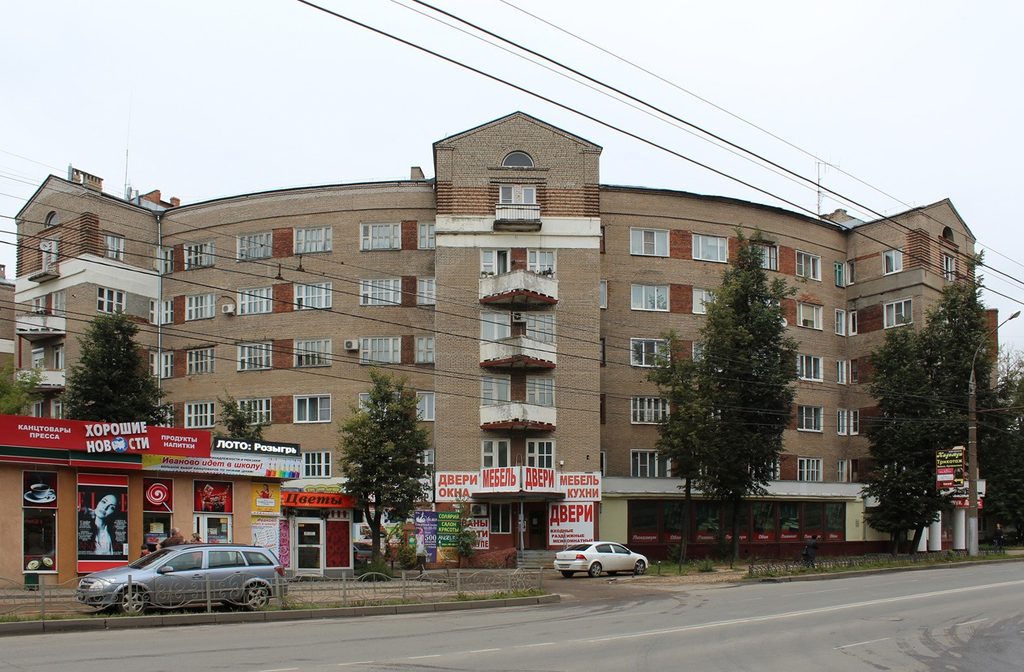
Ivanovo didn't get into the Ring for its antiquity. It only became a city in the nineteenth century, grew up around textile factories, and is still known as the city of brides because the weaving mills employed mostly women. There are almost no ancient cathedrals here.
Yet there is something here that is nowhere else on the route: the architecture of the twenties and thirties, constructivism, which was built here generously and in earnest. The ship-house with its rounded prow, the horseshoe-house, the bullet-house. After a week of white stone and domes, this is a sobering contrast, and it honestly shows that Russian architecture does not end with the pre-Petrine era.
Suzdal, the city without height
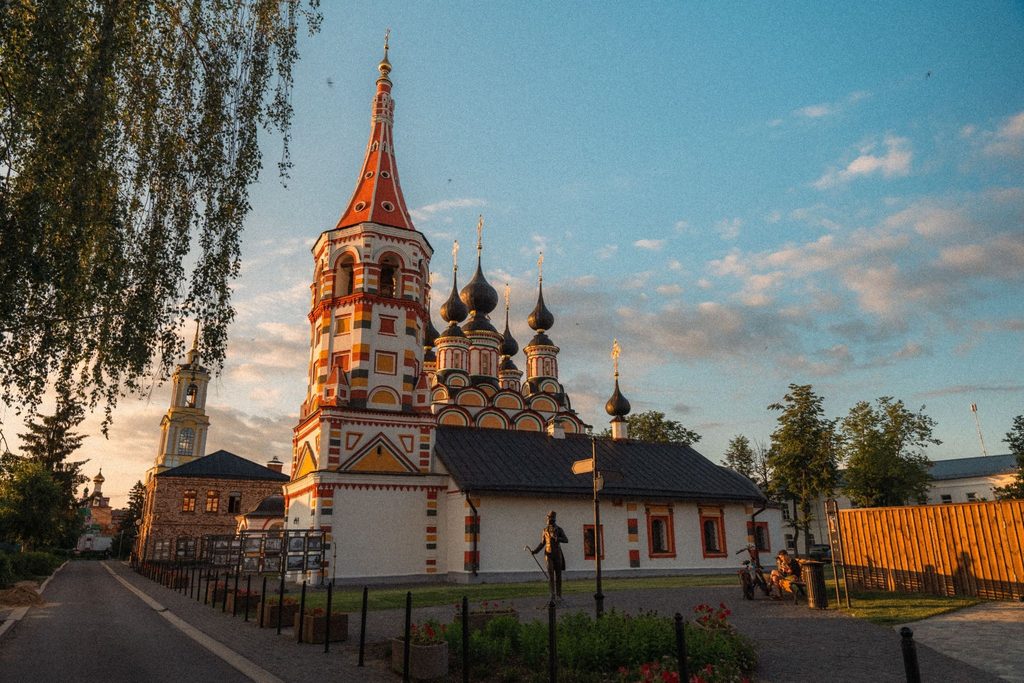
Suzdal is striking in its arithmetic. For a town where about ten thousand people live, there are more than one and a half hundred architectural monuments. There are almost no buildings higher than two floors, no industry at all, and fields begin right behind the last street. This did not happen by chance: back in Soviet times, the town received protected status, high-rise construction was banned here, and the railroad was routed past it at the time, which ultimately saved it.
The first mention of Suzdal dates back to 1024, in the story of the mages' uprising during a famine year, and the city's millennium was celebrated just recently. It is better to come here not for a day, but for an overnight stay, because the main thing here begins when the buses leave, and only bell towers and cows remain over the Kamenka River.
Vladimir and the carving that has not been completely unraveled
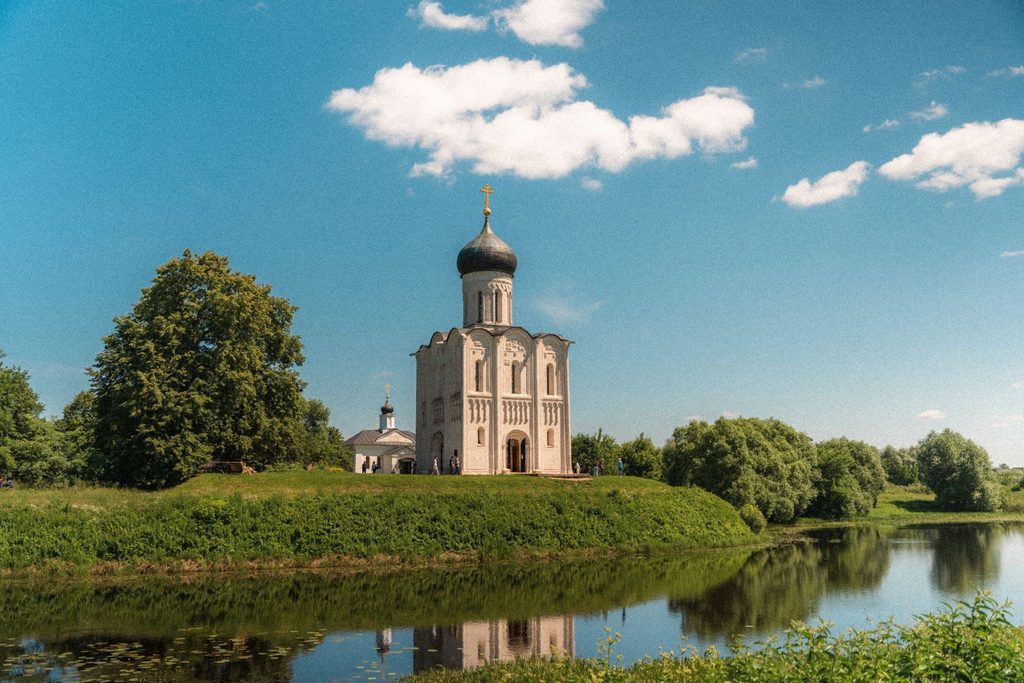
Arriving in Vladimir, a visitor first comes upon the white-stone gates at the old entrance, the very ones called the Golden Gates. The year of their construction is 1164, and they have stood since the time when the city, under Andrei Bogolyubsky, was the capital of the entire northeast. Inside the Assumption Cathedral, another rarity has survived: the frescoes painted here in 1408 by Andrei Rublev. There are very few places where you can see his work in the exact spot where it was created.
The most unusual thing in Vladimir remains the St. Dmitry Cathedral. Its walls are entirely covered with stone carvings: hundreds of figures, animals, birds, plants, horsemen, and King David with a psalter. There is still no single explanation for this program; researchers argue about what comes from biblical symbolism, what from folk beliefs, and what from Eastern models. A child who gets bored in museums usually likes this particular wall because they can look for animals on it like in a picture book.
How many cities are actually in the ring
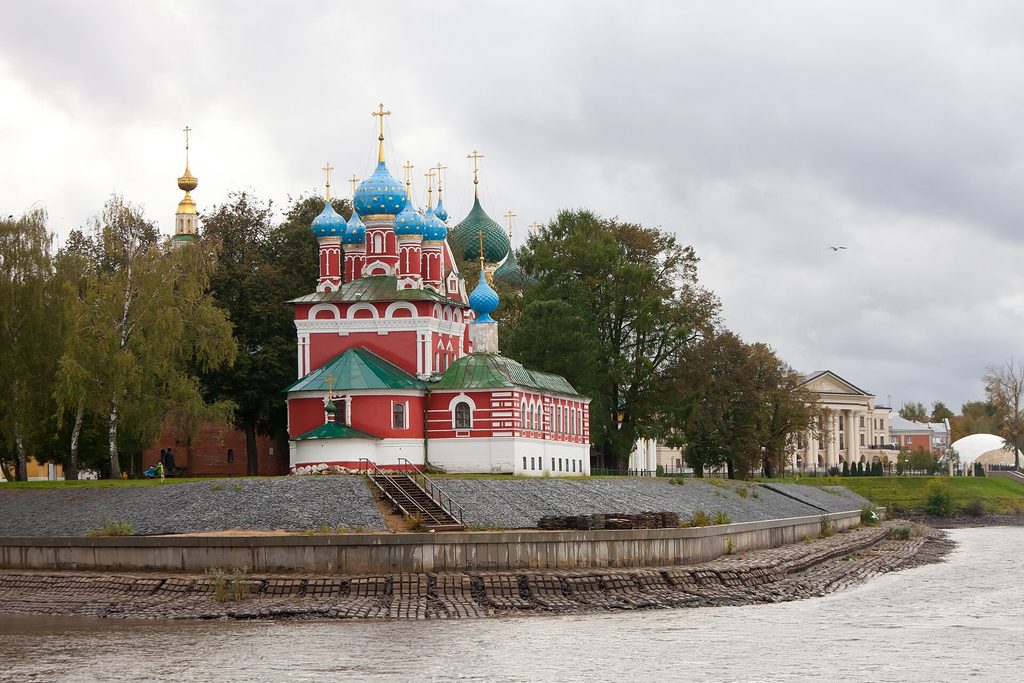
Bychkov's eight cities remain the classic core, but the ring has long since expanded. The Greater Golden Ring has emerged, which includes Uglich with its watch factory and the tragic history of Tsarevich Dmitry, Ples, where Levitan painted his Volga landscapes, Murom, Yuryev-Polsky, Alexandrov, and a dozen other cities. There is no single official list, and different operators offer different sets. At the same time, the ring remains only one of the destinations, and in overview of the country's main places It is clear how differently a trip across Russia can look.
This leads to a simple practical conclusion. There is no need to chase after the complete list of destinations; it is better to choose three or four cities and spend enough time in each. In English-language travel guides, the route is called the Golden Ring of Russia and is usually presented as a continuous list of cities one after another, which is the worst way to begin your acquaintance.
How to talk to a child about this

An eighth-grader from Boston was given a school project on the theme of the Golden Ring cities of Russia, and he brings home eight unfamiliar words in a row. Sergiev Posad, Pereslavl-Zalessky, Rostov, Yaroslavl. To him, this is just noise, a string of letters without a single clue to hold onto. This happens to our students all the time, and usually one thing saves the day: stopping the listing and starting to tell a story.
Any story with a human at its center works. A boy who built a fleet on a lake because he had no sea. A sixteen-year-old teenager who was told in a monastery that he was now tsar. A journalist who mapped out a route from behind the wheel of a car. City names stop being just noise after that; they become the addresses of stories, and at the same time drag the language along with them: kremlin, lavra, bell tower, spit, posad. There is nowhere for these words to come from in an English-speaking environment, and a child only acquires them together with the plot.
The map on the wall and the one-city-at-a-time rule help a lot. A week for Suzdal, a week for Yaroslavl, a short story, a couple of photos, one legend. In two months, the ring comes together on its own, and the child starts recognizing these names in adult conversations.
What is worth remembering about the Golden Ring
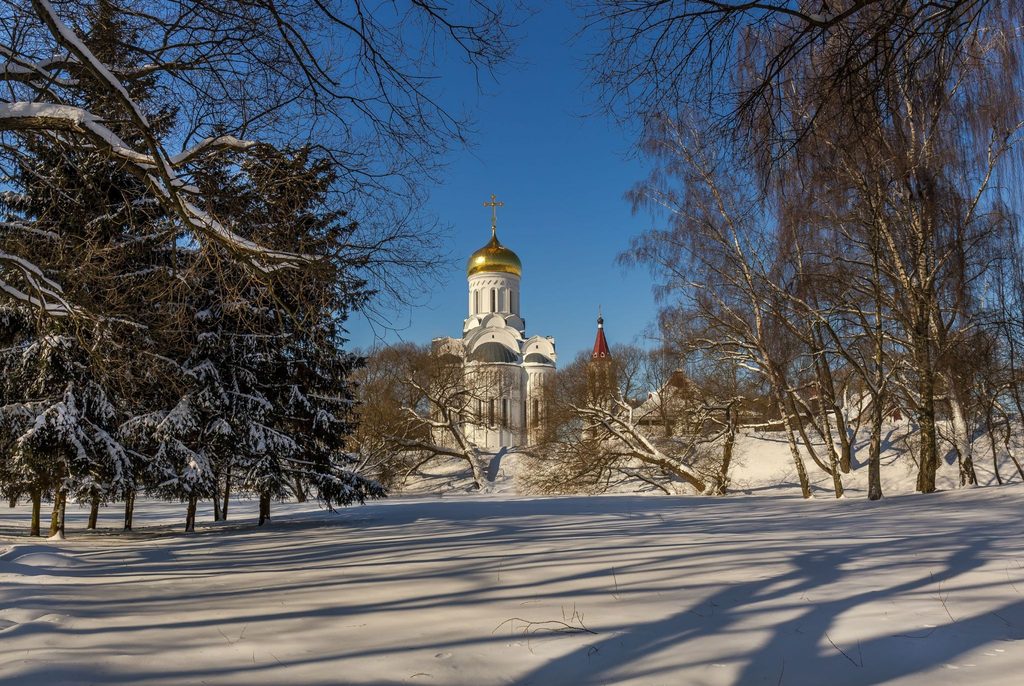
The circle of eight ancient cities northeast of Moscow was invented in the 1960s by a journalist looking for a catchy title for a series of essays. At the same time, the cities are real and very old: Sergiev Posad with its lavra, Pereslavl on the lake with Peter's boat, Rostov with its metropolitan kremlin, Yaroslavl at the Volga spit, Kostroma with the Ipatiev Monastery, textile-producing Ivanovo with its constructivism, low-rise Suzdal, and Vladimir with the carved wall of St. Demetrius's Cathedral. It is not necessary to visit all eight in a row; it is much better to choose a few and not rush anywhere.
The Russian language that hides in these names

At Palme School, we strive for children to learn Russian through stories, maps, and pictures, rather than as a separate column of rules. Then the language stops being a school subject and becomes a way to learn something new. We accept students from four to seventeen years old.
You can find out if this is right for your child at two free lessons. The first one is held with a methodologist, who gets to know the child, determines their level, and talks about the program. The second one takes place like a real group lesson, with a teacher and other children.
Frequently Asked Questions
The Golden Ring of Russia is a common name for a circular route that runs through the ancient cities of northeastern Moscow. It includes several cities: Sergiev Posad, Pereslavl-Zalessky, Rostov Veliky, Yaroslavl, Kostroma, Ivanovo, Suzdal, and Vladimir. The Golden Ring is a collection of some of the most historically significant and beautiful cities in Russia.
This is the name of the circular tourist route through ancient cities northeast of Moscow. It was created through the efforts of journalist Yuri Bychkov, who drove around this loop in 1967 behind the wheel of his own car. The title he came up with for his newspaper essays later became officially attached to the route.
What cities are included in the Golden Ring?
The core consists of eight cities. Sergiev Posad is closest to the capital, followed by Pereslavl-Zalessky and Rostov, further on are the Volga cities of Yaroslavl and Kostroma, then the textile city of Ivanovo, and Suzdal and Vladimir close the circle. No one has an approved list, which is why the Greater Golden Ring exists alongside it, to which either Ples, or Murom, or Uglich and Alexandrov are added from time to time.
How many days are needed for the Golden Ring?
The entire loop can be driven in four days if you move quickly and limit yourself to the main highlights in each city. It is more comfortable to allow a week. For a first trip, people often choose three or four cities and stay in each longer, as this yields more impressions than a cursory tour of all eight.
What is the best time of year to travel the Golden Ring?
It is most pleasant from late spring to early autumn, when all the museums are open and you can take long walks. Winter is good for those who like snow-covered monasteries and empty streets, but the daylight hours are short, and you have to plan more tightly. Late autumn with its rains is the worst time for such a trip.
Which city of the Golden Ring is the most interesting?
Suzdal is named more often than others because it has entirely preserved its old appearance and has almost no modern buildings. Those who are more interested in pre-Mongol architecture usually prefer Vladimir. Yaroslavl suits lovers of city life and river embankments.
Can you travel the Golden Ring without a car?
Yes, you can, although the route was originally intended to be by car. Trains run to Vladimir and Yaroslavl, commuter trains run to Sergiev Posad from Yaroslavsky Station, and there are buses between the other cities. Without a car, it is more convenient to choose two or three cities and stay in each for a few days, rather than trying to complete the whole loop.