Palme School

Online Russian Language School in the USA and Canada
Online school in Russian for bilingual children and teenagers
💡 Get bonuses with us! Referral program

Why good grades don't guarantee success and what soft skills have to do with it

«I don't have time to supervise my son. And without supervision, he makes no progress.» That's what a mom from Chicago wrote to me. Her son is nine. He gets A's and B's across the board in school. He's diligent, quiet, and capable. Without his mom nearby, he doesn't finish anything.

Familiar story. Our school gets letters like this every week, from parents in California, New York, Toronto. The child is doing well. And yet, there are tears at home over every test. Notebooks are forgotten. Homework, which is ready and in the backpack, hasn't been handed in for the third time this month. «He's lazy» doesn't explain it: the child is trying. «It's just his personality» doesn't help: this is clearly something that can be worked on, but it's unclear how.

If we're talking without scientific jargon, it's a story about the gap between hard skills and soft skills. What constitutes hard skills is more or less clear: knowledge. Spelling, the multiplication table, noun case endings. Soft skills, on the other hand, are about what a child can *do* with their knowledge. Sit down for a test and not get distracted by a pigeon. Apply knowledge in project work. Not give up after the first C grade. In Russian-speaking families in emigration, for obvious reasons, we gravitate towards the former. US schools and colleges are leaning towards the latter, and increasingly so.

We are starting a series on soft skills for parents. I'll try to do it without jargon and without being boring.

Hard skills (what the child knows) Soft skills (what the child can do with them)
Spelling, grammar Sit down for the test and not get distracted by the pigeon
Multiplication table, formulas Not to burn out after the first three and try again
Instrumental case endings Manage knowledge in a group project
Dates, facts, terms To make up with a classmate when you're upset
Easy to verify with a test It's hard to measure, but you can see it in life

Soft skills are personal qualities that enable someone to interact effectively and harmoniously with other people.
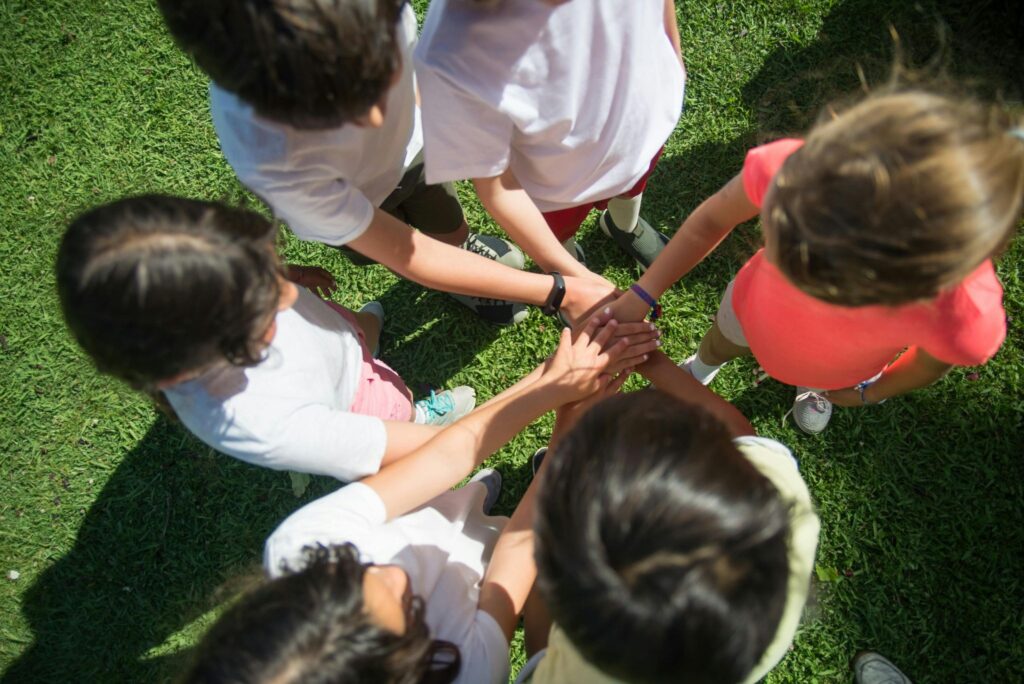
Top view, children reach their hands into the center and cup them together.
Pexels

There are two different things within the concept that are often confused.

The first is called executive functions, or simply EF. This is precisely what the boy from Chicago was lacking. Maintaining attention. Remembering what I'm doing now and why. Not blurting out the first thing that comes to mind. Not postponing starting until «later, in five minutes,» which turn into an hour. Planning. Switching from one task to another and back again.

Without this, knowledge turns into a pile of unthawed ice. A child learned a paragraph but forgot what was assigned by morning. Solved a problem with dad, but couldn't remember the solution on the test.

The second thing is SEL, or social-emotional learning. This is no longer about tasks, but about people. Noticing what's annoying me before I yell. Understanding that a classmate didn't do something «on purpose,» but is just in a bad mood. Explaining to the teacher what happened without crying.

The layers don't work separately. If the first one breaks, the child can't finish the task. If the second one breaks, they can't deliver it to the group. Most problem children have both of them compromised, and they drag each other down.

Why doesn't regular school teach this
Great, the kids are raising their hands
Pexels

It's not that school specifically ignores soft skills. It's just that its structure doesn't allow for them to be taken seriously.

Schools measure what is measurable. Knowledge of spelling is on the report card. The ability to negotiate with a classmate when you're hurt is not on the report card. The tools for measurement exist, but they are individual and cumbersome. A teacher cannot do this in a class of twenty-five children, even if they really want to.

Next is the academic minimum. A child who «knows but doesn't do» fits this minimum. A "B" grade is given. The test was written. By fifth grade, no one notices anything. By eighth grade, it's already apparent, but the school can't handle it on its own.

SEL programs have been implemented in the US since the 2010s. Most often, these are short sessions once a week for the entire class, without diagnostics and without individual work. In most districts, EF is not worked with at all. Read in detail about how American schools are rethinking their approach to education in our article «U.S. schools are preparing children for the jobs of the future.».

Soft skills are developed throughout life.
The boy is playing with a Rubik's Cube
Pexels

It's not «at any age» here. There's a window, and it's quite narrow.

The main phase of executive function training occurs between the ages of six and twelve. Before six, the foundation is laid, including inhibitory control, that very «I can resist doing it right away.» After twelve, the fine-tuning for adult tasks begins: long-term planning, metacognition, and abstract self-assessment.

By the age of twenty-five, the brain completes the development of the prefrontal cortex. This is the area that controls everything else. After twenty-five, neuroplasticity doesn't drop to zero, but it noticeably decreases. Adults can learn. It just takes more effort and significantly longer.

Age What is being formed What does this mean for a parent
3 to 5 years old Base, brake control «Stop Skill»: the ability to wait, not grab immediately
Ages 6-12
main window
Working memory, planning, task initiation System training window. Will close, will not return.
13–17 years old Metacognition, long-term planning The teenager applies the skills himself; the parent won't be able to «cushion» it anymore.»
25+ years Final formation of the prefrontal cortex Training is possible, but it will be many times more expensive and involve more resistance.

Roughly speaking. What isn't trained enough at eight is expensive and painful to train at thirty. That's why elementary school is a window. It will close. It won't come back.

What happens without skill development
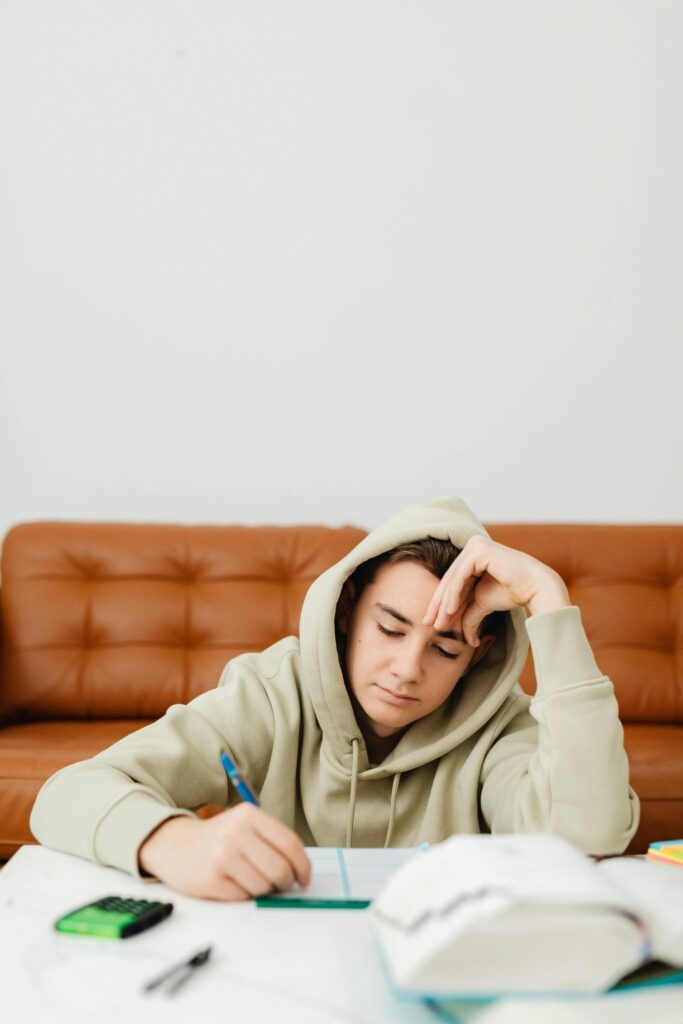
A teenage boy at a table thoughtfully completes assignments.
Pexels

At fourteen, a child «suddenly» starts performing worse in school. It's not sudden. In middle school, the demands are greater, and there are more formats: projects due two weeks in advance, group work, presentations in front of the class. What mom helped with in elementary school, the teenager now has to do themselves. And they don't have the coping mechanisms.

At seventeen, the end of high school and college applications arrive. And this is where soft skills become glaringly obvious. Top universities in the US don't just look at SAT and GPA. Personal essay. Recommendation letters from teachers. Interviews. All of this assesses not a child's knowledge base, but their ability to reflect, articulate their position, see things through, and respond appropriately to criticism. With a perfect transcript and a bland essay, Stanford will reject you.

Next comes adult life, which is no longer school-related. Professional life. Smart people with degrees spend years «preparing» to start their own business. They lose their jobs due to conflict with colleagues. They don't finish projects that took a month. With the arrival of AI, the stakes only get higher: what was considered hard skills, machines are doing better and better. What's about people, machines can't handle yet.

In the next article in the series, we'll discuss the first and most recognizable parental pain: why your child knows everything but doesn't do their homework themselves. Palme School is Soft Skills and Executive Functions Program For children aged seven to twelve. Classes are conducted in Russian in small groups, using a methodology specifically designed to train these skills. The first lesson is free. It's a forty-minute diagnostic session covering six areas, after which a specialist will explain to the parent the child's strengths and areas for growth.

Do you want to support child's successes In studies?
Helping to develop knowledge, confidence, and a love for learning through modern Russian language classes and beyond.
Ukrainian differs from Russian in several key ways, including pronunciation, vocabulary, and grammar. Despite these differences, they are often confused because they are both East Slavic languages and share a common ancestor, Old East Slavic. This shared heritage means they have a significant degree of mutual intelligibility, particularly in spoken form. **Key Differences:** * **Pronunciation:** * **"Г" sound:** In Ukrainian, the letter "г" is typically pronounced as a voiced velar fricative, similar to the "g" in "go" but softer, almost like a gentle breath. In Russian, "г" is usually a hard "g" sound. * **"И" and "Ы" sounds:** Ukrainian has distinct "и" (pronounced like the "i" in "bit") and "i" (pronounced like the "ee" in "see"). Russian has "и" (similar to Ukrainian's "и") and "ы" (a harder, more guttural sound not present in Ukrainian). * **Vowel reduction:** Russian has significant vowel reduction, where unstressed vowels change their sound (e.g., "o" can sound like "a"). Ukrainian generally pronounces vowels more clearly, regardless of stress. * **"Є" and "Ї" sounds:** Ukrainian has specific letters like "є" (pronounced like "ye" in "yes") and "ї" (pronounced like "yi" in "yield") which are not found in Russian. * **Vocabulary:** * While many words are similar or identical, Ukrainian has a richer influence from Polish, and also incorporates words from Turkic languages and other European languages to a greater extent than Russian. * Examples: * Thank you: Ukrainian - дякую (dyakuyu), Russian - спасибо (spasibo) * To speak: Ukrainian - говорити (hovoryty), Russian - говорить (govorit') * Yes: Ukrainian - так (tak), Russian - да (da) * No: Ukrainian - ні (ni), Russian - нет (net) * **Grammar:** * **Vocative case:** Ukrainian retains and actively uses the vocative case for direct address, which has largely disappeared from modern Russian except in very specific or archaic contexts. * **Verb conjugations:** There are differences in verb endings and some verb forms. * **Grammatical genders and noun declensions:** While largely similar, there are minor variations in how nouns change form based on case and gender. **Why They Are Confused:** 1. **Shared Ancestry:** Both languages descend from Old East Slavic, the language spoken in Kyivan Rus'. This common origin means they have a large base of shared vocabulary and grammatical structures. 2. **Geographic Proximity and Historical Interaction:** For centuries, the territories where Ukrainian and Russian are spoken have been in close contact, often under the same political empires (like the Russian Empire and the Soviet Union). This led to significant linguistic borrowing and influence in both directions. 3. **Mutual Intelligibility:** Due to the shared roots and similarities, speakers of Ukrainian and Russian can often understand a significant portion of what the other language is saying, especially in simpler conversations or written texts. This superficial understanding can lead to the misconception that they are dialects of the same language. 4. **Political and Historical Context:** During periods of Russian imperial and Soviet rule, the Ukrainian language was often suppressed or discouraged, and there was a promotion of Russian as the dominant language. This historical context sometimes led to the view, particularly among those outside Ukraine, that Ukrainian was merely a dialect of Russian. However, linguistic analysis clearly shows they are distinct languages.
Ordinal numerals in Russian are formed by taking the root of the cardinal numeral and adding the appropriate ordinal suffix. These suffixes agree in gender, number, and case with the noun they modify. Here's a breakdown: **1. Basic Structure:** * **Cardinal Numeral + Ordinal Suffix** **2. Ordinal Suffixes:** The suffixes are generally based on the endings of adjectives. * **Masculine:** -ый (e.g., первый - first) * **Feminine:** -ая (e.g., первая - first) * **Neuter:** -ое (e.g., первое - first) * **Plural:** -ые (e.g., первые - first) **3. Examples:** Let's look at the first few numbers: * **Один (one):** * Masculine: первый (pervyy) * Feminine: первая (pervaya) * Neuter: первое (pervoye) * Plural: первые (pervyye) * **Два (two):** * Masculine: второй (vtoroy) * Feminine: вторая (vtoraya) * Neuter: второе (vtoroye) * Plural: вторые (vtoryye) * **Три (three):** * Masculine: третий (tretiy) * Feminine: третья (tret'ya) * Neuter: третье (tret'ye) * Plural: третьи (tret'i) * **Четыре (four):** * Masculine: четвёртый (chetvyortyy) * Feminine: четвёртая (chetvyortaya) * Neuter: четвёртое (chetvyortoye) * Plural: четвёртые (chetvyortyye) **4. Numbers 5 and above:** For numbers five and higher, the formation is more straightforward. You take the root of the cardinal numeral and add the standard adjectival endings. * **Пять (five):** * Masculine: пятый (pyatyy) * Feminine: пятая (pyataya) * Neuter: пятое (pyatoye) * Plural: пятые (pyatyye) * **Десять (ten):** * Masculine: десятый (desyatyy) * Feminine: десятая (desyataya) * Neuter: десятое (desyatoye) * Plural: десятые (desjatyye) * **Сто (one hundred):** * Masculine: сотый (sotyy) * Feminine: сотая (sotaya) * Neuter: сотое (sotoye) * Plural: сотые (sotyye) **5. Compound Numbers:** When forming ordinal numerals for compound numbers (e.g., twenty-first), only the last part of the cardinal number changes to an ordinal. * **Двадцать один (twenty-one):** * Masculine: двадцать первый (dvadtsat' pervyy) * Feminine: двадцать первая (dvadtsat' pervaya) * **Сто двадцать три (one hundred twenty-three):** * Masculine: сто двадцать третий (sto dvadtsat' tretiy) * Feminine: сто двадцать третья (sto dvadtsat' tret'ya) **6. Pronunciation and Spelling Changes:** You might notice some spelling and pronunciation shifts, especially with the softer vowels and consonant changes in the first few numbers. These are typical sound changes in Russian. **7. Case Agreement:** Like all adjectives, ordinal numerals must agree with the noun they modify in case. * **Nominative:** первая страница (the first page) * **Genitive:** первой страницы (of the first page) * **Dative:** первой странице (to the first page) * **Accusative:** первую страницу (the first page - direct object) * **Instrumental:** первой страницей (by the first page) * **Prepositional:** о первой странице (about the first page) **Key Takeaways:** * Ordinals are formed from cardinals with specific suffixes. * They agree in gender, number, and case with the noun. * The first few ordinals (первый, второй, третий) are irregular and have unique forms. * For compound numbers, only the last numeral becomes ordinal.

Do you want your child to love learning?

At Palme School, classes are held online in live groups with experienced teachers. Choose a subject and sign up for a free first lesson.

Sign up for the newsletter
We at Palme Online School fall in love with the Russian language and Russian culture

Leave a request for a free call

Sign up for a free lesson.
Apply for a free introductory lesson to get acquainted, determine your goals, and find a suitable group.
Sign up for a free lesson
Submit a request for a free first session with a guidance counselor to get to know each other, determine your goals, and match your child with an educator
Sign up for a free lesson
Submit a request for a free first session with a guidance counselor to get to know each other, determine your goals, and match your child with an educator
Sign up for Russian Dictation
Sign up for a free lesson
Submit a request for a free first session with a guidance counselor to get to know each other, determine your goals, and match your child with an educator
Sign up for a free lesson
Submit a request for a free first session with a guidance counselor to get to know each other, determine your goals, and match your child with an educator
Sign up for a free lesson
Submit a request for a free first session with a guidance counselor to get to know each other, determine your goals, and match your child with an educator
Sign up for a free lesson
Submit a request for a free first session with a guidance counselor to get to know each other, determine your goals, and match your child with an educator
Sign up for a free lesson
Submit a request for a free first session with a guidance counselor to get to know each other, determine your goals, and match your child with an educator
Sign up for a free lesson
Submit a request for a free first session with a guidance counselor to get to know each other, determine your goals, and match your child with an educator
Sign up for a free lesson
Submit a request for a free first session with a guidance counselor to get to know each other, determine your goals, and match your child with an educator
Sign up for a free lesson
Submit a request for a free first session with a guidance counselor to get to know each other, determine your goals, and match your child with an educator
Sign up for a free lesson
Submit a request for a free first session with a guidance counselor to get to know each other, determine your goals, and match your child with an educator