


The word «cow» is written three times in the notebook.
The first time it was a «cow»; the second time it was a «cow»; only the first «o» is so densely outlined that an «a» comes out from under it. The third time it was a «cow» again, large and bold, almost as if it was meant to be so.
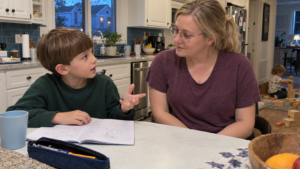
Imagine that the notebook is lying on the kitchen table in Boston. Next to it, the tea is cooling down; the pencil has been chewed into a gray hole; and nine-year-old Lisa is looking out the window and saying that she doesn’t care. She writes without errors in English; her teacher at the American school praises her. And the Russian «cow» has not been done for the second week already.
«I don't care» at the age of nine usually means something completely different. It's shameful. Disgusting. It's unclear how one can be wrong with such a single word so many times.
If the scene is familiar, here’s the bad news. The rule won’t help here. No matter how many times you choose the correct word, the first «o» in «korov» won’t be emphasized: neither «korovye» nor «korivye» nor «korovnik» will help. Such words are called lexical, there are dozens of them in every class, and with each new class the list grows. A child who couldn’t find the right word may decide that Russian is illogical and just isn’t for them. It’s difficult to undo such a decision later.
There is good news too. The key exists; it’s not just one key. Next, we’ve compiled vocabulary words from grades 1–4, along with an explanation of why they can’t be tested, seven memorization techniques without rote repetition, and a short quiz that can be completed right now over dinner. If you’re teaching your child with both your mom and dad or grandma/grandpa via video chat, this text will be useful to them as well.
What are lexical words and why they cannot be checked by the rule

Most mistakes in Russian spelling can be caught in the act. You doubt the unrounded vowel, you look for a word where it is under stress: «grass» and «grasses.» You doubt the consonant at the end, you put a vowel after it: «oak» and «oaks.» There is a witness for every suspicious letter, who speaks in full voice.
With lexical words, the investigation reaches a dead end. There is no witness. A questionable letter either never gets stressed, or it stays in the word according to the old tradition, which current pronunciation no longer reflects. To put it very briefly, what are lexical words? These are words whose spelling requires memorization because neither the rule nor the verification word are suitable for them.
The name came from school usage. In the textbook, such words are collected in an orthographic dictionary, and children create their own dictionaries, thin notebooks with the letters of the alphabet on the pages. Hence the vocabulary dictation, which they eagerly await.
Where do words come from without witnesses? Some have come from other languages so long ago that they already seem like their own. Others are native to Russian, but relatives who could verify them have disappeared from the language or changed beyond recognition. The third group hides a letter that no one ever says, such as «hello» or «feel good.».
It is important not to confuse two similar concepts. The vocabulary word always refers to one cunning letter, while the vocabulary refers to how many words a child knows and understands in general. How to expand it is discussed in detail in our article about that., How to quickly expand your vocabulary. Many words from the child's school vocabulary are perfectly known by ear, and the difficulty lies not in the meaning but in a single letter.
Adults make such mistakes too. Imagine a note on the common refrigerator in an old St. Petersburg apartment building: «Do not touch Malak.» The author wrote it the way he heard it. The mistake didn’t make him worse. Just one day as a child, no one showed him that this word has no witness and must be known by name.
Vocabulary words of grade 1 and 2
The lists are based on the «School of Russia» program and the textbook «Russian Language» by V. P. Kanakina and V. G. Goretsky. The textbook is regularly reprinted, and in different editions the same word may appear in a different class. Therefore, the most accurate benchmark for your family lies at the end of the textbook that your child is studying. If your child is only studying at an American or Canadian school, this list will serve as a guide: this is how the peer program in Russia looks like.
It is convenient to summarize the words in a table by class: if we add up the four lists, we get the foundation of the primary school vocabulary. Here we will go through them as we would a notebook, organizing them by topics.
Vocabulary words from grade 1–4 on the topics
| Class | Subject | Words |
|---|---|---|
| 1st grade | Animals and birds | sparrow, dove, rooster, dog, fox, rabbit, rooster, cow, bear |
| School | class, teacher, student, pupil, teacher on duty, students, classroom, pencil, notebook | |
| The house and the street | girl, coat, car, milk, village, work, Moscow | |
| Mood | fun, good | |
| 2nd grade | Calendar | September, October, November, December, January, February, April, month, Saturday |
| Nature | wind, windchill, frost, sleet, cloud, birch, aspen, apple tree, apple, berry, strawberry, raspberry, snowman, frog, monkey | |
| House and farm | sugar, cabbage, carrots, dishes, plate, furniture, clothes, scarf, boots, skates, hammer, axe, shovel | |
| City | street, shop, metro station, factory, road | |
| People and the country | homeland, Russia, people, comrade, father, surname | |
| Polite words | Goodbye, sorry, goodbye | |
| Small words | soon, quickly, suddenly, because, as if | |
| School terms | alphabet, subject, predicate, synonyms, antonyms | |
| Different | drawing, drawing, painting, harvest, yellow, went | |
| 3rd grade | Days of the week | Monday, Tuesday, Wednesday, Thursday, Friday, Sunday |
| The garden and the field | vegetables, potatoes, parsley, peas, cucumber, tomato, wheat, oats | |
| Food | breakfast, lunch, dinner, pie, walnut | |
| Nature | cloud, weather, trash, shore, sand, straw, daisy, carnation, chamomile, lilac, plant, animal, east, north | |
| Technology | rocket, tractor, plane, tram, highway | |
| Home and country | room, bed, apartment, stairs, capital city | |
| People | poet, hero, soldier | |
| Numbers and measures | four, grams, kilograms | |
| Double and unpronounceable consonants | neat, neat, collection, collective, celebration, feeling | |
| Adjectives | together, around, nearby, then, someday, warmly, interestingly | |
| Different | interesting album, black, to be desired | |
| 4th grade | Travels | travel, traveler, train station, passenger, passenger, ticket, ship, driver |
| Culture and connection | library, librarian, newspaper, phone, television broadcast, portrait, landscape, costume | |
| Professions | agronomist, engineer, director, bread maker | |
| Time and place | yesterday, today, tomorrow, now, here, ahead, yet, slowly | |
| Different | beautiful, twelve, iron, sheep, campfire, alley, conversation, to talk |
The table only lists the words that are mentioned in the article. The lists are based on the textbook by V. P. Kanakina and V. G. Goretsky, and in different editions the word may appear in a different place. For the full list, please consult the child’s textbook dictionary.
The first-grade vocabulary words live alongside the child. A third of them are about animals and birds that he saw in the yard or in a picture book: sparrows, doves, rooks, a dog, a fox, a rabbit, a rooster, a cow, a bear. The class came from school with the teacher, the student, the janitor, the students, the hallway, the pencil, the notebook. A few more words about home and the street: a girl, a coat, a car, milk, the village, work, Moscow. And two words about the mood, cheerful and good.
Take a close look at this list, and the clue will come to you naturally. Almost everywhere, the same trap lies in wait: the silent «o» that we hear as «a». The raven. The rooster. The dog. The cow. The milk. It is useful to notice this pattern right away: it applies to many first-grade words.
The vocabulary words of the second grade noticeably expand the range. Almost the entire calendar moves into the second-grade vocabulary. Autumn is complete: September, October, November. Winter is also complete, from December through January to February. And there is only one April left from spring. March and May are not included in the vocabulary, and that is also a clue. There is simply nothing to confuse about them.
Nature brings wind and gusts of wind, frost, sleet, cloud, birch, aspen, apple and apple tree, berry, strawberry, raspberry, snowdrop, frog and monkey. From the kitchen and the hallway come sugar, cabbage, carrots, utensils, plate, furniture, clothes, scarf, boots and skates. From the barn a hammer, axe and shovel. From the city there is a street, a shop, a metro station, a factory and a road. A separate group is about people and the country: homeland, Russia, people, comrade, father, surname.
There are polite words in the second grade as well: «Goodbye,» «Excuse me,» and «Goodbye,» without which no conversation with Grandma is complete. In the dialects «soon,» «quickly,» «suddenly,» and the conjunctions «because» and «as» the child learns to write small words. And the school terms «alphabet,» «subject,» «predicate,» «synonyms,» and «antonyms» the child will be writing in a notebook for years, so it’s better to get it right right away. These are supplemented by drawing, painting, a picture, a harvest, a month, Saturday, and also «yellow» and «went,» in which after the plosive [o] is heard, another letter is written.
Vocabulary words from grade 3 and 4

The 3rd grade vocabulary continues the calendar. In the second grade there was a Saturday; now the week is complete: Monday, Tuesday, Wednesday, Thursday, Friday, and Sunday.
Next comes the garden. Vegetables, potatoes, parsley, peas, cucumbers, tomatoes, and then there is wheat and oats from the field. Breakfast, lunch, dinner, and a pie are on the table; there is also walnut for it. Nature adds the scent of the forest, the weather, dust, the shore, sand, hay, chamomile, carnation, and lilac, and also two common words: plant and animal. There are only two sides of the world so far: east and north. Technology travels and flies: rocket, tractor, plane, tram, highway. A house is made up of a room, a bed, an apartment, and a staircase. The word «capital» also appears. From the people in the list we have a poet, a hero, and a soldier. The number is four. Measures of grams and kilograms.
In the third grade, the nature of the traps changes. The unvoiced consonant doesn’t go anywhere, but double consonants appear nearby. Neat and tidy, collection and collective, gram and kilogram, highway. And unpronounceable consonants, sounds that exist in writing but remain silent in speech: holiday, feeling, staircase. The child is confronted for the first time with the idea that a letter in a word can be an invisible letter. A good moment to play detective seriously.
The list is completed by the third-class adjectives that are indispensable in any story: together, around, near, then, once, kindly, interestingly. Next to them is interesting, an album, black, and the verb to wish.
The vocabulary words in the 4th grade are now spoken in an adult manner. Here we have travel and traveler, station, passenger and passenger, ticket, ship, driver. Here we have library and librarian, newspaper, telephone and television broadcast, portrait, landscape and costume. Professions include agronomist, engineer, director, baker. Small words of time and place that the child writes every day: yesterday, today, tomorrow, now, here, ahead, yet, slowly. And individual words like «wonderful,» «twelve,» «iron,» «sheep,» «campfire,» «avenue,» «conversation,» and «to talk.».
The word «station» in itself is a small detective story. According to the most famous version, the trail leads to London. There, in the eighteenth century, the Vauxhall Pleasure Garden with its orchestra, lanterns, and evening parties was bustling with activity. The craze for all things English spread to St. Petersburg. In the late 1830s, the capital’s public began boarding the carriages of the new Tsaryselskaya Railway to listen to the music in the Pavlovsky «station» amidst the park trees. Then the word gradually came to apply to any building where trains were waiting. First, music. Then trains. And the «o» in the first syllable was taken from the English name, and there was no way to check it in Russian.
Why children who grow up with two languages have more difficulty with vocabulary words
It all starts with the ear. A child abroad may hear Russian every day, but see it much less often. His or her peer in St. Petersburg encounters the word «milk» on the package of breakfast cereal, on the store sign, on the price tag, in the book before bed. Visual memory builds itself without any dictation. In Toronto, the Russian letters are most often only in the textbook. And the ear honestly reports what it hears: «malaqo.».
English also plays a role, as it sometimes gives incorrect instructions. English rocket It is written with an «o», and the Russian «raketa» with an «a». Canadian and American gram It costs one letter «m», but a Russian «gramma» needs two. Perhaps a child who writes fluently in English transfers the familiar appearance of the word into a Russian notebook. Although one mistake does not allow to establish the reason.
But English can also be an ally, and a reliable one at that. The word «careful» seems to be derived from accurate, and in both cases there are exactly the same pairs of consonants. «Collection» and collection They have a double «l». «Passenger» and passenger they share a double «s», «alleya» and alley Again, a double «l». Show the child these pairs, and maybe he will start looking for English cognates for difficult Russian words on his own. Sometimes the discovery will be a hit, but the actual searching process itself will teach him to look at the word carefully.
Sometimes it takes meaning for stumbling to occur. Words like «rotten,» «cabbage,» «oat,» «breadmaker,» or «agronomist» may be completely unfamiliar to a child abroad. Memorizing the spelling of a word without a picture is roughly the same difficulty as remembering the phone number of an unfamiliar person. First the meaning, then the letters. About others Common causes of spelling errors We have a separate discussion on children on our blog.
And yet, children in American and Canadian schools have an advantage that parents often don't realize. They are taught there from kindergarten onwards. sight words, Words that need to be learned at a glance, without fully understanding the meaning of the letters. The most famous list of such words, the Dolch list, was compiled as early as the 1930s. A child who has already learned dozens of English words by heart is familiar with the method that is required for vocabulary words. The task is to give this method a Russian twist.
How to memorize vocabulary words without rote learning

Everyone knows the classic method: rewrite the word twenty times. The hand works, and the brain can also rest; therefore, the «cuckoo» often returns. There are other methods as well, where the word takes on a history, a picture, or a meaning.
Start with word stories, because history is better remembered than letters. The word «tetrad» comes from the Greek and is related to the word «four»: once upon a time, this was how a sheet of paper was folded into four. A child who played «tetris» can be reminded that each figure is made up of four squares, and the name of the game partly comes from the same Greek word «four». «Cucumber,» according to one version, comes from the Greek word meaning «unripe,» because cucumbers are eaten green. And «station» is already familiar from the story of Pavlov’s garden.
The next step concerns the eye. Suggest to the child to draw the letter-trap so that it becomes part of the object. In the «crown,» the letter «o» becomes a round surprised eye. In the «shirt,» the two «o’s» become shiny beads that the forty-year-old has dragged away. In the word «birch,» the letter «e» grows into a branch with leaves. The main rule: the picture is invented by the child himself. It is usually easier for the child to remember their own image than someone else’s.
Those who love order will enjoy the card catalog. Don’t sort the words alphabetically, but by categories, like a detective’s file. One folder for the unpronounceable «o»: crow, forty, cow, dog, milk, frost, city, garden, peas, good. Another for the double consonants: Saturday, neat, collection, gram, highway, alley, passenger. The fourth for the invisible letters: Hello, holiday, feeling, staircase. When there are ten words in a folder with one category, it’s easier to see a pattern.
Inventory of traps
| Folder | Words |
|---|---|
| Unarticulated «o» | crow, rooster, cow, dog, milk, frost, city, garden, peas, well |
| Unarticulated «e» | birch, bear, blizzard, wind, notebook |
| Double consonants | Saturday, neat, collection, gram, highway, alley, passenger |
| Invisible letters | Hello, holiday, feeling, staircase |
Try writing ridiculous stories. Three vocabulary words, one sentence. «Forty stole a pencil from a crow and drew a cow.» Funny stories are easily retold by children, and the story connects the words together, and one can lead to the rest.
Don’t forget about the hand and the voice. Let the child write the word by hand, slowly, and at the same time pronounce it as it is written, in syllables: «ko-ro-va», «mo-lo-ko». Teachers call this orthographic pronunciation. It sounds strange, but the ear gets the correct pattern instead of the usual «mala-ko». A careful hand is also not a bad idea: when each letter is spelled out slowly, the child has time to consider the word.
For those who love systems, there is a card game. The German science popularizer Sebastian Leutner described it in the 1970s, and since then many students have used it. Leutner has five branches, but a junior school student can use three. Each word is written on a card. The new cards live in the first branch and are repeated every day. A word written without error moves to the second branch, and it is repeated every few days. From there, it goes to the third branch, where a check is done once a week. An error sends the card back to the beginning, no hard feelings. The child sees the box gradually empty from one end and filled from the other, almost like a scoreboard in sports.
The last trick is the most unexpected. Switch roles. Let the parent make a mistake on the shopping list on purpose, write «malak» or «cabbage» with an «o» after it, and the child will catch the mistake. The role of the detective who catches other people’s mistakes is usually more enjoyable for children than the role of the one who gets caught. And the caught adult is usually a legitimate reason for pride for the child.
Short dictation for home testing
The final test is structured like a small investigation. There are more than twenty vocabulary words from all four classes hidden in the text. Read slowly, one word at a time, and repeat each word twice. The child writes by hand.
One Saturday, Lisa found a note in her notebook. Someone had written on the page: «Tomorrow at eight at the train station.» There was no one around; only the wind rustled through the trees outside the window. Lisa took a pencil, put on her coat, and suddenly noticed a carrot on the floor. A clue! This morning she was walking slowly down the street past the store and the library. At the train station, a man in a blue suit was standing. It turned out that his father had brought two tickets and a big loaf of bread. Today they were going on a trip.
Now check it. The list is hidden under a button so that the child won't be able to see it beforehand.
Show the words for verification
Here are the words that test attention: once, Saturday, pen, notebook, tomorrow, eight, train station, around, pine tree, forty, pencil, coat, suddenly, carrot, slowly, street, shop, library, passenger, costume, ticket, cake, today, journey.
Every word with an error is sent to the first compartment of the box. After a week, the dictation can be repeated and seen how many cards have managed to move.
And Lisa from our imaginary story could have defeated her «cow» like this: draw an eye instead of an «o», get a box of cards and one day catch her mom for writing «buy milk». Was the mom wrong on purpose, let it remain a mystery.
What to do if the vocabulary book is lying around at home and evenings are occupied with hockey, English and everything else? Call in teachers for help. At Palme School, children from four years old have been learning Russian online in small groups; the lesson lasts 40 minutes. It doesn't cost anything to get acquainted. The methodologist will talk to the child for free and find out which words he already knows well and which are still hidden. And the two free lessons will help get acquainted with the program and the teacher and see how the same investigation is conducted in a real lesson. What is included in the main course is described on the course page. «Russian for bilinguals». Those who need regular spelling practice will benefit from this. Russian language training program, And the letters that scatter across the line are collected in lessons. calligraphy.