


We will have to start with an awkward admission. The Russian custom itself has no Russian name.
The word «toast» came from English and meant toasted bread. According to a common version, in old England, a slice of dried bread was dipped into a cup of wine, which made the drink softer, and the cup was passed around in a circle, and the person who uttered words before drinking was named after this very bread. The Russian language had its own word, «zdravitsa» (toast/oration), only it now sounds like a museum piece, and no one would dare to say "say a zdravitsa" out loud.
A rare thing resulted. The custom is powerful, elaborated down to the smallest detail, with its own dramaturgy and rules for queue succession, yet it has no name of its own and goes by someone else's.
Someone else's word in place of one's own custom
The confusion with the name leads to even more serious confusion. A foreigner who searches for «russian toasts» will almost certainly learn "na zdorovye" as a first resort and say it while raising a glass. A Russian at the table will inwardly wince at that moment.
«Na zdorovye» is not a toast at all. It is a reply to «thank you» for the food, a hostess's line that foreign textbooks have been copying from each other for a century in the section about feasts. We were analyzing this formula in a separate article, it confuses even children raised in Russian families.
A real Russian toast sounds different, and its main difference doesn't even lie in the words, it's in the length.
Grammar left without a beginning
Take a closer look at formulas everyone knows. To health. To you. To the meeting. To those at sea.
None of them are complete sentences. These are fragments that have lost their beginnings, and restoring them is not difficult; the full phrase sounded like «I drink to the health» or «I raise this glass to the meeting.» The verb disappeared as unnecessary, since the action is right before everyone's eyes, while the preposition with the accusative case remained and carries the entire meaning.
Hence, by the way, arises the difficulty for those who are learning Russian. The English «here is to» or a simple "cheers" are self-contained, and there is nothing more to be said after them. The Russian "za" (to) demands a continuation, and this continuation can drag on indefinitely, all the way to wishing that everything turns out for everyone present just as they planned back in the winter. The construction is open-ended, and feast gatherings take full advantage of this.
Five parts of a single dinner speech

A toast delivered by all the rules is structured like a little play, and these parts are held together tightly.
It opens with an address, because a speech is always addressed to someone—dear friends, Irina Petrovna, guys. Next comes the occasion, a brief reminder of why everyone has gathered, something optional at a birthday party and mandatory at an anniversary or a wedding. The core is occupied by a story, and it is the main element here. An incident from life, a memory, a parable, an anecdote about the host, preferably with details and names. Then comes the pivot, that moment where what was told is connected to those sitting at the table. And only at the very end does the actual wish appear, for the sake of which the whole thing was started.
This order is not decorative. A wish expressed immediately weighs precisely nothing; anyone can say «to your health.» A wish preceded by a three-minute story weighs a lot, because the speaker spent time and attention on the person in front of everyone.
A good toast lasts from one to three minutes. Anything shorter sounds like a cop-out, and anything longer turns into an ordeal for those holding their glasses in the air.
The open structure also has a downside, familiar to anyone who has attended a long feast. A toast that begins with the words «I want to say about» can wander off anywhere and never return, and the toastmaster has to gently steer the speaker back to the glass.
The toastmaster and where he came from
A Russian feast almost always appoints a master of ceremonies. The word for him is borrowed from Georgian, and this is no accident. A detailed table speech with a history and a moral came into the Russian tradition largely from the Caucasus, and in Soviet times it spread throughout the country along with resorts, business trips, and films.
The duties of a toastmaster seem simple on the surface and are difficult in practice. He monitors the order of events, keeps the feast from breaking up into conversations in corners, gives the floor in time to those who are shy, and cuts off those who get carried away. At weddings, the role has long since turned into a profession with a fee and a script.
The order, by the way, has its own logic. The first toast is given by the host or the main guest of honor, the second most often goes to the parents, then the floor is given by seniority and degree of closeness, and only after that freely. A guest who stands up ahead of time disrupts the dramaturgy of the evening, and this is noticed more acutely than a breach of etiquette.
What people say on various occasions
The formulas in the right column are the punchlines, not the whole toasts. Each one needs to be preceded by a short story; that's the whole point.
| Occasion | Who speaks first | What is appropriate to talk about | How to finish |
|---|---|---|---|
| Birthday | The closest of the guests or the host of the table | A story about the birthday boy, preferably funny and with details | Here's to you and to making next year more generous than this one |
| Anniversary | The eldest in the family, then the children, then colleagues | Evaluation of the journey traveled through a specific deed of the anniversary person | Here's to the person in whose presence we all felt at ease |
| Wedding | The groom's parents, then the bride's parents, then the witnesses | How we met, family advice, no jokes about the couple's past | To the bride and groom and the home they now share |
| New Year | Master, as the clock strikes midnight | The result of the outgoing year in one phrase, without long lists | Here's to having more people at this table in the new year |
| Meeting of friends | The one who assembled | A reminder of our shared past, short and without the nostalgic whining. | Here's to the meeting and to making the next one happen sooner |
| Farewell | Those remaining, the departing one answers last | Gratitude for the time spent together and confidence in returning | To those who are leaving, and for a short road back |
| Desktop | Manager, next in seniority | Overall result and the contribution of specific individuals, named by name | To the team that pulled off this year |
| Memorial dinner | The eldest of the siblings | One episode from the life of the departed, calmly and without anguish. The word toast is not used here and glasses are not clinked. | Let us remember him |
Order is more important than content. A guest who speaks before the host or parents disrupts the evening more than a bad joke.
Why the third glass is not clinked

There is a moment in a Russian feast that baffles foreigners more reliably than any grammar. At some point, everyone stands up, raises their glasses, and drinks in silence, without clinking glasses with their neighbors.
The third toast is dedicated to the memory of those who are not at the table. The custom is closely tied to the military environment and spread widely from there, and there are several explanations for it, all of which belong to the realm of lore, much like the prohibition against ringing bells that wake the dead. One thing is known for certain. The rule is observed everywhere and without discussion.
From the same realm is the memorial meal, where people do not clink glasses at all and where the word «toast» itself is never used; instead, they say «let us remember him/her.» Whoever looks for "drinking toast russia" usually skips this part of the custom, yet it explains the rest better than any list of formulas. The Russian toast was originally not structured around drinking. Its meaning is to name a person out loud and speak about them in front of everyone.
The penalty drink deserves a special mention. Those who are late are poured a separate drink and required to drink it alone, catching up with the company. The same logic applies here: the feast considers itself a single organism, and anyone out of rhythm is obligated to return to it. This custom persists among groups of friends and has completely disappeared in business settings.
Cheers versus three minutes
The difference between the Russian and English-language traditions is not quantitative, it is generic.
Cheers, prost, salud, and santé conclude a short ritual: raise, clink, drink. A speech is rarely given during this, usually for major occasions, typically by one person, most often prepared in advance, and its genre is closer to a speech than a toast.
The Russian version requires a speech from everyone in turn. Refusing is possible, but the refusal is noticed. A person who stays silent the whole evening and only drinks leaves a vague impression, whereas a guest who says two kind words about the hostess of the house will be remembered in this house for another year.
That is why the Russian feast seems protracted to foreigners. Each round adds yet another performance, and the evening physically cannot end quickly.
When the floor is given to a child
At a family celebration, sooner or later, a moment comes when someone utters the fateful «and now let Danya say a few words.».
For a child growing up outside a Russian-speaking environment, this is their first public speech in Russian, and it usually fails not from a lack of words. Danya speaks Russian wonderfully at home, but upon getting up from his chair, he says «for everyone» and sits down because he doesn't know the format. In his school life, the genre doesn't exist, he hasn't heard any examples, and there is nothing to improvise with.
The formula can be learned in a single evening, and it is best to do this at home, well before the holiday. It is enough to explain that three things are needed. Who you are addressing, what occasion you are recalling, and what you wish for. One sentence for each part, and you get a real toast—short perhaps, but correct in its structure.
Adults learning Russian are helped by the same scheme, with one caveat. It is better to make the first attempts in writing, because table talk in a non-native language requires freedom that is not there at the beginning, and a memorized piece still beats bewildered silence.
A separate difficulty awaits those who speak second or third. A good story has already been told, the best wish has been voiced, and all that remains is either to repeat oneself or to cling to what has already been said. Experienced guests choose the latter and start by referencing the previous speaker, something like, «Irina said the main thing, and I will add one thing that she doesn't know.» This trick always bails you out.
Ready-made formulas for various occasions, from a wedding to a corporate party, are gathered together along with tips for those who need to say a few words and sit down.
Five steps of table speech
Steps one, three, and five are mandatory; any table speech relies on them. The second and fourth are added when there is time and the occasion is festive; they are not needed for a short toast.
Name the addressee
Speech is always addressed to someone, and this is the first thing the table must hear. The address also provides a second of silence for conversations to die down.
ExampleMy dear ones. Irina Petrovna. Guys.
State the occasion, if the occasion is festive
One sentence about the reason for gathering. In a close circle, a step is skipped without loss; at an anniversary and a wedding, it is needed. For a short speech, it is optional.
ExampleWe have gathered today for a good reason, and this reason is sitting at the head of the table.
Tell me a story
The core of the speech. We need one episode with details, names, and a setting. General words about kindness and generosity don't work; a specific scene that the listeners can visualize does.
ExampleEight years ago, he came to me at four in the morning because my car broke down in a strange city.
Make a turn if the speech is long
The moment where what is told connects with those sitting at the table. In an extended speech, without it, the story remains just a story. In a short toast, the plot twist merges with the wish and requires no separate place.
ExampleAnd he's like that in everything, you can drop by to see him at four in the morning.
Make a wish
The final phrase, short and clear. They are waiting for it, and after it, glasses are raised, so there is nowhere left to drag it out.
ExampleTo you, and to making sure you always have someone you can call at four in the morning.
What ruins speech most often
A wish without a backstory, because it weighs nothing. Listing virtues one after another, because it sounds like a reference letter from a former workplace. Jokes about exes, debts, and weight. Reading from a phone. And a story that's too long, long enough for the hand holding the glass to go numb.
Where do they learn that
This genre is not taught anywhere separately; it is learned through practice. First you listen to others, then you try it yourself, and eventually you get used to it. The problem is that there is little practice abroad, and without it, neither a sense of duration nor the courage to stand up in front of everyone develops.
It is easiest to get this practice where you have to speak out loud in Russian during every class. Palme School enrolls kids from four to seventeen, lessons are online, groups are small, and the speaking part takes up a lot of time. You can see what it looks like from the inside at two free lessons. The first one is conducted by a methodologist, who listens to the child and selects a group for them, and the second takes place within the group itself, with the teacher and future classmates.
A reader who is learning Russian on their own should look at neighboring school subjects, Russian for adults and conversation school. They don't let you stay silent there from the very first lesson.
Home
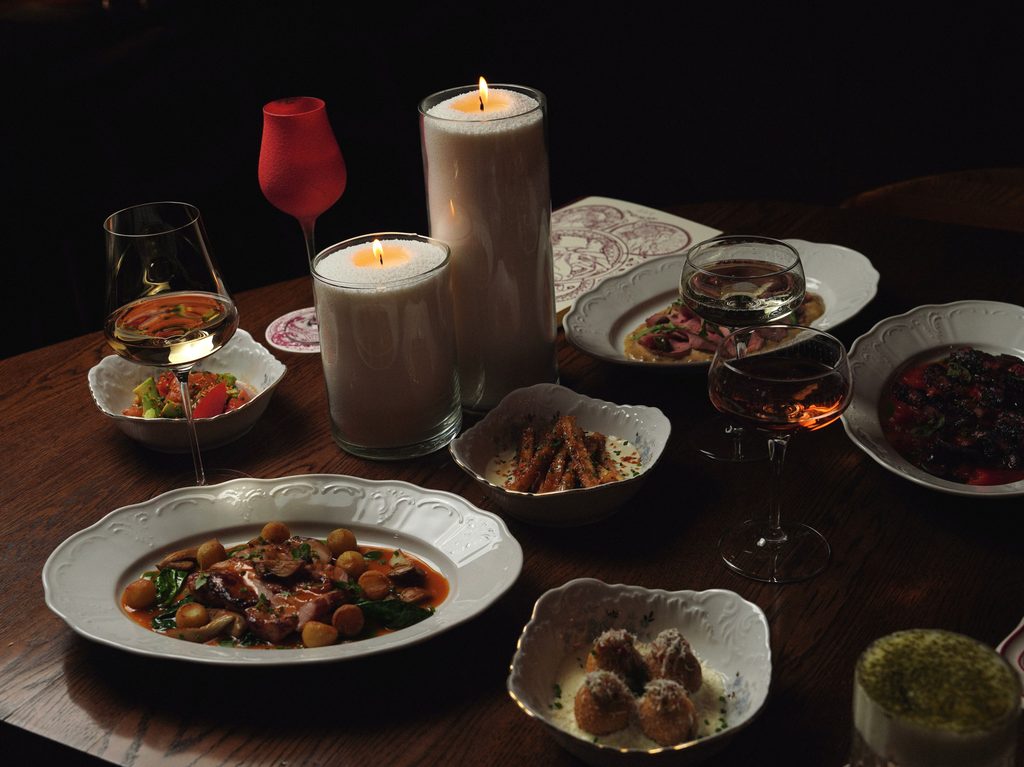
A Russian toast belongs to the genres of spoken language and is evaluated by the laws of speech; you cannot just brush it off with a polite formula. The address, the occasion, the story, the twist, and the wish at the end are important, and the length matters, because the time spent on a person is the very substance of the toast.
He who has learned ten ready-made formulas will not be able to say anything. He who has understood the structure will give a toast at any gathering, having one story and three sentences in reserve.
Frequently asked questions about Russian toasts
Is it true that Russians say «na zdorovye» when raising a glass?
No, and this is one of the most persistent misconceptions about Russian feasts. «Na zdorovye» serves as a reply to thanks for the food and is said by the hostess. A guest with a glass does not utter these words. This phrase is not a toast in any context.
How long should a toast last?
One to three minutes, if a person is speaking genuinely. A short formula like «to the meeting» is appropriate among friends and on the run, while at an anniversary, wedding, or farewell party, the guest is expected to give an elaborate speech with a story.
Why do people drink the third toast without clinking glasses?
This is how the departed are remembered, and the silence with glasses that are not raised to one another is here part of the ritual itself. The origin of the custom is usually traced back to the military environment, whence it spread, but no one really knows why glasses should not be clinked, and the existing versions exist only as legends. At the same time, the practice is the same everywhere, and no one disputes it aloud.
Who is a toastmaster and is one necessary?
Toastmaster, who keeps track of the order of toasts and prevents the evening from falling apart. The word comes from Georgian. At weddings, this is a paid profession; at a home feast, the role is assumed by the host or the liveliest of the guests; and a small dinner gets along just fine without a toastmaster.
What should I say if I am given the floor unexpectedly?
A short three-step scheme comes to the rescue. Name the person you are addressing, recall a single incident involving them, and end with a wish related to that incident. Three sentences sound more dignified than a long improvisation, and a story saves the day even when you don't have fancy words at hand.