
Names and identifying details of every student below have been changed.
A sentence I read in a journal, and the boy I thought of
Terrie Moffitt and her colleagues followed a thousand New Zealand children from birth into their thirties, and their summary of what they found runs to one line.
Childhood self-control, they reported, «predicts physical health, substance dependence, personal finances.»
I read that sentence years after I had stopped teaching a particular fifteen-year-old, and he was the first person it brought to mind. Not because anything in his life went wrong. I have no idea what happened to him. Because of what I did to him for two months, on purpose, believing it was the job.
His mother called on a Thursday in November to say her son had decided English wasn’t really for him, and thank you for everything. She was polite. That was the part that got me. He had come to me in the fall, twice a week after school, and for the first month he argued with me about movies. He would say «I go to the movies yesterday» and I would say «I went,» and he would say «I went to the movies yesterday,» and we would carry on. Several times a minute, every lesson, gently, and I was quietly proud of never letting one slip past me.
Somewhere in October he stopped offering opinions nobody had asked for. Adolescence, I decided. Then his sentences got shorter, and that I filed under nothing at all.
A shorter sentence has fewer places for a teacher to interrupt.
It took me years to figure that out. He passed his exam that spring with somebody else, so the English was in there the whole time. His grammar was never the thing I broke.
Show me the line on a report card where the other thing goes.
Three days in one week
Fifteen years later I keep a different kind of notebook, and last October it filled up in three days.
Monday, a nine-year-old handed the phone back to his mother after saying one word to his grandmother in Moscow.
Wednesday, a mom outside Minneapolis emailed me a photograph of a report card. Straight A’s, an A-minus in art, a note about how carefully her son works. Underneath the photo, one line. On Saturday he had stood by the snack table at a birthday party for most of an hour, because he couldn’t figure out how to ask whether he could join the game.
Friday, a fourteen-year-old spent most of her lesson explaining to me, in Russian, exactly why my homework policy was unfair. By the measure the school uses, only one of those three children was doing well. I would argue the third was doing best of all, and the rest of this article is my attempt to explain that before anybody’s mother apologizes to me again.
The word we use for it is wrong
Hard skills are easy to name, because you can test them. Long division, reading Cyrillic, the freestyle stroke, whatever Python they teach in seventh grade. The other category gets learned by practice on other humans, the gaps surface slowly, and the standard name for it is bad.
«Soft,» as though it were the optional round after the real work. I have sat with a ten-year-old who came apart over a group project, and there was nothing soft in that room.
| Hard skills | Soft skills | |
|---|---|---|
| What they are | Specific, teachable knowledge and technique | Ways of managing yourself and working with people |
| Examples | Long division, Russian handwriting, chess openings | Asking for help, taking turns, handling frustration, planning ahead |
| When gaps show up | Immediately, on the next quiz | Slowly, in situations that came with no rubric |
Researchers dodge the word too. Harvard’s Center on the Developing Child files most of this under executive function and self-regulation, compares the apparatus to air traffic control in the brain, and splits it into working memory, mental flexibility, and self-control. Parents ask whether a child either has this or doesn’t. On that, the Center is blunt.
Children are, in the Center’s words, «born with the potential» to develop these skills.
The sheet handed out at back-to-school night says self-management, a word that comes from CASEL. In my experience it means the homework a kid finished on Sunday and left in a locker until Thursday.
Where does a sentence break?
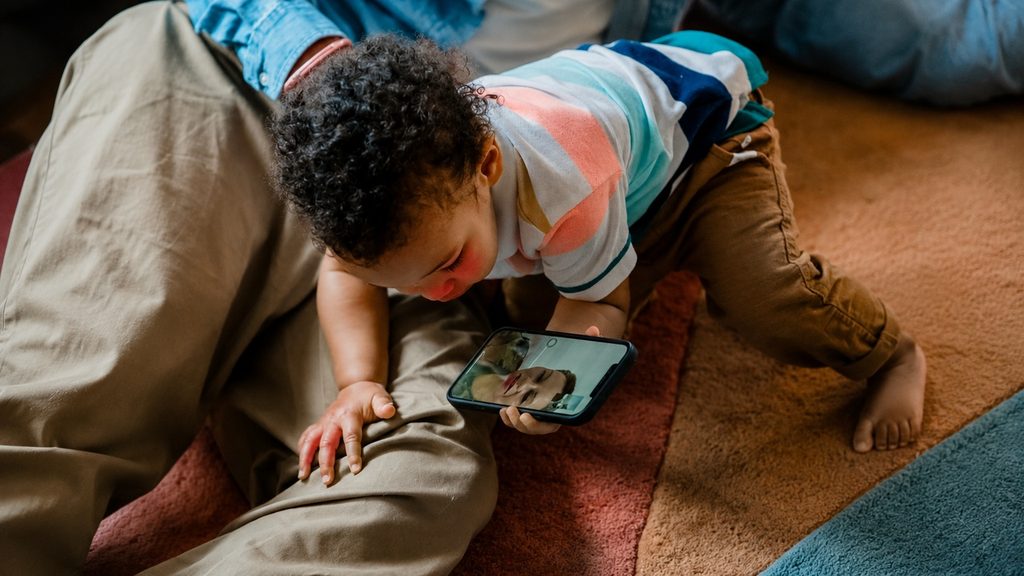
Back to Monday, and the boy who handed the phone back.
Mark, nine, from the Chicago suburbs. In English he can talk a teacher out of a late penalty without breaking a sweat. In Russian, asked how his week went, he said khorosho, «fine,» and handed the phone back like it was hot.
Mark, nine, from the Chicago suburbs. In English he can talk a teacher out of a late penalty without breaking a sweat. In Russian, asked how his week went, he said khorosho, «fine,» and handed the phone back like it was hot. Vocabulary, his mother said. That was the theory, and it was wrong. School, teacher, friend, boring, he had all of those. Try holding a conversation with an adult using only nouns. He had no way to change the subject in Russian, none for handing a question back, none for saying hang on, I haven’t gotten to the good part yet.
Those are moves, and he had learned all of his in a schoolyard in Illinois.
Think about where any kid picks that up. Arguing over the last cookie. Apologizing badly, then a shade better. Figuring out the phrasing that gets you into a pickup soccer game without sounding like you’re begging. None of it is vocabulary. It’s timing and volume and word order, a few hundred small scripts assembled by trial and error at an American elementary school, which is precisely where they stay. In English.
That last part is my observation, not a finding. Nobody has run the study. It is what the work on willingness to communicate would predict, though, since what decides whether a person speaks up is their own estimate of how good they are rather than how good they actually are.
So the question I ask first is not how much Russian a child has. It is where the sentence gives out. A seven-year-old I taught in Brooklyn used to start with ya hochu, «I want,» and finish in English every time. The wanting was Russian. The wanted thing was not.
With Mark we put the word lists in a drawer and called his grandmother instead. Three minutes at a time, with an assignment for each call, two questions for her and one thing that had gone badly that week. Badly, not well. I asked him how his week went and got «fine.» I asked what had gone wrong and he had to explain himself. What surprised me was what didn’t work. Role-play went nowhere, because he was nine and he knew perfectly well that I was not a shopkeeper. Only the grandmother moved him, because she actually wanted the answer. His Russian barely grew over those months. It became usable, and usable is the whole ballgame. The notebook I pull these out of is an actual notebook, incidentally, not a figure of speech. Green cover, coffee ring, roughly a third of it in Russian and the rest in English depending on what language I happened to be thinking in that day. I have been meaning to move the whole thing into a proper file since the year I started teaching online. Proves nothing. People ask.
Sofia could talk. She could not read.
The reverse pattern throws people more, and I meet it just as often. Sofia, fourteen, from Toronto, is fluent and quick and funny, and completely unable to read a Russian book anywhere near her intellectual level. She used the word «embarrassing» three times in our first minute on the subject, and with teenagers that word is a gauge.
So we read aloud in turns, and I went first, and on the long words I stumbled. Not performed stumbling, either. Read me an unfamiliar Russian page cold and I trip over it too, and she needed to watch that happen to an adult and see that nothing followed from it.
Six months later she was reading young-adult novels. Slower than a kid in Moscow. Reading.
Free
Printable materials for parents
Worksheets, reading cards, and conversation prompts you can print at home.
Open the libraryAn ordinary Tuesday
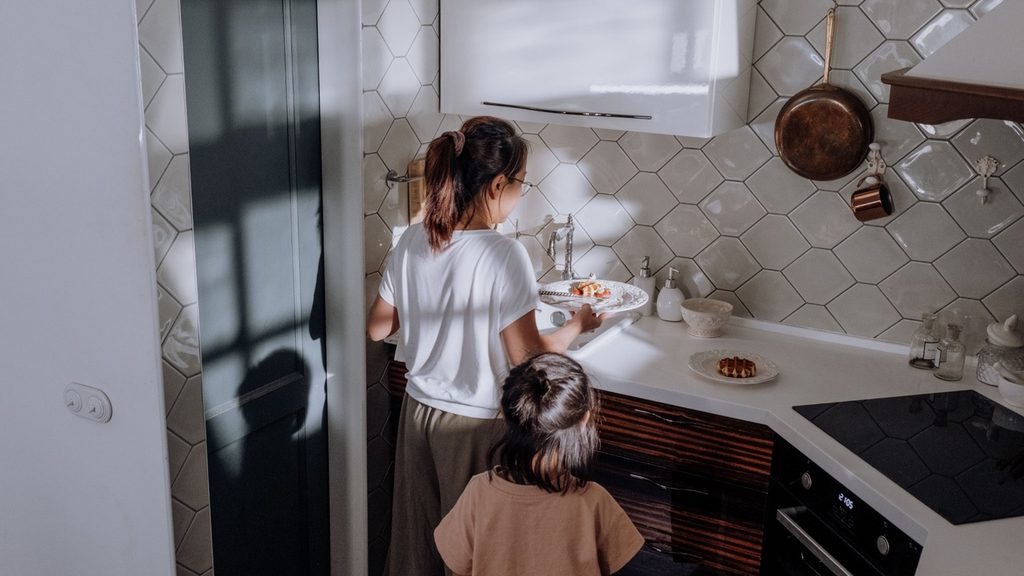
Before any of the research, the practical part, because most of what gets written about this assumes a family with more evening than anybody has.
Work call running long. One kid at practice. Nothing thawed for dinner. That’s the Tuesday I hold every piece of parenting advice up against, mine included, and I call it the kitchen-table test. Advice that only survives an idealized Sunday isn’t advice. It’s a fantasy with instructions.
What survives
One family I worked with picked the drive to Saturday school, ten minutes each way, and nothing else. The boy had one job in the car, two questions for his mother, and one story with a beginning and an end. She corrected nothing for those ten minutes, which took her about a month to manage. Afterward she would say one specific true thing, usually a version of «that was hard to say, and you said it anyway.»
Five weeks of that beat the heroic Sunday she had been attempting for a year. Consistency is dull as dishwater, and it wins anyway.
Three others I keep recommending. Stop rescuing so fast, because the most useful three seconds of a week are the three nobody fills, followed by «what have you tried?» Hand over the small errand you would normally handle yourself. And describe instead of praising, since «good job» evaporates on contact while «you asked her to repeat it instead of guessing» is something a kid can repeat on purpose tomorrow.
What doesn’t
The failures, and I have earned the first one. Correcting everything. The structured feelings check-in at dinner, which works beautifully for about nine days before everybody hates it, since the good conversations ambush you sideways in the car and at bedtime instead. Saying «oh, she’s shy» with the child standing right there. I have seen a girl still wearing that sentence at twenty. Letting Russian become the language of pressure while English stays the language of relief, arithmetic children run very fast. Writing off the summer. And reading one bad week as data, when children slide backward around anything that shifts underneath them.
Six, ten, fourteen
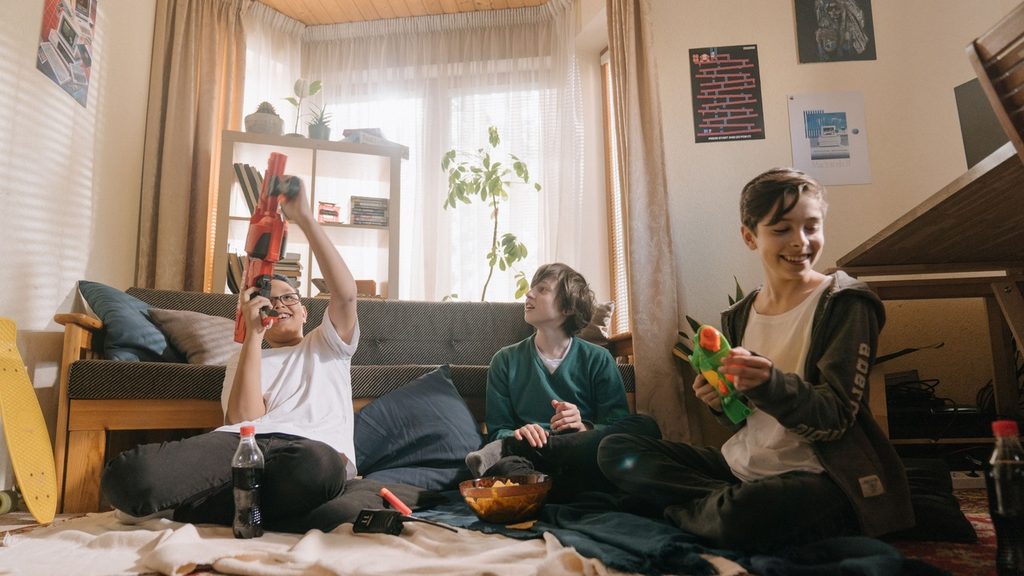
Tell a six-year-old you’ll be working on their communication skills. Now tell a fourteen-year-old the same sentence. You have just described two afternoons with nothing in common, which is why I distrust any article on this subject that skips age.The early primary years are turn-taking, naming what you feel, and following a two-part instruction. That’s also when «I don’t understand» gets built, not as a confession of failure but as an ordinary sentence competent people say several times a week. I say it about myself on purpose in class, so kids watch an adult admit confusion and survive. You’ll know it’s landing when a lost game costs a few minutes instead of the whole afternoon.
Upper elementary is planning, and planning is not tidiness. A messy backpack is one thing. A child who cannot picture Thursday is another thing entirely, and the difference shows up as a book report that starts before Sunday night.
Now back to Friday, and the girl explaining my unfair homework policy.
The teenage stretch is the uncomfortable one, because what a fourteen-year-old most needs to rehearse is arguing with you properly, and nobody volunteers to be the practice partner for that. Her mother apologized to me afterward. She shouldn’t have. That was the best Russian the girl had produced all year, and she produced it because she wanted to win.
Teenagers who never get to practice at home practice somewhere else, with coaching nobody chose for them.
What the numbers actually establish
Everything above is one teacher’s arithmetic, a thin thing to hang a family decision on. So here is the rest of what the Moffitt paper and the studies around it say, and where they stop.
| The study | What it looked at | What it found |
|---|---|---|
| Moffitt et al., PNAS 2011 | About 1,000 children in New Zealand followed from birth to age 32, checked against 500 sibling pairs in Britain | Childhood self-control predicted adult health, finances, and criminal offending, independent of IQ and social class |
| Durlak et al., Child Development 2011 | Meta-analysis of 213 school programs, 270,034 students, K through 12 | Better skills, attitudes, and behavior, plus a measurable academic gain |
| Cipriano et al., Child Development 2023 | 424 studies, 53 countries, 575,361 students | Same direction as the earlier review, with the same warning about implementation |
| WEF Future of Jobs Report, 2025 | Employer survey on core skills required today | Analytical thinking tops the list, then resilience, flexibility, and agility |
| NACE Job Outlook 2026 Spring Update | 185 employers on what they want on a resume | Teamwork 85%, problem-solving 82%, verbal communication 78% |
| NACE on GPA screening | Employers screening candidates by grade point average | 73% in 2019, under half today |
| CASEL and RAND, 2024 | US principals reporting an SEL curriculum | Under half in 2017–18, 83% by 2023–24 |
What surprised me in the Moffitt paper was not that self-control predicted anything. It was the shape of the finding. The authors describe a gradient. Not a cliff with the troubled children on one side of it. A slope, all the way along.
The school row surprised me more. Students in those programs didn’t lose academic ground to the hours the programs ate up. On average they gained it, and Durlak’s team put a number on the gain.
The review reported «an 11-percentile-point gain in achievement.»
Six separate outcomes were tracked. What happened to behavior turned out to be as real as what happened to test scores, and the same team warned that everything swung on how well a school delivered the thing. A much larger review reached the same place a dozen years later, with Cipriano and colleagues reporting «significantly improved skills, attitudes, behaviors» and the identical warning attached.
Employers name the same three things when somebody asks what earns a resume a second look. Teamwork. Then problem-solving. Then whether a person can say a thing out loud and be understood. Nearly three-quarters of employers used to screen applicants by grade point average before a human read a word. Fewer than half do now.
Where the evidence stops
Brakes, though. I have no interest in frightening anybody, and a preschooler who can’t wait their turn is not booked for money trouble in adulthood. The Dunedin cohort describes a pattern in a large group of people over three decades. It does not describe your child on your couch. Self-control in a small child answers to sleep and temperament and whatever is going on at home, and none of that fits in a table.
What I took from the pile was modest.
These things are real, they predict outcomes families care about, and they respond to being taught.
The room I cannot replace
Now Wednesday, and the boy by the snack table.
His mother wanted to know what to fix in his Russian. Nothing, as it turned out. His Russian was ordinary for an eight-year-old in Minnesota, better than most, and irrelevant to what had happened at that party. He had stood there for the better part of an hour in English, surrounded by children who spoke the same language he did, unable to produce the six words that would have gotten him into the game. That case is the one I bring up when a parent tells me this is a bilingual problem. Sometimes it isn’t. Sometimes a child simply has not yet been in enough rooms. His mother cannot rehearse that with him at the kitchen table, and I cannot teach it to him one-on-one.
Articles like this one hand parents more responsibility than anybody can carry, so let me mark the edge of mine.
I cannot teach a child to read a room. Neither can their mother. Disagreeing with somebody your own age, recovering when a friend cuts you off, working next to a boy who does every step in the wrong order, none of it rehearses with a parent present, because a parent is a soft audience by design. Soft on a good week, exhausted on a bad one, never once neutral.
Home builds confidence. It is a poor place to test whether the confidence holds. That is my argument for group learning, and I find it sturdier than «so they learn Russian.» The moment I keep watching for happens around the third week, when two children discover in Russian that they hate the same cartoon. Nothing pedagogical occurs. But Russian stops being the language of one household and grown-ups, and I have never found a way to manufacture that with an adult in the room.
In our lessons for bilingual kids, that means talking to peers rather than one-on-one with an adult, and the conversation school exists so that speaking carries stakes that are not grades. I’ll add chess, with a caveat. Inside the game a bad plan gets punished politely and immediately, and that is decent practice for a child who has never had to think two moves ahead about anything. Outside the game the evidence is thin. I’m not selling anybody a brain-training story I don’t believe myself.
Schools have moved further on this than the parents I talk to expect. In 2017–18, fewer than half of principals said their building ran an SEL curriculum. The RAND survey that tracks it now puts the figure north of four in five.
The sentence that dismantles a home language
One more thing belongs here, because it reaches me every spring. Parent-teacher conference, October, everyone pleasant, and near the end the teacher suggests kindly that all this Russian at home might be holding the child back in English. I have watched families dismantle an entire home language over that one sentence.
Jim Cummins built most of a career around why the advice is wrong. The languages are not fighting over one shelf, and whatever a child learns about working with language and ideas travels between them. Find the main idea of a paragraph in Russian on Tuesday and the ability is still there on Thursday, when the paragraph happens to be in English.
Nobody needs to argue with the teacher about this. Nobody needs to take her advice either.
The account that gets a deposit every week
Grades matter. Transcripts open doors and close them, and any teacher who tells you otherwise is selling something. Look at what the number covers, though. How well your child performed a task that arrived with the instructions attached, where the deadline came from somewhere else, so did the rubric, so did the answer, which existed before they ever picked up a pencil. That’s a valuable thing to be good at, and it bears no resemblance to how your own week went.
Most of adult life arrives without instructions attached.
Nobody handed you a rubric on Monday.
Nobody is issued any of it at birth, either. It gets built in small awkward moments that look like nothing while they are happening. The phone call they didn’t want to make. The apology you refused to draft for them. The argument they won because you decided to let them win it. Not one of those will feel like progress on the day, and then you’ll see the result a couple of years later, sideways, in a room where you weren’t expecting it.
And in our families there’s one more layer. Each of those moments happened in some language, and that’s where the deposit went. The nerve, the joke, the knack for telling a friend she’s wrong without losing her, all of it lands in the language the moment took place in and not in the other one. Nobody opens that account once and walks away; every week it gets a little deposit or a little nothing, depending on what your family actually does. I still think about the boy from that November. He’d be a grown man now, somewhere, and I hope somebody after me shut up long enough to let him talk.
At Palme School we teach online, in groups of up to eight, two forty-minute classes a week. The first two lessons are free and start with an assessment of where your child actually is, not just in Russian but in how they use it. You can book those here, and there are free materials for parents in our resource library.
Start small, pick one routine, and let that be this week’s deposit.
Frequently asked questions
The abilities that shape how a child handles themselves and other people: managing frustration, asking for help, cooperating, planning, listening, and disagreeing without blowing things up. Hard skills are what a child knows how to do. Soft skills are how they operate while doing it.
A more useful framing: they predict different things. Grades predict the next report card well. Long-term research links childhood self-control to adult health, finances, and other outcomes independent of IQ and family background, while NACE’s employer survey puts teamwork, problem-solving, and communication at the top of what companies look for on a resume. Both matter. Only one appears on the report card.
No, and it’s among the most common things I see. Confidence gets built through practice, and your child’s practice has been overwhelmingly in English. The skill exists; it hasn’t transferred. Regular low-pressure conversation in Russian with people who aren’t family is what moves it.
Very common in the stretch when fitting in with peers outranks almost everything, which in my classes tends to mean late elementary through middle school. Fighting it head-on rarely works. What usually helps is giving Russian a context where it’s genuinely useful and not on display: a small online group, a relative who’s fun to talk to, a show you both actually like. Pressure tends to produce silence, while purpose tends to produce speech.
Lily Rozberg has been teaching for sixteen years, first English in Russia and now Russian to bilingual children across the US and Canada. She writes for Palme School about heritage language, reading, and the things report cards do not measure.
Sources
- Center on the Developing Child, Harvard University. (2012, May 20). InBrief: Executive Function. developingchild.harvard.edu
- Cipriano, C., Strambler, M. J., Naples, L. H., Ha, C., Kirk, M., Wood, M., Sehgal, K., Zieher, A. K., Eveleigh, A., McCarthy, M., Funaro, M., Ponnock, A., Chow, J. C., & Durlak, J. (2023). The state of evidence for social and emotional learning: A contemporary meta-analysis of universal school-based SEL interventions. Child Development, 94(5), 1181–1204. onlinelibrary.wiley.com
- Collaborative for Academic, Social, and Emotional Learning & RAND Corporation. (2024, September 17). More than 8 out of 10 U.S. schools implement SEL. casel.org
- Collaborative for Academic, Social, and Emotional Learning. (n.d.). What Is SEL? casel.org
- Cummins, J. (1979). Linguistic interdependence and the educational development of bilingual children. Review of Educational Research, 49(2), 222–251. doi.org
- Durlak, J. A., Weissberg, R. P., Dymnicki, A. B., Taylor, R. D., & Schellinger, K. B. (2011). The impact of enhancing students’ social and emotional learning: A meta-analysis of school-based universal interventions. Child Development, 82(1), 405–432. onlinelibrary.wiley.com
- MacIntyre, P. D., Clément, R., Dörnyei, Z., & Noels, K. A. (1998). Conceptualizing willingness to communicate in a L2: A situational model of L2 confidence and affiliation. The Modern Language Journal, 82(4), 545–562. onlinelibrary.wiley.com
- Moffitt, T. E., Arseneault, L., Belsky, D., Dickson, N., Hancox, R. J., Harrington, H., Houts, R., Poulton, R., Roberts, B. W., Ross, S., Sears, M. R., Thomson, W. M., & Caspi, A. (2011). A gradient of childhood self-control predicts health, wealth, and public safety. Proceedings of the National Academy of Sciences, 108(7), 2693–2698. pnas.org
- National Association of Colleges and Employers. (2026). Employer use of skills-based hiring practices grows. naceweb.org
- National Association of Colleges and Employers. (2026). Job Outlook 2026 Spring Update. naceweb.org
- Sala, G., & Gobet, F. (2017). Does far transfer exist? Negative evidence from chess, music, and working memory training. Current Directions in Psychological Science, 26(6), 515–520. journals.sagepub.com
- Schwartz, H. L., Grant, D., Diliberti, M. K., Hunter, G. P., & Setodji, C. M. (2024). Social and Emotional Learning in U.S. Schools (RR-A1822-2). RAND Corporation. rand.org
- World Economic Forum. (2025). The Future of Jobs Report 2025: Skills Outlook. weforum.org
Palme School: Russian for bilingual children · Conversation school · Chess · Free materials for parents