

In the July heat, the kitchen smells of dill, a dewy pitcher sits on the table, and six-year-old Grisha points his finger at a bowl of chopped ingredients and asks why the soup is called okroshka. Outside the window, it could be Boston or Toronto, and suddenly the adult realizes they don't know the answer. Okroshka appears on the table every summer, and no one usually wonders where it came from.
In fact, the moment is perfect. While you're cutting cucumbers together, you can casually tell your child about the word itself, its history, and why grandma swears by kvass while auntie swears by kefir, and each one believes their okroshka is the only correct one. And in the end, it turns out there was nothing to argue about.
It all started with crumbs

The secret is right in the name. There was an old word, «kroshevo,» meaning anything finely chopped and mixed with something cold, most often kvass or brine. Chop it, pour it over, eat it. Russian folklorist Mikhail Makarov, who lived in the late 18th and first half of the 19th century, explained kroshevo as any meat chopped into shchi or kvass. The origin of the word itself is still debated. According to one version, it comes from that very «kroshevo,» while another, simpler version, directly derives from the verb «kroshit»" (to chop). The first explanation is enough for a child.
If Grisha demands more serious evidence, it will be found. The earliest recipe was published in 1790, in Nikolay Osipov's book with a lengthy title about an old Russian hostess, housekeeper, and cook. It advised to mince roasted meat with onions and cucumbers, dress with sour cream, salt, and pour over pickle brine, kvass, or sour «shtya.» Don't let the word "shchi" confuse you; sour "shtya" back then wasn't soup, but a sour kvass drink. And here's what's important. Cookbooks in Rus' were almost nonexistent until the end of the 18th century, so finding that one true ancient recipe is impossible; it was simply never written down.
For peasants, everything was much simpler than a fancy kitchen. They would take onions, radishes, sometimes a salted cucumber, pour cold kvass over it, and that was lunch, which saved them during the height of the harvest. It's best not to specify exactly when kvass appeared in Rus'. Dates in sources vary, and instead of a precise number, it's wiser to say that this habit is very old.
There's also a very cinematic version about the burlaks. It's said that the Volga burlaks were paid with kvass and dried fish. They would soak the dried roach in the same kvass, and okroshka was supposedly born from this fish and kvass mixture. It sounds great, and kids like it, but historians chuckle at the legend and don't take it seriously. You should tell a child that it's a beautiful tall tale, nothing more.
At the same time, the question of whose dish this is can be settled. Similar cold soups exist among our neighbors. Belarusian kholadnik, Polish kholodnik, Lithuanian šaltibarščiai, Bulgarian tarator, and among Turkic peoples, sliced ingredients are even poured with fermented dairy products. Okroshka has no single author; by tradition, it is considered attributed to Russian cuisine, but she has a large family. For a child, the conclusion is simple. The same tasty idea came to people in different regions because in the summer everyone equally wanted something cold.
What goes in the bowl
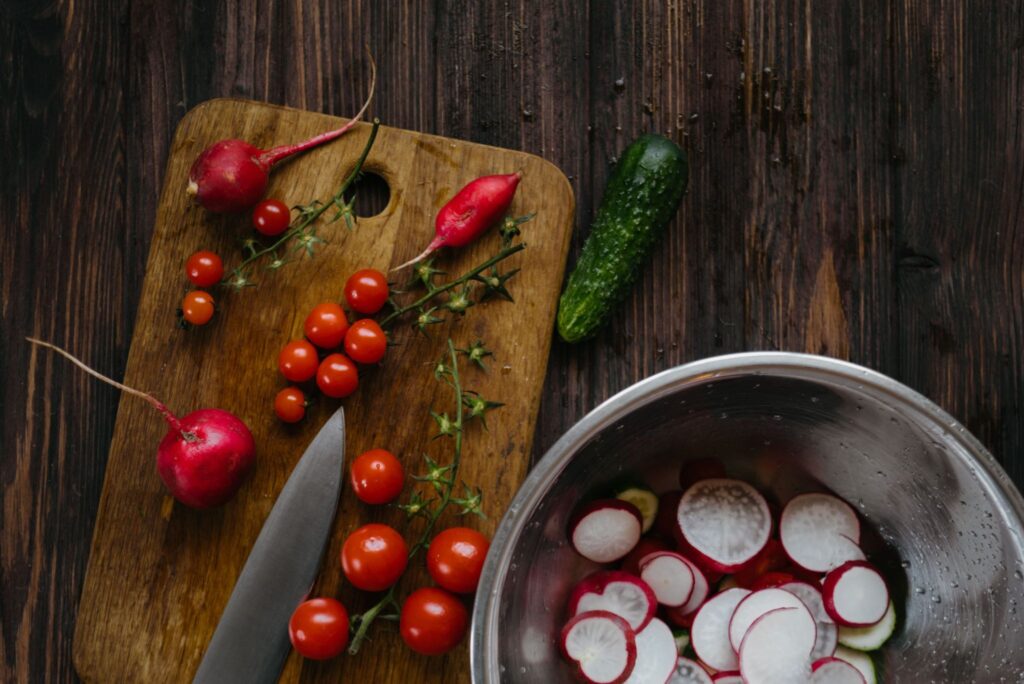
Let's get back to the salad, which Grisha is still conjuring with a knife under adult supervision. The classic set is simple. Boiled potatoes, fresh cucumbers, radishes, hard-boiled eggs, lots of green onions and dill. Plus something meaty, usually boiled beef, ham, or regular "Doctor's" sausage. Everything is cut into small cubes of about the same size, so that a spoonful gets a little bit of everything at once. The herbs aren't just for looks here; half the flavor depends on them, so they add dill and onions generously.
This is where personal preference comes in, and that's wonderful. Some people grate radishes instead of turnips, some like more eggs, some omit meat entirely during Lent. There are no strict rules. There's just the ratio, and it's worth remembering. There should be more liquid than chopped ingredients, about sixty to forty, otherwise, you'll end up with kvass with floating cucumbers instead of soup.
How to pour kvass
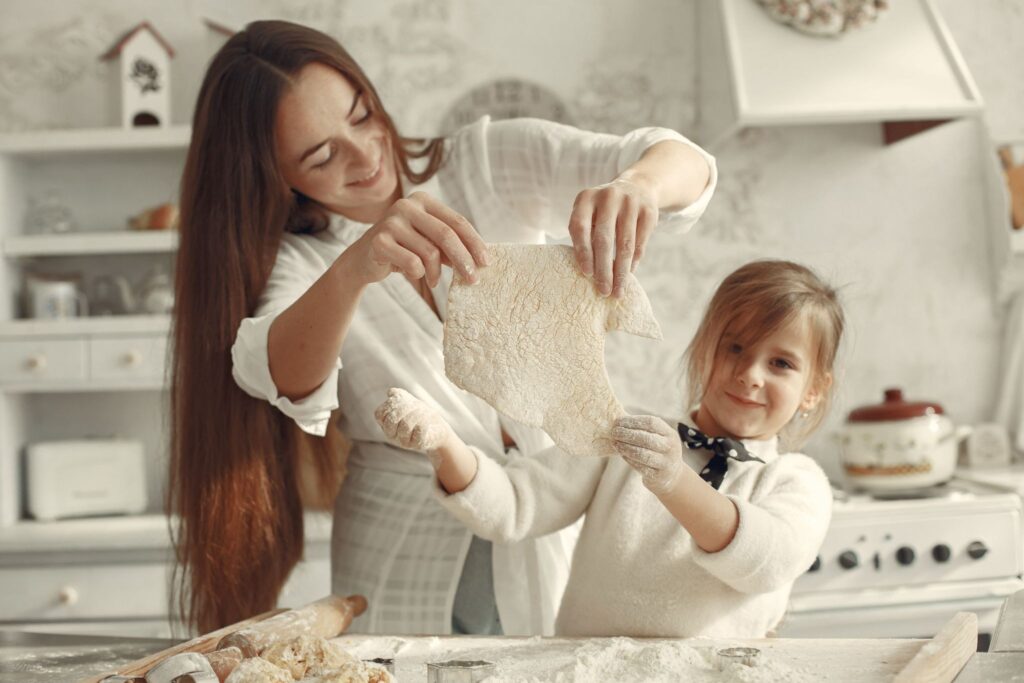
Making okroshka with kvass seems simple. The potatoes and eggs are boiled in advance and must be cooled, preferably overnight in the refrigerator, because warm okroshka is sad. While they are cooling, cut the cucumbers, radishes, herbs, and meat. Then put everything into a large bowl, add salt, lightly mash the onions with salt with a spoon to release their juice, and season with sour cream. And only at the very end pour in cold kvass.
This is where a mature subtlety hides, which Grisha is not yet thinking about. Kvass can be different. Historically, okroshka on white kvass, unsweetened and sour, is considered the authentic version, not on dark, sweet kvass that is pleasant to drink from a glass. This is pointed out, for example, by chef and candidate of historical sciences Anton Prokofiev. If you use sweet kvass, the soup will lean towards dessert, and no one expects that from okroshka. The finished bowl is sent to the refrigerator for another half hour, served icy cold, with half an egg and a spoonful of sour cream on top if desired. Adults can add mustard or grated horseradish, while children are usually fine without them.
What about kefir?
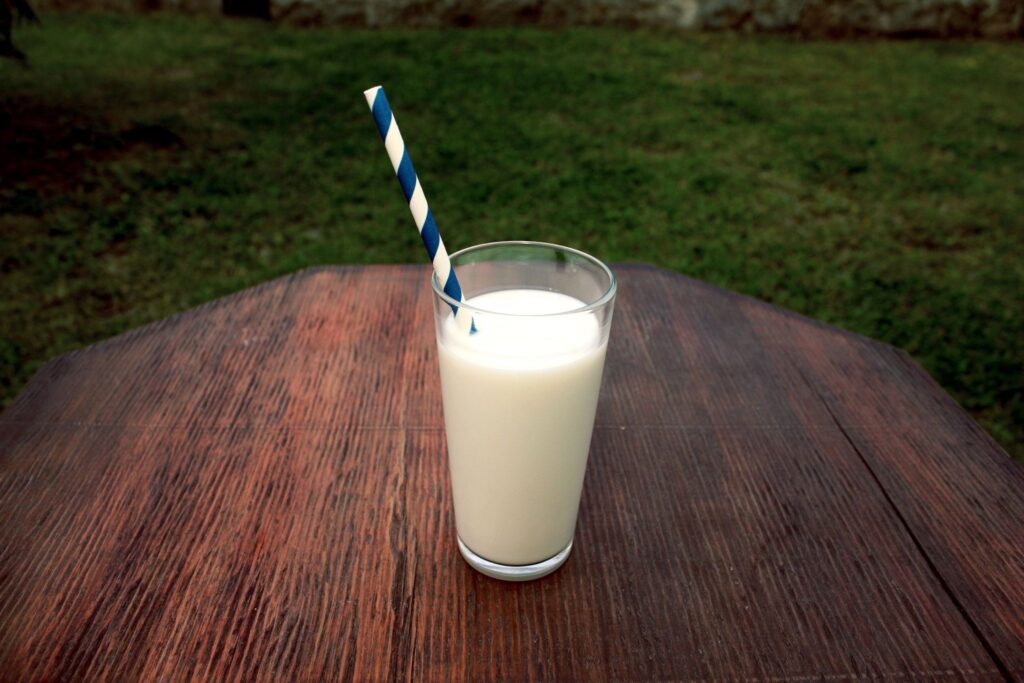
Then an aunt bursts into the conversation with her kefir, and Grisha demands to be judged who is right. Both are right. Kefir is a couple of centuries younger than kvass in okroshka. It's not mentioned at all in old books; it appeared only in Soviet times when kefir became available in every store. They do almost the same thing, only instead of kvass, they use kefir, and to prevent it from being too thick and sour, they dilute it with cold water or mineral water. In hot weather, many find the kefir version milder and lighter.
And that's not all. They pour okroshka with whey, mineral water with lemon, brine, and light vegetable broth. Each family spends years finding their own proportions and their favorite combination. Okroshka has never had and does not have a boss who would issue a single correct recipe.
So, with kvass or with kefir

This argument flares up every summer, and Grisha will definitely drag him out to the yard to his friends. There are fair arguments on both sides. Historically, kvass is ahead, okroshka has been made with it for centuries. By habit, geography decides everything. In 2020, the Yandex Eda service counted okroshka with kvass in about three-quarters of restaurants, and with kefir in one in seven. A year earlier, the search query map showed the same picture. Kvass confidently held Moscow, St. Petersburg, Siberia, Yakutia, and Kamchatka, while kefir was popular in the south and in some places in the Far East.
Both kvass and kefir are produced through fermentation and are roughly equal in health benefits, so there's simply no scientific reason to label one of them as incorrect. It all comes down to taste and how it was prepared at home. This is the idea you should convey to a child growing up far from Russia. There are many "correct" versions of okroshka, each with its own origin and logic. In the summer, there's nothing stopping you from making both and calmly choosing your favorite, without taking away your grandmother's or aunt's right to their own authentic version.
Cuisine as a way to revive the living Russian language
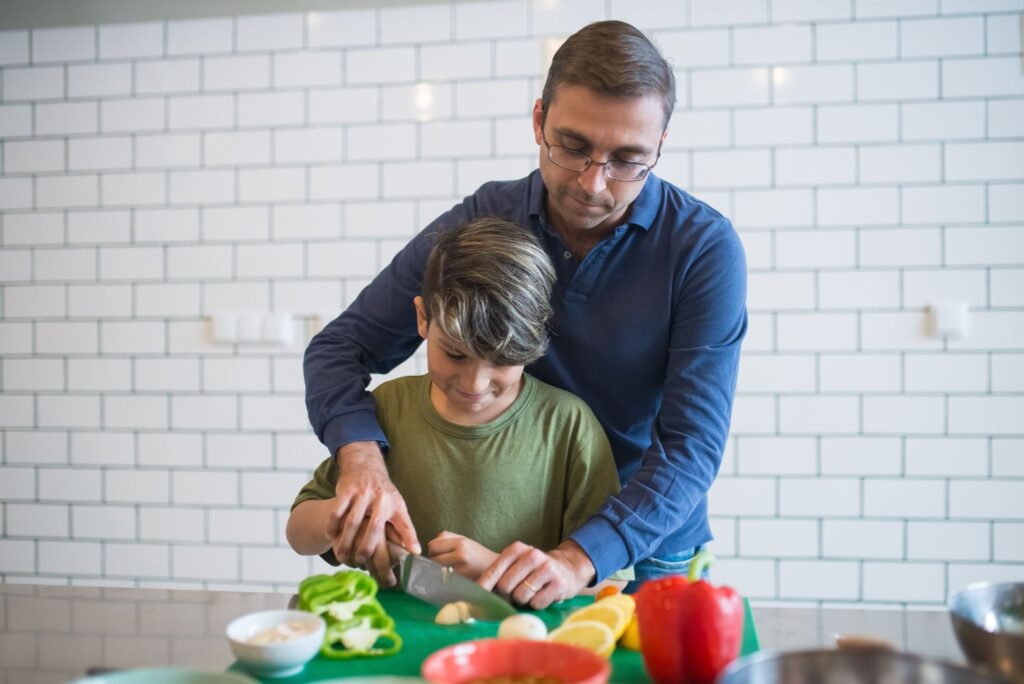
While all this fuss with the knife, kvass, and arguments is going on, something more important than soup is happening. The child has been hearing and experiencing the Russian language firsthand for an hour. Product names, kitchen verbs, and words about taste, cold, and sourness are naturally entering their speech. Grisha isn't cramming a list from a textbook; he's asking questions, arguing, and repeating, and all of it sticks like glue. Okroshka, with its history and eternal debate about the dressing, also provides topics for conversation, from the origin of words to the difference between white kvass and sweet kvass.
If you want your child's Russian to sound as confident as it does at this summer table, he should supplement it with regular lessons. Children from four to seventeen years old study at Palme School, and you can start by taking two free lessons. The first is an introductory lesson where a methodologist assesses the child's level and selects a program. The second is a trial lesson, which takes place in a small group with a teacher, so the child can see how regular lessons are conducted.
Home

Okroshka doesn't have one single correct recipe, and that's the beauty of it. Historically, it was based on white kvass and simple summer ingredients, but kefir, whey, and other dressings have long become traditional. The taste of the family decides the argument about the correct okroshka; there are no strict rules here. And cooking together incidentally helps a child reconnect with living Russian, and for this reason, this simple summer dish is worth more than any textbook.
What's better to make okroshka with, kvass or kefir?
There's no strict answer. The historical basis is kvass, but kefir has long been a fully legitimate option. Taste and region play a big role, so it's easiest to make both variations differently and stick with the one the family prefers.
What kvass is suitable for okroshka?
White kvass is best, unsweetened and slightly sour. Dark sweet kvass, which is pleasant to drink on its own, gives okroshka an overly dessert-like flavor, so it's rarely used for soup.
Is it mandatory to put meat in okroshka?
No. The lean, meatless version is commonplace, with vegetables, eggs, and herbs taking center stage. This okroshka turns out lighter and is especially good when it's hot.
Okroshka is served cold because it is a cold soup. It is typically made with chopped vegetables, boiled meat or sausage, and a liquid base of kvass or kefir. The cold liquid and ingredients make it a refreshing dish, especially in warm weather.
The cold here is part of the design. Warm okroshka immediately loses its freshness, so the ingredients are chilled in advance, and the assembled soup is kept in the refrigerator for at least half an hour.
There's no single "correct" okroshka.
The easiest way is through geography. Different regions prepare okroshka differently, and everyone considers their own version to be the real one. Let the child try okroshka with kvass and with kefir and suggest they decide for themselves which one they prefer.