

«Mom, why does it look like cancer?»
Misha is eight years old; they live in Katy, Texas, and he has a long-standing and friendly relationship with the crayfish. Every spring, the neighbors from two houses hold a crawfish boil. They cover the table with newspapers and pour a huge pot of crayfish into the center of the table. They then toss corn on top of the crayfish, along with some corn on the cob, potatoes, and some sausages. They all eat with their hands. Misha usually eats the corn, but he sorts the crayfish out in rows like soldiers. So he knows better than most adults what color the cooked crayfish is.
He couldn't understand anything else. In the book, the girl blushed like a cancer, and in English, he knows exactly that blushing is as red as a beet. Like a beetroot. Or like a tomato. What's the point of the beets here?
Mom Natasha read Oséev’s «Blue Leaves» to him that evening, from an old book that Grandma had brought along. She answered honestly about the crabs, as best she could. They are dark, greenish-brown in water, and turn red all at once in boiling water, in front of everyone’s eyes; and that «all at once» is probably the closest thing to what a person becomes when they suddenly feel ashamed. Mishka thought about the neighbor’s pot and agreed.
And then he asked about the case itself. Is there anything she’s ashamed of? She was the one giving it.
Rewind back
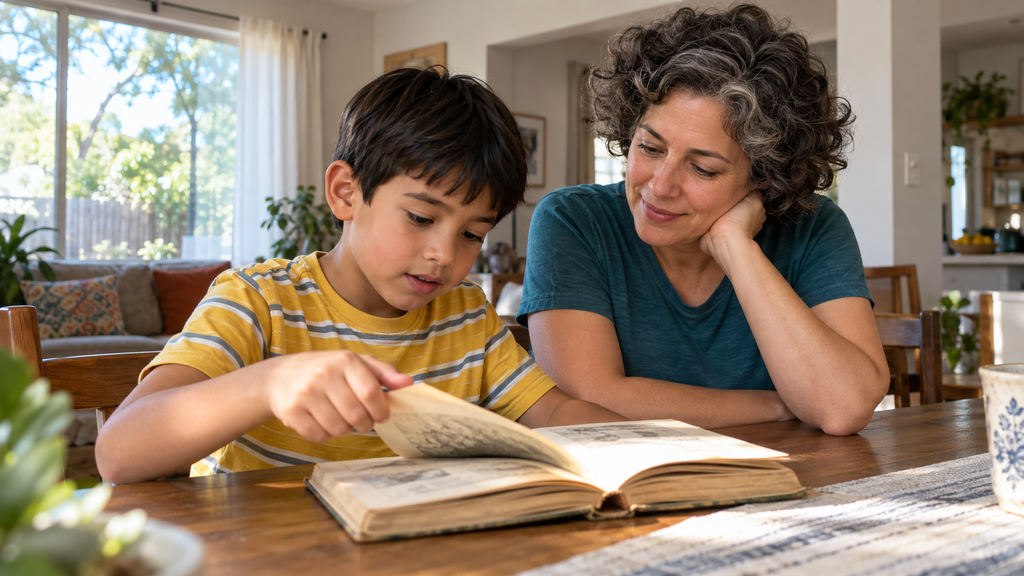
Natasha didn’t explain it, although she really wanted to. She said that if she blushed, then there must have been something going on before that, so let’s look into it. And they started reading the story backwards, which, by the way, works well with short stories.
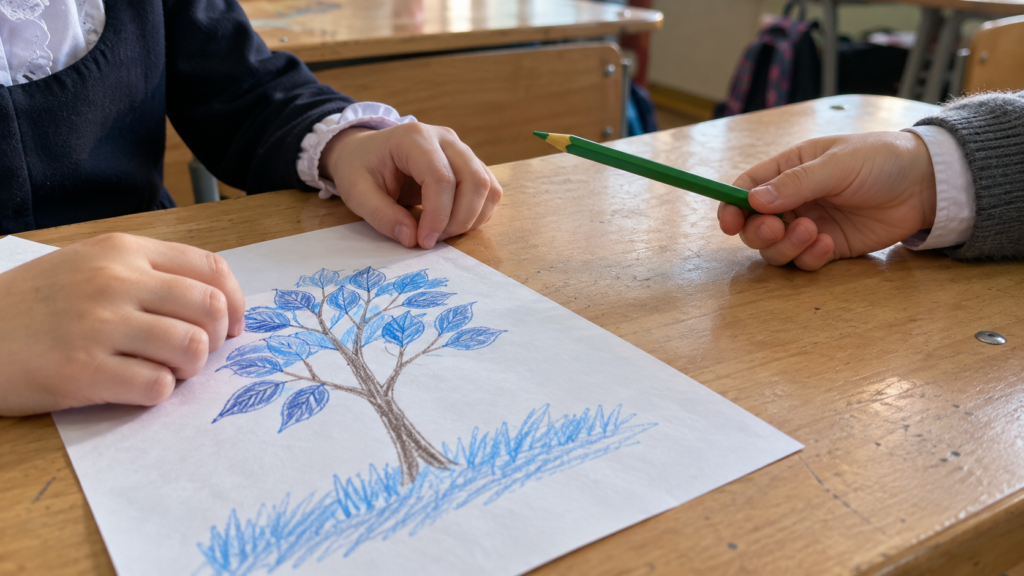
In class, the teacher notices Lena has blue leaves. Lena says there’s no green pencil, and that’s it. Then she’s asked why she didn’t take it from her friend, and she stays quiet. Misha even gets a little upset about the plot. He was sure there would be a scandal now and Lena would spill everything. But Katya gets embarrassed and posts it herself: she said she had given it to her friend, but Lena wouldn’t take it.
Okay, let’s scroll up. Katya runs after Lena and says, «Well, what are you doing?» Mishya proudly tapped the line, here it is, I gave it to you. Natasha agreed that she did. And she only asked one question: why is she running? If someone is standing next to you, they don’t run after them.
So Lena had already left by this point. Mishya missed that part the first time he read it, and honestly, Natasha did too when she was a child.
Eyebrows
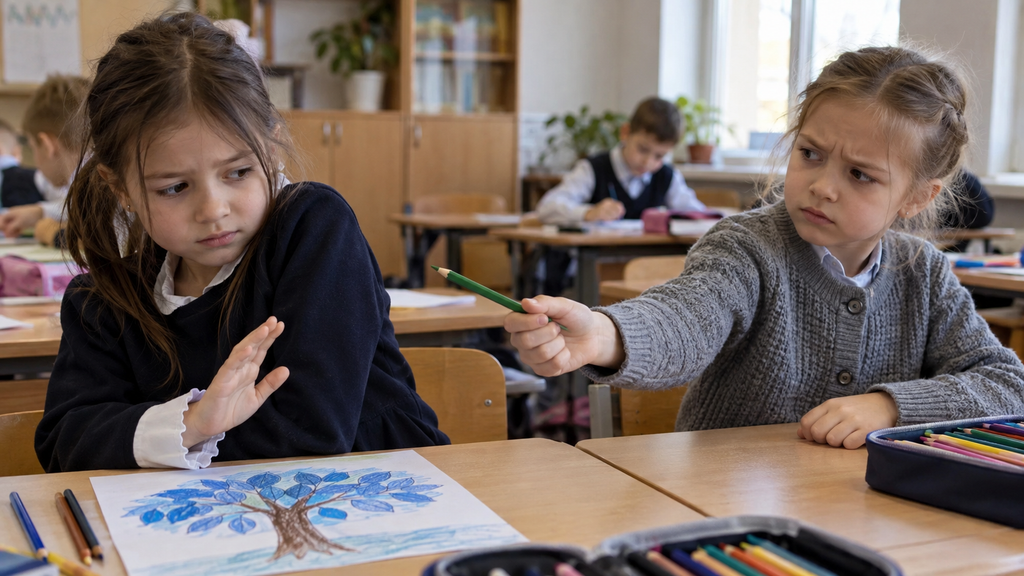
There was a place upstairs that Mishka later asked to be read to three times. Lena explains how many leaves she needs, the leaves on the trees, and a little bit of grass. Katya frowns, makes an unhappy face, and says that that’s a lot.
After that, Lena left.
Misha initially remained silent, then raised his eyebrows, frowned, and said in Katya's voice, «That's a lot.» It came out like something that was really unpleasant, so he himself laughed and repeated it again, for Papa, who had just come in to do some exercise.
Before the story began, it was already close to the end. There were strict rules in Katya’s eyes (no licking, no pressing too hard, no taking things in your mouth, no drawing too much), and over «no taking things in your mouth» Mishy giggled for a long time because pencils in their class are all chewed up, and Mrs. Garcia had long since stopped fighting with it. And even before that, Katya went to ask her mom for permission, but it turned out that she hadn’t asked her brother yet, so another day passed like that.
«She gave it for three days,» concluded Mishka. Without any irony, he just counted it.
Where did it end?
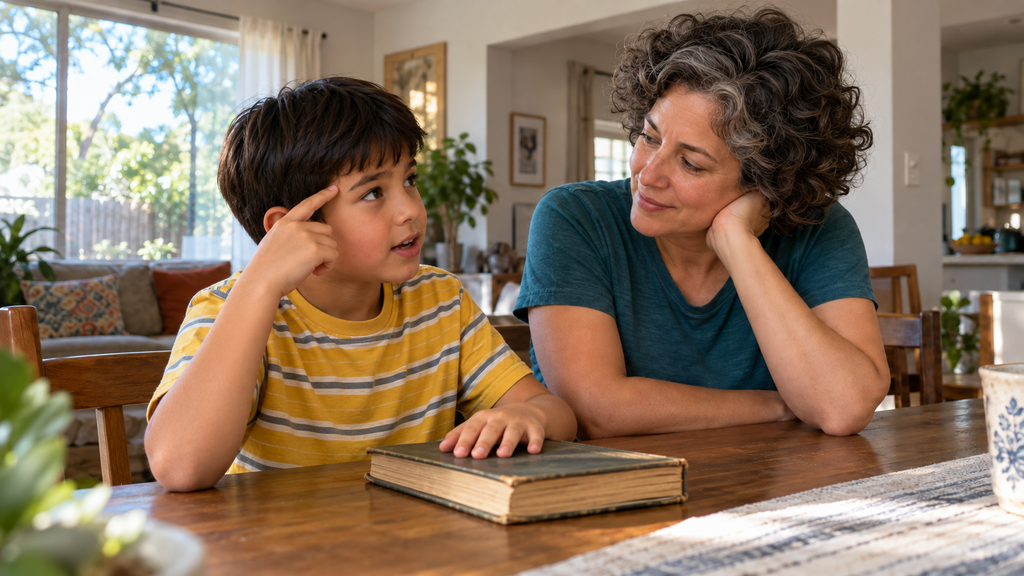
The most interesting question was asked by Natasha at the very end, when the book was lying closed. At what point did Katin’s «dam» stop meaning «dam»?
Misha first pointed to his eyebrows. Then he changed his mind, opened the book and found that «it’s not really worth drawing a lot of things,» because how could you actually take a pencil and not draw a lot of things? Then he went back to the eyebrows again. The conditions, he said, were bearable enough, but the face was intolerable. Natasha didn’t choose for him.
The teacher’s words at the very end, «You have to give it that way so that you can take it,» Mish heard calmly and said that he was right. But it sounded as if the teacher was just repeating what Mish had already found himself minutes ago.
In the spring, the neighbors will have another crawfish boil, and as usual, one of the adults will start telling everyone to go get it, go get it, there's still plenty left. It'll be interesting to see if Mishka will look at the faces.
And if you want to continue with the characters who don't notice anything about themselves, we had a discussion about «The Enchanted Letter.» In that story, the boy can't hear himself saying a single word.
When an offer ceases to be an offer
For the first two tasks, the story «Blue Leaves» itself is needed; the third task is done with voice. You can answer orally or by pointing to the lines with your fingers. One task is enough for one go.
Why is Katya running away
The child finds a place where Katya tells Lena «Take it!», and answers the question of why Katya had to run away for this. What happened just a little earlier?
Two seats next to each other
The child compares two places in the text. The first is where Katya says that her brother allowed it. The second is where Lena leaves without a pencil. What happened between them and at what point, in the child’s opinion, did the sentence stop being a sentence?
One word with two votes
The child says «take» twice. Once like they say, when it's not really a pity. The second time like the word could have sounded to Lena after Katya's conditions and the dissatisfied face. The adult guesses which option was which, then they can switch.
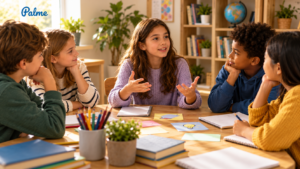
In literary reading classes at Palme School, children read Oseev, Draganovsky, Nosov and other authors’ Russian-language stories, look for how the characters feel in the text, and learn to explain their conclusions based on specific lines of text.
You can start with two free lessons: Introductory class with a methodologist and a trial lesson in a group with a teacher.
Frequently asked questions about «Blue Leaves»
Why didn't Lena take a pencil?
Katia put it off for a long time, then listed the conditions; when Lena said she needed to draw leaves and grass, she frowned and replied that that was a lot. Lena walked away. Katya ran after her and offered to get a pencil, but after such a conversation, Lena didn’t want to take it.
Why are the leaves in Lena's drawing blue?
Lena doesn't have a green pencil, so she painted the leaves on the trees in blue. That's how she answers her teacher, and when asked why she didn't take a pencil from her friend, she remains silent.
What does Osyeeva's story «Blue Leaves» tell about?
Lena asks Katya for one of her two green pencils. Katya formally agrees, but asks permission from her mother, then from her brother, sets conditions, and shows her displeasure. Lena leaves without the pencil, and in class the teacher explains what the problem is.
What does the teacher say at the end of the story?
The teacher says: «You have to give it in such a way that it is easy to take it.» That is, it is important to offer a thing in such a way that the person does not feel uncomfortable taking it.
Can we say that Katya is greedy?
Oseeva herself does not call Katya that name and does not evaluate her in any way. She shows what Katya said and how she looked while doing it, and leaves the conclusion to the teacher and the reader. It is more useful for a child to look for in the text where Katya’s sentence stopped being a sentence.
What does it mean to be «red as cancer»?
That is how people in Russia talk about a person who gets very red, usually out of shame. Cooked cancer is bright red. In English, in such cases, it is more often compared to a pumpkin or tomato.