


The teacher put away the laptops. She covered the digital board with plain paper. She brought an old vinyl record player into the classroom. And she led the entire lesson as if it weren't the 2020s of the new century, but the good old school days without a single screen. The result surprised even herself.
The children came alive. No one was staring at each other's screens anymore, getting distracted by games, or fiddling with a dead tablet. Everyone was just present. In the classroom. Together. Education Week describes this story, and it’s not an isolated incident: all across America, teachers are trying so-called "unplugged" days and noticing the same thing. Remove the screens. And the children seem to wake up.
What's happening
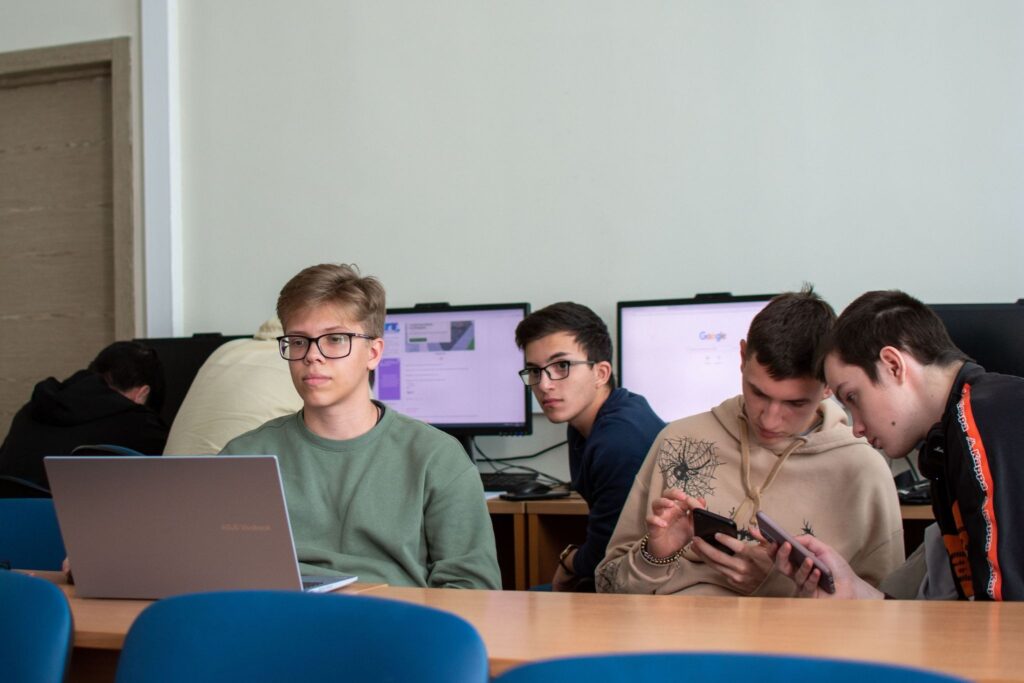
And here's what's happening. After the pandemic, nearly every American schoolchild has a tablet or laptop, and each has their own car. The screen has become the norm for lessons: they read, write, take tests, and play educational games on it. And imperceptibly, fatigue from all of this has crept in.
Teachers and parents are sounding the alarm. Children are spending too much time on devices, and problems are following: with behavior, mood, or grades. In one survey, more than half of educators admitted that parents believe schoolchildren spend too much time in front of screens. Several states are already preparing laws to limit technology in the classroom. And the bravest teachers aren't waiting for laws and are simply organizing gadget-free days.
And here's where it gets interesting. That very same teacher from Tennessee came up with a lively game instead of a boring replacement for screen-free day. She'd play music on a record player, and the children would write their answer to a question. The music would stop, everyone would switch seats, read what their neighbor had written, and add their own thoughts. Noisy. Fun. And at the same time, everyone was engaged. No frozen tabs, no fussing with chargers. Just children, paper, and live interaction.
Why children come alive without screens
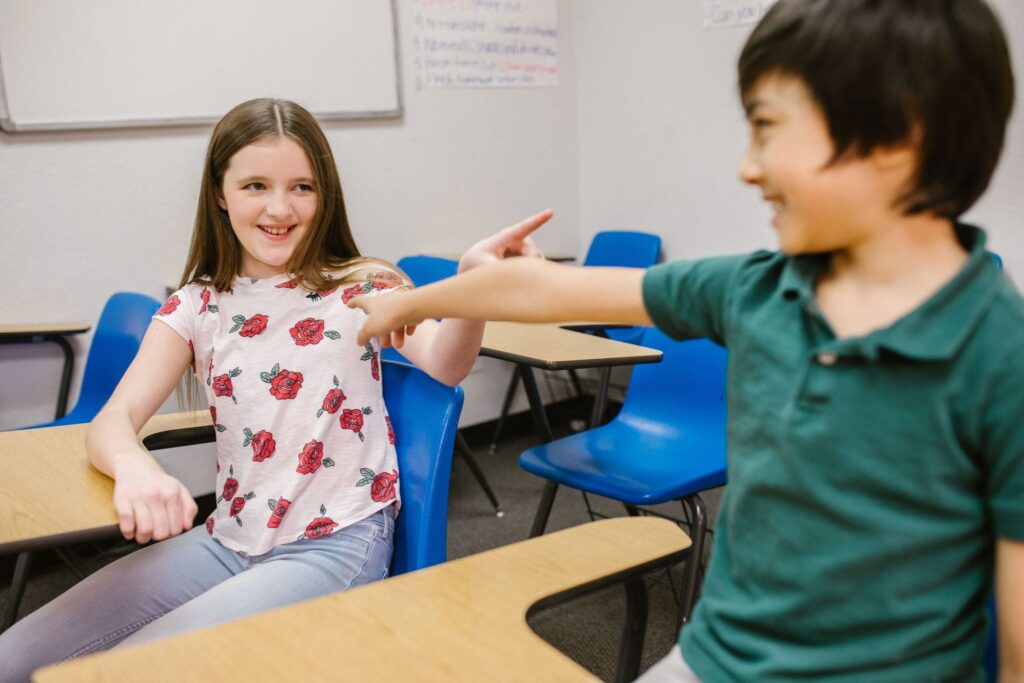
And because the screen, despite all its benefits, is a lonely thing. The child stares into their rectangle and is removed from the group. Classmates sit nearby, but they are alone with their device.
Remove the screen, and the connections are restored. You have to turn to your neighbor, talk, agree, argue. Children look at each other again, not at monitors. The teacher sees living faces, not bowed heads. What the screen cannot provide returns: wspólna rozmowa, spor, śmiech, wspólna praca. It turns out the recipe is simple. For the classroom to come alive, sometimes it's enough to remove the technology from the desks.
Where is our interest here

And this is where the story turns to a Russian-speaking family. Because the most important thing that a screen-free day brings back is live communication. And for our child, live communication, especially in Russian, is worth its weight in gold.
Think about where a bilingual child most often hears and tries out Russian. Not in an app. In conversation: with parents, with grandparents, with other children. The more a child is glued to a screen, the less "live" words they hear in their day, and Russian above all, since all the content around them is in English. And language only grows through communication. Not through chatting with a bot, not through an educational game, but in a real conversation where you have to listen, respond, argue, joke. So, school days without technology suggest a simple thought to the parent: the child needs more live conversation, and especially in Russian.
What can a parent do

Don't fight with gadgets; it's useless. Instead, create real-life interactions. Have your own little screen-free day sometimes: at the dinner table, on a walk, when visiting grandma where people talk instead of scrolling.
Let Russian be heard in these vibrant havens. A shared dinner without phones, where the day is discussed. A Russian board game that requires conversation. Reading aloud with discussion. A trip somewhere where impressions are immediately talked about. All those things that school brings back to the classroom on a screen-free day, a parent can bring home and fill with their native language. The child will rest from the screen and improve their Russian, because the language is absorbed precisely in such lively, unhurried communication.
The Palme school will help with
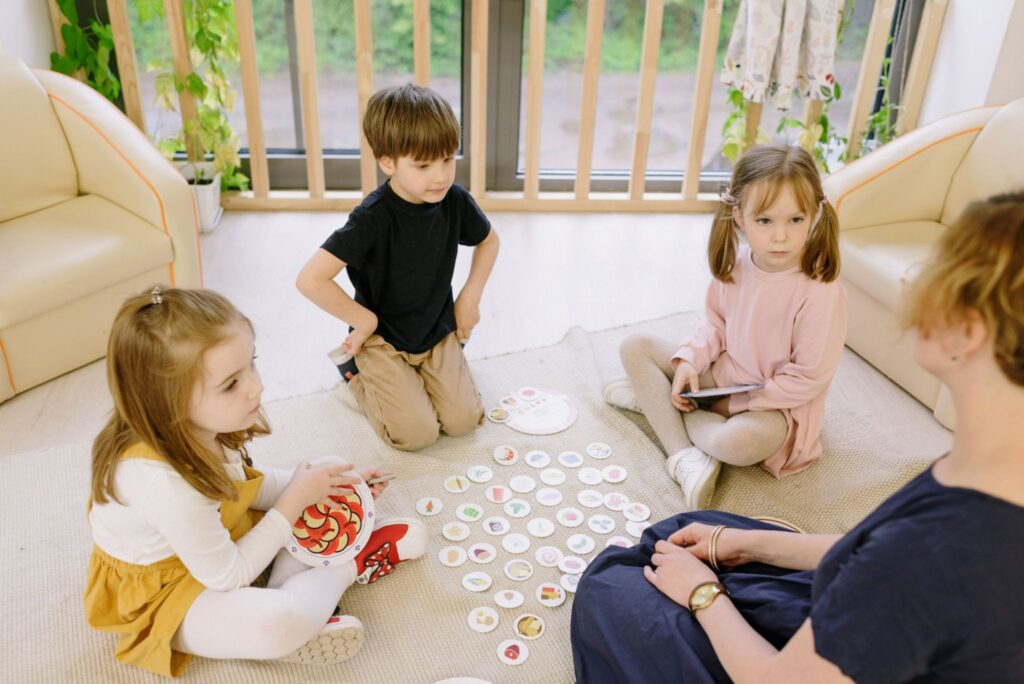
At Palme School, that's the whole point. Our Russian lesson isn't an app where a child sits alone, but a lively conversation: children talk with the teacher and each other, discuss, argue, and play with words. Essentially, it's the same thing that a tech-free day gives a classroom, live communication, only focused on the Russian language.
Our students are kids from four to seventeen years old. If Russian is already spoken at home, this is your choice. Program for bilinguals. If the language is completely new to the child, [they] start with Russian as a foreign language courses. Classes are held remotely, in groups of several people, and sessions are forty minutes long. Yes, it's via video call, but the experience is the complete opposite of sitting alone with an app: the child is in conversation the whole time, answering, asking clarifying questions, and laughing with others. The beginning is free and in two stages: first, a methodology specialist will have a call to assess the child's level, and then the child will join a live group session. Two such meetings are enough to decide if you like our approach.
Home

More and more American schools are trying out tech-free days, and teachers are noticing that without screens, children come alive: they communicate more, are more engaged in activities, and get distracted less. Behind this lies a simple truth: screens are a solitary thing, and they cannot replace live interaction. For a Russian-speaking family, here's a clear signal. The most important thing a child needs for language is live conversation, and the more genuine Russian speech is heard at home instead of another video in the feed, the stronger their native language grows. The publication discusses tech-free school days and how teachers are reducing screen time. Education Week.
What is a day without technology in school?
This is a day or lesson when the teacher consciously removes laptops, tablets, and phones from the classroom and conducts the lesson the old-fashioned way: with paper, books, and live discussion. The idea is for children to take a break from screens and return to direct communication with each other and the teacher. Educators who try such days note that the children are noticeably more active and engaged, and get distracted less.
Why are schools removing technology if they used to rely on it?
Because screen fatigue has built up. After the pandemic, almost every student got a device, and over time, teachers and parents started to notice the downside: children spend too much time on gadgets, which negatively impacts their attention, mood, and grades. "Tech-free" days help find a balance, not by completely abandoning technology, but by bringing back face-to-face interaction, which screens cannot provide.
How is this related to learning Russian?
Directly, because language lives in live communication. The more a child sits in front of a screen, the less real conversation they have during the day, especially in Russian, since almost all the surrounding content is in English. A screen-free day at school brings children back to spoken language, and this suggests the same to parents: for a child's Russian to grow, they need more live communication in it, not time spent on apps.