

Of all the world's playwrights, perhaps only Shakespeare is staged more often than Chekhov, and repertoire posters from Tokyo to Buenos Aires confirm this year-round, while the search query «Chekhov plays» leads to theater pages all over the globe. The man who wrote four plays that hold the world stage considered an entirely different pursuit to be the main work of his life.
By education and by his own calling he was a country doctor, treated peasants for free, built schools with his own money, went out to deal with epidemics, and for a long time considered writing a side job with which he fed a large family. He lived for forty-four years, almost half of that time with tuberculosis, which he diagnosed in himself early as a doctor, but acknowledged late as a man, and during that time managed to create several hundred stories and revolutionize the arrangement of European theater.
Forty-four years by dates
Click on the year to reveal what lies behind it. Read items are marked automatically.
Born in a port city in the south, where his father ran a grocery store. Work behind the counter began in childhood and ended late in the evening, after school.
The father went bankrupt and fled to Moscow to escape his creditors. The teenager stayed in Taganrog to finish his schooling, making a living by tutoring for three years and sending money to his family.
He arrived in Moscow, entered university, and almost immediately became the main breadwinner in the family, which besides him had five other children.
Short pieces under pseudonyms, paid by the line and for pennies. He had to be published in several publications at once, hence the dozens of signatures with which he filled a single issue.
He began his practice in Voskresensk near Moscow. In the same year, a symptom appeared that, as a medical professional, he understood completely and which for twenty years he had explained to himself otherwise.
A well-known older writer wrote to a young author that he was wasting real talent on trifles. With this letter, Chekhov began to take literature seriously.
The award for the collection «At Dusk» finally moved yesterday's magazine hack into the ranks of serious writers.
A cross-country trip to a penal colony island, a one-man census, prisons, barracks, conversations with exiles and their children.
He bought an estate near Moscow, where he lived for seven years, treated the peasants for free, and during the cholera year was responsible for a district of twenty-five villages.
The benefit performance audience expected a comedy, but instead got a play without clear explanations and with pauses instead of action. The author vowed never to write for the stage again.
The same text in a new acting style brought triumph, and the seagull moved to the theater curtain and stayed there forever.
Doctors demanded the south. On the built dacha «The Lady with the Dog» was written, nearby a garden was laid out, which he cultivated himself.
Elected to the Academy of Sciences in the belles-lettres department along with several of the era's major writers.
The wedding ceremony was arranged almost secretly, with a family dinner serving as a diversion. The play was staged at the Art Theatre that same year.
After Gorky's election to the academy was canceled by order of the authorities, Chekhov returned his title in disagreement.
The last play was staged in January, the author passed away in July at a German health resort where he had been sent by his doctors. He is buried in Moscow.
Boy from the shop on the coast of the Sea of Azov

He was born in 1860 in Taganrog, a port city in the south, where his father owned a grocery store, and his childhood was spent behind the counter of this shop, among customers, bills, and his father's severity, which went as far as flogging. Later, he would say a few bitter words about these years, which all biographers retell, and their essence is that he essentially had no childhood.
The shop went bankrupt when the boy was sixteen. The family fled from debts to Moscow, and he was left in Taganrog to finish his gymnasium studies. For three years he lived alone, earning a living by tutoring, selling off the remains of the household property, and sending money to his family. This experience explains much in his prose, including his complete lack of illusions about poverty and his ability to see the funny side where anyone else would only find hardship.
The doctor who fed his family with humorous stories

In Moscow, he entered the university's faculty of medicine and almost immediately began to be published in humor magazines under pseudonyms, of which the most famous was Antosha Chekhonte. They paid by the line and very little, so he had to write a lot and quickly, between lectures and shifts, and in the first years hundreds of short pieces passed through his hands, from captions for drawings to quarter-page anecdotes.
This school turned out to be the best possible one. The editors' requirement to fit within a specified length developed the very quality for which he is now studied in universities: the ability to strip away all explanations and leave a single scene that the reader would figure out on their own. By the late 1980s, the magazine hack had grown into a writer who received the Pushkin Prize of the Academy of Sciences, while medicine went nowhere, as he did not stop practicing until almost the end of his life.
A journey that contemporaries failed to explain
In 1890, already a well-known writer, thirty-year-old Chekhov traveled across the entire country to Sakhalin, an island of penal servitude nine thousand versts from Moscow, which took months to reach through impassable terrain, by horses and steamships. Friends tried to dissuade him, editors were perplexed, his health was already failing by that time, and he gave no clear explanation to anyone.
On the island, he conducted the population census entirely on his own, filling out by hand about ten thousand data cards for convicts and settlers, toured the prisons and barracks, talked with the children of exiles, and kept records of corporal punishment. From this grew Sakhalin Island, a dry, documentary book, completely unlike his prose. It fell into the hands of officials, and changes in the penal colony began in those same years, although historians are cautious in assessing the direct link between the book and the reforms. Such a trip gave nothing to the writer, but for the physician and the man it proved essential.
Melikhovo, three schools and an epidemic
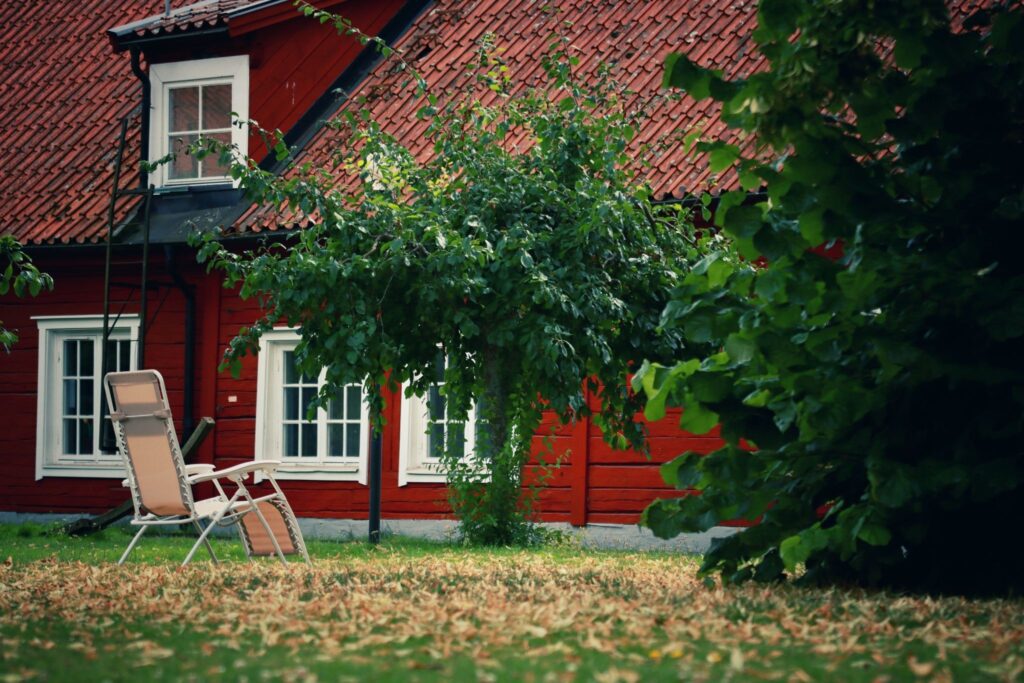
Upon his return, he bought a small estate, Melikhovo, near Moscow, and lived there for seven years, which he himself considered the best. The farming was managed poorly, but in the surrounding area there appeared three schools built with his funds, a bell tower, a road, and a post office, and he treated peasants from nearby villages as a doctor free of charge, including the cholera year, when his district had twenty-five villages and one medic for everyone.
In the same Melikhovo, «Ward No. 6,» «The House with the Mezzanine,» «The Man in a Case,» and his first two major plays were written. The combination seems incredible only from the outside, because for him personally, medicine and literature were two halves of the same work, which he once joked about by calling medicine his lawful wife and literature his mistress.
How The Seagull failed and what came of it
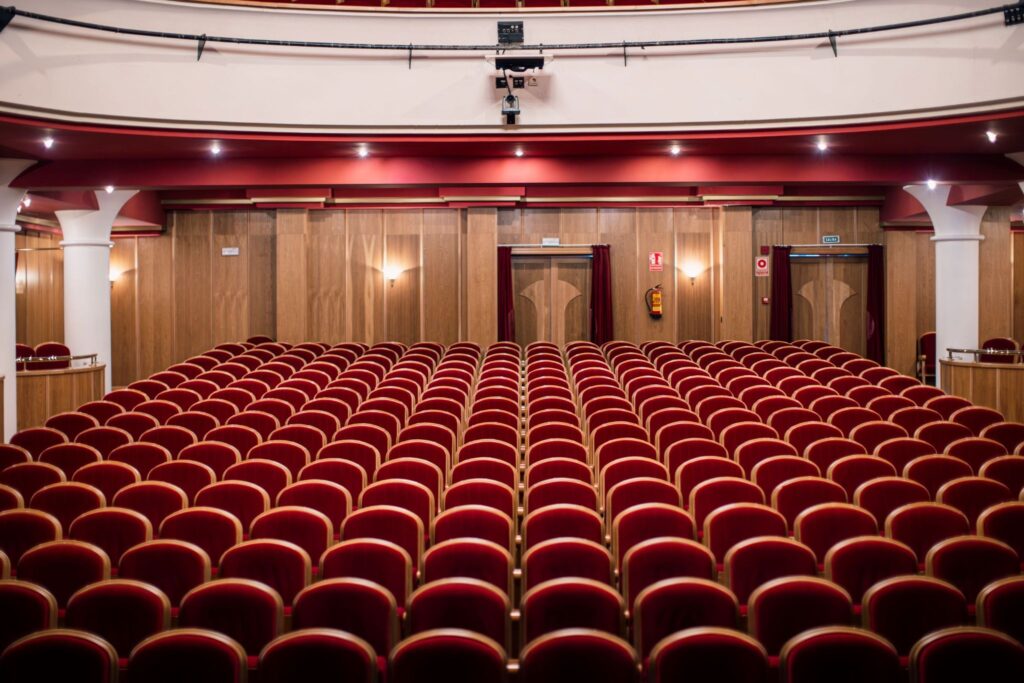
On an autumn evening in 1896, The Seagull was performed at the Alexandrinsky Theater for the benefit of Elizaveta Levkeeva, a public favorite who played comedic roles. She did not take part in the play itself, but the auditorium was packed with her fans who had come to laugh, and they began laughing from the very first scenes, where the characters talked about literature and remained silent about what mattered most. By the third act, the theater was filled with hooting and catcalls. Nina was played by a young Vera Komissarjevsky, and even her acting was not enough to hold this audience. The author left the building, wandered the city until morning, stayed with acquaintances, and left St. Petersburg only the next day, vowing never to return to the stage.
Two years later, the play was staged by the newly created Moscow Art Theatre, and the success was such that the seagull became the emblem on the curtain, where it has remained forever. The text stayed the same, but the way of acting changed. Stanislavski and Nemirovich-Danchenko demanded that the actors behave naturally instead of declaiming, with pauses, turned away faces, and muttered asides. Thus, the theatre as it is known today came into being, and it was born from a play that had once been booed off the stage.
What to read and where to start
Eleven things he is known for, from three-page stories to his last play.
| Product | Genre | Year | What to read and why |
|---|---|---|---|
| «The Death of a Government Clerk» | Story | 1883 | A minor clerk sneezed on a general's bald head and died of his own fear of his superior. Three pages that make a convenient starting point for getting acquainted. |
| «The Chameleon» | Story | 1884 | The police warden changes his mind about a dog bite six times in a row upon learning whose dog it is. A prime example of how character is revealed through a single plot twist. |
| «Ward No. 6» | Novella | 1892 | A psychiatric hospital doctor started a conversation with a patient and ended up behind the same door himself. His darkest possession—which Lenin valued and which is analyzed in medical ethics courses. |
| «The House with a Mezzanine» | Story | 1896 | A story of unfulfilled love and a debate over whether small practical work brings any benefit. Written in Melikhovo, where the author was engaged in precisely such work. |
| «The Man in a Case» | Story | 1898 | A Greek teacher, afraid of everything in the world, keeps an entire town in fear. This is the origin of an expression still used to describe a certain personality type. |
| «The Lady with the Dog» | Story | 1899 | A resort romance that turned out to be the only true love in the lives of both. Written in Yalta, the ending is open, and that is so Chekhov. |
| The Seagull | Play | 1896 | It flopped at its premiere, but two years later brought fame to the Art Theater. About how youth demands new art, but gets a broken life. |
| «Uncle Vanya» | Play | 1897 | A man suddenly realizes that he has spent twenty-five years working for a hollow idol. A play about a life lived in vain, the quietest of the four. |
| «Three Sisters» | Play | 1901 | The heroines spend the entire play getting ready to go to Moscow and never leave. About unfulfilled dreams spoken aloud, the action is driven by conversation. |
| «The Cherry Orchard» | Play | 1904 | The estate is being sold for debts, and the family pretends until the very last moment that this is not happening. The author considered the play a comedy, but the theater performs a drama. |
| «Sakhalin Island» | Book of essays | 1895 | The result of the hard labor trip, written dryly and medically, with numbers and tables. His only documentary book. |
For short stories and novellas, the year of first publication is indicated; for plays, the year they reached the audience or reader; for non-fiction, the year of separate book publication. «Uncle Vanya» is listed by its 1897 publication, the play premiered at the Art Theatre in 1899, while «Sakhalin Island» was serialized in a magazine starting in 1893 and was published as a book in 1895.
Plays in which almost nothing happens
The four major plays, The Seagull, Uncle Vanya, Three Sisters, and The Cherry Orchard, run counter to everything dramaturgy taught before him. There is no plot in the traditional sense, no one hatches plots or delivers decisive monologues, the characters drink tea, complain of boredom, plan to go to Moscow and never go, while the estate in the meantime is sold for debts.
The main thing in these plays is hidden beneath the words, and this technique has been used by theatre and cinema worldwide ever since. The characters talk about the weather, the heat in Africa, or falling atmospheric pressure, and through these lines everything they are unable to say can be read. Hence the famous Chekhovian pause, and hence the eternal dispute over the genre, because the author called The Cherry Orchard a comedy, while Stanislavski staged it as a tragedy, and this dispute remains unresolved to this day because the text allows for both interpretations.
Yalta, Knipper and the last five years
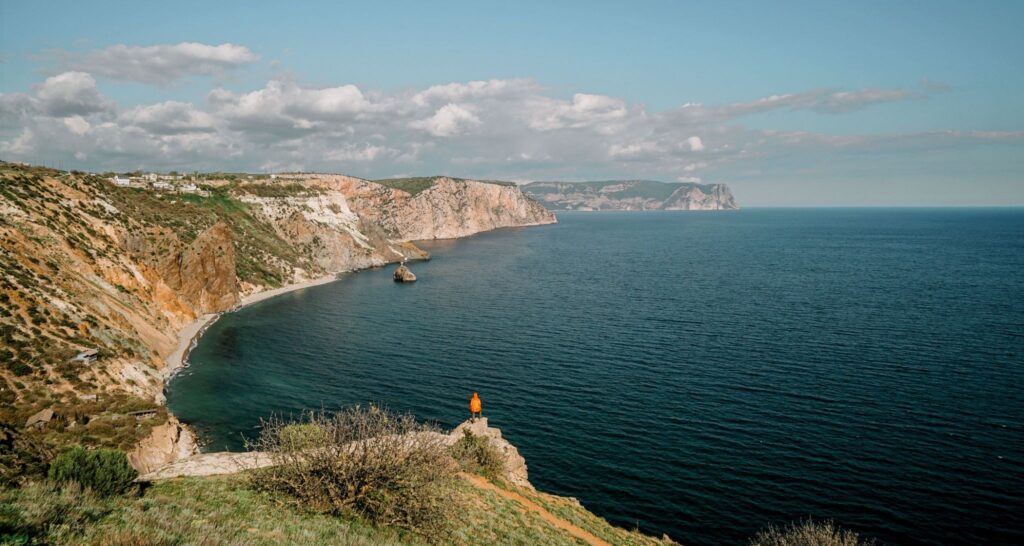
The illness that he long concealed even from those closest to him forced him to move to Yalta, where in the autumn of 1899 a house, now known as the White Dacha, was completed. It was there that he wrote «The Lady with the Dog,» a Yaltan work both in its setting and in its atmosphere. From there he wrote letters to Moscow, which became a distinct part of his legacy, met with Tolstoy and Gorky, tended to his garden, and yearned for the theater, which was a two-day journey away.
He married Olga Knipper, the leading actress of the Art Theatre, in May 1901, arranging the wedding in a way he might have written in a short story. Relatives were invited to a dinner in Moscow, while the bride and groom were married in an empty church on the other side of town and left immediately afterwards. Their marriage thereafter fit almost entirely into letters, because she acted in Moscow while the south was prescribed for him, and in a little over three years they sent each other several hundred letters. In the summer of 1904, doctors sent him to the German resort town of Badenweiler, where he died in July at forty-four years of age. His body was brought back to Moscow in a railcar marked «Oysters,» which was written about a lot afterward, and in this detail lies all the irony that fills his own stories.
Six phrases that are repeated without him
Five of the phrases have a precise address, a play, or a dated letter. The sixth does not, and this is stated outright, because a multitude of formulas have grown up around Chekhov that he pronounced differently or did not pronounce at all.
Everything in a human should be beautiful
«Uncle Vanya, Doctor Astrov's line
The continuation lists the face, clothing, soul, and thoughts. The phrase was long ago detached from the play and is spoken seriously, although in Chekhov it is uttered by a person who is dissatisfied with himself.
Brevity is the soul of wit
Letter to brother Alexander, 1889
Advice to a novice writer that became the main slogan of everyone who teaches writing. In the letter itself, it referred to a specific manuscript that needed to be shortened.
Chekhov's gun must go off
It is known from letters and memoirs, in various versions
The principle spread through playwriting textbooks all over the world under the name of Chekhov's gun, although the author himself did not call it that and spoke about it on various occasions, each time differently.
To Moscow, to Moscow
«Three Sisters»
The spell that the heroines repeat throughout the play and that is never performed. Today, the phrase is used for any dream that has been put off for years.
All Russia is our garden
«The Cherry Orchard, lines of the student Trofimov
It is said about the future, which the young hero sees as bright, a minute before the estate is auctioned off. The irony of this juxtaposition sustains the entire ending.
Medicine is a lawful wife, literature is a mistress
Letter to the publisher Suvorin, 1888
The joke with which he explained the double life of a doctor and a writer. He practiced both professions in parallel until almost the end and seriously considered the first to be his main one.
What the reader needs to know who takes it up in Russian
Chekhov is more convenient than most Russian classics for those learning the language. The sentences are short, the structures are simple, there are no huge periods like Tolstoy's, and a four-page story can be mastered in one sitting. It is sensible to start with early funny things like «The Chameleon» or «A Horse's Name,» where the whole point lies in a single twist.
His difficulty is different, and it is not in the vocabulary. The main point is said between the lines, the irony relies on intonation, and the ending often cuts off where the reader expects a conclusion; therefore, upon the query «Anton Chekhov,» English-language analyses honestly warn that upon a fast reading, a story can be mistaken for a trivial sketch. A simple rule helps. Having finished reading, one should ask oneself what the character wanted to say and why he remained silent. For comparison with an author of a completely different make-up, it is useful to look into the analysis «Crime and Punishments», where everything is spelled out loud across five hundred pages, or into a biography Leo Tolstoy.
Home

In his forty-four years of life, Chekhov managed to train and work as a doctor, build three schools, travel to the penal colony of Sakhalin, and write several hundred short stories along with four plays that are performed all over the world today. His prose taught literature to do without explanations and morality, his drama shifted the main action to the subtext, and the Moscow Art Theatre, which grew out of the failed «Seagull,» established a style of acting that is still used today. At the same time, he considered himself a physician to the very end, called literature a side pursuit, and spoke skeptically about his own future in Russian letters, heavily underestimating, as it turned out, both of his professions.
Chekhov should be read aloud
Chekhov is good to read aloud and together, because half of his meaning is in the intonation, and intonation appears when there is someone to talk to. At Palme School, children from four to seventeen years old study Russian online in small groups, where short stories are analyzed in full during a lesson, they argue about the endings, and learn to notice what remained unsaid. You can see how it works at two free lessons, the first of which is an introduction with a methodologist who selects a group based on age and level, and the second is a trial lesson with a teacher and other students.
Frequently Asked Questions
Who was Anton Chekhov and what is he famous for?
A physician by training and practice who wrote short stories between seeing patients, and at the same time one of the most performed playwrights on the planet. Short lifespan, from 1860 to 1904.
Which of Chekhov's plays are considered his major works?
The Big Four took shape over the last nine years of his life, from The Seagull to The Cherry Orchard, with Uncle Vanya and Three Sisters in between. They have remained staples of the theatrical repertoire for over a century.
Why did Chekhov have so many pseudonyms?
Humorous magazines paid by the line, an author could publish three pieces in a row in a single issue, and signing them all with one name was inconvenient. He is known to have had several dozen signatures, the most frequent being Antosha Chekhonte, derived from his high school nickname. He began signing his real name when he took literature seriously.
Is it true that Chekhov talked about a gun on the wall?
The formulation is known from letters and memoirs of contemporaries, moreover in several different variants, so there is no verbatim canonical text. The meaning is the same everywhere: there should be no superfluous details in a play, and if an object is shown, it must go off.
What is a zemsky doctor?
A doctor who served in the local self-government system that appeared in Russia after the reforms of the sixties. Such a doctor was assigned a district of several dozen villages, consultations were free of charge, and duties included smallpox vaccination, childbirth, dealing with epidemics, and traveling across unpaved roads in any weather.
How did Tolstoy feel about Chekhov?
He held the stories in very high regard and would reread some of them aloud to his household. He did not accept plays at all, and a well-known story has survived of how he announced to Chekhov that his plays were worse than Shakespeare's, despite the fact that Tolstoy could not stand Shakespeare himself.
What is left of Chekhov's houses today?
Both main houses became museums. In Melikhovo near Moscow, the annex where «The Seagull» was written has been preserved, and the estate with its garden has been restored. In Yalta, the White Dacha operates, where the study furnishings and the trees he planted remain.