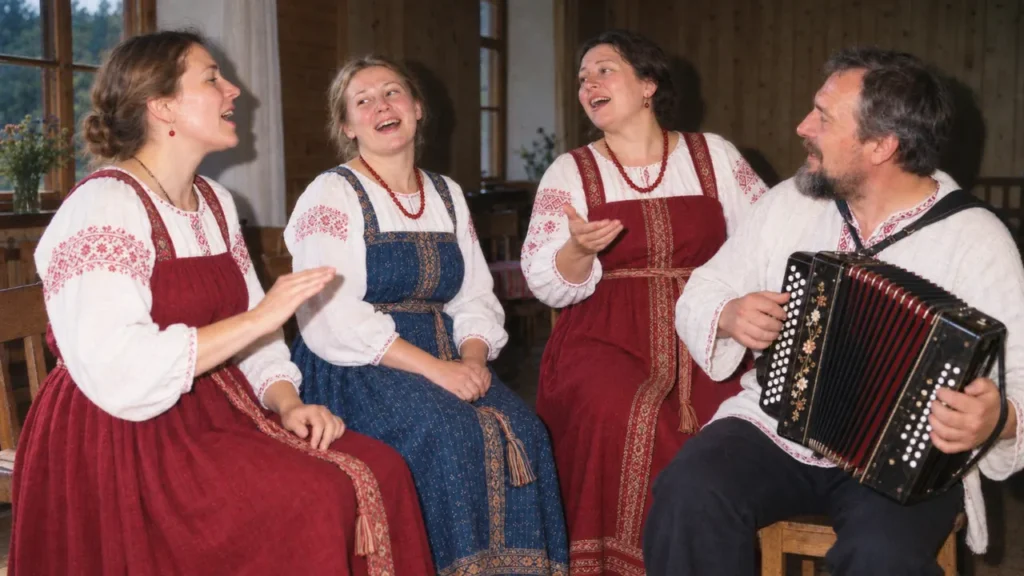
In 1860 in Saratov, amateurs staged an act from the drama The Bogyl. Among the inserted numbers was a song performed by the author of the music himself, composer Ivan Larionov. The audience received it so warmly that the singer was called back for an encore. Saratov local historian Nikolai Khovansky wrote about this evening in his 1884 essays.
The song was called «Kalinka».
Today it opens almost any compilation of Russian folk songs. It is sung by choirs, danced to on stage, and recognized abroad from the very first bars. And at the same time, it has an author, a year, and a city.
Then what does the word «narodnaya» even mean?
The author who stopped being named
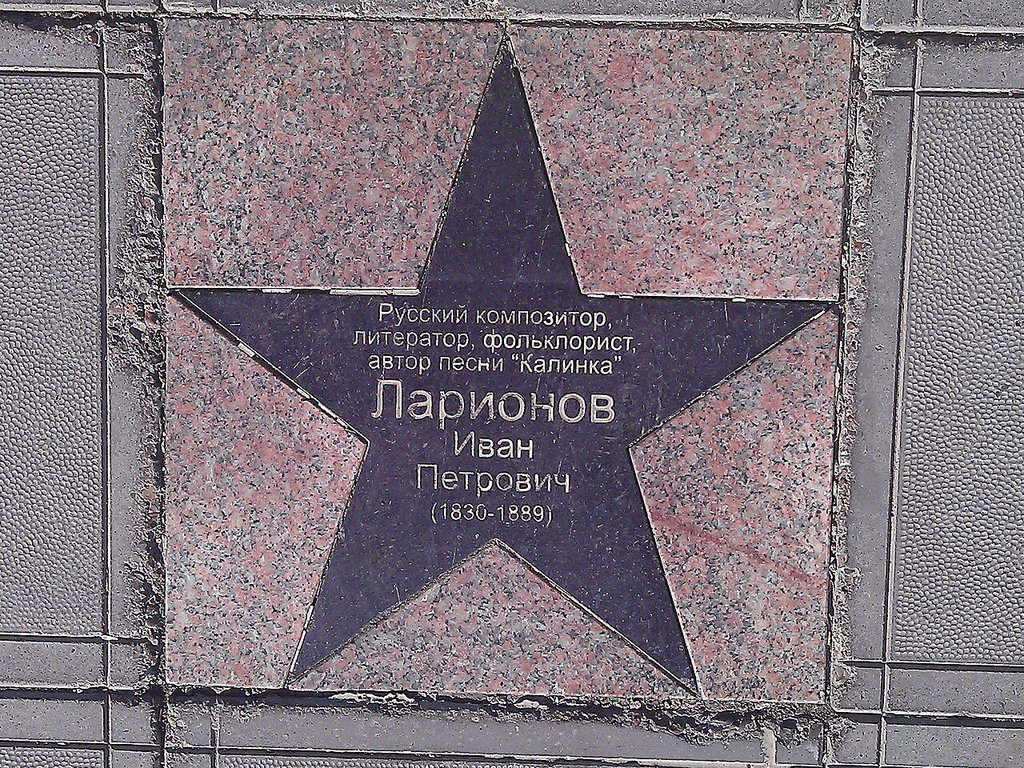
Larionov was not a chance figure in this story. He was seriously engaged in folklore, traveled around the provinces, and recorded the melodies of about four hundred folk songs. He composed «Kalinka» in the same spirit, which is why it sounds as though it is two hundred years old.
Then the song started making the rounds. Larionov gave it to the repertoire of Dmitry Agrenev-Slavyansky's choir, which toured Russian cities with Russian songs, and in the 20th century, the Alexandrov Ensemble made it famous far beyond the country's borders. With each step, the author's name was heard less and less. On the English Wikipedia, the article about it is called Kalinka (1860 song), and this date in the title alone surprises the reader, who is used to considering the song ancient.
The text itself is structured in a very folk-like manner. «Sosenushka» (little pine) instead of pine, "kalinka" ( Guelder-rose) next to "malinka" (little raspberry), endearing forms are abundant on every line. The chorus "ay-lyuli, lyuli", like many traditional song choruses, maintains the rhythm and melody.
Song without an owner
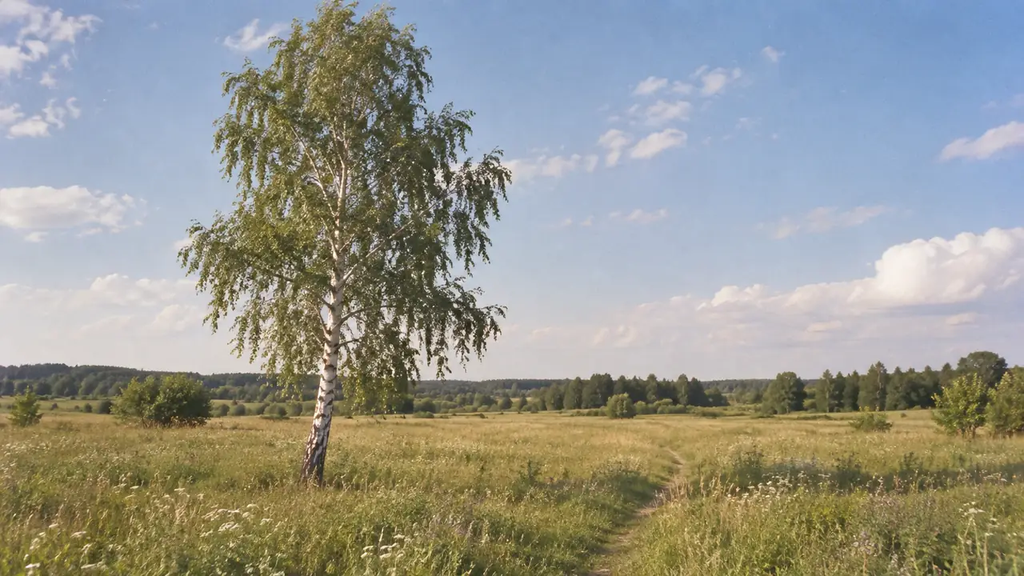
For comparison, a traditional folk song by an unknown author is needed. «In the Field Stood a Birch Tree» fits best. In 1790, it was included in the collection by Nikolai Lvov and Ivan Pratsch as a folk song. In the 1870s, Tchaikovsky already used it as a ready-made melody for the finale of his Fourth Symphony.
We talked in detail about the birch tree itself and the round dances around it in the article about the birch as a symbol of Russia. One thing is important here. Such a song has no known first performance that could be found in a newspaper.
To each their own song
The second characteristic of a folk song is harder to notice. It lives in variants.
This is clearly seen in «Korobeiniki,» which is also frequently called «Korobushka.» The words came from Nikolai Nekrasov's 1861 poem, meaning the text does have an author. But afterwards, the song took on a life of its own the way folklore does. The beginning of the poem was adapted in various ways, several different melodies were composed for it in the late 19th and early 20th centuries, and Yakov Prigozhy's arrangement became the most popular. The text and melody still exist in several versions today.
Outside of Russia, this melody is known by an entirely different name. In 1989, Japanese composer Hirokazu Tanaka arranged it for Tetris on the Game Boy, and ever since, for millions of children, it has simply been the Tetris theme. They have no idea about the peddler with a full pack of goods who invites a girl to choose a gift for herself. In English-language collections of Russian folk music, such songs often sit right next to songs with an unknown author, and on the list, you can't tell one from the other.

A romance assembled piece by piece
It also happens that a song has multiple authors, yet in collections they still wrote «music by an unknown author.».
«Dark Eyes began as a poem by Yevgeny Grebinka, published in Literaturnaya Gazeta in 1843. The version of the romance known today took shape in the 1880s in an arrangement by Sergey Herdel based on a waltz by Florian Hermann, and it was first performed at the Yar restaurant in Moscow. Abroad, the romance was popularized by Feodor Chaliapin, who performed it with modified lyrics and additional verses.
What it has in common with «Kalinka» is this: a well-known author is gradually fading from public memory. But «Dark Eyes» is structured more complexly. The author of the lyrics, the original music, the arrangement, and the later verses all exist separately, while the listener gets a single song and rarely thinks about how many people put it together piece by piece.
A dittty that was composed yesterday
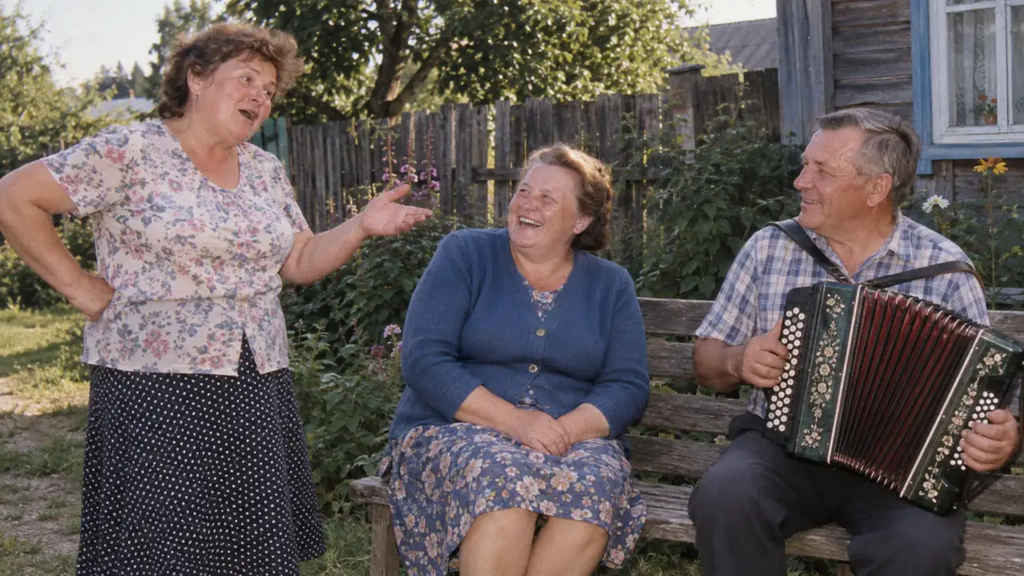
Is it possible to see how a folk song is born right before your eyes? It is, if you listen to chastushki.
The name «chastushka» was established in print by Gleb Uspensky in 1889. Thus the writer referred to short songs in a newspaper article, which, according to his observation, were composed almost daily and in every village. The name resonates with «chastyye» (frequent), fast-paced dance tunes, and the chastushka spread along with the accordion.
It is structured as simply as it gets. Usually four lines, a rhyme, a single occasion. Someone made up a verse about a neighbor or a boss, another person changed one word, and a year later no one remembers how it all started. That is how real folklore works.
Where does the border run
The main feature of folklore, if you put all the examples together, is not even anonymity. A folk song has no single definitive text; it passes from person to person and changes along the way. «A Birch Tree Stood in the Field» and chastushki follow this rule.
«Korobeyniki» represents an intermediate case. The author of the original text is known, but the song has long lived in different melodies and word variants.
It is different with «Kalinka.» We know who, where, and when wrote it, it is mostly sung in its original form, and it is mistaken for an old folk song because the author's name has faded from mass memory.
The melody is already known, there are no words yet
A child growing up abroad might well have heard «Kalinka» or the tune from «Tetris.» In that case, they already have the melody. There are no words, affectionate diminutive forms, the peddler, the maiden, or the pine tree under which they are asked to be laid to sleep.
Try one simple thing at home. Put on Kalinka and ask to find by ear the words that sound diminutive and affectionate, like «sosenushki» [little pine trees]. Then together find their standard forms and see where it comes easily and where you have to think. And finally, compose a chastushka together about school or a cat. Four short lines, and it is easiest to start with the rhyme in the second and fourth. It will have an author, but in a month, perhaps no one will remember them anymore.
It is generally convenient to analyze a song as living Russian text: listening, guessing familiar words, noticing forms, and trying to compose your own lines. At Palme School, children from four to seventeen years old study Russian online in small groups, and you can get to know the school at two free lessons. First, the methodologist will determine the child's level, and then the child will try a class in the appropriate group with the teacher.
Frequently asked questions about Russian folk songs
Who wrote the song «Kalinka»?
The composer and folklorist Ivan Larionov in 1860, for an amateur play in Saratov. He was also the first to sing it. Later, the song was included in the repertoire of the Agrenev-Slavyansky choir, and with the Alexandrov Ensemble, the song gained wide international fame. At the same time, the song was long mistaken for a folk song.
Why are author's songs sometimes mistaken for folk songs?
Such songs are written in the folk style, quickly spread among choirs and at feasts, and the author's name gradually fades from memory. That is what happened with «Kalinka» by Ivan Larionov. The authors of «Korobeyniki» to Nekrasov's lyrics and the romance «Ochi chernye» (Dark Eyes) to Yevgeny Grebinka's poetry are also known, but many listeners have long perceived them as old Russian folk songs.
What is a chastushka?
A short, usually four-line song with a fast rhythm, most often humorous, sung to the accordion or unaccompanied. Dozens of new verses can be sung to the same tune, so the author of individual lines is quickly forgotten. Chastushki are still composed today.
How does a romance differ from a folk song?
A romance is a lyrical vocal piece with instrumental accompaniment, usually set to original poetry, and it generally has a known poet, composer, or arranger. A folk song lives in oral tradition, often with no established author and in multiple variants. At the same time, an original romance can also begin to be perceived as a folk song over time.