

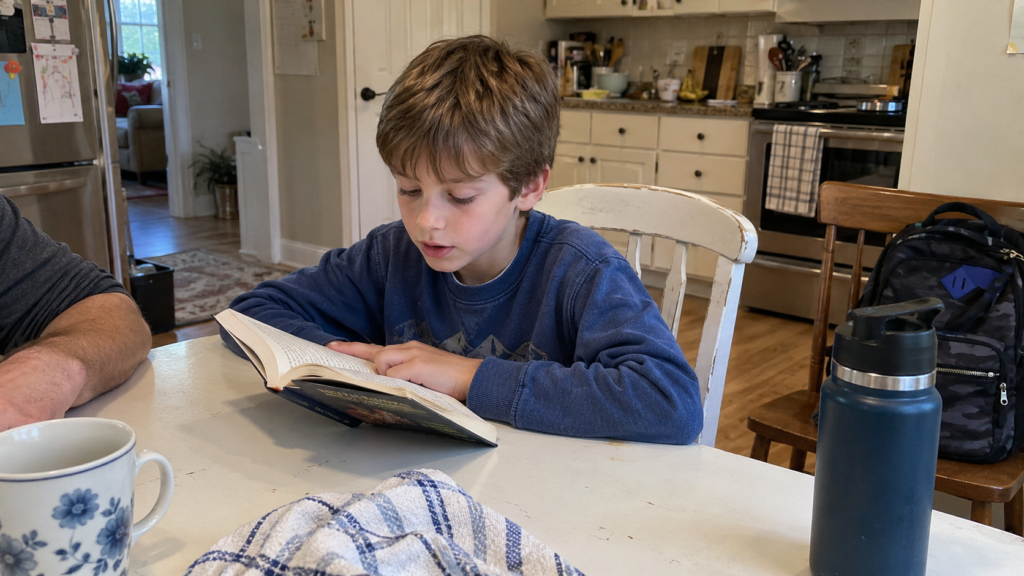
The child reads out a short winter story aloud, in a rough, almost uncoordinated manner, and on one line he says, «They started sculpting a snowman.» The book is printed with «snowmen» printed on it. You correct him, and he looks surprised and says that he actually read it that way. A minute later, they are already arguing about how many snowmen are actually made in the winter, and the matter never gets resolved until the end of the page.
Is this a familiar situation? Next, we’ll discuss one such substitution from our reading lesson, along with a five-minute exercise. The text is always in front of your eyes, and the child trains themselves to find the place where the spoken word diverges from the written word.
The last letters on the page
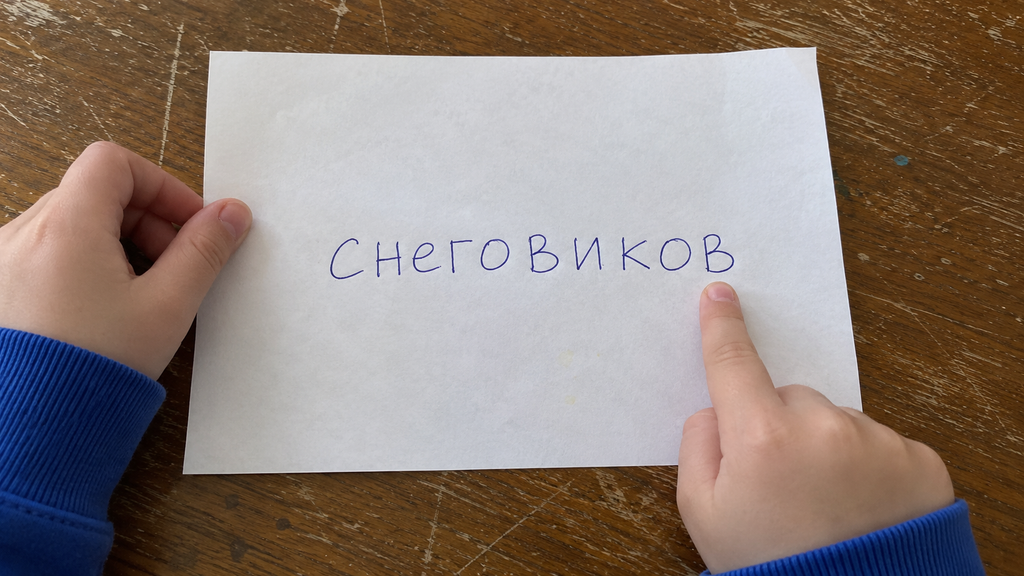
Look at the word that caused the pause. The beginning of «snowman» matches. Next, the book prints «-ov», but the child pronounced «-a».
The letters, however, remain unchanged. They stand in their place, and they can be shown with a finger, outlined with a pencil, and read separately. Of the entire evening’s argument, this is the only thing that can be verified directly on the page; everything else has to be reconstructed from memory and intuition.
What the student replied
During one of our reading lessons, the children read a short story called «Winter Day» in turn. At home, they had already read it, but in class they were presented with it in an unusual format: the lines had to be read from right to left, one sentence per person. The teacher reminded them that the point of this assignment was not speed but accuracy.
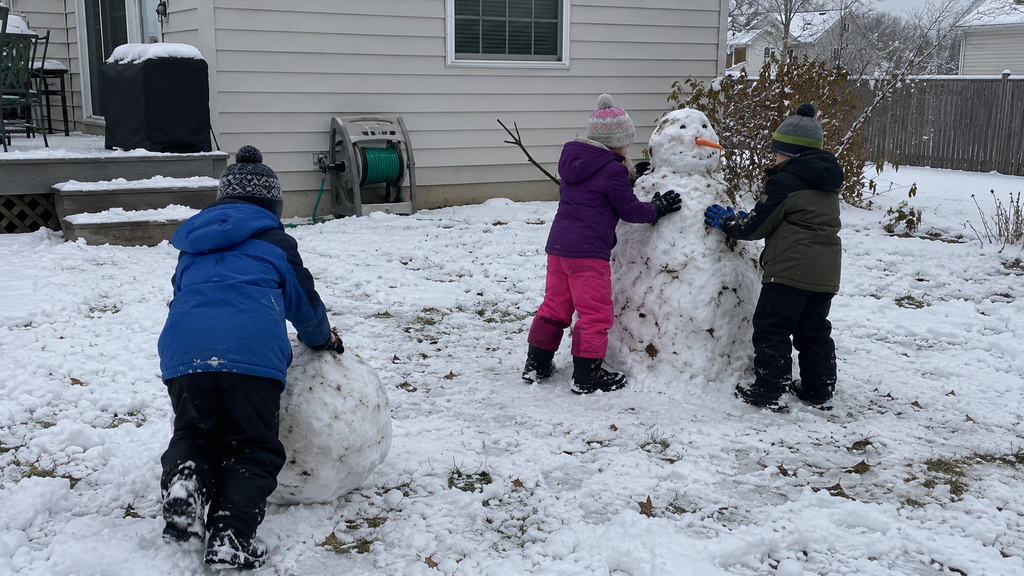
The student was given the assignment «They started sculpting snowmen.» She read «The Snowman.» The teacher returned it to her and reminded her that there are many children in the story. She then went on to discuss the essence of the matter. They all make one big one, so why make many small ones when you can make one?
There is a logical explanation behind this. The girl had her own picture of a winter yard, and she immediately added her own details. First they roll small lumps of snow, then they connect them, and what you get is one big snowman; usually they sculpt it all together. It’s interesting that a little further on in the story, we already learn about one snowman; they make his eyes out of ice cubes. The student’s picture with this line fits perfectly.
In the proposal she read, something else is printed.
What this remark does not explain
One would immediately conclude that the child understood everything correctly and simply skipped the ending. A replica of such a conclusion does not give any information. It shows what plot the student imagined and why the «snowman» option seemed appropriate to her. Why did that particular word sound like that, one cannot say from a single answer. She could not finish reading the word to the end, could see the letters and decide that the story was wrong, could get confused by the unusual direction of the lines.
To get back to the word now, it is not necessary to first establish the reason for the replacement. What can actually be done is not to argue about snowmen. How many of them were made in the usual backyard, how many were made in childhood at your house, how many are made in the story that follows—all of this is a conversation about winter. The line on the page from such a conversation does not change, and for a child who defends their own view, such a dispute can be perceived as a lack of trust in their explanation.
The end or the little things
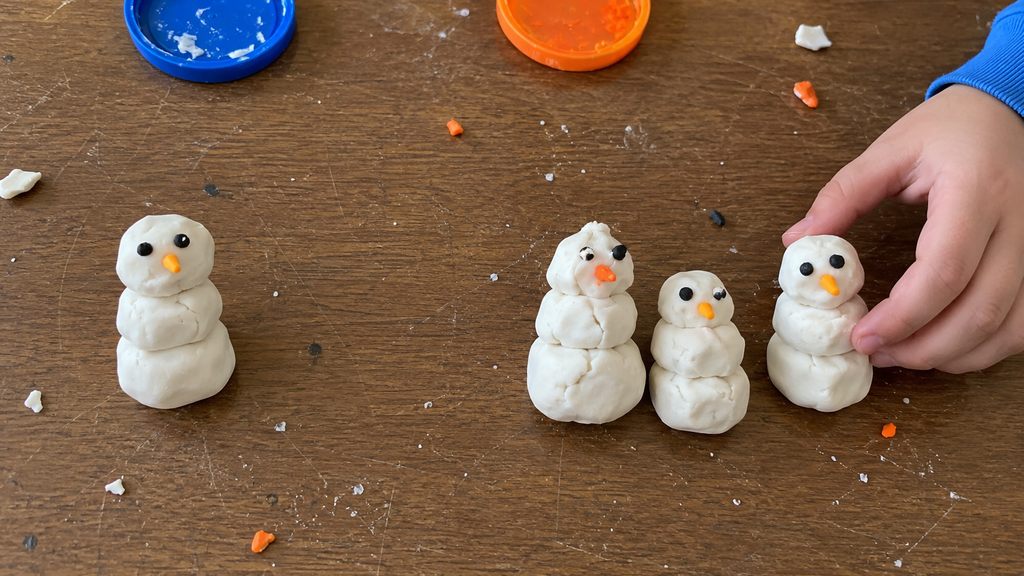
The most common objection sounds calm and reasonable. He understands the meaning though; he’ll read it carefully when he grows up.
In this sentence, the ending is the point. «They started sculpting a snowman» tells the story of one person. «They started sculpting snowmen» tells the story of several people. The words are almost identical, but the endings are different: «-a» and «-o». Replacing the ending of a word can change the meaning of the sentence, even when all the other words are read without a single error.
Therefore, it is important to return to the printed word and check what exactly is being said. The mark of correctness has nothing to do with it. Without such verification, the child continues to read their version of the story and doesn’t even notice that it differs from the text.
Two more such replacements in the same story
In the same lesson, the «snowmen» weren’t the only ones. A little earlier in the story, the sentence «The trees have put on white coats» was read out in unison. The student started it with «The tree has put on coats.» He corrected it to «the tree has put on coats,» and the student who picked up the end of the sentence said «coat» instead of «coats.».
Three replacements in one short text, and all three in one direction. Instead of several, there was one in each. Why did this happen in this lesson? It’s impossible to understand why it happened on one occasion, and there’s no point in summarizing here. One can notice another difference. In all three cases, the differences are visible on the page, at the end of the word. In all three cases, one can return to the word and compare the printed text with the spoken one.
How to get back to the word without a dispute
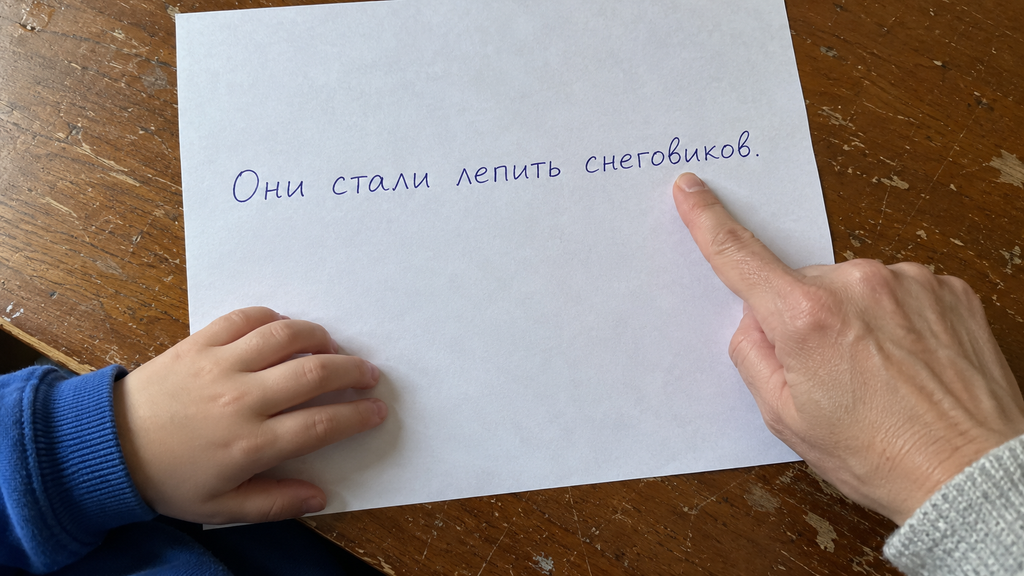
Instead of «wrong again,» and instead of telling how to make snowmen, just three sentences told in order will suffice.
«Look at the last letters.».
«Read the word whole.
«Is it written here about one snowman or about several?»
Order is important here. If the child asks how many there are in the beginning, they will answer according to their own picture and will be right in their own way. They have already formed their own version of what is happening. The question of meaning works only when the answer has already been taken from the page. First the letters, then the word as a whole, then the meaning.
Such an amendment does not sound like an accusation. An adult corrects without reproaching And asks again to look at the place where the answer is written. Sometimes, even after the second phrase, the child can already hear the difference and correct himself before the question is asked.
When the beginning of a sentence is lost at the end of the sentence
This situation is easy to confuse with another one that looks similar. Sometimes a child reads slowly, in syllables, and by the end of the sentence they no longer remember where it started. The difficulty lies in holding onto the sentence as a whole, and that’s where help comes in. division into semantic parts.
Here we address another difficulty: the child substituted another word for the printed form. It is impossible to judge how accurately he understood the entire story based on this substitution.
Five minutes with one sheet
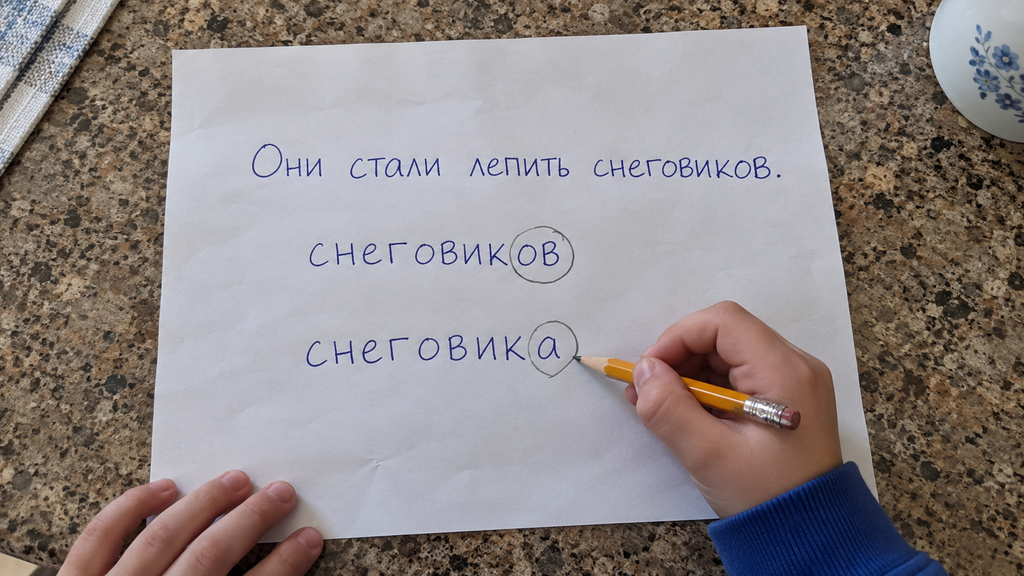
Any sentence from the book that the child is reading now would be suitable for the exercise, as long as it contains a word where the ending changes from «one» to «many» or vice versa. Write this sentence down in large letters on a piece of paper. Underneath it, write down two forms of the word, the printed one and the one that was pronounced. Snowmen. Snowman.
Ask the child to circle the letters that are different. In our examples, the letters are different at the end of the word. Then have them read the sentence again, in its entirety, and say whether it is about one person or about several people.
That's it for the assignment. The text is always open; there's no need to guess; the child just checks what he/she has said against what he/she sees. One such sheet of paper won't be enough to make the child never change the ending again. But it does give him/her a way to find that place for themselves.
Below is a training exercise that is built in the same way. On the screen is printed a sentence with one word replaced by another. You need to find that word, mark the letters that distinguish it, and read the sentence again.
What was written and what was said
The text is always in front of your eyes; you don't need to guess anything. In every sentence, one word was heard when it was read in a different form. Find it, mark the letters that distinguish it from the printed text, read the sentence again and choose the picture.
Proposal 1 of 6
Printed in the book
They started sculpting snowmen.
It was heard when it was read out
.
Find the word that was pronounced differently than it was written.
Here is the printed word. Mark the letters that distinguish it from the sound of the word «snowman.».
Now read the printed sentence out loud again, in its entirety.
Which picture fits the printed proposal?
Proposal 2 of 6
Printed in the book
Mom bought apples at the market.
It was heard when it was read out
.
Find the word that was pronounced differently than it was written.
Here is the printed word. Mark the letters that it differs from the sound of «apple».
Now read the printed sentence out loud again, in its entirety.
Which picture fits the printed proposal?
Proposal 3 of 6
Printed in the book
The grandmother saw the cats.
It was heard when it was read out
.
Find the word that was pronounced differently than it was written.
Here is the printed word. Mark the letters that distinguish it from the sound of «cat».
Now read the printed sentence out loud again, in its entirety.
Which picture fits the printed proposal?
Proposal 4 of 6
Printed in the book
Mushrooms are in the basket.
It was heard when it was read out
.
Find the word that was pronounced differently than it was written.
Here is the printed word. Mark the letters that distinguish it from the sound of «mushroom».
Now read the printed sentence out loud again, in its entirety.
Which picture fits the printed proposal?
Proposal 5 of 6
Printed in the book
Pencils are on the table.
It was heard when it was read out
.
Find the word that was pronounced differently than it was written.
Here is the printed word. Mark the letters that distinguish it from the sound of «pencil».
Now read the printed sentence out loud again, in its entirety.
Which picture fits the printed proposal?
Suggestion 6 out of 6
Printed in the book
Dogs are walking around in the yard.
It was heard when it was read out
.
Find the word that was pronounced differently than it was written.
Here is the printed word. Mark the letters that distinguish it from the sound of «dog».
Now read the printed sentence out loud again, in its entirety.
Which picture fits the printed proposal?
One phrase for every adult
If the evening reading falls to the second parent, they only need one sentence instead of «read it again.» Look at the last few letters.
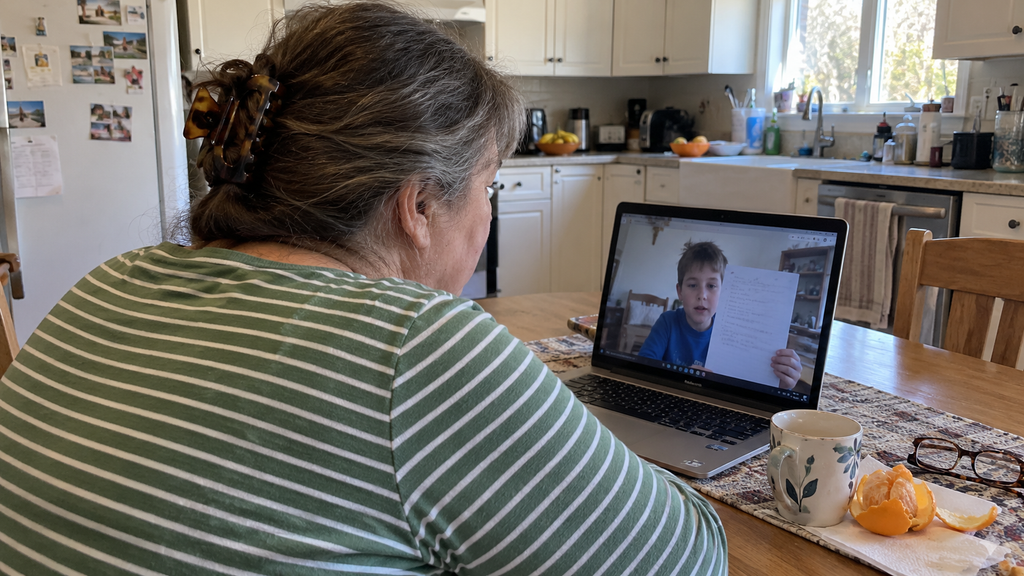
The grandmother, whose grandson reads out the words over video link, will benefit from the same thing, plus one request. The dispute over how many snowmen she made as a child can be put aside for now and have the grandson bring the book closer to the camera and point to the end of the word with his finger. The camera will also show it to the grandmother.
For the Saturday School teacher, a worksheet with two forms of the same word might be suitable. In class, it can be done in a minute, on the board or on a card, for any text that the class is currently reading.
Snowman and snowmen
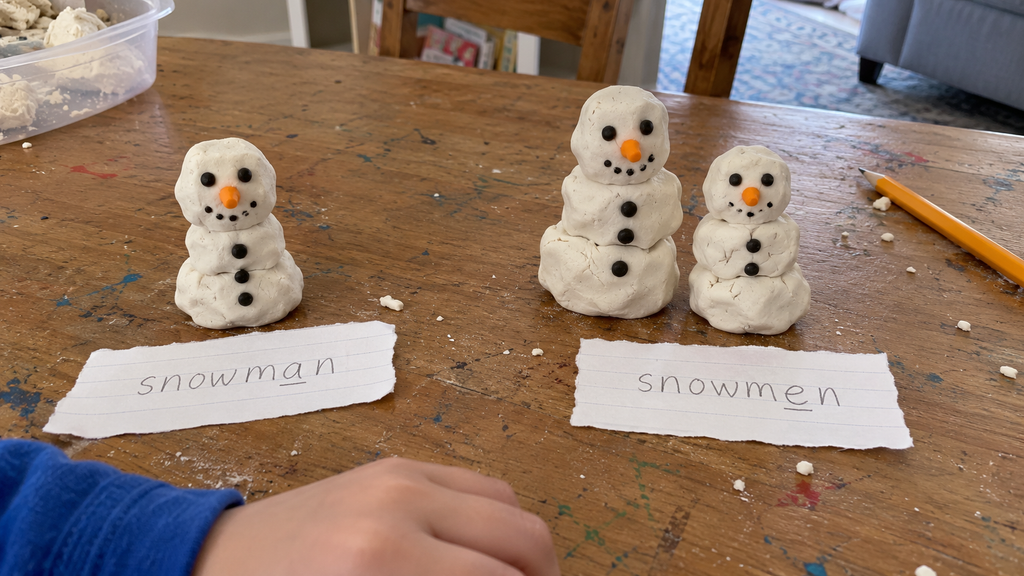
In English, which the child hears every day, the number sometimes changes right inside the word. One snowman, several snowmen, changes the vowel before the last letter.
In the pair of «snowmen» and «snowmen,» the difference is at the end. In both pairs, a single initial word is not enough to distinguish the forms. The word must be checked in its entirety, down to the last letter, both in the Russian book and in the English one.
In the «Reading School» classes at Palme School, children aged four to fourteen transition from reading by syllables to fluent and meaningful reading. They discuss what happened to the characters and retell what they have read in their own words. The classes take place online in mini-groups or individually.
You can start with two free lessons. First, the methodologist determines the child's level and helps choose a program; then the family meets the teacher at a free lesson.
Sign up for free lessonsFrequently asked questions about guessing words while reading
The child guesses the words when reading, is that bad?
Sometimes a child says the expected word instead of the printed one. In itself, this does not mean that they are unable to read. The important thing is that they can go back to the printed word and check what exactly was said.
Why not ask right away, is it about one person or about several?
Because the child can answer according to his or her own version of the story that has already formed in his or her mind. First he or she looks at the last letters and reads the word in its entirety, and the question about its meaning comes after that.
How is this different from reading by syllables, when the child loses the meaning of the sentence?
V An article about reading by syllables There is a case where a child reads slowly and loses the beginning of the sentence by the end of it. Here is another difficulty: the child substituted another word for the printed form of the word. It is impossible to judge how accurately he understood the entire text based on this substitution.
How many times do you need to do the exercise with the sheet?
As many words like this appear in the reading. It is impossible to promise that several tasks will eliminate the habit. Exercise trains one action, correlating the spoken word with the printed one.