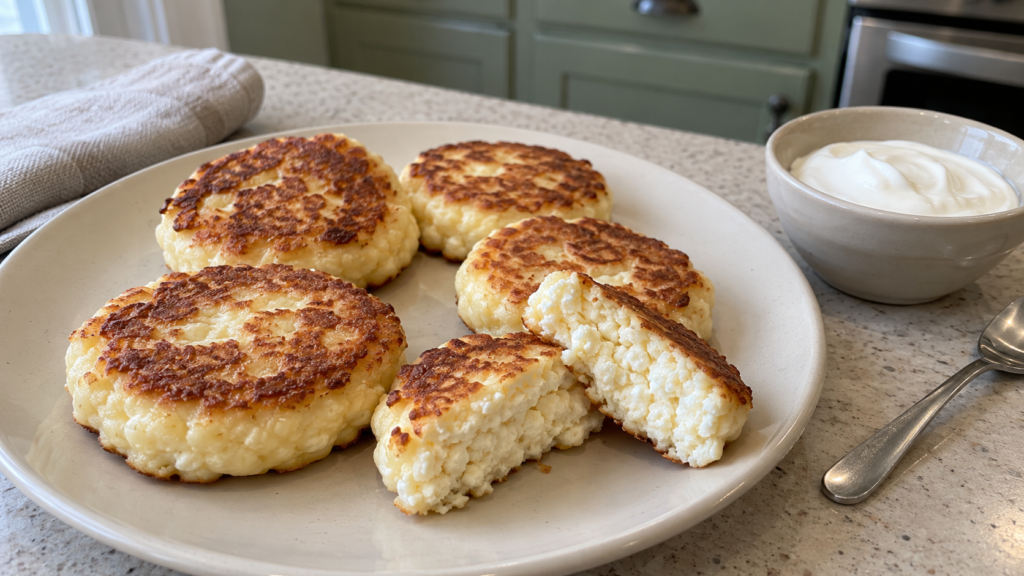

If you put three old books—Vasily Levshin’s «Russian Cookery» from 1816, the fourth volume of the second edition of the dictionary by Dal published in 1882, and the 1952 book «A Book about Delicious and Healthy Food»—next to each other, you will find various dishes with similar names. In Levshin’s “Russian Cookery,” pancakes with fillings are called “syrniki”; in Dal’s book, this is the name of several dishes; and in the 1952 book, the familiar rosy pancakes are called “tvorzhniki.” The recipe for these pancakes is below; you can print it out and cook it together with your child, and the name story follows.
Yogurt Makers from a 1952 Book
How many pancakes do we fry?
Of this amount, the following amount is deducted: 10 flour. The recipe in the book calls for 10 pancakes; the number of servings is not specified.
Products
- Yogurt 500 g (dry, wet first squeeze)
- Egg 1
- Muka into a mass ¼ cup
- Mutton for cutting and grinding ¼ cup
- Sugar 2 tbsp
- Salt pinch
- Vanilla to taste
- Oil for frying 2 tbsp
- Cream cheese at the table ½ cup
How to cook
- Grind the cottage cheese or mash it with a fork until it becomes homogeneous.
- Mix the cream cheese with the flour for the dough, sugar, salt, vanilla and egg.
- The child's step Divide the mass by 10 parts.
- The child's step Roll the ball, press your finger into the dough, and roll it in flour on all sides.
- The adult cooks the pancakes in heated oil on both sides until they are golden brown.
- Serve with cream.
We don't try the raw mass; after work, I wash my hands. The adult one cooks it.
Portions according to the «Book of Delicious and Healthy Food» (1952), recipe «Tvoroznik». The cooking time in the book is not specified; it is cooked until it is golden brown.
Moscow, 1816 year
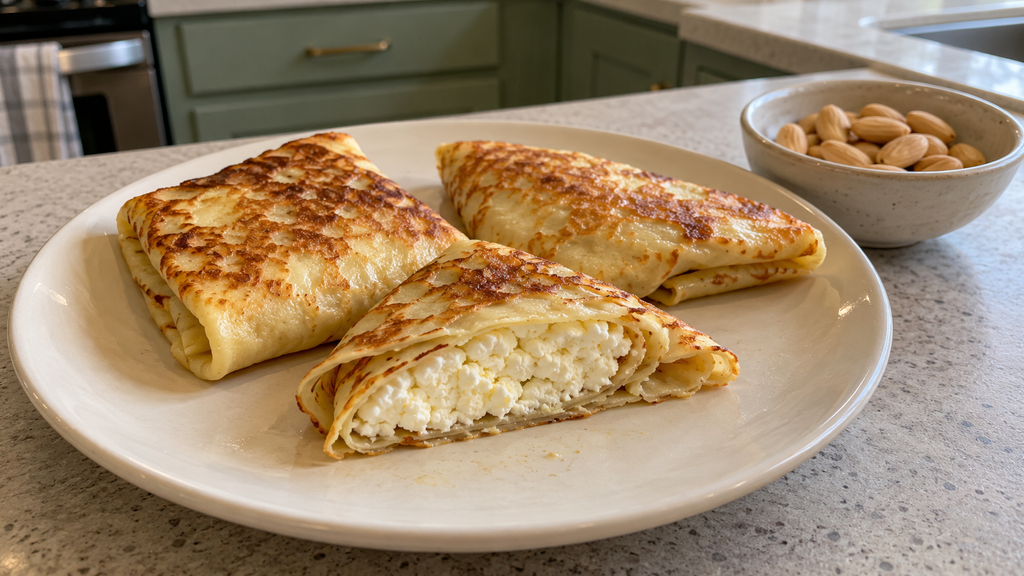
Levshin’s book was titled «Instructions on the preparation of all kinds of authentic Russian dishes»; his pancakes start with bliny. The housewife is instructed to bake bliny «for each one to put sour cream, whipped with eggs,» to fold the bliny into a square or triangular shape and fry them in cow fat. If such a plate were placed on the table today, no one would call it pancakes; everyone would say that these are bliny with sour cream, and they would be entirely correct.
Even more surprising is the recipe that appears later in the same book, titled «Post-Cheese Pancakes.» The author does not eat dairy products during fasting, and Levshin suggests making the filling from almonds, «blanched almonds with a small addition of sugar,» and then filling the pancakes, folding them the same way as regular pancakes, and frying them. There is no cheese in this dish, and no cottage cheese either, yet the book calls it a “pancake,” because one name unites two versions of the dish: with cheese and with almonds.
St. Petersburg, 1882
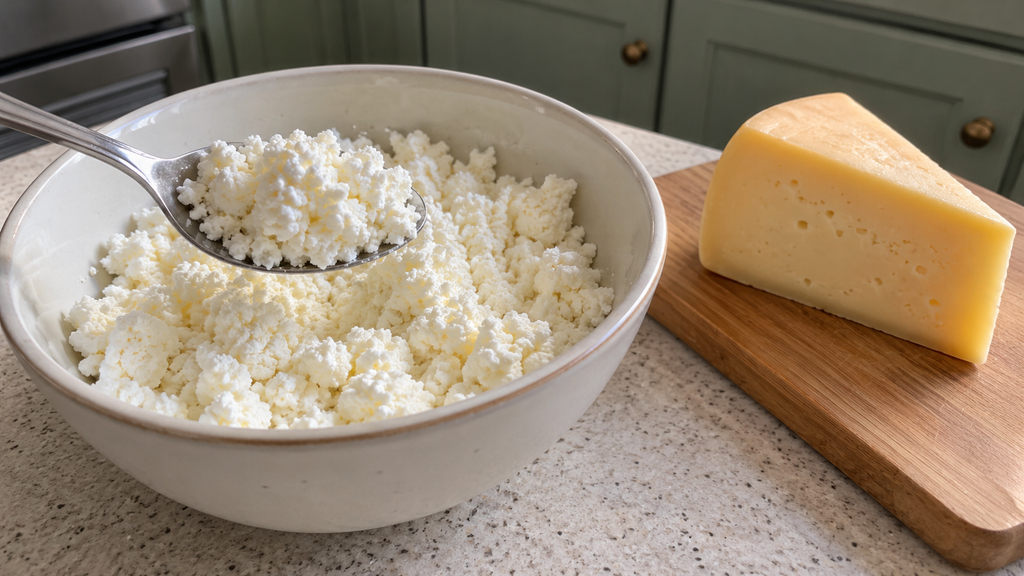
In the fourth volume of the second edition of Dal's dictionary, the word «cheese» is written with the meaning «cheese cake.» Under the word «cheese cakes,» Dal lists several different things: «pies, pancakes, filled with cheese,» ravioli and «a variety of dumplings, dumplings made with cheese, with a filling,» so at that time a "cheese cake" could be called almost any dish that included cheese.
Further on in the same volume, in the article «Tvorog», there is also «tvorozhnik», and it is explained through the same thing: «cheese cake, bun, pie, vatroushka with cheese». The words were used in pairs and meant almost the same thing. To say that people at that time did not distinguish between cheese and curd would be incorrect. Dal also describes other cheeses. But the word «cheese» could mean both curd and in «syrnik» this meaning has remained until today.
Moscow, 1952
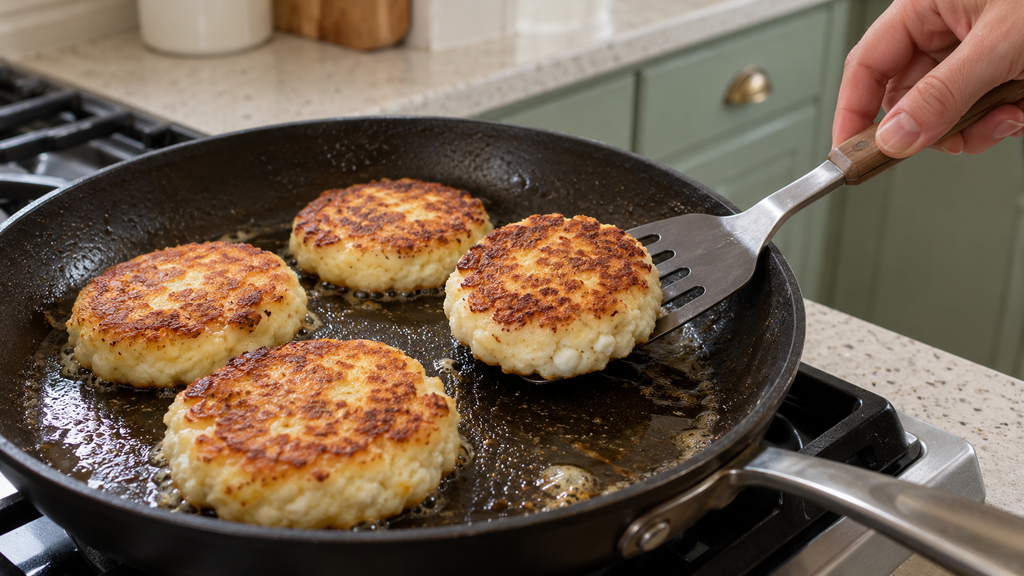
The book that was prepared in Soviet families chose the second word from this pair. Five hundred grams of cottage cheese, one egg, half a cup of flour, of which only a quarter cup goes into the batter, two spoons of sugar, a pinch of salt and vanilla extract. The batter is divided into ten parts, the pancakes are rolled in flour and fried on both sides until they are golden brown. If the cottage cheese is wet, it is first squeezed out.
The title is accompanied by the word «Tvorozhniki.» This dish is the one that is known today as both syrniki and both names are legitimate; both have a long history.
In the US, a product similar to cottage cheese is available under the name farmer cheese; the recipe requires a dry version without additives. Why cottage cheese should not be called cottage cheese and which English names are closer to it are discussed in more detail in the article. «Food and products in Russian».
In the kitchen
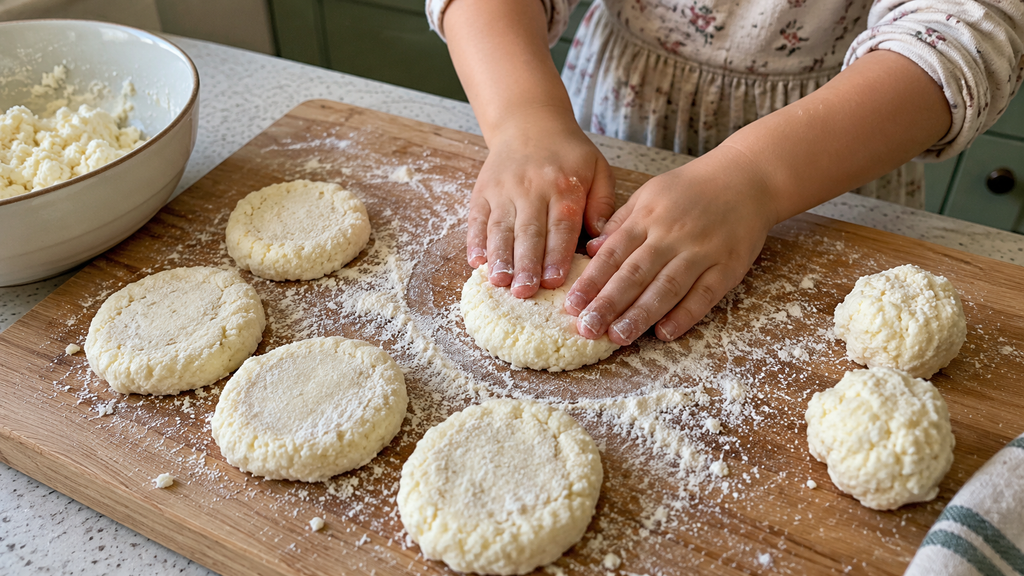
The adult mixes and fries the food, while the child divides the mass into ten parts, rolls the balls, presses them with his fingers and batters the pancakes with flour. They do not try the raw mass; they wash their hands after work.
While we’re stuck with this mess, let’s talk about the almond-filled fritters—there was no cheese or cream in them—and ask how these pancakes were called at Grandma’s house.
And then ask how the child would have named them themselves if he were to come up with a name in his recipe book.
At the «Russian Conversation School», children from the age of four learn to speak Russian with their peers and relatives. The story of how they made cheese pies and why they have two names is also a conversation, and they need words for that.
You can start with two free lessons. In the first method, the educator determines the child’s level and helps to choose a program; in the second method, the family gets acquainted with the teacher.
Sign up for free lessonsFrequently asked questions about the pancakes
Why are the pancakes called pancakes if they are made from cheese?
The word «cheese» was also used in the sense of «cheese», and this meaning is recorded in the dictionary of Dal'a. There, «cheese maker» is explained through «cheese maker», meaning that the two words meant almost the same thing.
How are the cheesecakes different from the yogurt cakes?
Today, this dish is called the same thing—cheese pancakes, fried on both sides. In the 1952 book «The Book of Delicious and Healthy Food,» this recipe is called «Tvorozniki.».
What were the pasty buns like?
In Vasily Levshin's «Russian Cookery» of 1816, syrniki are flatbreads with cheese, folded and fried in oil. There are also «pork syrniki» with a filling of almonds, without cheese.
Which yogurt to use for cheesecakes in the USA?
A product close to cottage cheese can be found under the name farmer cheese; for cheesecakes, a dry version without additives is needed. If the cottage cheese is wet, it is first pressed.
What can a child do when they are making crepes?
Divide the mass into parts, roll into balls, press them into pancakes and roll them in flour. The raw mass is not tasted; after work, hands are washed, and the adult cooks it.