The hall in the American city. The names can be any; there were more than a thousand such evenings. A tall man with a straight back walks towards the orchestra, plays the program, bows. The audience claps and doesn't disperse. They are waiting for one thing.
He sits down and plays a prelude in D-flat minor. The same one he wrote when he was nineteen.
His hand was about a half-tone sharp, and he wrote the chords with such a swing that he didn't care about the hands of others. Pianists with ordinary staves have to take many notes in the wrong order, from bottom to top.
This went on for more than forty consecutive years. Her name was simply printed in the program as The Prelude, without the author's name or the tone of the work; as if there were no other preludes. He spoke about it with irritation. He played anyway.
Forty rubles and no rights
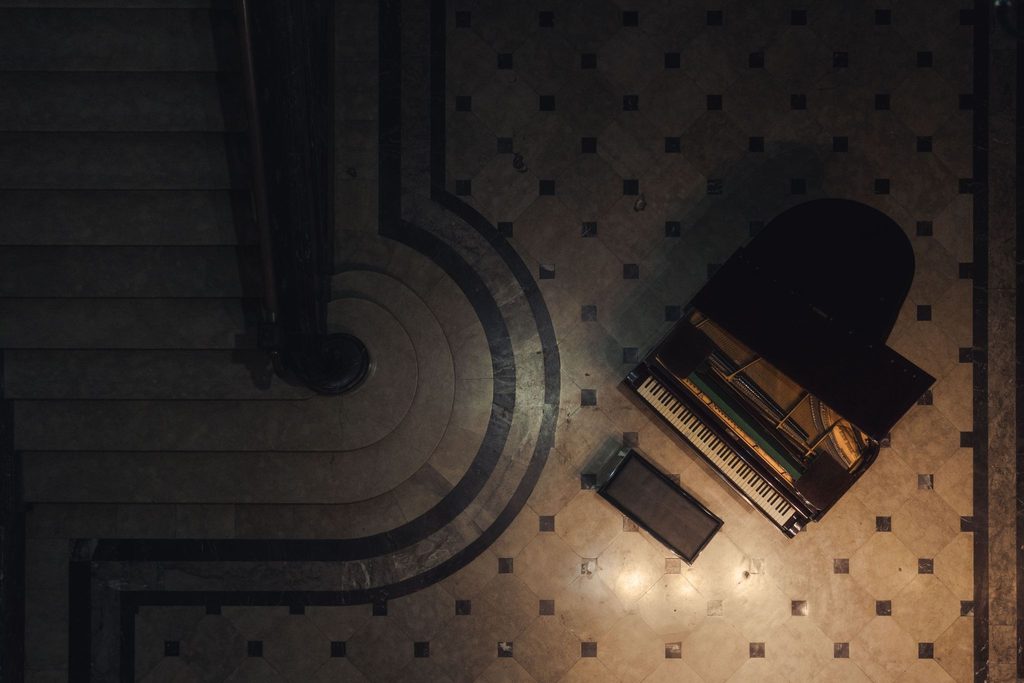
He sold the prelude along with the other plays in that opus, receiving for the entire opus, in his own words, forty rubles, about twenty then-current dollars. No more was ever paid for it. The Russian Empire did not join the Berne Convention, and his music was published and performed abroad freely, without paying anything to the author.
Meanwhile, the item went all over the world. It was played in living rooms, in cinemas before screenings, and at dances. The composer received exactly zero for that.
The exam that Tchaikovsky sat for
It was written in the same year as the other work that would decide his fate. There was a conservatory thesis and a graduation work, a one-act opera «Aleko» based on Pushkin's «Gypsies», written in just a few weeks. The exam was taken by a committee, which included Tchaikovsky.
According to family legend, the fifth one he attributed three pluses: above, below, and on the side.
There was no praise in Russian music at that time. The author was nineteen years old.
Two halves of one life
The evening after which he fell silent
Things didn't go so well after that. In March 1897, his First Symphony was performed in St. Petersburg. The premiere was a failure. Critics panned the work, and he later described that evening as the most difficult experience of his youth.
After that, a void came in. Three years with almost no work. The feeling that he could no longer write.
The doctor extracted it. Nikolai Dal, a neurologist who was fascinated by hypnosis, worked with him for several months. The formulas were simple: the composition would begin, and the work would go smoothly. After a while, the Second Piano Concerto appeared, his most performed work. The score bears a dedication to Dr. Dal.
Stockholm as a reason
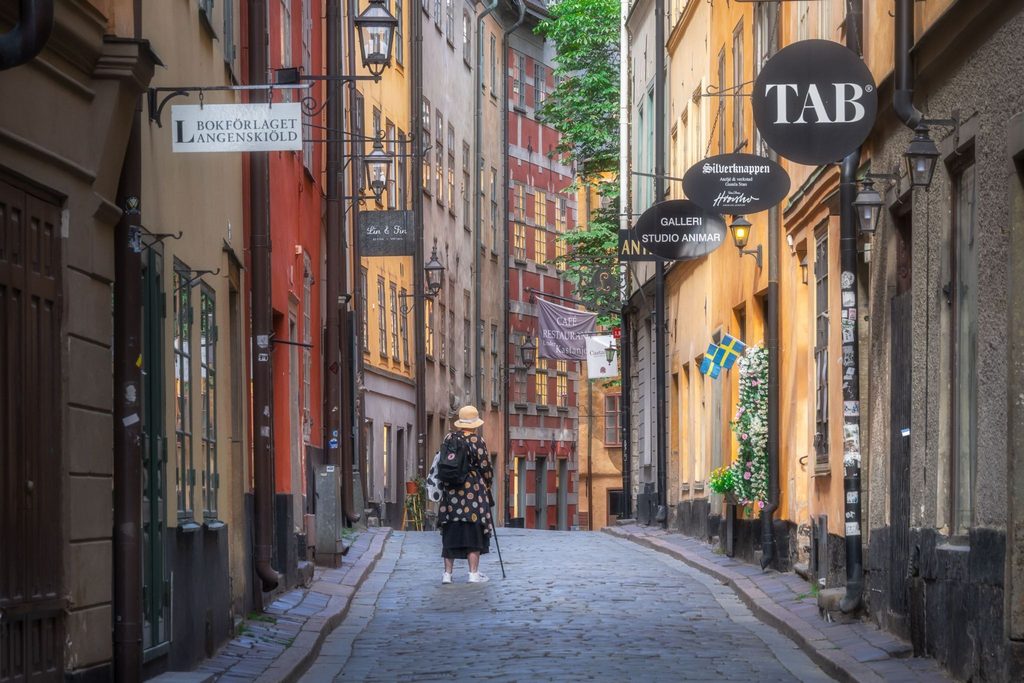
In 1917, an invitation came along to perform in Sweden. He and his family left in December. They were going on a short trip; the road seemed short.
No one returned. He no longer saw the Ivanovka estate, where almost everything important is written, and Rachmaninoff never returned.
Royale instead of a writing desk
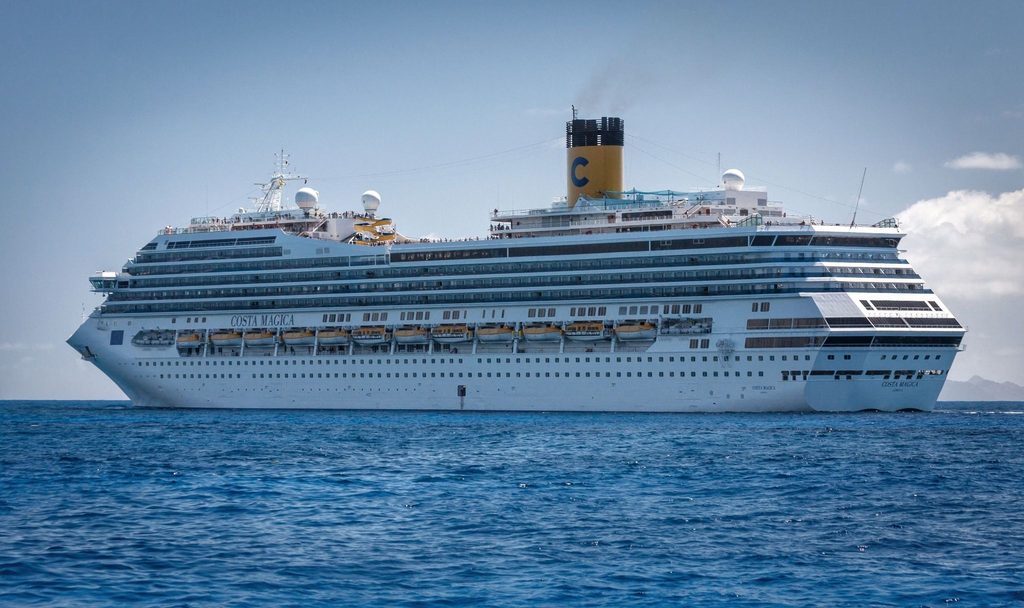
The family reached America in 1918. There was no money, and the language was almost the same. They offered him conducting positions in good orchestras, but he refused and sat at the piano because the concert earnings were more reliable.
The calculation turned out to be correct. He became one of the most highly paid pianists of the era, recorded music, toured, supported a large family, and helped dozens of people.
The fee turned out to be different. The pianist gradually ate the composer in it.
Eight years of silence
In his first eight years in America, he didn’t accomplish anything. Not a single new thing.
The silence was interrupted in 1926: The Fourth Piano Concerto and Three Russian Songs. Next, with long intervals, Variations on the Corelli Theme, Rhapsody on the Paganini Theme, Third Symphony, Symphonic Dances. A total of six compositions over twenty-six years of emigration. Before leaving, there were thirty-nine of them.
He explained it himself in a nutshell. Leaving Russia, he left behind a desire to write music, but losing the country also meant losing himself.
A house similar to Ivanovka
In the early 1930s, he built a house on a Swiss lake. He arranged the grounds and planted it in such a way that it resembled the abandoned estate. Much of his emigrant work, including the Rhapsody, was written there.
The eighteenth variation from it is heard today in every second advertisement. It is based on Paganini’s reversed theme: the same notes played in the opposite way. The theme of the Second Concerto from the seventies formed the basis of an American pop ballad, and since then it has appeared in the cinema every time a director needs to evoke a great sadness. Those who open the list of Rachmaninoff compositions for the first time usually recognize half of it by ear.
Dances in which the First Symphony is hidden
The last thing he wrote was in 1940. Symphonic Dances, he considered them his best late work.
The score contains a reference to the very same devastated First Symphony, to which he returned more than forty-five years later. And the church chant from his own «All-night Prayer.» The man has brought together both ends of his life in a single composition.
He obtained American citizenship in the winter of 1943. He passed away in late March, with only a few days left before his seventyth birthday. He died in a California home, far from Ivanovka.
Main works by year
| Composition | Year | Composition of performers |
|---|---|---|
| Prelude in D minor | 1892 | solo piano |
| Opera «Aleko» | 1892 | singers, choir, orchestra |
| The Second Piano Concerto | 1900 and 1901 | piano with orchestra |
| The Third Piano Concerto | 1909 | piano with orchestra |
| «All-night vigil» | 1915 | choir without accompaniment |
| Rhapsody on the Theme of Paganini | 1934 | piano with orchestra |
| Symphonic dances | 1940 | Symphony Orchestra |
Why is he called the most Russian?
More than a quarter of his life was spent abroad; he holds foreign citizenship; he wrote six works during his entire period of emigration; and he is also considered the greatest Russian composer of the 20th century.
In his music, the Russian composer left behind neither the title nor a quote from folklore. What remained was an intonation: broad, drawn out, coming from church singing. In English-language programs, his name is printed as Sergei Rachmaninoff, a dispute over transliteration still ongoing, and this confusion over how to write his name well describes his position between the two countries. The same path was followed by Kandinsky and Shagal, about whom we wrote in the review. Great Russian artists. And there is a story about the instrument that became the trademark of Russian music abroad. A conversation about the balalaika.
Where to start listening with a child
It is better to listen to the material in short bursts, one thing at a time, and to always finish the conversation with a statement. The conversation is remembered along with the music.
What a Russian-born child learns here

For a child who speaks Russian at home and English at school, this story is closer than it seems. The man had left home as an adult, a famous and successful person. He had been longing for twenty-six years, working almost non-stop.
It’s not about weakness. The language and the familiar environment became part of his tool.
Talking about it is usually more useful than just explaining why it’s important to learn Russian. The child sees that connection to their language affects what a person can achieve. And that losing it is not necessarily a bad thing.
How language stays with a child

At Palme School, we work with children who speak Russian at home and English on the street. We strive to ensure that Russian is not limited to everyday requests: conversations about music, books, and history help with grammar just as much as they do with language acquisition. We accept students from four to seventeen years old.
You can find out if this is right for your child at two free lessons. The first one is held with a methodologist, who gets to know the child, determines their level, and talks about the program. The second one takes place like a real group lesson, with a teacher and other children.
Frequently Asked Questions
Who is Sergei Rachmaninov?
Composer and pianist who left Russia in 1917. In exile, he became famous as a performer, but almost completely stopped composing.
Which of Rachmaninov's works are the most famous?
The Second and Third Piano Concertos are often performed in the halls. The eighteenth variation from the Ragtime on a Theme by Paganini, the early prelude in D minor, and the choral «All-night Vigil» are also well-known.
Why did Rachmaninov leave Russia?
He did not plan to leave all at once. In the autumn of 1917, an invitation to perform in Sweden came, and that gave the family the opportunity to leave in December. The luggage was packed as before for ordinary tours.
Is it true that during his exile he almost stopped writing?
Yes. Twenty-six years abroad yielded six completed things, and the first of them took eight years after leaving. He himself explained this by the fact that along with the country, he had also lost himself.
What is known about Rachmaninov's hands?
His hand spanned about a half-tone, and many chords are designed for just such a range. Pianists with ordinary staves have to take them in a slurred manner, from bottom to top.
Where can one hear Rachmaninoff's music today?
In addition to concert halls, it has found its way into film and popular music. The Eighteenth Variation and the theme from the Second Concerto are used so often that many people recognize them without ever having been to a symphony concert.