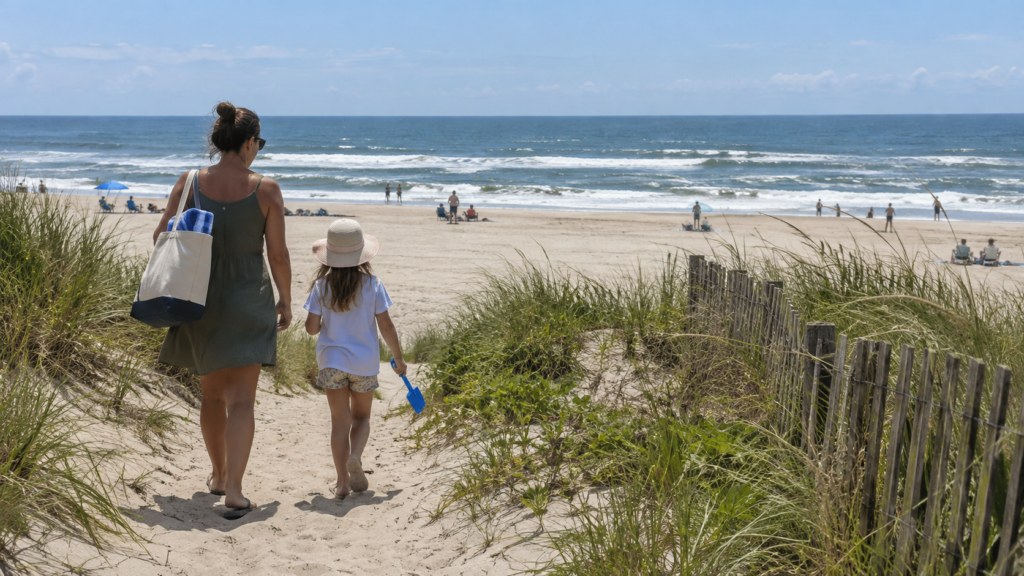

In the summer, in Russian families in California, Florida, and New Jersey, they say, «we’re going to the beach.» They gather towels, a shovel, and a panama hat. But there’s no beach at the dunes. It’s an ocean, the Pacific or the Atlantic.
A child who goes to an American school might notice this. Their classmates go to the beach or talk about the ocean. They go to the beach at home.
Who is right?
At the sea, not in the ocean
Both are right; it's just that words work differently.
In Russian, to «go to the sea» has long meant simply going to a place where there is salty water, sand, and a vacation. No one checks the map while doing this. You can also say «we’re going to the ocean,» but that sounds unusual, almost solemn.
Ask the child how he/she speaks. In Russian and in English, about the same place.
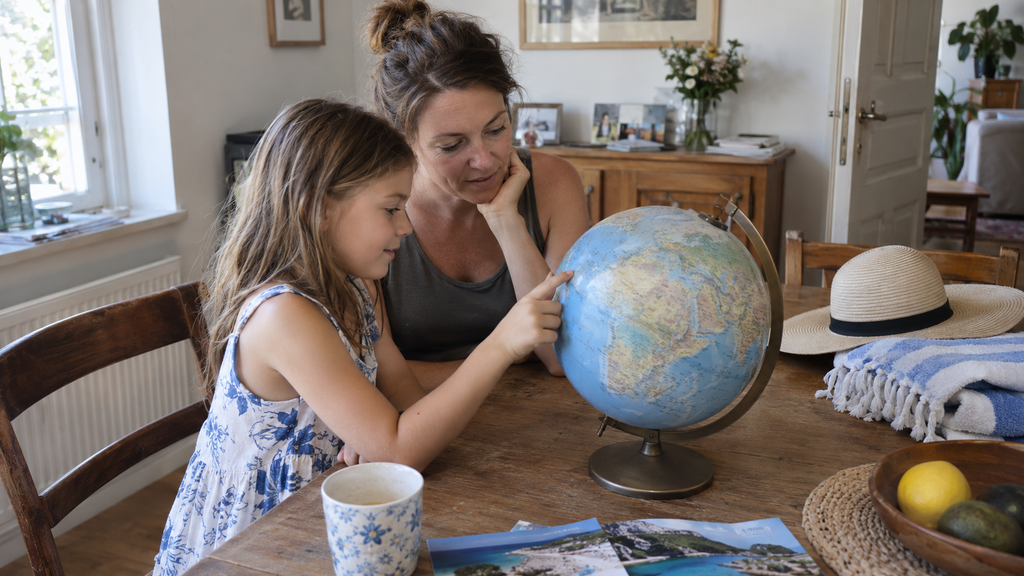
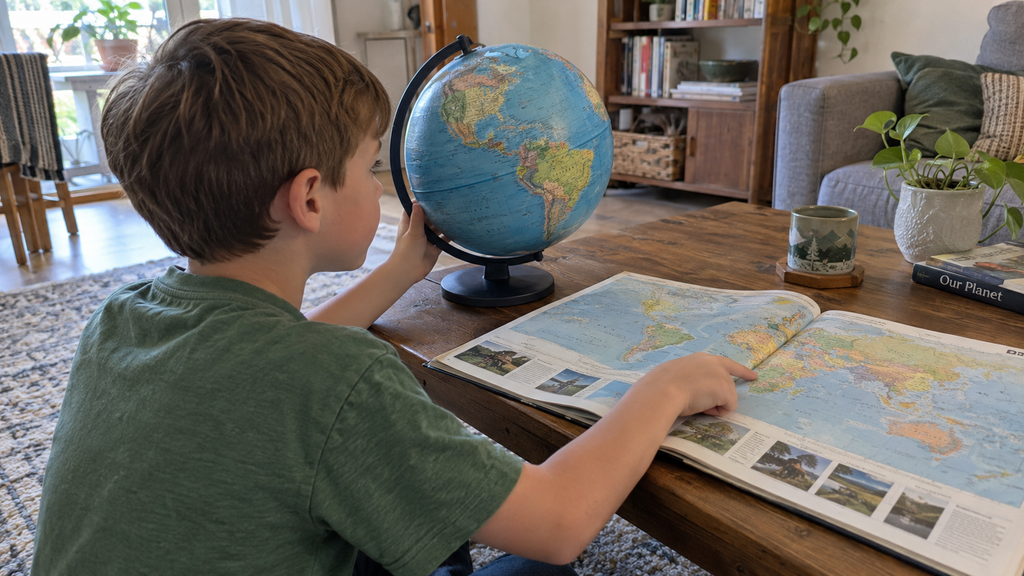
And then take a globe and find the beach you’re going to. What is it really like there, a sea or an ocean?
How the sea differs from the ocean
The sea is part of the ocean. It is usually separated from the open ocean by coasts, islands, and underwater elevations. The Caribbean Sea, where people fly from the USA to vacation, is part of the Atlantic Ocean. The White Sea, where the Polynesians sailed in wooden boats, is part of the Arctic Ocean.
There is also a sea with no land at all. Sargasso Sea, in the middle of the Atlantic Ocean. Its boundaries are determined by currents that circulate around it; the name was given to it by the Sargassum algae, which float there on the surface.
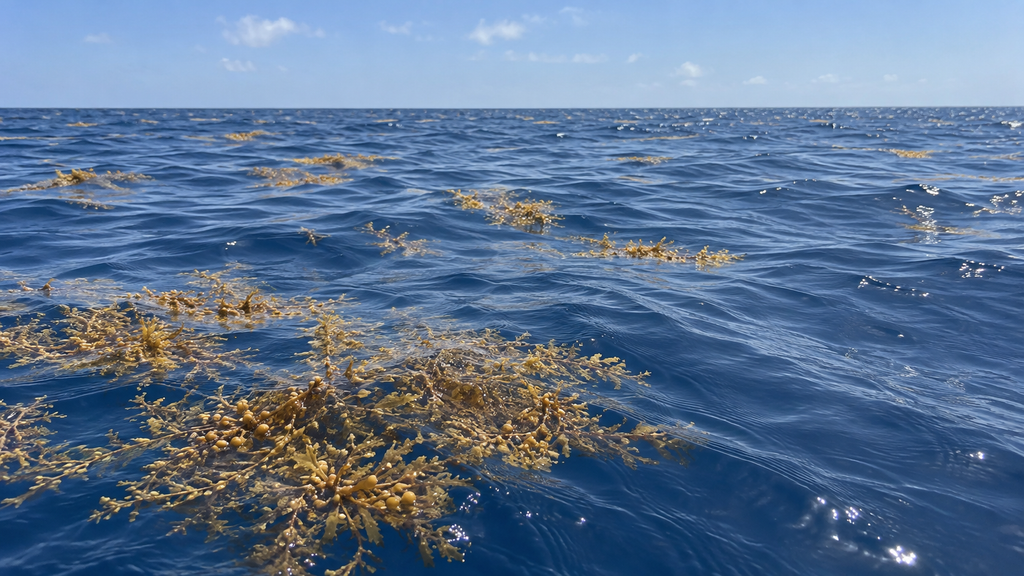
If it is signed on your globe, look at where the edge is.
How many oceans
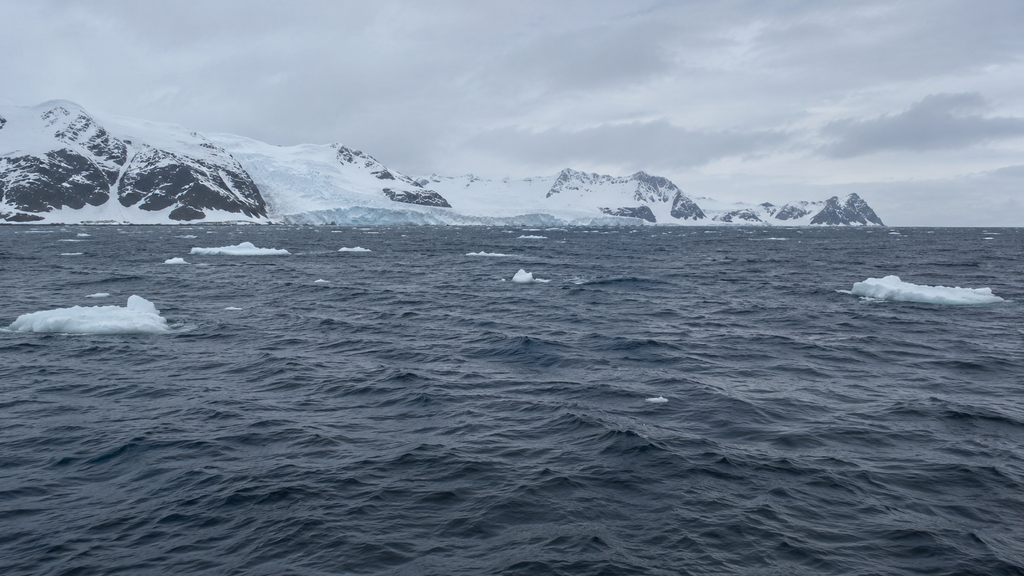
There is only one ocean on Earth—the World Ocean. All the oceans are connected, and people drew the boundaries between them to make it easier to name them.
At present, it is most often called Five. The largest is the Pacific. The smallest is the Arctic. The other three are somewhere in the middle, and the newest of them, the Southern one, covers Antarctica.
If you have an atlas at home, check if there is room for the South in it. If not, there could be four oceans instead of five in it.
Where the names come from
The very word «ocean» comes from Greek. To the ancient Greeks, the Ocean was the name of a river that they believed flowed around the entire Earth.
The Pacific was named by Magellan. His ships sailed calmly on this water for a long time, without storms. In English, Pacific is also peaceful. Here, two languages coincide.
The Atlantic is named after Atlas, the giant from Greek mythology; the Atlantic is almost the same. The Indian one is named after India.
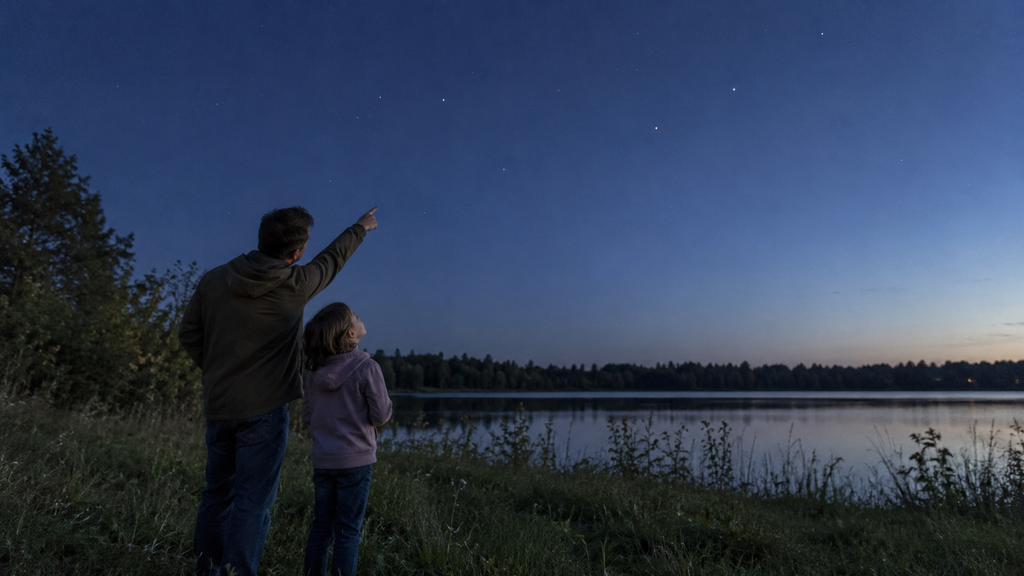
And the northern languages diverged. In Russian, the North is called Arctic; the name comes from the word for the north and ice. In English, Arctic; and this word, according to one version, comes from the Greek name for a bear, the one that is in the sky. The Big Bear is said to be looking for the North Star from its bowl.
Which name does the child prefer?
Find on the globe
It is better to compare the oceans on a globe. On some flat maps of the world, the polar regions are very stretched out, and the Arctic seems huge, even though it is the smallest.
Sea or ocean
Five tasks with a globe. Each has three levels of answers. Choose the one that the child can do in Russian right now. The phrases below are examples; change them to suit your home and atlas.
Find your own beach
Find on the globe the place where your family goes to the sea. What is it really, the sea or the ocean?
Show me. The child places his finger on the water at a familiar shore.
Name it. «This is the Atlantic Ocean.».
Explain. «We say that we are going to the sea, but there is an ocean there.
The sea within the ocean
Find the Caribbean Sea on a globe or any other one that the child knows, and ask what ocean it belongs to.
Show me. The child shows the sea and the ocean that it reaches.
Name it. «The Caribbean Sea in the Atlantic Ocean».
Explain. «The sea is part of the ocean; it is separated by the coast and islands.
Find all five oceans
Ask them to find all five oceans on the globe, including the Southern Ocean around Antarctica, and to tell you which lands are located on its shores for each of them.
Show me. The child shows the five oceans in turn.
Name it. «The Pacific, Atlantic, Indian, Arctic, and Southern Oceans.
Explain. «The Indian Ocean lies between Africa, Asia, and Australia, and the Southern Ocean surrounds Antarctica.
Two names for one ocean
Name the ocean in Russian to your child and ask them to find its English name on a globe or atlas.
Show me. The child finds the ocean and the sign next to it.
Name it. «Pacific in a quiet English way».
Explain. «Silent and Pacific mean the same thing, but the Arctic and Arctic Ocean are named differently.».
Compare the map and the globe
Place a map of the world next to it, where the polar regions are greatly enlarged; this is evident in the huge Greenland region. Find the Arctic Ocean first on the map, then on the globe.
Show me. The child shows the ocean in both images.
Name it. «На этой карте океан кажется больше».
Explain. «Эта карта увеличивает полярные области. Северный Ледовитый океан на самом деле самый маленький».
Если ребенок молчит, дайте начало фразы, например «Мы ездим на…» или «Этот океан у берегов…».
Так что можно спокойно ехать на море и купаться в океане. Главное, знать, где он на глобусе.
Как такие разговоры вписываются в домашние study geography, мы разбирали отдельно. Почему глобус и плоская карта показывают Землю по-разному, есть в нашей статье про опыт с апельсиновой кожурой, а почему число материков в разных школах разное, в статье про материки.
At Palme School, geography has its own course for children from the age of four, online and in Russian, with maps, projects, and discussions. You can start with free trial lesson.
Частые вопросы про океаны
How many oceans are there on Earth?
Most often, they now call it the fifth. The fifth, the Southern one, is located around Antarctica. Previously, it was often not included, so in old ocean textbooks there were four. All of them are connected and together with the seas form the World Ocean.
Which ocean is the largest?
It is quiet. In terms of area, it is larger than all of the land of the Earth combined.
Which ocean is the smallest?
Arctic Ocean. On many flat world maps it seems huge, because the polar regions are enlarged on them, and on the globe it is seen that it is smaller than the rest.
Where is the deepest place in the ocean?
In the Pacific Ocean, in the Mariana Trench. Its deepest point is almost eleven kilometers below the water surface.
Where does the boundary between the oceans run?
Where it has been agreed to be surveyed. Often this is a line from one cape to another or along a meridian. For example, between the Atlantic and Indian Oceans, the boundary is drawn along the meridian of Cape Ignalo in southern Africa.
Why is the water in the ocean salty?
Rivers have been bringing dissolved salts from rocks into the ocean for centuries. The water then evaporates, leaving the salt behind, so it gradually becomes more abundant in the ocean.