
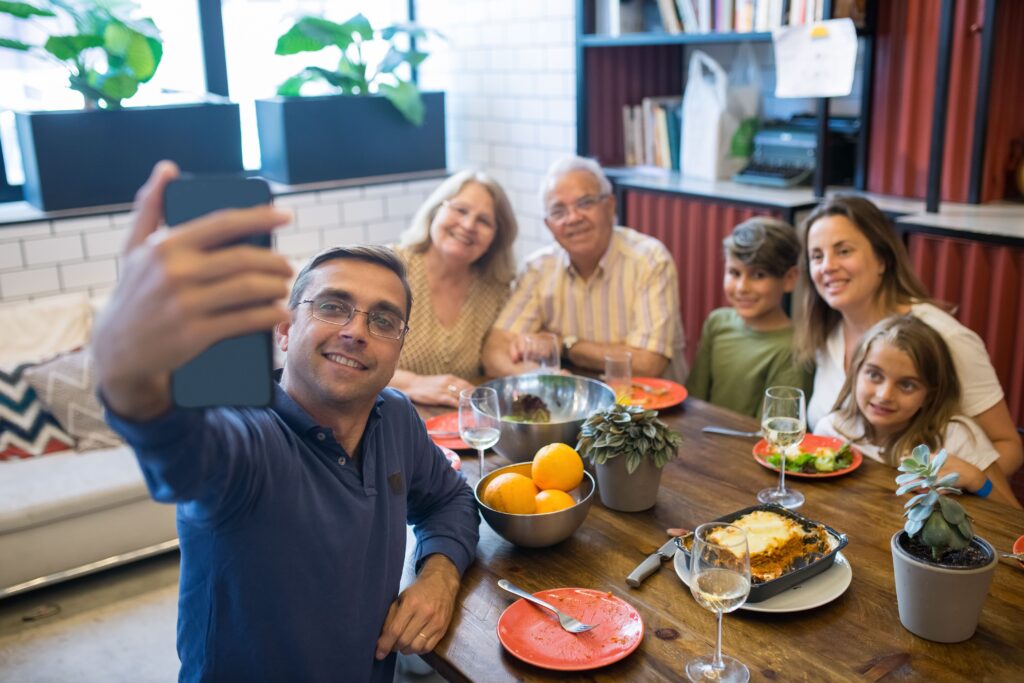

Grandma Nina turns seventy today, and by five in the evening, her apartment is packed to the brim with relatives. It smells of pies, there's a mountain of shoes in the hallway, someone is already looking for a corkscrew, and the birthday girl is trying to hug and seat everyone at once. First to fly in is her granddaughter Katya with a shout of «Grandma, happy birthday,» followed by the younger grandson Maxim stomping in and pulling his «Grandma Nina, is the cake ready soon.» Their mother, Nina's daughter Lena, kisses the birthday girl and calls her simply «Mom,» and behind her enters her son-in-law, her daughter's husband, and carefully, so as not to miss a note, says, "Nina Petrovna, congratulations." One woman, and within a minute of being at the threshold, she's managed to be Grandma, Grandma Nina, Mom, and Nina Petrovna.
This is where one should start a conversation about family in Russian. Whoever opened a phrasebook to the word "family" remembers a short column: mother, father, sister, brother. But beyond that, the column dissolves into a handful of living terms of endearment. If you were to write down all the Russian family words that are spoken here over an evening, it would form a living map of closeness, where each person has a formal, domestic, and affectionate name all at once. English makes do with a couple of words and the universal "in-law" for all relatives by marriage, while Russian distinguishes close relatives across branches so meticulously that at first, you're intimidated, and then you get drawn in.
While everyone is settling in
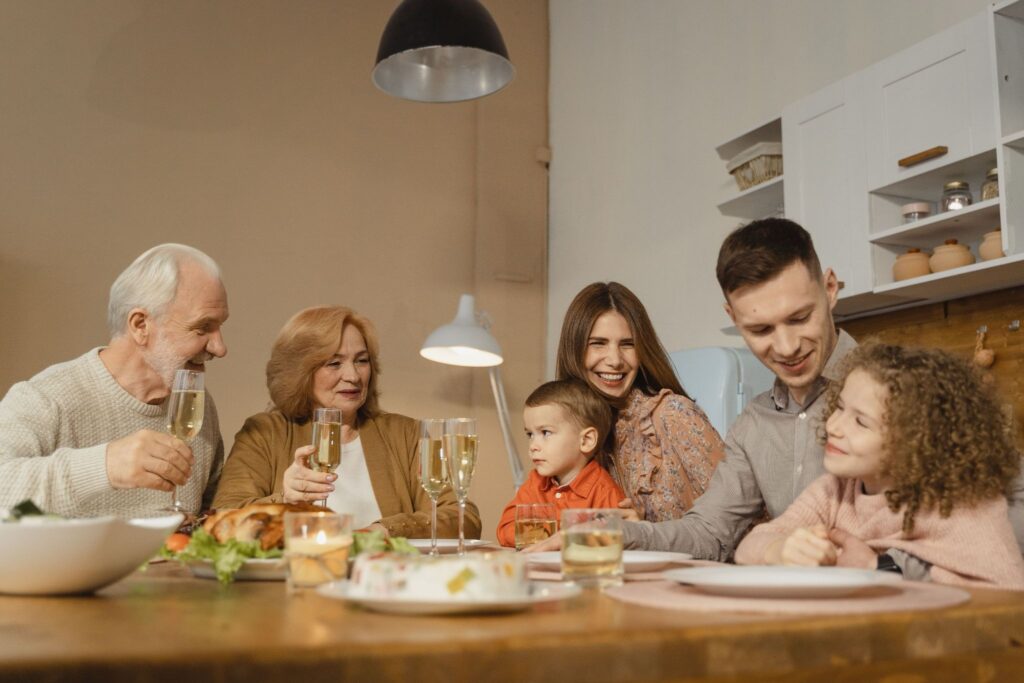
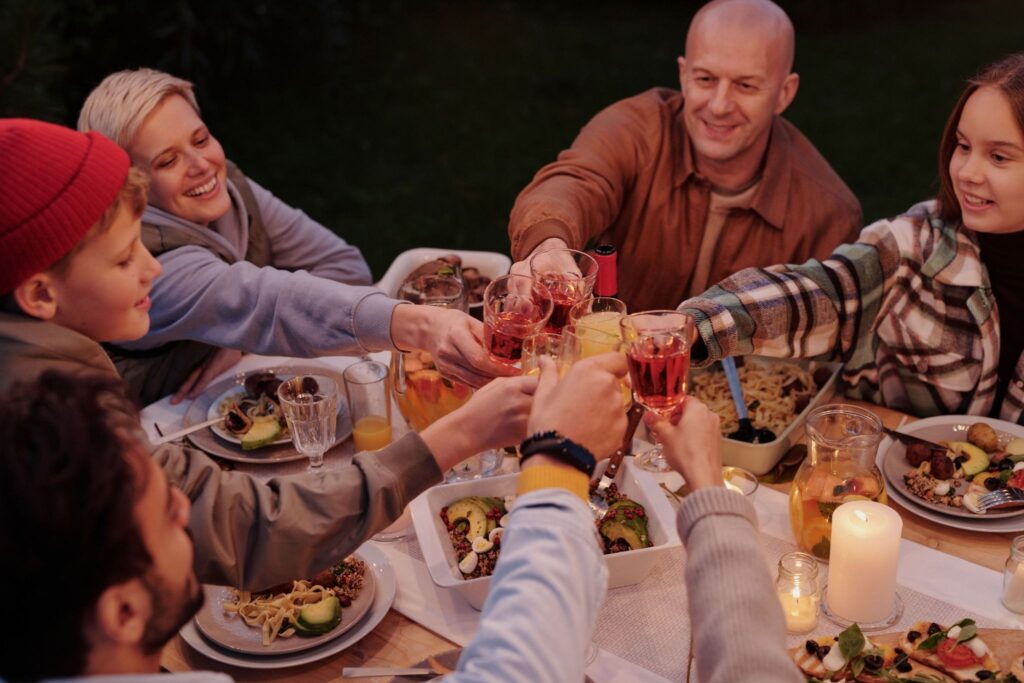
While the guests are taking off their shoes in the entryway, the whole party is already visible at the table. The birthday girl is seated in the center, next to her husband, Grandpa Misha, who is simply "deda" to the grandchildren. Their daughter Lena and son-in-law Sergey are Katya's and Maxim's mother and father, and for Nina and Misha, the youngsters are their beloved grandson and granddaughter. Katya is older, Maxim is younger, and that's not a trivial matter at the table; the younger brother occasionally listens to his older sister, and she occasionally bosses him around.
Russian immediately assigns everyone a gender. Where English would use just one "cousin," here a "dvoürodny brat" (male cousin) and "dvoürodnaya sestra" (female cousin) would sit separately, and "grandchild" would break down into "vnuk" (grandson) and "vnuchka" (granddaughter). On the side of the oldest relatives, the prefix "pra" comes into play; here they mention "prababushka Dunya" (great-grandmother Dunya) at every feast, and Maxim is her great-grandson. Every year at the table, they tell the same story about great-grandmother Dunya, how at ninety she recognized all her great-grandchildren by their voices, and Maxim, though he's heard it a hundred times, listens again. Thus, family words carry with them not only relatives but also family memory, which has been accumulating at this table for decades.
Meanwhile, Grandma doesn't leave anyone alone. She serves Katya salad, saying «daughter, eat,» and hurries Maxim, «son, washed your hands.» In response, they shower her with endearments: "grandma," "granny," and Maxim's is especially funny, "ba-grandma," which has stuck with her since he was two. The children's mother is sometimes "mommy," sometimes "mom," their father is "dad," or "daddy," and "father" is only used when Sergey frowns seriously. Grandpa has his own entourage of names; for Nina, he's Misha, for the grandkids, he's grandpa and "granddaddy," and for old friends, he's just Mikhalych, by his patronymic alone, without his first name. There are so many affectionate forms in Russian for each person that with just one suffix at the table, you can tell if the conversation has warmed up or if it's time to be quieter.
It's also amusing that one and the same person at this table is simultaneously someone's son, someone's father, someone's brother, and someone's son-in-law, depending on which way they turn. Sergey is Nina's son-in-law, Katya's dad, his own mother's son, and in the evening he'll turn out to be a brother-in-law too, and with every turn of his head, he has a new name. Lena and Sergey, while setting the table, exchange their own pet names, using "darling," "sunshine," and the very domestic "bunny," and these terms of endearment intertwine so much with family relationships that from the outside, you can't tell where kinship ends and love begins. On paper, they are, of course, husband and wife, but no one ever calls them that.
Family on both sides of the table
The doorbell rings, and there at the doorstep is the second grandmother—Sergei’s mother. To her grandchildren, she’s also a grandmother, but to Lena, she’s her mother-in-law—her husband’s mother—whereas to her own mother, Nina, Lena is simply a daughter. To Sergei, Nina herself is his mother-in-law, his wife’s mother, and over the years, both the mother-in-law and the son-in-law have learned to be the first to joke about it. Nina teases Sergei, saying that all the jokes about mothers-in-law were surely made up by some son-in-law, while Sergei swears that it’s exactly the opposite. The mother-in-law and daughter-in-law are more reserved, but even they spend the entire evening cautiously gauging what they can say to whom. All these terms—mother-in-law, father-in-law, son-in-law, daughter-in-law—English would lump together into a single, vague “in-law,” but Russian keeps a distinct term for each one.
Aunt Olya, Lena's sister, arrives with her husband Igor and daughter Rita. Igor and Sergey slap each other on the shoulder and laugh about being related by marriage, a rare word, but fitting for this table. Rita is a second cousin to Katya and Maxim; their future children will be their third cousins. They also bring up distant relatives, "seventh water on kissel," as they say about those whose kinship is hard to trace but whom they still call their own.
Closer to tea time, Maxim pulls out a notebook and tortures the adults with a game of «what's related to what.» «And the husband's brother?» someone recalls, «brother-in-law.» «And the husband's sister?» "sister-in-law." "The wife's brother?" "brother-in-law." "The wife's sister?" "sister-in-law." The adults get confused, laugh, start arguing, and it turns out half of these words even they themselves don't quite remember, even though the people they refer to are the closest relatives. The groom's and bride's parents, by the way, call each other "matchmaker" and "matchmaker's wife," and Nina and Sergei's mother, the new "matchmaker's wife," spend the whole evening observing how to address each other now. These words are held not so much in a dictionary as in memory, and "brother-in-law" truly comes alive when the actual husband's brother appears at the table, and until then, he peacefully sleeps among other kinship terms.
The godparents come last.
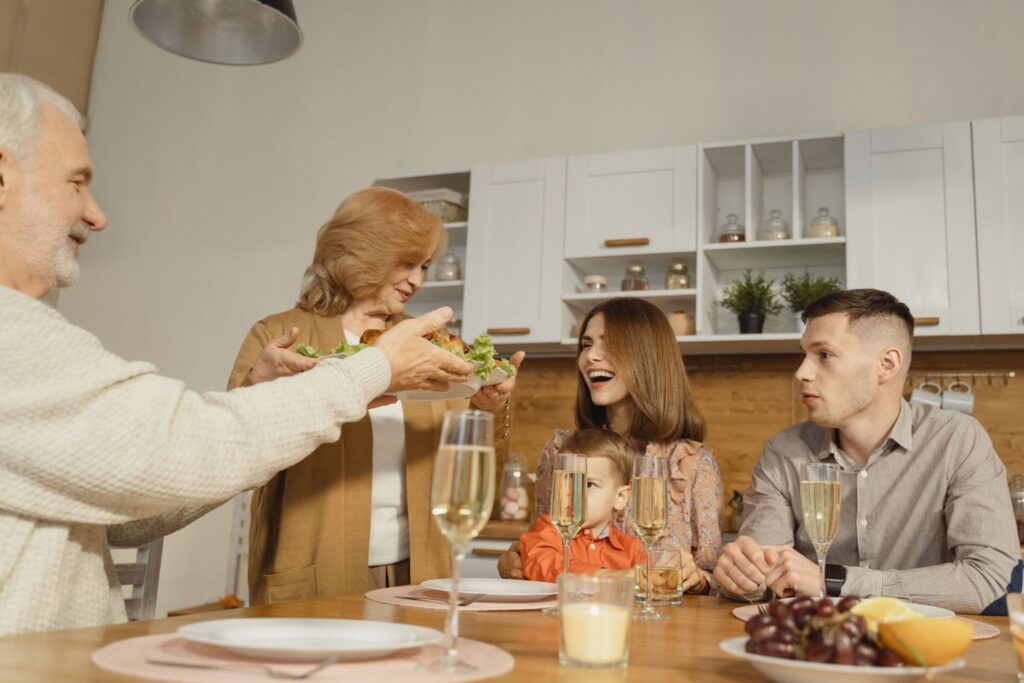
Last to arrive, with the cake, are Maxim's godparents, Lena's friend and her husband. They are not blood relatives to the parents, but in a Russian family, this bond has its own special warmth. The godmother and godfather take the child under their care for life, and Lena and Sergey, along with the godparents, call each other kum and kuma. English has nothing to offer here again; "godparents" only conveys half the meaning, and there is no equivalent for the word "kum" at all. Maxim is the godson to this couple, Katya their goddaughter, and Maxim proudly recounts how he was christened when he was very young, and since then, his godmother has given him gifts not only for his birthday but also for his name day. In the old days, the kum/kuma relationship was considered a serious bond, almost like blood kinship, and sometimes the kum and kuma are closer friends than certain blood relatives.
While they're cutting the cake, Aunt Olya is quietly telling Lena about their mutual acquaintances, explaining who is a step-brother to whom and who is a half-brother. The difference is subtle. Full siblings share both parents, while step-siblings join a family when two people get together, each bringing their own child. Half-siblings share only one parent, either the father or the mother. The neighbor, Olya adds, has twins who look like two peas in a pod, while her sister has fraternal twins, simply born on the same day. Russian makes a distinction between these two cases, whereas English "twins" lumps both together. Amidst the conversation, Nina manages to whisper to Lena not to forget to invite their second cousin from Kazan to the next celebration; she's the distant relative that few remember, but whom this family persistently considers one of their own.
First toast and full name
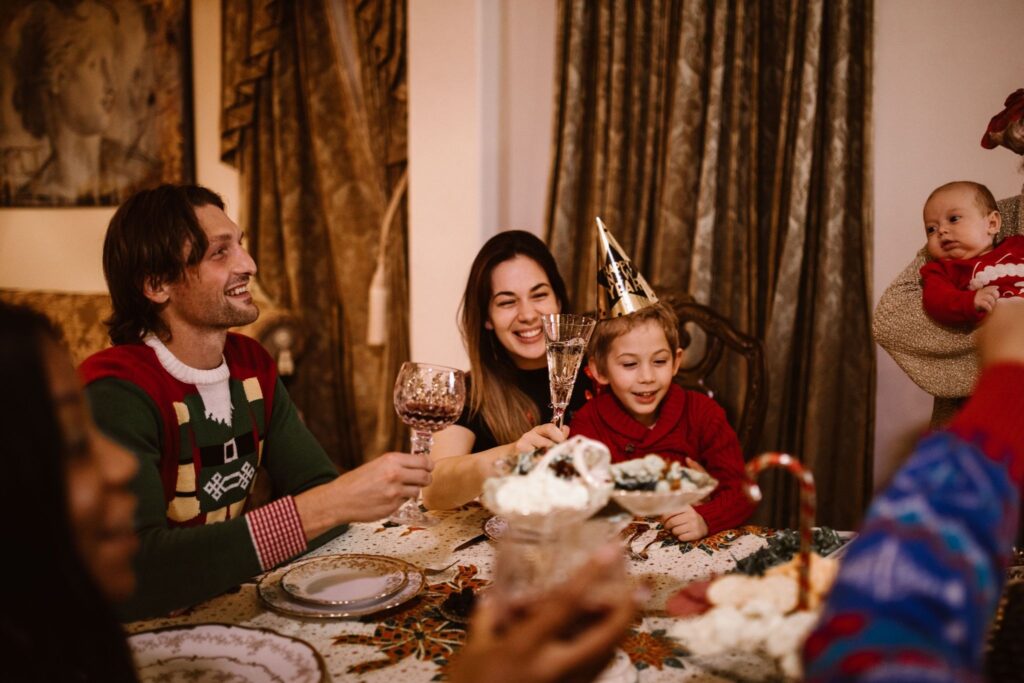
At a table like this, toasts are given according to age. Grandpa Misha stands up first, then the older guests, and only then does the floor get to the young people, so the order of speeches reflects the same family hierarchy, where elders are listened to first. Grandfather raises his glass to his Ninotchka, familiarly and tenderly, while one of the older guests picks it up more formally, «to Nina Petrovna,» and the full name with patronymic sounds festively weighty. The patronymic, the middle name derived from the father, directly tells whose son or daughter a person is, and Petrovna means that Nina's father was named Pyotr. From a full name alone, a Russian can hear what family someone is from, and from the surname, whether a man or a woman is standing before them, Sokolov and Sokolova, Petrov and Petrova are distinguished by their endings. Addressing someone by their first name and patronymic, like Nina Petrovna, is heard everywhere in Russia, to a teacher, to a doctor, to a boss, and it sounds both respectful and a bit warmer than a dry Mr. or Ms. A child learns this form early on, long before they can pronounce all their brothers-in-law and sisters-in-law.
Nina's maiden name was different, Lena recalls. Before marriage, she carried her father's surname, and with her husband's surname, a new chapter began. In the children's certificates, the patronymic and surname come from the father, while their first name remains their personal mark. Thus, from the very first document, a person in Russia is already inscribed into their lineage and connected to it from two sides.
Maxim, taking advantage of the pause, announces that he is preparing a project at school about the Russian imperial family. Romanovs, and asks if it's true that it was the most famous Russian family. True, Grandpa nods, their surname became the name of an entire era. But famous dynasties are an exception here. Those who search for Russian family names will more often encounter the most mundane thing: how a simple patronymic quietly ties a person to their father and grandfather every day. Grandpa, getting carried away, also recalls an old joke that the word "family" is formed from "seven I's, seven of our own." They laugh at the table, although Lena, who read about it, corrects them, saying that etymologists only smile at the guess; the word is much older and hides no seven within it. A beautiful invention, however, warms you no less than the truth. And Maxim, getting into the mood, promises to draw his own family tree after the Romanovs and is already figuring out if everyone from his great-grandmother Dunya to future third cousins will fit on the sheet. When everyone is finally gathered, Nina looks at the table with satisfaction and remarks that now all her own people are gathered. She understands the word "own people" broadly; it includes close relatives, godparents, and old friends who are always expected at this table. There are also words for everyone at once: "domashniye" or slightly old-fashioned "domochadtsy," those who are under one roof, and the younger generation, who call their parents "ancestors," are also part of this big family confusion of names.
Doorbell
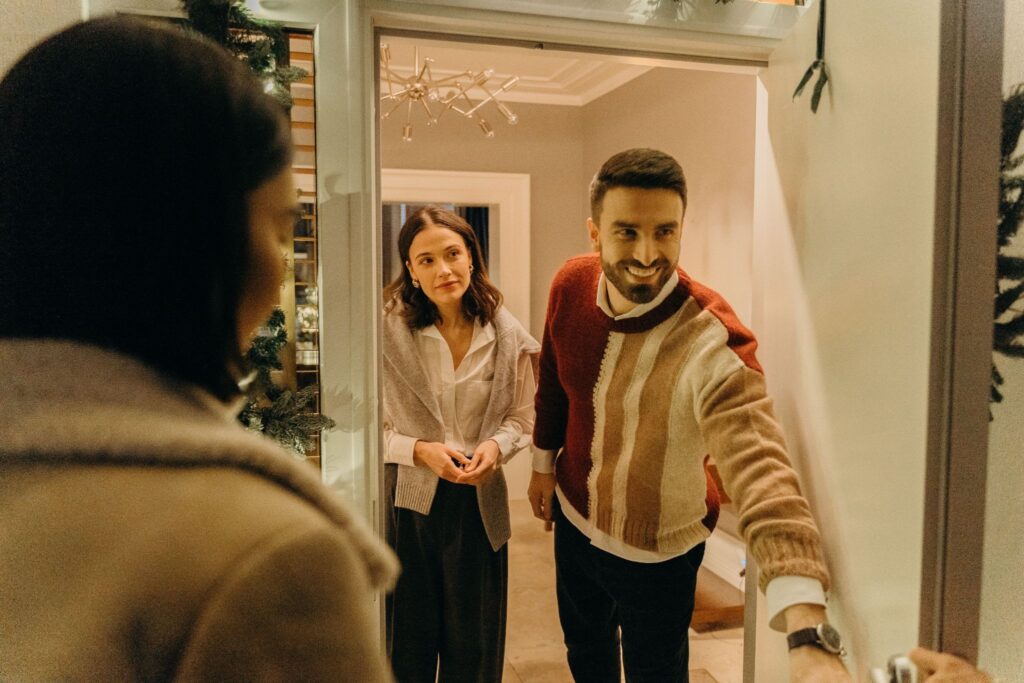
Towards the end of the evening, the doorbell rings, and Maxim, opening it, habitually calls out to the unfamiliar guy, «Uncle, who are you looking for?» No one is bothered by this; for children, any strange adult easily becomes an aunt or uncle, and an elderly person becomes a grandmother or grandfather. For Maxim, «aunt» refers to both his aunt Olya and any unknown woman he needs to address, and "uncle" could easily be a neighbor or a bus driver. The courier, a guy about twenty years old, replies, "Bro, sign right here," and this is also normal.
In Russian, terms of endearment often extend beyond the immediate family. At the market, a saleswoman might call a young customer “son,” and he’ll call the elderly woman behind the counter “daughter”—a term he himself once heard from someone just like her. In a village or on a train, an older person might be addressed as “father” or “mother”—or even, more colloquially, “mom”—and there’s nothing rude about it; it’s simply a desire to speak in a familiar way. An elderly neighbor, bumping into Maxim on the stairs, calls him “grandson,” and the boy actually likes it. Among close friends, simpler terms are used; friends call each other “bro” and “sis,” even though they aren’t related in the slightest, while Rita, Katya’s cousin—already a teenager—refers to her parents as “ancestors” behind their backs, and even that is said without malice. By calling a stranger by a family term, a Russian seems to invite that person to their table for a moment, and for someone learning the language, this is perhaps its warmest feature. And even among family, terms of kinship jump from person to person all the time. Katya might call her younger brother Maksim “little bro,” but a minute later, feeling offended, she’ll curtly call him “Maksim”—and based on that single name alone at the table, you can immediately tell whether peace reigns or the truce has ended, and everyone picks up on it instantly.
| Branch | In Russian | English | Note |
|---|---|---|---|
| Immediate family | mom | mother | |
| Immediate family | Dad | Dad | |
| Immediate family | son | son | |
| Immediate family | daughter | daughter | |
| Immediate family | Brother | brother | |
| Immediate family | sister | sister | |
| Immediate family | grandmother | grandmother | |
| Immediate family | grandfather | grandfather | |
| Immediate family | grandson | grandson | |
| Immediate family | granddaughter | granddaughter | |
| Immediate family | Cousin | cousin | English: one cousin |
| Immediate family | Cousin | cousin | English: one cousin |
| Older generations | great-grandmother | great-grandmother | prefix pra |
| Older generations | great-grandfather | great-grandfather | prefix pra |
| Older generations | great-grandson | great-grandchild | |
| In-laws | mother-in-law | mother-in-law | husband's mother |
| In-laws | father-in-law | father-in-law | Father-in-law |
| In-laws | mother-in-law | mother-in-law | Wife's mother |
| In-laws | father-in-law | father-in-law | father-in-law |
| In-laws | brother-in-law | son-in-law | Son-in-law |
| In-laws | daughter-in-law | daughter-in-law | daughter-in-law |
| In-laws | daughter | daughter-in-law | Daughter-in-law, from the father-in-law's perspective |
| In-laws | brother-in-law | brother-in-law | Brother-in-law |
| In-laws | sister-in-law | sister-in-law | husband's sister |
| In-laws | brother-in-law | brother-in-law | brother-in-law |
| In-laws | sister-in-law | sister-in-law | Wife's sister |
| In-laws | in-laws | brothers-in-law | Brothers-in-law |
| In-laws | matchmaker, matchmakers | parents-in-law | In-laws |
| Spiritual kinship | godfather | godfather | half of godparents |
| Spiritual kinship | godmother | godmother | |
| Spiritual kinship | godson | godson | |
| Spiritual kinship | godchild | goddaughter | |
| Spiritual kinship | godfather, godmother | Co-godparents | There is no steam in English |
| Kinship and types | relatives | full siblings | Both parents |
| Kinship and types | Summary | step-siblings | without a common parent |
| Kinship and types | blood relatives | half-siblings | Father's Day |
| Kinship and types | full siblings | half-siblings | common mother |
| Kinship and types | twins | identical twins | Like two peas in a pod. |
| Kinship and types | twins | fraternal twins | Just one day |
| The person's name | patronymic | patronymic | Middle name by father |
| The person's name | Surname | Last name | Ivanov and Ivanova |
| The person's name | Maiden name | Maiden name | |
| Addressing strangers | aunt, uncle | Aunt, uncle | to any adult |
| Addressing strangers | son, daughter | son, daughter | To the young man |
| Addressing strangers | grandson | little grandson | to the child |
| Addressing strangers | bro | Bro | friendly |
The words that leave first
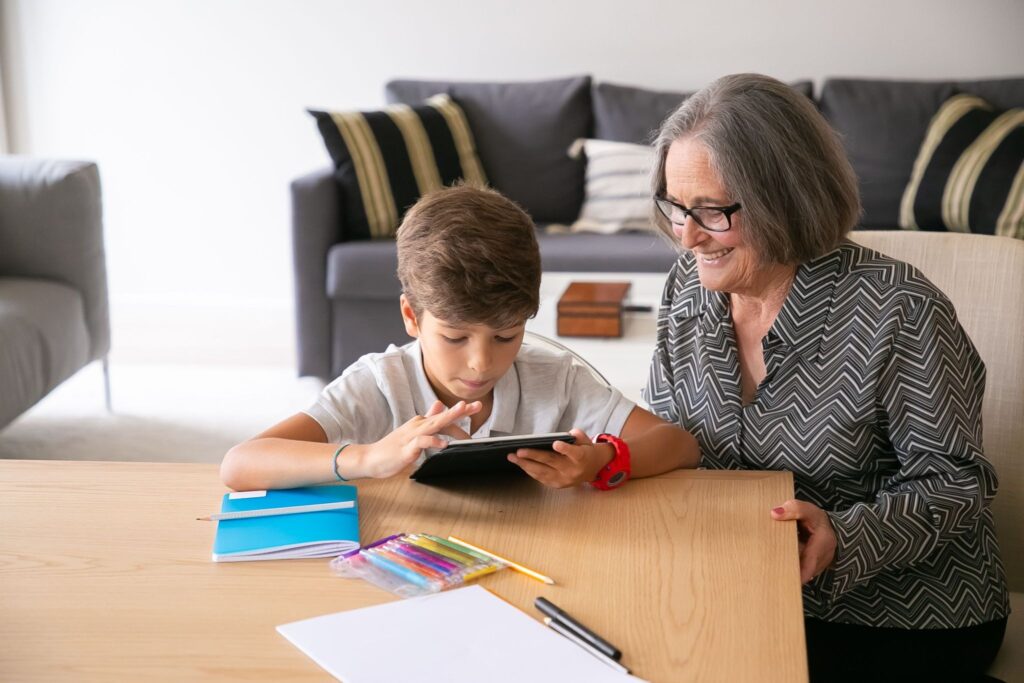
When guests leave, Katya waves goodbye to her grandmother at the door and shouts «bye, grandma,» a word she says earlier and more often than many others. A child in a Russian-speaking family hears family terms of endearment first; "mama" and "baba" even precede "hello" and "thank you." They also fade first, as soon as another language starts to be heard. At home they still say "babushka," but the child already answers "grandma," and a whole warm layer of words quietly falls away if it's not kept alive in spoken language.
At Palme School, Russian is taught to children from four to seventeen years old, and it's held in a conversational, home-like style, as if speaking to loved ones. You can learn more at two free classes, first, an introductory meeting with a tutor who will assess the child's level and select a group, and then a trial lesson with the teacher in that group. Then grandmother remains grandmother, and family words live on with the family itself.
Click on the card to see the translation. The stress is marked, and "yo" is preserved.
Home
At one grandmother's table, the Russian language hands out several names to everyone at once: a formal one, a domestic one, and an affectionate one. It then sorts relatives by branches with a meticulousness that English simply doesn't possess. Relatives by blood and by marriage, godparents, in-laws, and matchmakers – each has their own word where English is content with "family" and "in-law." From the melodic "mama" and "babushka" to the formal Nina Petrovna, from mother-in-law and son-in-law to kum and sviyak, every word here marks its place at the table. The same words easily cross the threshold and warm address to strangers, while patronymics and surnames remind a person every day of their lineage. For families where a bilingual child is growing up, these words are worth saying aloud at home, as they are the first to fade from speech, and the quietest to do so, only to return later, harder than many others.
What are the family members called in Russian?
Your closest relatives include mother and father, their children son and daughter, and between them brother and sister. The older generation are grandmother and grandfather, and the younger generation for them are grandson and granddaughter. Russian differentiates between male and female almost everywhere, which is why the English word "cousin" has two translations: двоюродный брат and двоюродная сестра. There are also words for more distant and older relatives, great-grandmother and great-grandfather, as well as a scattering of terms for in-laws.
Why do mom and dad have so many affectionate forms?
Because in Russian, affectionate address shows not only kinship but also a feeling in a specific moment. From the word "mama" come "mamochka," "mamulya," "mamenka," and from "papa" come "papochka," "papulya," "papenka." Families usually use several of these, choosing based on mood. Spouses use the same warmth with each other, and parents with children, so many affectionate words are heard in a Russian family.
Relatives of the husband and wife.
For each, there's a specific word in Russian. A husband's mother is a "svekrov," his father is a "svekor." A wife's mother is a "teshcha," her father is a "test." A daughter's husband is a "zyat'," a son's wife is a "nevestka." There are also words for a spouse's siblings: "dever'" (husband's brother), "zolovka" (husband's sister), "shurin" (wife's brother), and "svayenitsa" (wife's sister). English gets by with just one word for all of these: "in-law." godparents, godmother, and godfather also stand apart, for which English only has the general term "godparents.".
What does a patronymic mean and what is it for?
The patronymic, the middle.
Why are children taught to call adult strangers aunt and uncle?
It's customary in Russian to soften address to an unfamiliar adult. It's easier and warmer for a child to say aunt or uncle than to call a stranger by name or completely impersonally. The same warmth explains the habit of calling elderly strangers "grandma" and "grandpa." Adults can similarly call a young person "sonny" or "daughter," conveying warmth rather than kinship.
In English, the terms "daughter-in-law" and "sister-in-law" have distinct meanings. * **Daughter-in-law:** This refers to the wife of one's son. * **Sister-in-law:** This can refer to several relationships: * The wife of one's sibling. * The sibling of one's spouse. * The wife of one's spouse's sibling.
Both words refer to a son's wife, but they have different nuances. "Сноха" is an older, more rural word, more often used by the paternal father-in-law, while "невестка" is a more general term used by everyone in the family. In some dialects, "невестка" can also refer to a brother's wife, so the meaning shifts slightly from place to place. In practice, both words coexist peacefully, and the choice is more often guided by family habit than by strict rules.