

«Another piece?»
«Thank you.».
«So, should I put it in or not?»
«No, thank you.».
«Yes, it's really small there.».
«Actually, I can't, it's very delicious, but I've already had enough.».
«Well, half of it?»
«Honestly, I can’t do it anymore.».
Eight replays because of one piece of cabbage pie. Those who are looking for how to say no politely in Russian usually count on a list of polite words. Here they are almost non-existent. Instead, there is a conversation that just won’t end.
Thank you yes or no
Almost the same exchange is given in the «Great Universal Dictionary of the Russian Language» by V. V. Markovkin, G. F. Bogacheva and N. M. Lutskaya. In the article about the word «thank you,» the guest is offered to have lunch. He replies «thank you.» They ask him again what exactly this "thank you" is, or if it is not.
The question is not trivial. The dictionary notes that «thank you» has both meanings.
At the table, this is easy to check. On «Budete čaj?» you can simply say «thank you,» and the cup will either stay in the cabinet or be placed in front of you. Therefore, as a rule, something is usually added. «Thank you, with pleasure.» «No, thank you.».
The same dictionary has another «thank you.» The patient is sent to the hospital, but she replies «no thanks»: she is already there and is not going to go back.
It’s better not to experiment with pies like that. «No thanks, no thanks» is much more powerful than the usual «no thanks.» If a person offers you their own pie for the third time, the difference will be noticeable.
We have already discussed how to mitigate the usual «no» in an article about «yes» and «no». But our pie didn't go anywhere after the first refusal.
Yes, it's really small there.
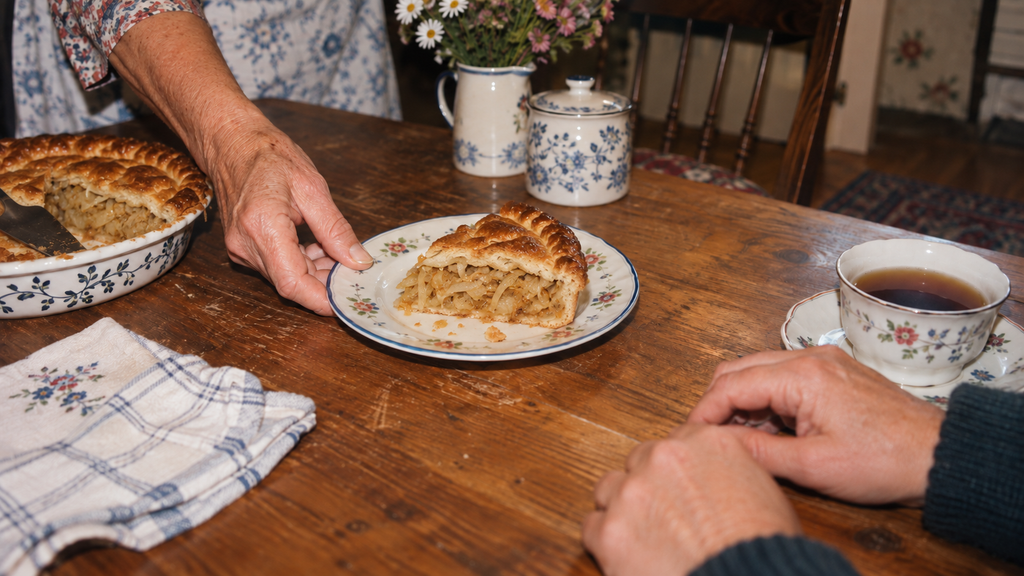
The hostess is reducing not only the size of the portion, but also the scale of the request. It was easy to refuse the whole portion; it seems like even a very small one is already inconvenient.
That's why the answer changes.
«Actually, I can't, it's very delicious, but I've already had enough.».
Here, the «no» disappeared altogether. In its place came «I can’t.» The guest doesn’t say that he no longer wants the pie. He says that he can no longer eat it. Desire and opportunity have gone separate ways; in this story, the pie is not at fault in any way.
«Very tasty» also turns out to be useful. Without it, the hostess can still decide that the person is politely trying to avoid a bad filling. With it, the reason is clearer.
One could say it another way: «I would be happy to, but I can’t do it anymore.» The particle «would» leaves the possibility of pleasure in the first half of the sentence, while the refusal is hidden in the second half.
The pie experienced a failure again.
Well, half of it
Now the owner is bargaining.
This is not a new suggestion anymore. She simply splits the old one in half and checks whether the answer will change along with the size of the piece.
Here, a long explanation starts to sound strange. The guest already mentioned both the pie and his own stomach. It remains to confirm the decision.
«Honestly, I can’t do it anymore.».
You could also change the topic: «I’d prefer tea.» Or take the problem into the future: «Leave it to me for tomorrow.» It’s even safer to ask for a piece to take with you. However, in the latter case, the refusal turned into a tacit agreement; the pie will just be eaten somewhere else.
And here the conversation takes on a second possible ending.
«Well, half of it?»
«I will not give up.».
A refusal that means consent

If you try to interpret «I will not refuse» in terms of words, nothing good comes of it. Inside, there is negation and the verb «to refuse». The whole phrase therefore means that the piece can be placed.
That's not the only way they respond to food.
«To pick you up?»
«I will not give up.».
«Would you like some coffee?»
«I will not give up.».
Moreover, there’s no need to wait for the third sentence. You can say it right away. It creates a strange symmetry: a lonely «thank you» can turn out to be a refusal, while «I won’t refuse» turns out to be a consent.
That’s why the «yes means yes, no means no» matching list ends pretty quickly. After that, you have to listen to a whole line of arguments.
What happened to the pie
In our first conversation, he stayed lying on the plate.
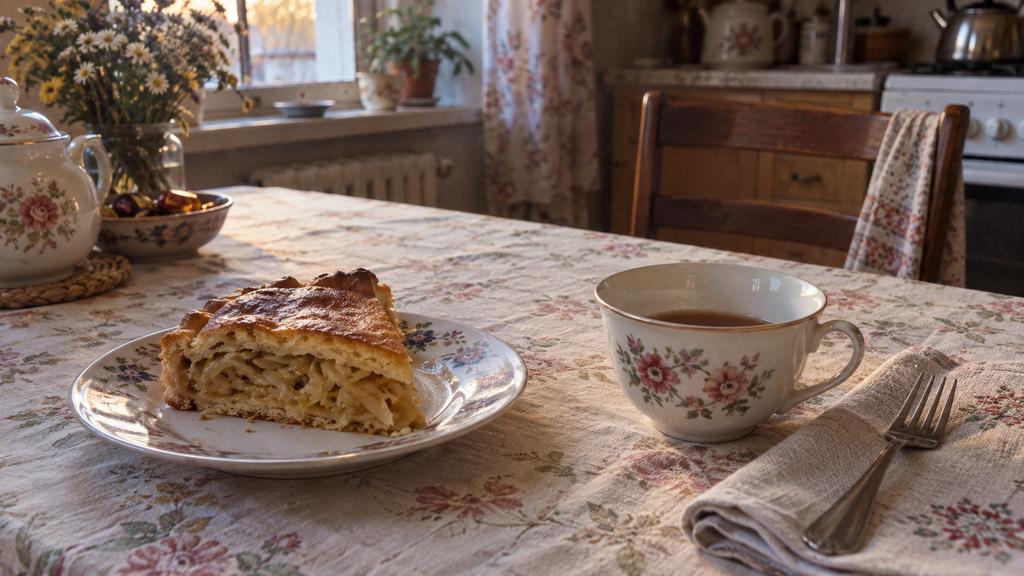
To achieve this, the guest needed a «thank you,» then a «no, thank you,» a compliment to the pie, a message about their own satiety, and finally «my honest word.» Four refusals, counting the first ambiguous «thank you.».
In another house, the same conversation could have ended with half of it gone. Or a piece of it wrapped up in the person’s belongings. Or tea instead of pie.
Therefore, the question «how to politely say no in Russian» is somewhat misleading. It’s easy to say «no» on your own. The moment when the interlocutor understands that this is the last «no» is much more interesting.
For a child who grew up speaking English, where no is simply no, these eight Russian phrases will come in handy more than once. At Palme School, children aged four to seventeen learn Russian online in small groups, and you can try it out here. two free lessons. The first methodist will listen to the child and select a group, and the second lesson will take place within that group.
Frequently Asked Questions about Polite Rejection in Russian
What does «thank you» mean after a proposal?
The meaning is indicated by the context, intonation, and what follows. One «thank you» without clarification can be understood by the interlocutor as either agreement or refusal. The dictionaries note that this word has both meanings. To avoid repeating the question, the «thank you» is accompanied by an addition that removes ambiguity.
What to say when you’re offered a treat for the third time?
It’s enough that what has already been said. It’s better to briefly repeat that you no longer want to do it, for example, «thank you, I’m really full.» You can take the conversation to tea or ask to take a piece home for later.
What does it mean to «not give up»?
This is a polite «yes». The negation here is only a formality; in meaning, the phrase means agreement. This is how they respond to a treat and other friendly offers; for example, «I won’t refuse if you bring it.».
Is it polite to say «no thanks»?
Such refusal is noticeably more pronounced. In a friendly conversation it can also be humorous, but at the table it can easily sound like irritation or a demonstrative unwillingness.
How to politely decline an invitation in a letter?
It’s convenient to talk about the situation, for example, «this time it won’t work out,» and if you want to meet up, immediately suggest a different time. In English-language materials about Russian polite refusal, there is also the phrase «I’m afraid I won’t be able to attend.» They usually answer the question about the possibility or the fact. In a business letter, they write «Unfortunately, I won’t be able to attend.».