

«Is it snowing?»
This question might appear in a family chat under a photo with snow if it is written by a child who thinks in English. It’s snowing. That means it’s snowing.
Adults are most likely to smile. They don’t say that either. They say «snow is coming.».
But in Efremova's dictionary, the verb «to snow» does exist. With the addition of the «conversational» qualifier and the meaning of «to go, to fall (of snow).» An example of this can be found in other explanatory dictionaries, «It snowed all night.».
So the child didn't make up the word. He found something real, just something rare.
And then we have a more interesting question than «is it right or wrong.».
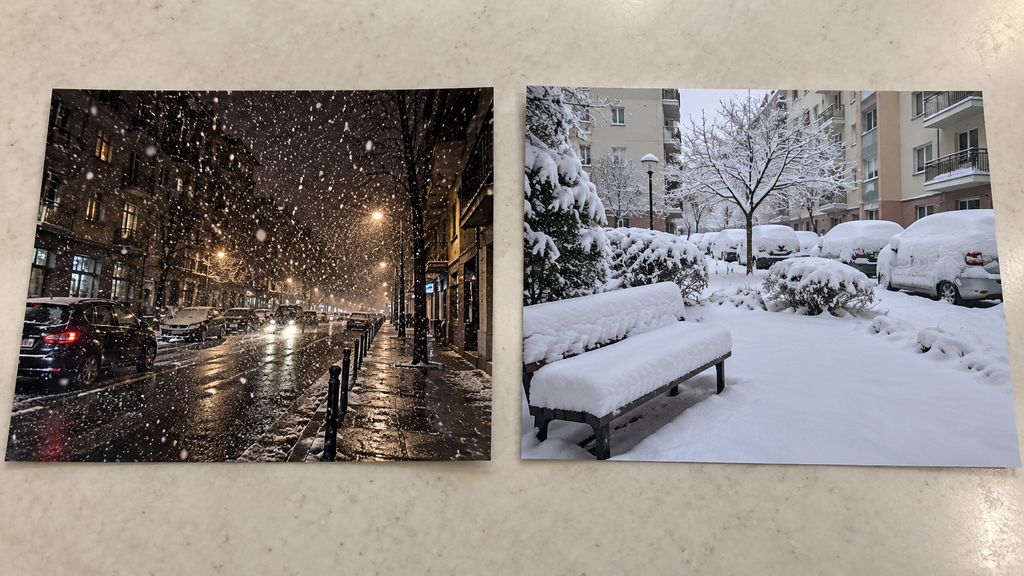
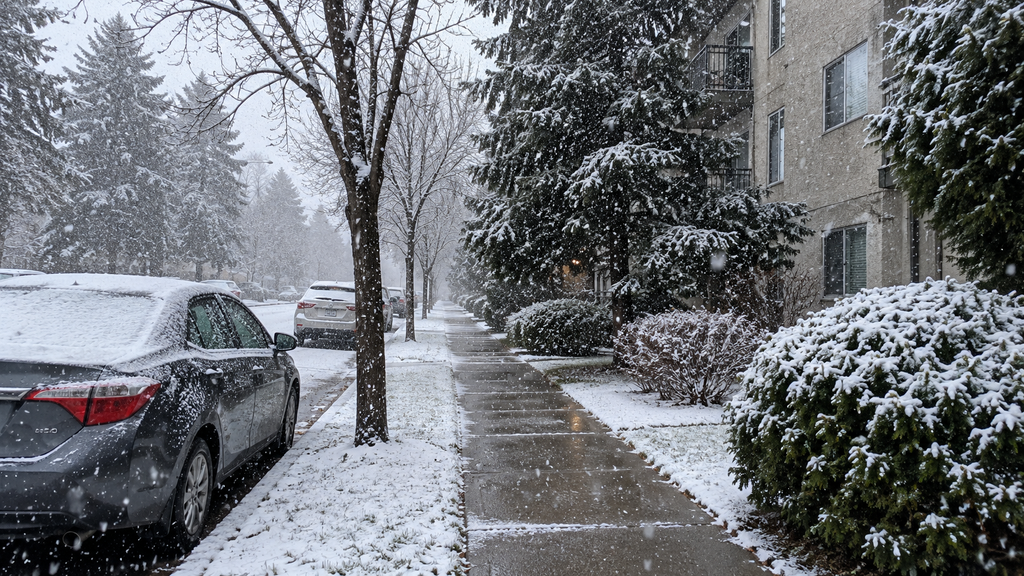
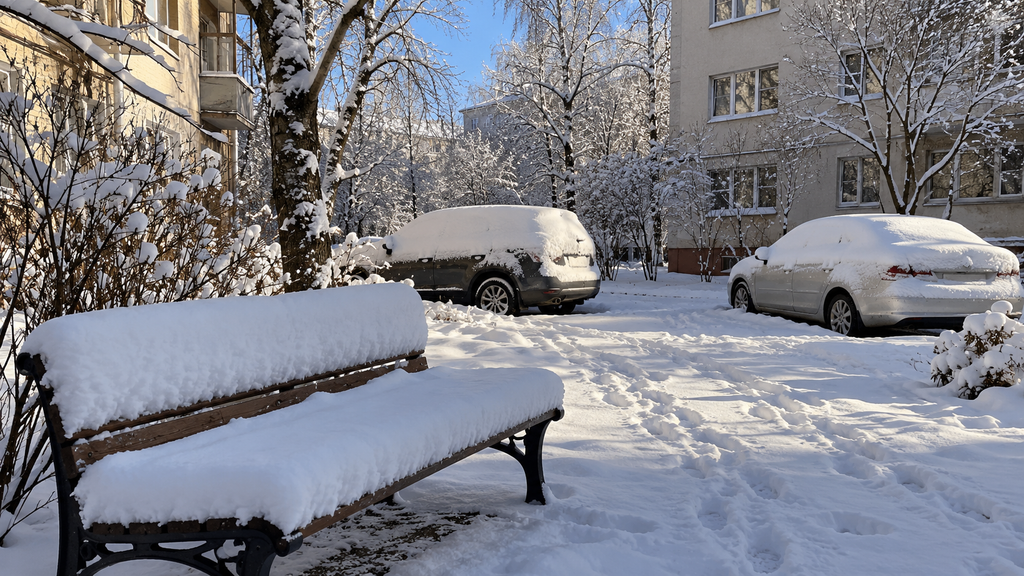
Two photos arrived in the chat from relatives from different cities. On the first photo, the street is shown; in the air, you can see snowflakes, white dots, and in some places they are drawn into dots. On the second photo, the yard is shown; the bench is covered in thick snow; there are white cars; there are traces on the ground; and no snowflakes are visible in the air.
There’s always something to answer to under each one.
The child has five options to choose from. «It will snow.» «It will snow.» «The snow is coming.» «The snow is falling.» «Snowfall.».
Which of them goes with which photo?
What a signature should be capable of
Before trying out the options, it is useful to agree on the criteria by which they will be tested. Otherwise, the dispute will boil down to «so they say» and «so they don’t say».
There are four signs.
The signature must match what is shown in the photo.
They need to understand her in the chat, and they need to understand it without smiling or asking questions again.
Nothing should be left in it that came from the English phrase and is unnecessary in Russian.
And she should talk about the time in the photo. If the snow is falling now, then about «now.» If it has already fallen, then about what happened before.
Now you can check.
«It will snow»
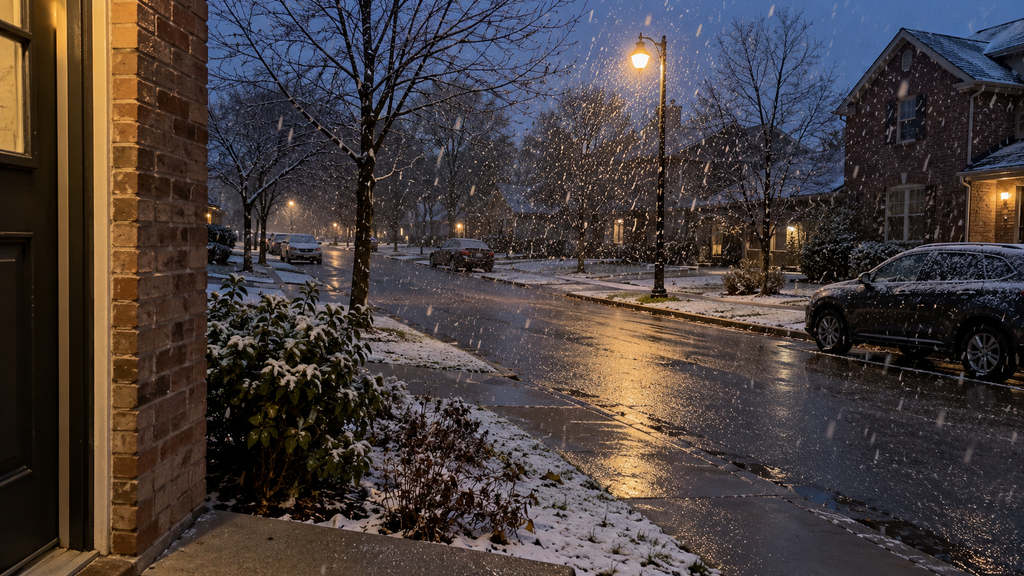
It’s snowing, and it turned into «it».
Does it match the photo? Yes, the first photo shows snow in the air.
Will they understand in the chat? They will understand, but they will ask again who the «it» is.
This is where the boundary runs. In the English sentence, without the subject, it’s awkward; so they put an empty it there. It means nothing; it just holds the place.
It is quite cozy for the Russians. It is light outside. In the evening it gets dark. It is snowing in the morning. In the fields it is snowing. No one asks who is lighting the fire and who is snowing.
«The »Snizhit« system is configured the same way. It doesn’t need »it.”.
So there is only one error in the «It will snow» variant; it is in the first word. Remove it, and the next candidate will remain.
«Snowy»
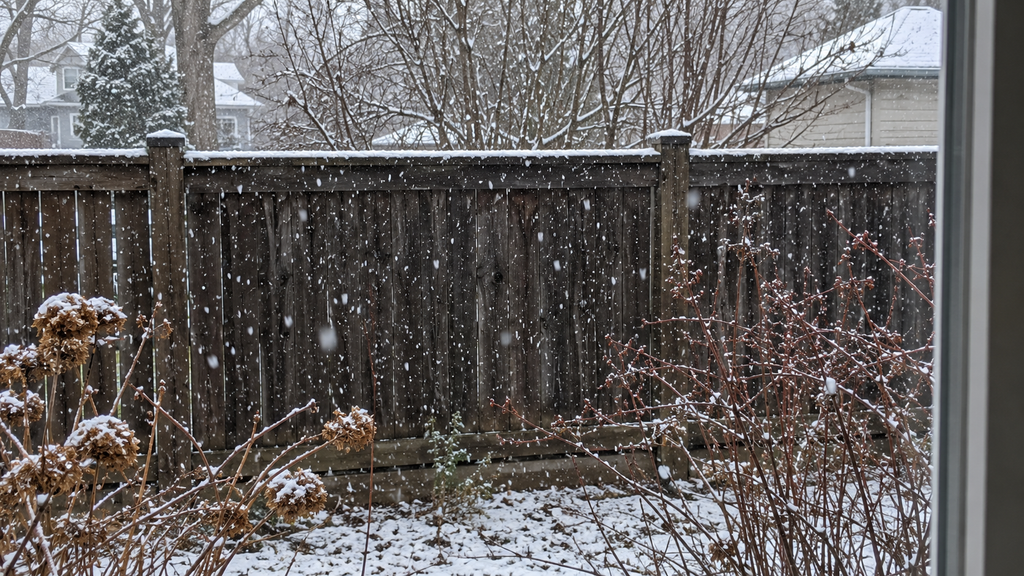
The photo matches. There’s no unnecessary English in it. It talks about the «now.».
There remains a sign that this option clashes with. Will they understand?
The dictionaries differ here. Efremova writes «conversational,» meaning that this is how people speak in ordinary speech. In Ushakov's dictionary, which is older, the same verb «oblastnoe» is used; that is, it is used in certain places.
It seems both are right. The word lives on the edge of the tongue; in some families they are known from childhood, in others they have never been heard of. One grandmother will answer, «Yes, it snowed in the morning!» The other will be surprised.
There is also a strange feature in «snowing,» which the dictionary of difficulties notes. There are no forms of «I am snowing» and «You are snowing» for the verb. Only the weather can be "snowing.".
The option for the first photo is being considered, but there is a risk that it will not be recognized.
And for the second one?
The second snowflake in the air is not visible. It’s unclear whether there is any snow there in the photo. Maybe the snowfall has ended. Maybe the snowflakes are too small for the camera.
It turns out that «Snowit» claims more about the second photo than it actually shows.
But the very lexical example fits it almost like a caption. «It snowed all night.» It was night, and in the morning the yard was white. This refers to what happened before, and the photo does not contradict that.
«The snow is coming»
The most common option, and it’s understandable why.
In English, snow is both a thing and an action. The snow, to snow, is one word. In Russian, the usual verb for snow is almost nonexistent; «to snow» lives on the edge of the dictionary. Therefore, the Russian takes the object, the snow, and gives it a motion verb. The snow comes, just as the rain comes.
Why «is going» when snow has no legs? There's no need to explain it. It's a common meaning of the word, like «the lesson is going on» or «the movie is going on».
We are checking.
The first photo matches. Everyone will understand in the chat. Nothing superfluous. About «now».
All four characteristics converge.
With the second photo, the same question as with the «snowy one.» Is there any snow now? The photo doesn’t say. «Snow is coming» would be a guess.
«Snow is falling» and «snowfall»
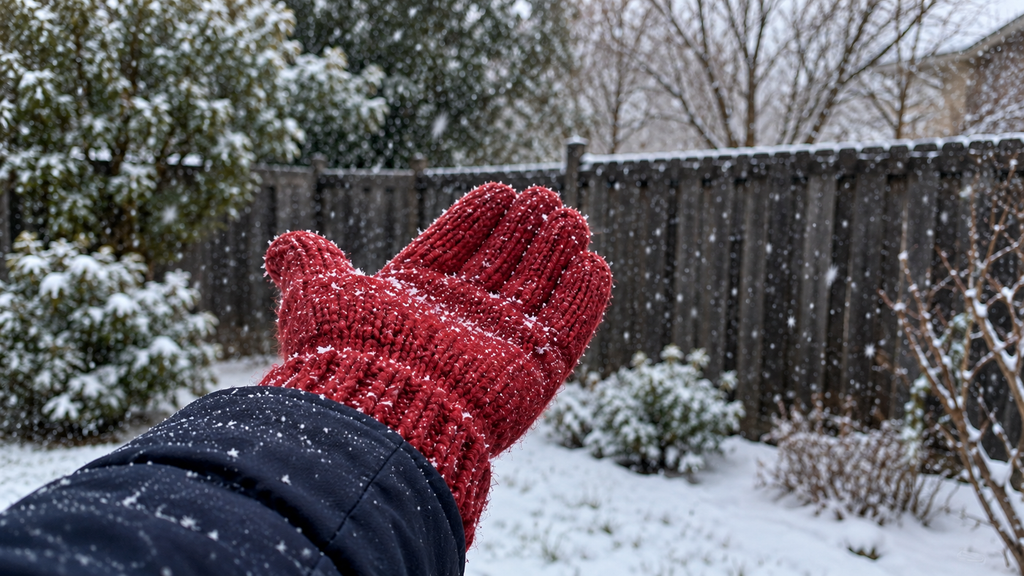
«Snow is falling» is almost a duplicate of the previous one. It's a little more like what the eyes see: the snowflakes are flying from top to bottom. It fits the first photo, with the same caveat.
«Snowfall» sounds differently. It is a noun, and in the caption under the photo it is read as the title of the weather forecast. They will understand. But the grandmother is waiting for an answer from her grandson, not from the weather station.
What is missing among the five candidates
If you add up the tests, the picture becomes unexpected.
Four of the five options apply to the first photo; the fifth, «it snows,» is made with a single crossed-out word.
None of the second photo is a convincing match. All five of them say there is snow falling, but the photo shows no snow.
The second photo shows something different. There is snow lying there.
It lies on benches, on cars, on branches. This word refers to the fact that the snow is already here and is not moving anywhere.
There was no such candidate among the candidates. A child who translates from English will easily miss it. It’s snowing, but there’s no ready-made English formula for the lying snow that one would like to translate.
In the chat, the caption is already there under the second photo. «It’s snowing, look.» «It’s snowing.» It’s also about the past; like «it snowed all night.» There was snow, and now there’s snow lying around.
Which signature suits the drawing
And what's under your window

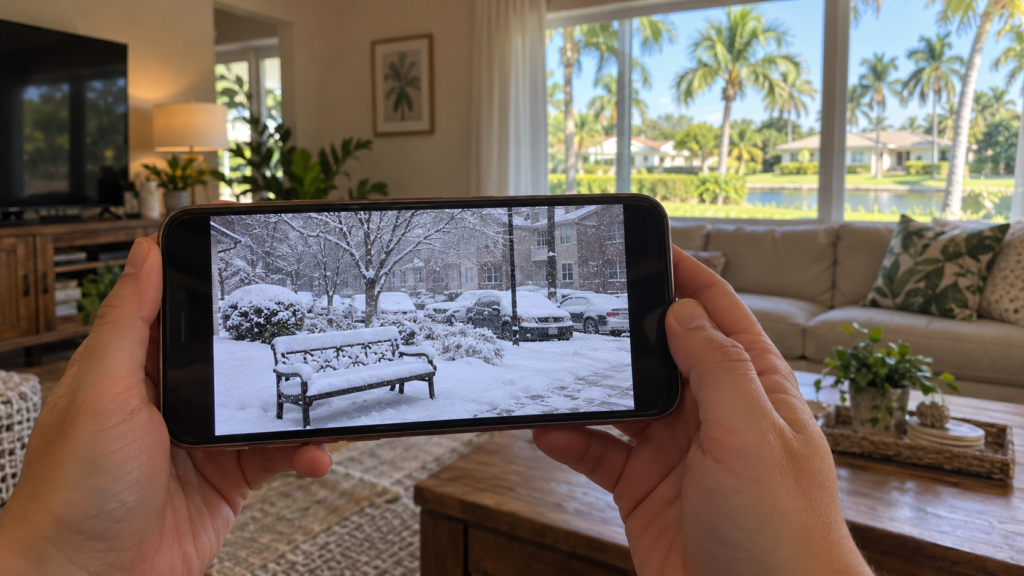
There are palm trees outside the window of the child's room.
And here «Sneizhit» shows another side.
«It won't snow» means that there is no snow right now.
«We have no snow» means that there is no snow at all, neither in the air nor on the ground.
For a house where there are green palm trees in winter, the second phrase is more accurate. The first one is suitable for a day when there is already snow in the mountains and it is clear in the city.
There was «snow,» and it became «snow.» You don't need to understand the rule; the sentence is short, so it's enough to say it in its entirety.
The next photo
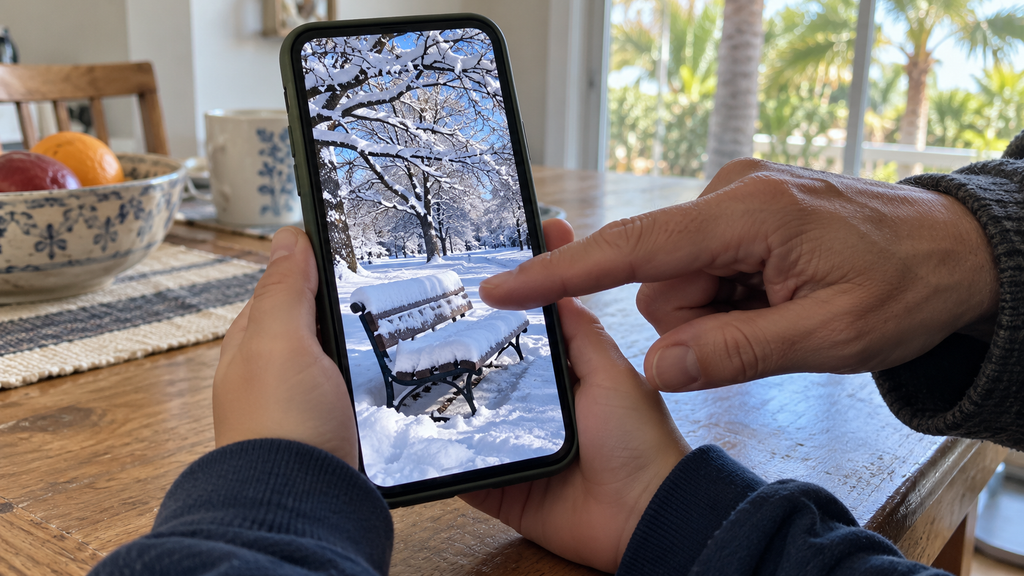
Pictures with snow will be coming to the chat all winter long.
If the child writes «snow» under one of them, don't rush to correct it. He chose the correct word.
It would be better to ask him how to solve this problem:
«And in the photo, is the snow falling or already lying there?»
Frequently asked questions about snow in photos
Is it possible to say «it snowed»?
It is possible. The verb «to snow» is in Efremova’s dictionary with the hyphen «colloquial». In other dictionaries, it is given as an example «It snowed all night». This is a rare word; in some families people know it, in others they have never heard of it, so in a chat it is clearer to say «the snow is falling». If a child wrote «it snows», it is first necessary to understand what they meant and then offer the usual option. It is not necessary to say «it snows», because the verb does not require a subject.
Can snow be both falling and lying down at the same time?
Maybe. The snow is lying on the ground, on benches and cars, and new snowflakes continue to fall at this time. If both of these things are visible in the photo, both the captions «Snow is falling» and «Snow is lying» will be appropriate. If the snow is not visible in the air, it is safer to write only that the snow is lying.
Is it possible to tell from the photo that the snow is the first one?
No. The photo shows whether it is snowing or not, but it does not say whether it has been snowing before this autumn. Without information from the person who took the photo, it is impossible to determine that. Therefore, the child can simply ask in the chat: «Is this the first snow?»
We have already told you about the different weather conditions in different parts of Russia. An article about the weather in Russia.