



Emma, who is learning Russian while living in Boston, once complimented a friend's blue dress, but called it sianiy. The friend gently corrected her, saying the dress was goluboy, and it wasn't called sianiy there. For Emma, both shades were the same "blue," and the correction caught her by surprise. Thus, because of one dress, she learned that Russians perceive color slightly differently than English speakers, and that a whole world lies hidden behind what appears to be a simple topic.
The riddles then poured down one after another, during walks, in the store, in the kitchen, while doing repairs. Russian colors turned out to be both about perception, and about capricious grammar, and about history with omens. Below is Emma's story in order, and the full reference guide, the very one that is searched for by the query "colors in Russian," with color samples and pronunciation awaits at the end.
Two blues and one dress

The incident with the dress wasn't your friend's whim. English has just one word, "blue," for the entire spectrum of blue, from the sky to the night sea, while Russian divides it in two. "Siniy" is deep and dark, the color of ink, the evening sky, and jeans. "Goluboy" is light and delicate, the color of a clear day and forget-me-nots. The Russian ear perceives them as two distinct primary colors, on par with red and green, and confusing these words is as strange as calling pink red. According to one theory, the word "goluboy" itself got its name from the pigeon, from the gentle grayish-blue sheen on its neck, although its origin remains debated.
That evening, Emma checked herself by looking at the sky, and indeed, towards sunset, the blue of day slowly thickened into the blue of night, and the boundary between them could almost be felt. Later, she read that this difference is even visible in experiments. Psychologists compared how English and Russian speakers distinguish between close shades of blue, and Russian speakers were slightly faster at separating light blue from dark blue because the boundary between the two words lies there for them. The language a person thinks in slightly adjusts even how they see color.
The difference continued to emerge at every step. A light blue shirt and a blue shirt in the store turned out to be different things, and they talked about light blue and blue eyes separately. Emma even noticed that the middle stripe of the Russian flag is actually blue, not light blue, although for a novice eye, either would have passed. For a family where a child is growing up speaking Russian, there's an important detail here: both shades of blue should be called by their correct names from an early age, then the distinction between them will settle on its own. Over time, Emma herself began to automatically choose the right word, a light blue envelope, a blue coat, and was happy when her friend no longer corrected her.
How Emma painted the room

The real test came with the renovation. Emma decided to repaint the room and for the first time encountered a whole palette at once. In the paint store, she remembered primary colors Along the rainbow, red, orange, yellow, green, light blue, blue, violet, the same rhyme about the hunter who wants to know where the pheasant is sitting. The English hint about Roy G. Biv is arranged similarly and also gives seven bands, only the seventh there is called indigo, a dark blue tone, so both rainbows divide the blue, just at different borders. The seller explained in passing that warm tones, red, orange, yellow, visually warm and bring the wall closer, while cool tones, blue and green, push it away and calm.
Choosing the shade also turned into an adventure. Emma wanted a soft light blue for the bedroom, but accidentally tapped on a deep blue, and the salesperson asked if she was sure she wanted such a dark color. The difference between blue and navy, which she had learned about because of a dress, suddenly became very practical, because the room would be airy or severe depending on that one word. In the end, she chose the blue for the walls and the navy for one accent shelf, and both blues coexisted beautifully in the same room.
Grammar started at home. Emma proudly told her friend that she bought red paint, and she laughed, paint is red, it's feminine gender. It turned out, color in Russian is adjective, and the adjective adjusts to the word. Red scarf, red wall, red blanket, red curtains – one word changes its ending according to gender and number. Blue behaves a bit more gently: blue, blue, blue, blue, but on the same principle. By evening, describing the finished room – green walls, white table, blue blanket – Emma was adding endings almost without thinking. It was funny that the mistakes disappeared not so much because of the rule, but out of habit. At first, she’d glance to see the gender of the word, but after a week, "red wall" and "blue blanket" came out on their own, as if the ending had become one with the object.
A simple trick, suggested by her teacher in class, helped her. Instead of holding a single word in her mind, she held a pair: a color and a typical object, like a red apple, a yellow sun, or black coffee. Then, the needed form would come along with the image. Her teacher also happened to mention that colors have three types of endings: a hard ending (-ый) like in "red," a soft ending (-ий) like in "blue," and a stressed ending (-ой) like in "light blue" and "gold." Each ending has its own set of rules, but the system is surprisingly regular.
A walk around Red Square
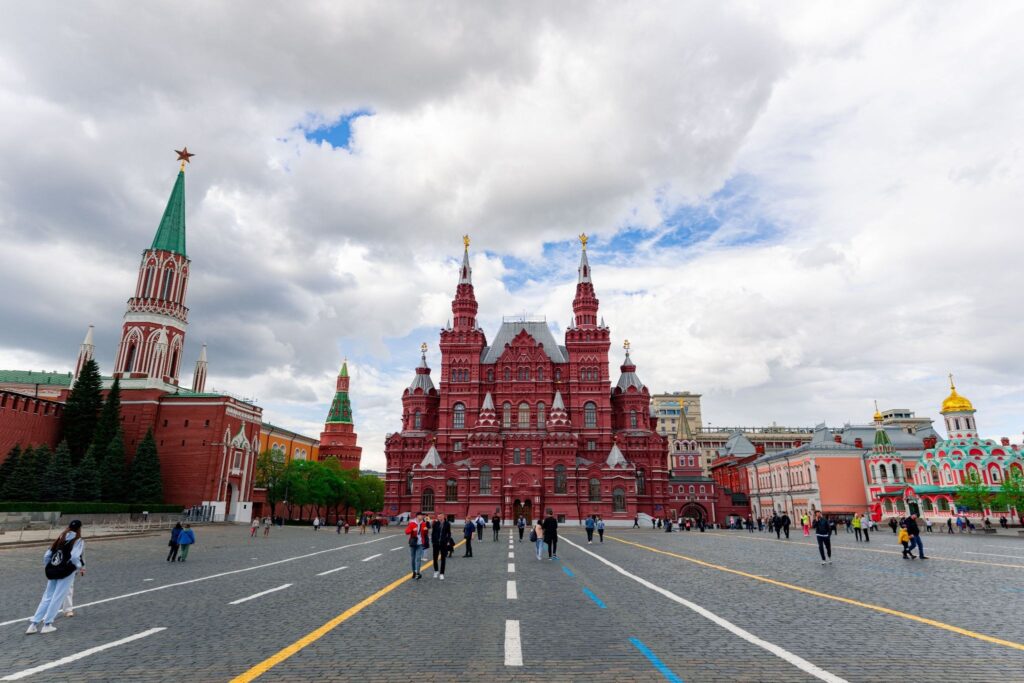
A special discovery awaited Emma on Red Square. She was convinced that the square had been named for the color of the Kremlin walls or for its Soviet past—and she was wrong on both counts. The word “red” comes from “krasa,” meaning “beauty,” and for centuries it has referred not so much to the color itself as to everything that is beautiful and good. Red Square means “beautiful,” and in that same old sense, a girl in fairy tales is called a “red maiden,” and the most honored place in a house with icons is called the “red corner.” The familiar meaning of “red” became associated with the word later on, but the original meaning lives on in these expressions and in the “red days” of the calendar—that is, the holidays. This discovery turned everything upside down for Emma; she had thought that the connection between red and beauty had long since faded, but the language had carefully preserved it for centuries.
Walking, Emma began to notice how thickly the color had sprouted into Russian speech. About the master they will say golden hands, ..., about a slacker who does shoddy work, about a newbie who is still green. A black day means difficult, a blue dream the most cherished, gray weekdays boring, and newspapers that love gossip are called yellow press. There are even two kinds of envy: white, quiet and harmless, and black, evil. Colors in Russian have long lived beyond the palette, and Emma found understanding their figurative meanings no less important than the colors themselves. Her friend, walking alongside her, added that the old meaning of red is still heard today; one only needs to recall the expression "krasnoye slovtso" for a witty, beautiful word. Emma jotted it down in her notebook, where she collected everything that caught her attention.
Colors in the Kitchen and at the Market
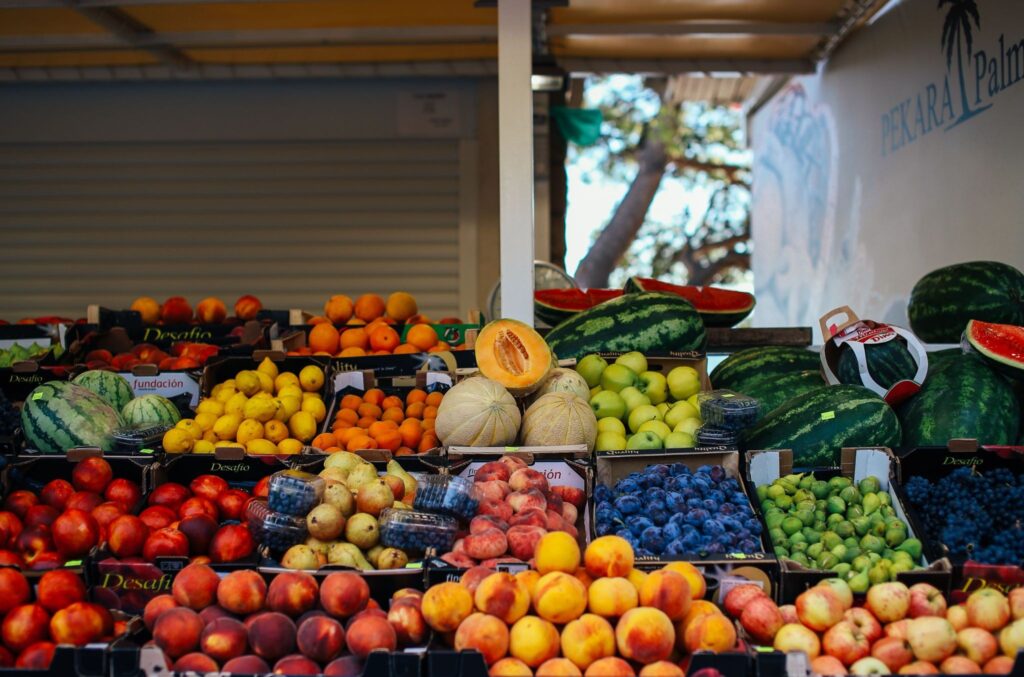
The kitchen introduced Emma to a different kind of word. While brewing cinnamon tea, she learned that the color “brown” got its name from that very same cinnamon. From then on, she began to notice such connections everywhere. Crimson reminded her of raspberries, cherry of cherries, lilac of lilacs, pink of roses, and turquoise was named after the stone. Orange turned out to be a special case; the word came relatively late from French, where the color was named after the orange, whereas the Russian word for “orange” made its way from Dutch. Previously, this shade had been described as “reddish” or “yellow-red.”.
And one day, while cooking borscht, Emma asked what color it was, and learned that beets give it a burgundy or beet-red hue rather than a pure red—and once again, the Russian turned out to be more accurate than she had thought. The kitchen is generally full of such words—coffee-colored, chocolate-colored, honey-colored, mustard-colored—each named after something delicious and therefore easy to remember.
The market offered even more shades, and almost every one was tied to a familiar object. Sandy, brick, pale green, emerald, burgundy – as soon as you heard the root word, the color appeared in your mind's eye without any dictionary. Emma realized that such words didn't need to be memorized from a list; it was easier to associate them with things, and then they'd come to mind on their own when needed. For a child, by the way, this comes especially easily through familiar fruits, berries, and flowers. At Emma's home, her kitchen cutting board became a makeshift dictionary; she labeled each new shade next to whatever it reminded her of, and after a month, the board was adorned with a dozen names.
Brown eyes and auburn hair
When meeting new people, Emma stumbled upon words that behaved in a strangely selective way. Describing a new friend with brown eyes and blonde hair, she learned that "карий" (kariy) primarily describes eyes (brown eyes in English), while you can't say "карий стол" (kariy stol) or "карий шкаф" (kariy shkaf). Only hair can be "русые" (rusyye), that very common light brown shade; hair that has turned gray is called "седые" (sedyye). For an English ear, this is unexpected, as "brown" applies equally to eyes, tables, and hair. The new friend's name was Dasha, and intending to praise her eyes, Emma checked a dictionary just in case. There she discovered that for eyes, Russian has a special word "карие" (karie), and "коричневые глаза" (korichnevyye glaza) is not said at all. Later, looking through Dasha's old family photos, Emma herself learned to distinguish "русые" (rusyye) hair from simply light hair and admired her grandmother's beautiful gray locks.
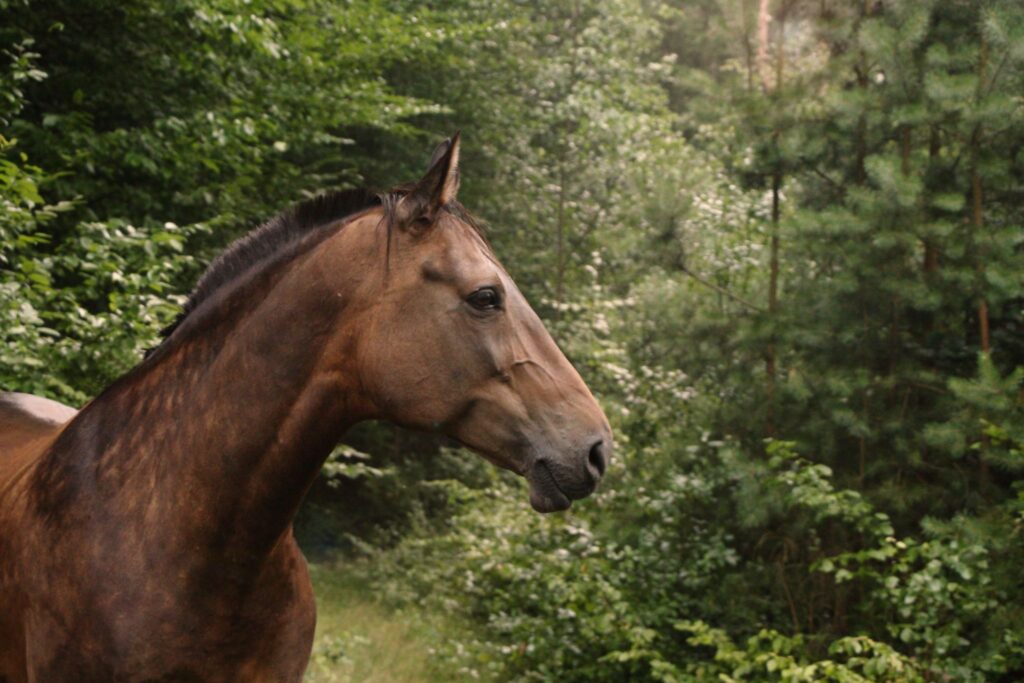
Later, on a horseback ride, the palette narrowed again to specific creatures. Horses have their own system of coats: a black horse is "voronoy" (black), a bay horse is "gnedoy" (brownish), a sorrel horse is "kauryy" (reddish), and these words don't typically stick to other animals or objects. It's as if Russian saved separate colors for eyes, hair, and horses, emphasizing that they deserve them. For a child, it's convenient to learn such words in a group right away, like brown eyes, light brown hair, so they don't get confused with ordinary colors.
Fitting room and stubborn beige

Emma had a pleasant surprise at the clothing store. Several colors in Russian absolutely refuse to change. Beige coat, khaki pants, burgundy dress – all these borrowed words remain unchanged, regardless of their gender or number. Emma unexpectedly liked this; it's rare when there's nothing to learn, and the word is the same for all forms. However, the saleswoman immediately said "beige coat" (бежевое пальто), and Emma realized that in spoken language, "beige" (беж) is more often turned into the customary declinable "beige" (бежевый), and the indeclinable form sounds more like it belongs in a store than at home. At the same time, the saleswoman showed off fashionable color names like marengo, electric, and fuchsia, and noted that some of them also do not decline. Emma decided to leave these nuances for later and, for now, remember the main thing: beige, khaki, and burgundy don't need to be changed.
Yellow flowers and other omens
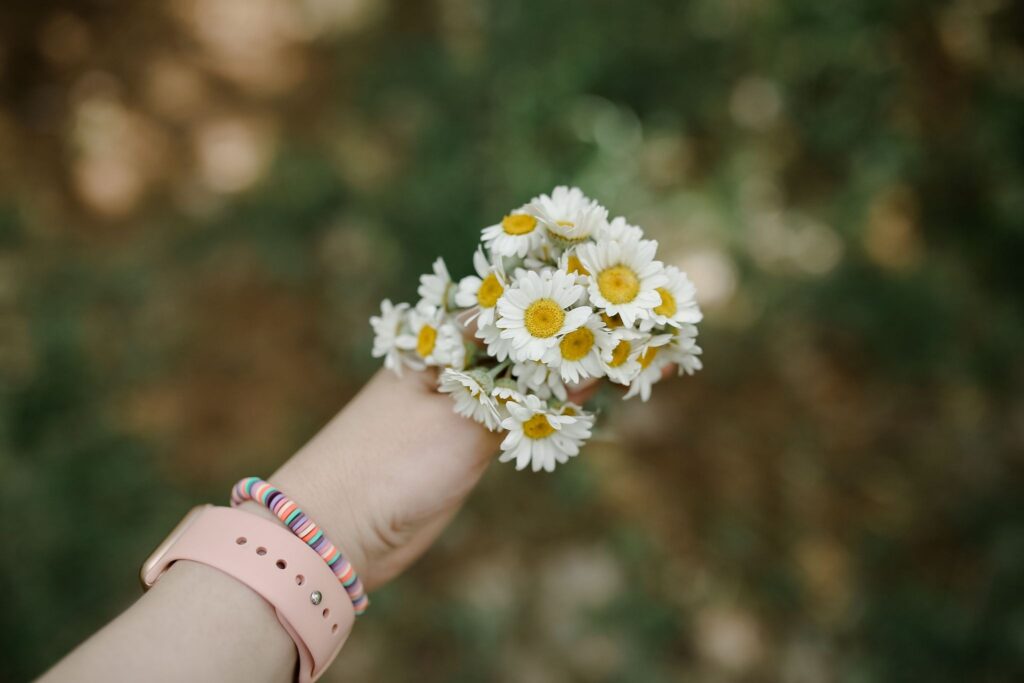
Towards the end, Emma realized that in Russia, color matters even in everyday trifles. When preparing to give a bouquet, Emma almost chose yellow flowers, but remembered something she had read the day before: in Russia, according to an old belief, they are associated with separation, so she rearranged the bouquet in other colors. A black cat crossing one's path, by the same folk logic, bodes ill luck; a bride wears white to a wedding and people wear black to a funeral. In some places, a thin red thread is still tied around the wrist to ward off the evil eye. All of these are no longer strict rules, but living superstitions, yet it's useful to know them to avoid being surprised by your interlocutor's reaction.
Emma also noticed the lighter side of color. Blue blood is jokingly called aristocratic origin, green became the color of nature, and at the same time of longing, for which the expression "green melancholy" is responsible. White is associated with purity and celebration, black with mourning, red with triumph and victory. And the Russian language paints the seasons in its own way: winter is called white for the snow, autumn is golden for the foliage, and the expression "golden autumn" has become the almost official name for September and October. A child absorbs these familiar combinations along with poems and songs, and color subtly weaves into conversations about nature and weather. And at the same housewarming of the same friend, Emma caught herself choosing a red tablecloth for the holiday and white napkins, as if the colors were already suggesting her mood. Omens and habits, initially foreign, gradually became her own.
How did all this fit together?

By the end of her colorful epic, Emma realized that colors only pretended to be a simple theme. Behind them lay a particular view of blue, red with the meaning of beauty, whimsical endings, a scattering of borrowings from fruits to stones, separate colors for eyes and horses, and a whole heap of omens. Individually, it's all simple, but together it's an entire layer of language and culture that cannot be learned by memorizing a table. However, it fits perfectly when colors are seen and named firsthand, as Emma experienced them, in her dress, in repairs, at the market, and on a walk. She didn't learn any of these words from a list; each came with its own story or scene and therefore remained in her memory.
It's even easier with children, because colors can be drawn, searched for, and turned into a game. Talking about the color of the car outside the window, a favorite t-shirt, or soup in a bowl gives a child both the word, agreement, and a vivid image right away. This is how colors stick in memory more firmly than any list, through hundreds of small scenes. This is how language works at Palme School. Russian is taught through conversation, play, and real-life examples to children from four to seventeen years old, online and in small groups. You can learn more at two free lessons. The first is an introductory session where a methodologist assesses the child's level and selects a program. The second is a trial session, which takes place in a small group with a teacher.
Home
Colors in Russian start with and are held together by surprises. One English word, "blue," splits into *siniy* (dark blue) and *goluboy* (light blue). "Red" (*krasnyy*) holds a memory of beauty, and each color name lives as an adjective, changing its ending to agree with the noun. Add to this the hues of fruits and stones, separate words for eyes and horses, a couple of indeclinable loanwords, and a heap of folk omens, and this seemingly short topic turns into an entire layer of language and culture. Emma's story shows that it's easiest to grasp in spoken language, and a full list with pronunciation and facts is always at hand in the table below.
The stress is marked with a sign above the vowel, and pronunciation is given in Latin script for those coming from English. The color sample is on the left.
| Color | Word | Pronunciation | Translation |
|---|---|---|---|
| Primary colors | |||
| red | beautiful | red | |
| orange | orange | orange | |
| yellow | yellow | yellow | |
| green | green | green | |
| blue | dove | light blue | |
| blue | sinus | Dark blue | |
| purple | Violet | purple | |
| white | Colt | white | |
| Black | choir | black | |
| gray | serious | gray | |
| brown | coriander | brown | |
| Pink | pink | Pink | |
| Shades and colors from things | |||
| beige | Beige | beige | |
| burgundy | burgundy | maroon | |
| turquoise | birch | turquoise | |
| lilac | siren-like | lilac | |
| raspberry | Raspberry | raspberry | |
| light green | salad | Light green | |
| golden | Golden | gold | |
| silver | silver | silver | |
| Special colors for eyes, hair, and horses | |||
| brown | carry | brown eyes | |
| light brown | Russia | light brown | |
| gray-haired | sedoj | gray (hair) | |
| raven | Voronoi | black horse | |
| Bay | gnedój | bay | |
| brown | kaury | chestnut | |
01 Why are blue and light blue considered different colors in Russian?
Russians consider them two distinct primary colors, rather than light and dark shades of one. Blue is deep and dark, while light blue is light and gentle. English "blue" covers both simultaneously, and this is the main difference in perception between the languages. Russian speakers are accustomed to naming these colors differently from childhood, so the boundary between them seems completely natural to them.
02 In Russian, the word "red" (красный - krasnyy) changes its ending to agree with the gender and number of the noun it describes. Here's how it changes: * **Masculine:** красный (krasnyy) - *e.g., красный шар (a red ball)* * **Feminine:** красная (krasnaya) - *e.g., красная машина (a red car)* * **Neuter:** красное (krasnoye) - *e.g., красное яблоко (a red apple)* * **Plural:** красные (krasnyye) - *e.g., красные цветы (red flowers)*
"Red" changes its ending depending on the word it refers to. Red scarf, red car, red apple, red flowers. In the feminine gender, the ending becomes "-aya", in the neuter "-oye", in the plural "-yye", and almost all colors behave this way because in Russian they are adjectives and agree in gender, number, and case.
03 Is it true that Red Square is not named for its color?
Yes. The word "krasny" used to mean beautiful, and the square was named precisely for its beauty, not its wall color or politics. The same old meaning is preserved in the expressions "krasna devitsa" (beautiful maiden) and "krasny ugol" (beautiful corner, icon corner), so red and beautiful were once almost the same word.
04 Why doesn't the color beige change?
Beige came from French and remained indeclinable in Russian. Beige, khaki, and burgundy do not agree in gender or number, for example, a beige coat, not a beige coat. In everyday speech, beige is often replaced by the declinable "beige," which has the usual endings.
05 What Russian colors should you start learning?
The easiest way to start is with the basic colors: red, blue, cyan, green, yellow, white, and black. You see them around every day, and they are quick to learn. It's convenient to add orange, purple, brown, pink, and gray next, and leave different shades and non-declining loanwords for later.