In the school chess club, the child hears «you hung your queen», but at home for the same mistake he is told «you lost a pawn». The coach and dad talk about the same moment, about the move after which the pawn is given away to the opponent.
Russian chess discourse holds two words for this one second. «The pawn is hanging» is said about a piece. In chess discourse, this is sometimes simply said about an unprotected piece, but we will take a more specific example: a piece under attack, and after its capture there is no way to respond with a capture. «Zeon the pawn» is already said about a player. «Zeon the dice» means to carelessly allow it to be lost, and the colloquial «to zeon» also has the meaning of «losing due to negligence.» In English, a similar pair, “hanging piece” and “to hang a piece,” although it does not completely correspond to the Russian words, is used.
«Висит» describes the position of the figure, and «зевнул» indicates a player’s mistake. After a failed move, both words can refer to the same situation. Therefore, before the move, it is worth checking what will change on the board.
Two questions before proceeding
The check is based on two questions. What are my pieces currently under attack? After my move, will any of my pieces be under attack without protection?
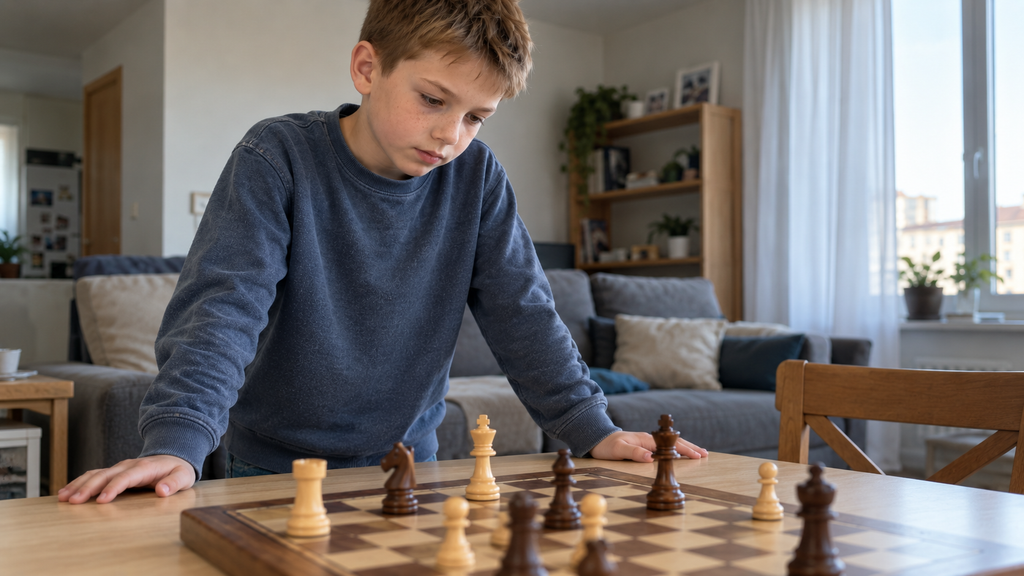
The first answer is given by looking at the board as it is. The white players move first; the black players don't move yet, but they have already made their plans. For each of their figures, the child checks whether they can take something from someone else; if they can, who is protecting them.
The second one is more difficult; the board he asks about isn’t ready yet. The move is first done in the head. It’s convenient to say it out loud, «I want to go with the knight to g5. What then?» and look at the board again, with the knight in a new position.
Elephant on d4
Here is the position where the answer to the first question is calm, but the answer to the second is not. The white king is on g1, the elephant is on d4, the knight is on f3 and the pawn is on b2. The black king is on g8, the rook is on d8 and the pawn is on b7. The black rook is looking vertically directly at the elephant. While the knight is on f3, the white knight will answer with a knight to capture the elephant, and the black knight will give up the pawn for the elephant.
The horse jumps onto g5, closer to the black king. The move looks bold, and there is nothing threatening the horse itself. However, the elephant no longer has a defender, and the laddle takes it without a response. This allows the elephant to charge, without even moving it.
The presence of a defender by itself does not guarantee security. If a pawn takes a protected knight, and the defender then takes the pawn, the owner of the knight gives it up for the pawn. Therefore, you need to look not only at the defenders, but also at which pieces will be exchanged.
Attack and defend
For bilingual chess players, it is more convenient to first show the chess words and then name them. First, the word «elephant can take a horse» is heard, and only after that the action gets a name—attack. Similarly, with «under attack,» «under attack,» «hit,» and «defend.» These expressions are found in Russian programs for beginners« chess training. In a club, the trainer will say »attack« and »defend,” and at home, “attack” and “defend” will be heard. An adult can show the same attack or defense on the board and name them in both languages.
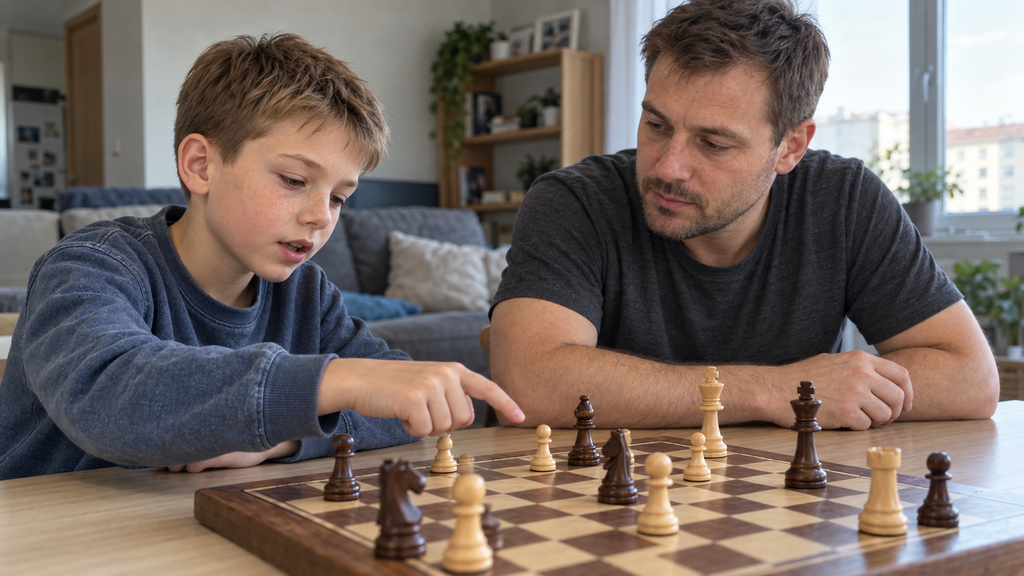
These questions do not exclude errors. Even experienced chess players make mistakes. In disassembled positions, they help to see who attacks a piece and what changes after the defender retreats.
The elephant on d4 is waiting on the interactive board below, in the third position. Two pawns are in front of it. In the first position, it is currently hanging, in the second position, the pawn is not protected, but it is not currently attacked.
Check the board yourself
Your white pieces are your moves; move your white pieces. Click on your piece: the opponent’s pieces that attack it will turn red, and your pieces that defend it will turn green. The dots indicate where your piece can go. Click on a dot, and the board will show you where it was hit after this move.
The figure is under attack
Which of your pieces is currently under attack? Hit the knight e4. Then try to move it away so that it no longer hangs there.
attacksprotectshangingunder attack, but protected
At the online chess classes at Palme School, children discuss positions with a coach and talk about moves, attacks, and defense in Russian. You can take classes in small groups or individually.
You can learn more about the course on chess page. You can also sign up for two free classes there.
Sign up for chessFrequently asked questions about hanging figures
What does «the figure hangs» mean in chess?
In chess parlance, this is sometimes simply referred to as an unprotected piece. In this article, we discuss the case where a piece is under attack and there is no way to respond with a capture after it has been captured.
What does it mean to «summon» a figure?
«To »lose a dice« means to carelessly allow it to be lost. The ordinary word »to lose« also has the meaning of »failing through negligence.« »Lies hanging« describes the position of a figure, while »to lose a dice” indicates a player’s mistake.
In English, how do you say that a figure is hanging?
There is a similar pair of terms in English chess terminology: "hanging piece" for a piece and "to hang a piece" for an action by the player. These expressions do not fully correspond to Russian words, but the situation on the board remains the same.
What questions can a child ask themselves before going on a walk?
Two questions. Which of my pieces are currently under attack? After my move, will any of my pieces be vulnerable without protection? For the second question, the move is first made in my head and then looked at on the board again.
If the figure is being protected, then it is safe?
Not always. The defender can take the attacking piece in response, but the exchange can be disadvantageous. If the defender takes the protected piece, and the defender then takes the piece, the owner of the piece gives it up for the piece. Therefore, it is worth looking at which pieces will be exchanged.
How to use the interactive board in the article?
At the beginning of each position, the white pieces move. Click on the white figure to see the attacking pieces, the defenders, and the available moves. Click on the marked cell to check the move. For another option, click «Undo move.» In the third position, try moving the knight from f3 to g5.
We have a separate section on the history of gambling in Russia. A story from Alekhine to Kasparov.