

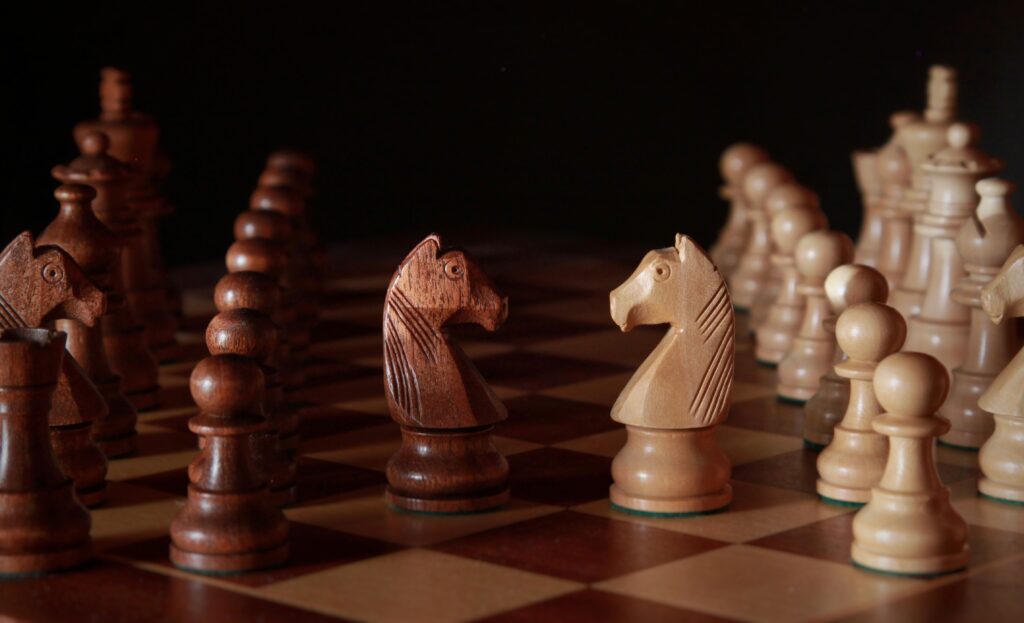

An old wooden board used to be found in almost every home. It would be brought out in the kitchen after dinner, laid out on a bench in the yard, taken on trips and to sanatoriums. The pieces might be chipped, a horse might have a broken ear, or a lost pawn might be replaced by a button, and still, people would spend hours hunched over this board, until their voices were hoarse, until it was dark. Chess problems were printed in newspapers, games were analyzed on the radio, and there was always a grandfather in the yard ready to beat any boy and immediately explain where he had blundered his queen.
From this ordinary parlor game grew something almost unbelievable. Anyone who searches for "russian chess," "soviet chess," or "chess russia" stumbles upon a history that is hard to believe. One country, for decades, supplied the world with champion after champion, and the crown of the strongest chess player on the planet settled firmly in Moscow. The story continues, from Alexander Alekhine to Garry Kasparov, about the school that turned a game played at the kitchen table into a matter of national pride.
The game that settled in every home
Chess arrived in Rus' a very long time ago, long before any sports, and for centuries lived a quiet domestic life. Mikhail Chigorin was the first to make a name for Russians at the chessboard. At the end of the nineteenth century, he twice vied for the world crown with Wilhelm Steinitz, the very first official world champion, and although he lost both matches, he lagged only slightly behind, and his play infected a whole generation of his compatriots with chess. It is no coincidence that he is called the founder of the Russian chess school, the one that would later resound throughout the world.
True world fame began with another person. The first world champion whose roots went back to Russia was Alexander Alekhine. He was born in Moscow, moved to the West after the revolution, and in 1927, in a long match, he defeated the Cuban virtuoso Capablanca and won the highest title. Alekhine's play was distinguished by boldness and cunning of design; opponents simply could not withstand the depth of his calculation, and he did not give up his crown until the end of his days, until 1946. For many in his homeland, his successes proved a simple thing for the first time: Russians can be the best in the world in chess too.
The news of Alekhine fell on fertile ground. People loved playing chess in Russia even before him, and after his triumphs, they became completely captivated by the game. Chess was not considered a frivolous pastime; it was treated with respect, as an activity that showcased a person's intellect. Chessboards could be found in clubs and in factory recreation rooms, people would solve chess problems from the newspaper with their whole family, and a strong player in the courtyard commanded no less respect than a musician with an accordion. Chess also permeated high culture. Books were dedicated to it; one only needs to recall the story of the grandmaster in Nabokov's «The Defense» (or "The Luzhin Defense"). And the amusing invention about the future chess capital of the world in the sleepy backwater of New Vasyuki from an old satirical novel has long since become a common saying. Only one step remained: to transform this nationwide love into a well-oiled system. And this step was soon taken.
When the state sat down at the board
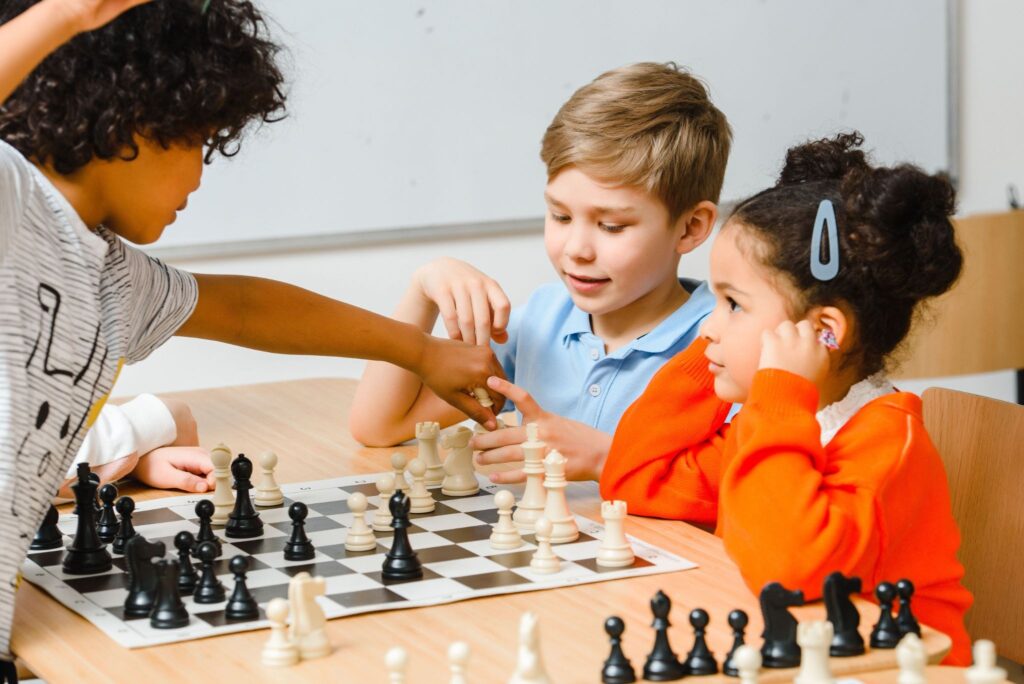
After the war, chess in the Soviet Union became a state affair. It was introduced in schools and pioneer palaces, talented children were sought out across the country and nurtured, masters were paid for playing, chess newspapers and magazines were published, and the Central Chess Club in Moscow turned into a real headquarters. A child who showed talent would fall into the hands of coaches who knew almost everything about the game and grew up in an environment where sitting down at the board with a future champion was commonplace.
Mikhail Botvinnik took charge of this school. In 1948, after Alekhine's death left the crown vacant, it was Botvinnik who won the Candidates Tournament and became the first Soviet World Champion. An engineer by training, Botvinnik approached chess like a scientist, meticulously organizing training, instilling in players a rigorous approach to analysis, discipline, and even physical fitness. He is rightly called the patriarch of the Soviet chess school, as nearly all subsequent champions emerged from the system he built. The domestic competition was incredibly fierce; the USSR Championship was no less challenging than a world championship, and advancing through it was often harder than winning an international tournament. In team competitions, the Soviet national team was unparalleled for decades, winning the Chess Olympiad time and time again, establishing the country as the undisputed strongest chess power on the planet.
A Succession of Champions
After that, the crown for decades barely left the country, and champions succeeded one another as if passing a baton. Botvinnik was followed by Vasily Smyslov with his surprisingly clear, harmonious play. Then came the star of Mikhail Tal, the Riga magician, whose daring sacrifices and whirlwind attacks drove the audience wild and pushed opponents into time trouble and panic. This fireworks display was succeeded by Tigran Petrosian, the complete opposite of Tal, patient and unyielding, earning him the nickname "Iron Tigran" for his formidable defense. Then came the turn of Boris Spassky, a player of versatile disposition, equally strong in both attack and defense.
Each one was unlike the previous, and together they showed that the Soviet school was capable of everything, from furious onslaughts to cold precision. Botvinnik himself, incidentally, lost the crown twice and won it back twice, yielding first to Smyslov and then to Tal, and winning the return match both times. Such swings only emphasized how deep the bench of talent was; behind every champion stood a whole line of successors breathing down his neck. The entire country followed their games, newspapers printed the moves, fans argued about variations, and boys in courtyards replayed the grandmasters' attacks, imagining themselves as Tal or Petrosian. The succession of these names created the impression that the Soviet Union had almost eternal possession of the chess crown. And the main protagonists, Karpov and Kasparov, were yet to come.
| Champion | Years | Style or nickname | What is [he/she/it] known for? |
|---|---|---|---|
| Alexander Alekhine | 1927 to 1946 | Attack and deep calculation | The first world champion with Russian roots, who took the title from Capablanca |
| Mikhail Botvinnik | 1948 to 1963 | Patriarch of the school | The first Soviet champion, a scientific approach to training |
| Vasily Smyslov | 1957 to 1958 | Clear, harmonious play | Took the crown from Botvinnik |
| Mikhail Tal | 1960 to 1961 | Riga magician | Vortex attacks and daring victims |
| Tigran Petrosian | 1963 to 1969 | Iron Tiger | Impenetrable defense |
| Boris Spassky | 1969 to 1972 | Universal style | He ceded the crown to Fischer in Reykjavik. |
| Anatoliy Karpov | 1975 to 1985 | Precise positional play | Received a title without playing, numerous tournament victories |
| Garry Kasparov | 1985 to 2000 | Powerful attack | The youngest champion of his time, long the number one ranked player |
| Vladimir Kramnik | 2000 to 2007 | Deep strategy | Defeated Kasparov, unified the warring titles |
A duel that the whole world watched
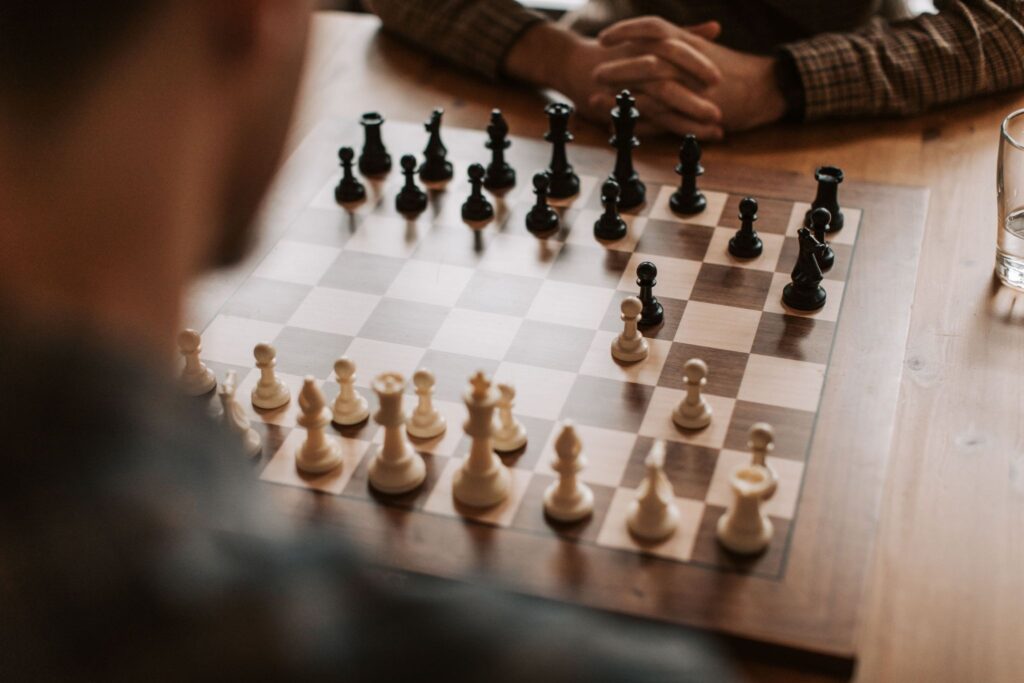
And yet, one day the crown slipped away. In 1972, in Reykjavik, Iceland, the reigning champion Boris Spassky faced American Robert Fischer, a rare genius and a man of unbearable character. This match is often called the "match of the century," and not just for its chess. The Cold War was on, and it seemed as though two systems were meeting over the board, so the games were followed by, without exaggeration, the entire world, from the White House to the humblest kitchen. Newspapers published moves on their front pages, and even those who previously couldn't tell pieces apart followed the game. Every move by the two rivals was analyzed as if the fate of entire nations depended on it.
Fisher had worn down both the organizers and his opponent even before the match began. He showed up late, made countless demands, lost the opening game, simply didn’t show up for the second one, and when everything hung in the balance, he suddenly played with such intensity that no one could stop him. In the end, Fischer won the match and, for the first time in many years, took the crown outside the Soviet Union, while the match itself became the stuff of legends that are still retold to this day. True, Fischer’s reign was short-lived and strange. Three years later, he refused to defend his title under the stipulated conditions and simply didn’t show up at the board, so the young Anatoly Karpov became champion without playing a single move. The crown returned home. Karpov, however, quickly proved that he was a worthy champion. For a full ten years, he remained at the very top, amassing a collection of tournament victories that almost no one before him had achieved, and became one of the most decorated champions in the history of chess.
Games that are still analyzed today
The true glory of this school lies not only in its titles, but also in the games that are still studied to this day. Tal’s sacrifices, in which he gave up piece after piece while the board seemed to burst into flames, are still analyzed in chess clubs as a model of pure attack. And in that very 1972 match, Fischer played the sixth game so beautifully that Spassky stood up after it ended and, along with the audience, applauded his opponent—a gesture that is remembered longer than many of the results themselves.
A separate chapter, of course, is Karpov and Kasparov. Their endless confrontation of the eighties stretched over five matches and hundreds of games, and the very first of them was stopped by a decision of the then head of the chess federation after five months of struggle and over forty games, without reaching a victory, which caused worldwide controversy. Two completely different geniuses, the calm, precise Karpov and the seething, attacking Kasparov, spent years figuring out who was stronger and gifted the world of chess an entire library of great encounters. And Kasparov's famous attack against Veselin Topalov, where he chased his opponent's king across the entire board, is still shown to beginners today as a miracle that the game is capable of.
Spassky vs. Fischer Reykjavík, 1972
Fischer played the sixth game of the match so flawlessly that, after Spassky resigned, he stood up and, along with the audience, applauded his opponent. That gesture is remembered longer than the result itself.
Tal vs. Botvinnik 1960
The Riga magician, with a whirlwind of sacrifices and swift attacks, took the crown from the patriarch of the Soviet school and showed the whole world what pure attack is capable of.
Karpov vs. Kasparov 1984 and 1985
Their first match for the crown was stopped after five months of struggle and more than forty games without a winner. In total, the two great rivals played five matches against each other.
Kasparov vs. Deep Blue 1997
For the first time, the reigning world champion lost a match to a computer, and the whole world began to talk about the limits of the human mind.
Kasparov vs. Topalov 1999
One of the most beautiful attacks in chess history. Kasparov sacrificed material and chased his opponent's king across the entire board, and this game is still used to teach beginners today.
Chess Today
Garry Kasparov claimed the title in 1985, when he was just twenty-two, making him the youngest champion in history at the time. For nearly four decades, no one was able to break that record. Kasparov reigned at the top for about fifteen years, was the world’s highest-rated player for a long time, and his name was known even to those who could barely tell a rook from a bishop—so much so that a search for “Kasparov chess” still yields a mountain of articles today. His 1997 match against the supercomputer Deep Blue also remains etched in memory; it was the first time a machine had defeated a world champion in a match, and the whole world began to wonder whether humans could continue to compete with computers. Kasparov lost his title to his compatriot Vladimir Kramnik in 2000; a few years later, he retired from competitive chess and turned his attention to public life.
After Kramnik, who still managed to unify the warring chess titles, the crown, for the first time in many decades, truly left the country and has not returned home to this day. It was held by Indian Viswanathan Anand, then by Norwegian Magnus Carlsen, who for a long time became the main face of the game, and now the title belongs to the very young Indian Gukesh, who in 2024 broke Kasparov's record, becoming champion even younger. There are still strong chess players in Russia, and the same Ian Nepomniachtchi has reached the match for the crown twice, but the former undivided dominance is gone. Younger players are already emerging to replace the older ones, and work is still in full swing in the country's chess schools.
Added to this was a difficult political situation. Since 2022, Russian chess players have not been allowed to compete under their own flag; they play in individual tournaments under a neutral flag, and in the summer of 2026, the international federation suspended the Russian Chess Federation’s membership altogether, citing a decision by the sports court. This issue is constantly evolving, literally on a monthly basis, so it’s worth following the latest news. At the same time, the game itself hasn’t gone anywhere; on the contrary, chess is experiencing an unprecedented boom. Online platforms, online tournaments, and live streams have brought tens of millions of new players to the board worldwide, and it’s now possible to analyze games and learn without leaving home. The Russian school continues to produce strong masters, even under challenging conditions, and coaches who came of age in the Soviet system are now working on every continent, teaching children from Europe to Asia.
How chess leads a child to language
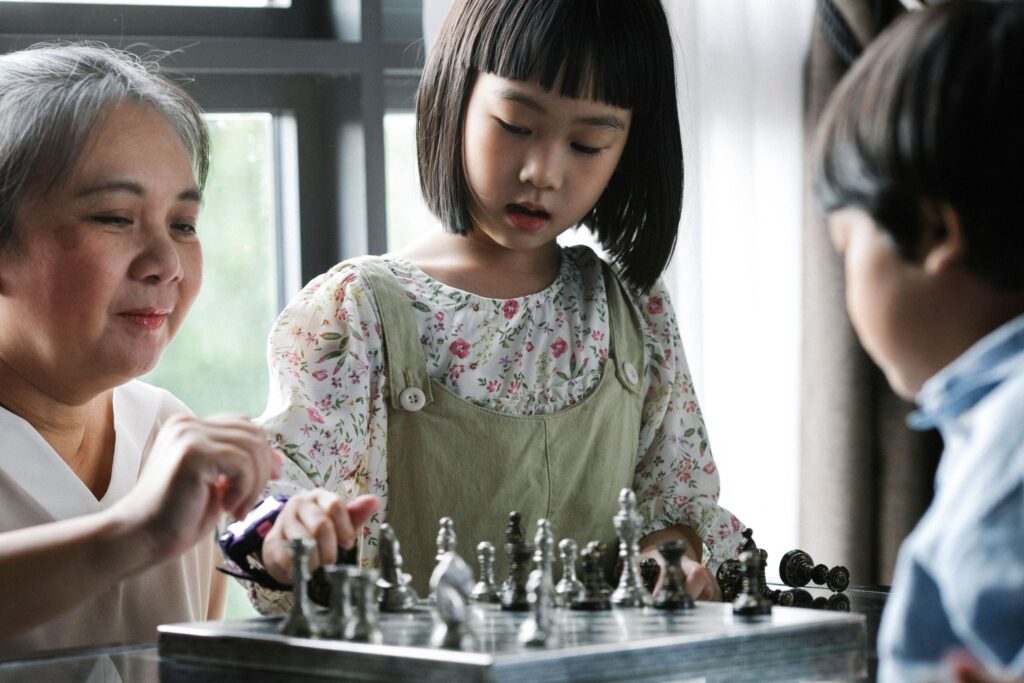
For families raising bilingual children, chess can be a surprisingly convenient way to engage with a language. The game itself is invaluable for a child; it teaches them to think several moves ahead, stay focused, lose gracefully without giving up, and take responsibility for their decisions. And along with the game, Russian language skills come naturally. A child who sits down to analyze a game with his grandfather or gets absorbed in online chess suddenly wants to understand the names of the pieces and moves, what the commentator is saying, and what those strange terms like “castling” and “fork” mean. The familiar chessboard makes the language necessary right here and now. A young boy who persuaded his dad to play a game in Russian and declared “check” on his own for the first time will remember that short word forever—much more firmly than from any workbook exercise.
At Palme School, children ages four to seventeen learn Russian, and the school strives to teach the language through familiar and enjoyable activities, whether it’s games, sports, cartoons, or music. You can get to know the school through two free lessons: first, there’s an introductory meeting with a curriculum specialist, who will assess the child’s level and place them in a group, followed by a trial lesson in a small group with a teacher. In this way, a game at the chessboard becomes yet another natural opportunity to speak Russian calmly and with enjoyment, while the names of Alekhine and Kasparov serve as gateways to a rich cultural heritage.
More Than Just a Game
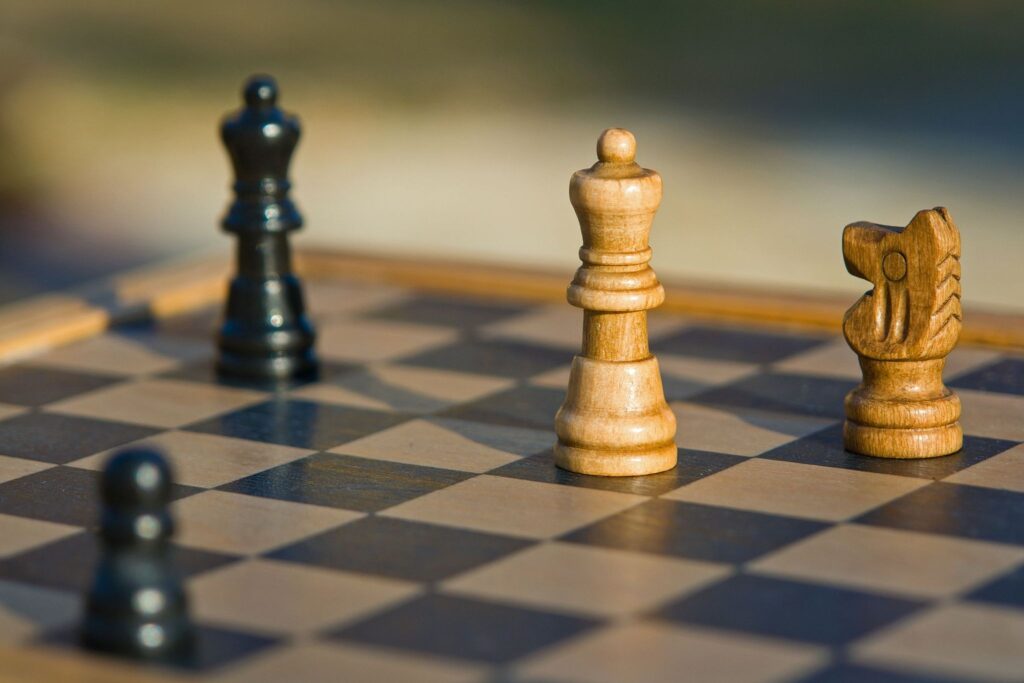
Russian chess has long since developed into a distinct and major tradition, with its own philosophy and entire generations of heroes. It all began with Alekhine, who proved that Russians could be first on the chessboard, continued with the Botvinnik school, which placed champion training on a solid foundation, and culminated in an almost continuous succession of crown holders, from Smyslov and Tal to Karpov and Kasparov. The match between Spassky and Fischer reminded the whole world that chess can be a drama no less compelling than major sports, and the great games of this school are still analyzed today. The crown now travels the world, visiting India and Norway; international doors are partly closed to Russians, but the board, the pieces, and the love for the game of the mind have not disappeared. Children are still taught to move a knight at kitchen tables, and coaches, trained in the Soviet school, are now passing on its secrets worldwide. For a child growing up far from Russia, this game can become a simple and joyful an opportunity to reconnect with one's native language, ...and for anyone who loves to think, it offers dozens of great figures and political parties that you’ll want to spend nights pondering. Such a blend of history, character, and pure intellectual exercise is a rare find.
There are many strong chess players in Russia and the USSR for a variety of interconnected reasons: * **Historical Emphasis and State Support:** Chess has a long and rich history in Russia and the Soviet Union. It was actively promoted and supported by the state. The government saw chess as a demonstration of intellectual prowess and a tool for national prestige. This led to significant investment in chess clubs, schools, trainers, and tournaments, creating a robust infrastructure for talent development. * **Educational Integration:** Chess was often integrated into the Soviet education system. Children were encouraged to learn and play, and chess clubs were common in schools. This early exposure and structured learning environment helped cultivate a large pool of young talent. * **Culture of Intellectual Pursuit:** There's a deep-seated cultural appreciation for intellectual activities and strategic thinking in Russia. Chess, with its complexity and depth, fit well within this cultural framework. * **Intense Competition:** The sheer number of dedicated players and the high level of competition within the Soviet Union meant that aspiring Grandmasters faced incredibly tough opposition from a young age. This constant challenge pushed players to improve rapidly and reach peak performance. * **Legacy of Great Players:** The success of Soviet chess legends like Mikhail Botvinnik, Anatoly Karpov, and Garry Kasparov inspired generations of players and provided role models. Their achievements solidified chess's importance and created a self-perpetuating cycle of excellence. * **Dedication and Training:** Russian and Soviet chess players are known for their rigorous training regimens, dedication, and analytical approach. They often spent countless hours studying openings, endgames, and complex tactical and strategic positions. * **Access to Resources and Information:** The state-funded chess infrastructure provided access to top coaches, extensive chess libraries, and opportunities to compete internationally, which were crucial for developing world-class players.
The issue lies in the entire system that was built over decades. Chess was respected and loved by the people, and after the war, the state took it up, introduced it in schools and pioneer palaces, and began searching for gifted children across the country to nurture them further. A talented child would be taken under strong coaches and grow among masters, and the internal competition within the country was so fierce that the USSR Championship was as intense as a world championship. In team tournaments, the Soviet team was unmatched for decades and won the Chess Olympiad time and time again. Add to this the general respect for the game of intellect and the long tradition that stretches back to Chigorin and Alekhine, and you get that very stream of champions that the whole world envied for a long time.
Who is Garry Kasparov?
He is one of the greatest chess players in history. He won the World Championship crown in 1985, at just twenty-two years old, and for a long time remained the youngest champion, then reigned at the top for about fifteen years and stayed the strongest player on the planet by rating for a long time. He became famous for his legendary rivalry with Anatoly Karpov and his match against the supercomputer Deep Blue. In the early 2000s, Kasparov lost the crown to Vladimir Kramnik, soon retired from professional sports, and became involved in public life.
The most famous Russian chess players are: * **Garry Kasparov:** Widely considered one of the greatest chess players of all time, a former World Chess Champion. * **Anatoly Karpov:** Another legendary World Chess Champion and Kasparov's great rival. * **Mikhail Botvinnik:** A dominant figure in Soviet chess, a six-time World Chess Champion. * **Alexander Alekhine:** A brilliant attacking player, he was the fourth World Chess Champion. * **Mikhail Tal:** Known as "The Magician from Riga," famous for his incredibly complex and attacking style. * **Boris Spassky:** The 10th World Chess Champion, famously played against Bobby Fischer in the "Match of the Century." * **Vladimir Kramnik:** A former World Chess Champion and a strong modern player. * **Magnus Carlsen:** While Norwegian, he is a dominant figure in the modern chess world and highly respected by Russian chess enthusiasts. (Though technically not Russian, his influence and rivalries with top Russian players make him relevant in discussions of famous chess players). * **Sergey Karjakin:** A grandmaster known for his early achievements and a former World Championship challenger.
The list is impressive. At the very origins is Alexander Alekhine, the first native-born Russian to win the title. Then the crown was passed around within the Soviet school for a long time, starting this line was Mikhail Botvinnik, followed by the clear-playing Smyslov and the Riga magician Tal, then the unyielding Petrosian and the versatile Spassky. The pair of eternal rivals, Karpov and Kasparov, stand apart. Vladimir Kramnik also wore the crown, and among those who are strong today, Ian Nepomniachtchi is most often mentioned.
What is the 1972 Spassky–Fischer match?
Behind this loud name lies their duel for the crown in 1972. The then-reigning champion from the USSR, Boris Spassky, and the great American, Robert Fischer, met, and Reykjavik, Iceland, was chosen as the venue. It was not for nothing that it was nicknamed the Match of the Century; the height of the Cold War turned the games at the board into a competition between two powers. Fischer prevailed, taking the chess crown overseas for the first time in a long time, and almost the entire planet followed every move. However, the American could not hold onto the title and soon refused to defend it.
Why do Russian chess players play under a neutral flag?
It's the same as in other sports. Due to the events surrounding Ukraine, Russians have been banned from international competitions under the flag of their country since 2022, and in individual tournaments, they are only admitted as neutrals. Then, in the summer of 2026, another blow followed: the membership of the country's chess federation in the world organization was suspended after a decision by the sports arbitration court. All of this is fluid and is reviewed almost every month, so it's best to check the latest reports.
How are chess beneficial for children?
The benefits of playing chess are surprisingly numerous. Through the game, a child learns to calculate moves ahead, consider the consequences of each decision, avoid distractions, and see things through to completion. Losing teaches them to control their emotions, analyze where mistakes were made, and try again. Simultaneously, memory and patience are strengthened. One can start playing at a young age, the rules are not complicated, and the game's depth is such that interest doesn't wane even after years. For families who value the Russian language, chess also becomes a lively reason to speak and read in Russian.