

In the summer of 1874, the University of Göttingen was handling an unusual case. Three mathematical papers sent from Berlin were accompanied by a recommendation from Weierstrass himself, who requested that their author be awarded a doctorate. The papers were excellent, the recommendation was impeccable, and the hitch was something else entirely. A woman had written all of this, and her appearance at a public defense would have caused such an uproar that the university preferred a different path. The degree was awarded in absentia, without examinations, with the highest honors. Thus, twenty-four-year-old Sofia Kovalevskaya became the first woman in Europe with a doctorate in mathematics, without ever setting foot in the lecture hall where her papers were discussed.
Such, in essence, is this entire biography. Every step of it ran into a prohibition, and every prohibition had to be bypassed with some sidestep, sometimes elegant, sometimes humiliating. Let us examine in order what exactly was forbidden to her and what she did about it.
The ban on studying bypassed by marriage
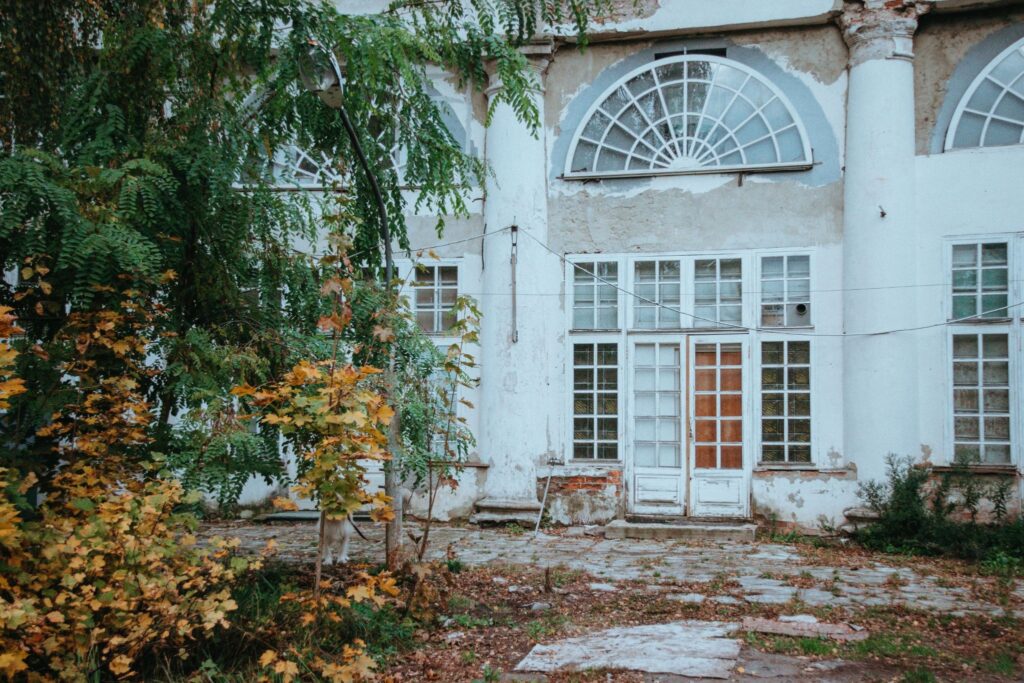
The first obstacle arose at home, on the Palibino estate in Vitebsk Governorate. A girl from a general's family was expected to learn languages, music, and needlework, and mathematics was not included in this list under any circumstances.
Here she was lucky twice over. First with the walls. The nursery had coincidentally been papered with lithographed sheets of university lectures on differential calculus left over from her father’s youth, and eight-year-old Sonya Kovalevskaya spent months examining the incomprehensible symbols. Then with the neighbor. Professor Tyrtov gave the general his physics textbook, but it was his daughter who read it. Stumbling upon unfamiliar trigonometric formulas, she derived them herself from a diagram. Tyrtov went to the general and declared that his daughter had replicated Pascal's reasoning.
This convinced her father to give her lessons, but not to let her go away to study. Without her father's permission, an unmarried woman in 1860s Russia could not obtain a foreign passport, and domestic universities did not admit women at all. This vicious circle could only be broken in one way known to all progressive youth of that time. A fictitious marriage was required.
Vladimir Kovalevsky, a novice naturalist and later a prominent paleontologist, agreed. They were married in September 1868; the bride was eighteen. Formally husband and wife, but actually partners in an escape, they left for Germany together. The parents did not learn about the nature of the arrangement until much later. Afterwards, the relationship between the spouses became real, then fell apart, and it all ended badly, but the passport was obtained, and with it, freedom.
The audience where she was not allowed
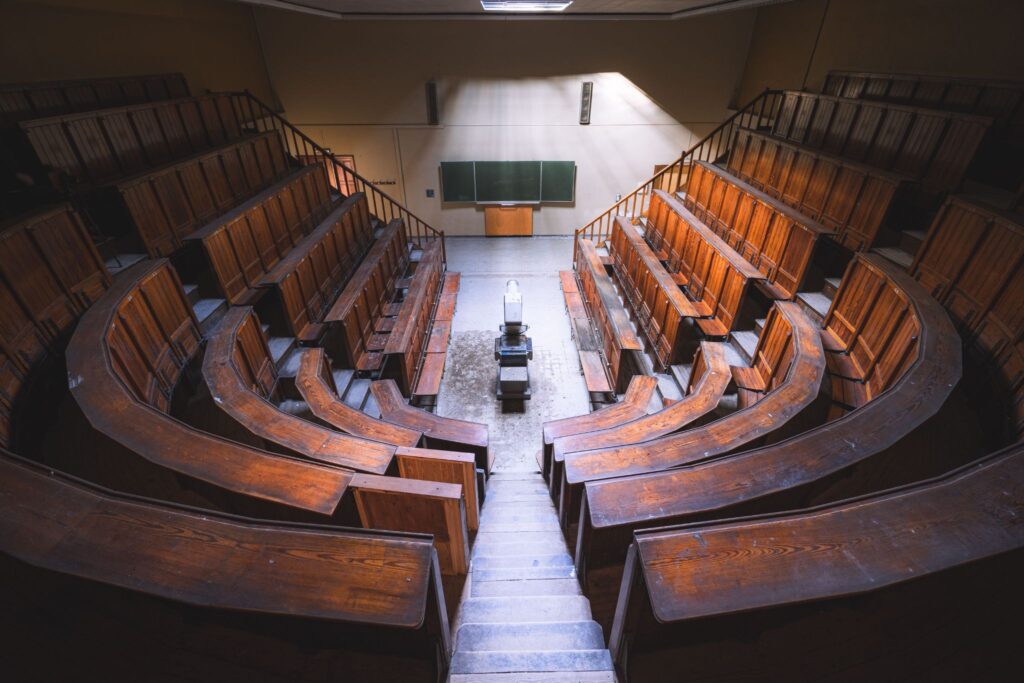
In Heidelberg she was allowed to audit courses as an exception, with the personal consent of the professors. In Berlin they would not even allow that.
Karl Weierstrass, to whom she appeared with letters of recommendation, at first decided to brush off the visitor with some problems. He handed over a few of those meant for the best students and told her to come back in a week. The plan was transparent and failed. By the appointed day, the solutions were ready, and moreover, the visitor had arrived at some of the answers in her own way, not the one the creator himself had in mind.
The university refused flatly; women were not admitted either as auditors or in any other capacity. Then the professor began teaching her at his home, free of charge, twice a week, recounting his own university courses to her. This went on for four years. Judging by the surviving correspondence, rather soon he stopped seeing her as a student and began discussing unsolved problems with her as an equal.
The result of these four years was the three works of 1874 with which our story began. The first of them contained a result known today to every student by the name of the Cauchy-Kowalevski theorem. Today, not a single course on partial differential equations is taught without it.
A ban on working that could not be bypassed
Here the biography hits a failure, and telling children about it is more important than about the victories.
With a doctoral degree with highest honors, Kovalevskaya returned to Russia, where there was no place for her whatsoever. A woman could not teach at a university, could not defend a dissertation, could not hold a professorship. There remained the position of an arithmetic teacher at a girls' gymnasium, and in a letter to a friend, Sofia bitterly joked that her command of the multiplication table was less than stellar.
Almost ten years passed without mathematics. Theater reviews and newspaper essays provided her income, there were occasional translations, together with her husband she embarked on business ventures that invariably failed, and in 1878 a daughter was born. Most bitter of all was watching former classmates whose work was inferior to her own receive academic chairs without any trouble. Everything came to an end in 1883. Vladimir, drowning in debt and accused in the case of a bankrupt company, committed suicide. The news reached Sofia in Paris. For several days she sat locked away, refusing food, and then she set to work, because she had nothing else left to keep herself afloat.
This prohibition remained uncircumvented. Her homeland did not give her a place.
What did she achieve
Doctorate of Göttingen
The mechanics were as follows. The university requested reviews from experts, reviewed the submissions at a closed meeting, and issued a decision in the candidate's absence. Neither exams nor a public presentation were required.
Cauchy-Kovalevskaya theorem
Conditions for the existence and uniqueness of solutions to partial differential equations. Augustin Cauchy approached the problem earlier, but it took on a general and rigorous form in her presentation, which is why textbooks bear two names.
Two other works of the same year
Research on abelian integrals and the paper on the shape of Saturn's rings. Both were part of the submission presented to Göttingen, and both were recognized as independent results.
Professorship in Stockholm
The university contract was initially concluded for a five-year period, and when that term expired, it was replaced by a lifetime appointment. Individual women had held university positions before, but not a single one had headed a mathematics professorship until her.
Editorial Board of Acta Mathematica
Mittag-Leffler brought her onto the editorial board of the journal he had founded himself. There had never been women on the editorial boards of major mathematical publications before that.
Borden Prize of the Paris Academy
The theme of the competition was announced in advance, participants submitted their essays under mottos, and authorship was revealed only after the winner was chosen. It was decided to increase Kovalevsky's award from three thousand francs to five. Noted was the third case of the rotation of a heavy body around a fixed point, known today as the Kovalevskaya top.
Prize of the Swedish Academy of Sciences
Awarded for the continuation of the same work on the rotation of a rigid body. In the same year, the St. Petersburg Academy of Sciences changed its charter and elected her as a corresponding member, the first woman in its history.
Literary heritage
The novella «The Nihilist,» the autobiographical «Memories of Childhood,» translated into several languages, and a play written together with Anne Charlotte Leffler about two possible paths of a single life.
The department that had to be searched for abroad
The Swede Gösta Mittag-Leffler, a student of Weierstrass who considered Kovalevskaya's lack of opportunity a disgrace to science, came to the rescue. It took him several years to secure a position for her at the young University of Stockholm; both the faculty and the city objected.
In the autumn of 1883, she arrived as a privatdozent, without a salary, on funds raised by supporters. On January 30, 1884, her first lecture took place, and as early as June, she was appointed professor for a five-year term. It is from this appointment that her claim to a world first is reckoned. The first lectures were given in German, a year later she switched to Swedish, and the gapers who had crowded into the lecture hall for the sake of a curious spectacle gradually became a regular audience. Newspapers dubbed her the princess of science, and the academic world has known the name spelled Sofia Kovalevskaya ever since. When the five-year term expired, the chair was secured for her for life.
Her homeland recognized her halfway. In 1889, for the occasion, the St. Petersburg Academy of Sciences amended its own charter and elected her a corresponding member; previously, there had never been women holding this title. It did not confer any work, and she awaited an invitation from Russia until her dying day.
The third case, which turned out to be the last one

Kovalevskaya did her most important work already as a professor.
For over a century, mechanics could not cope with the rotation of a heavy body around a fixed point, in other words, the motion of a top. Only two fully analyzed cases had accumulated, one by Euler and the other by Lagrange, and progress stopped there. Kovalevskaya found a third, and it was later proven that no others of this kind simply exist. The problem was closed.
It is convenient to demonstrate the essence to a child using a real toy. As long as the top is symmetrical, it spins predictably and evenly. Shift the center of gravity, and the trajectory becomes such that no formula can capture it. This is the difficulty she overcame. The Paris Academy of Sciences awarded her the Bordin Prize for this work and increased the prize money because the submission exceeded the jury's expectations. The entries, by the way, were submitted under mottos, without names, so the judges only learned the winner's gender when the envelope was opened.
She did not have time to enjoy her fame. The journey from Italy in the winter of 1891 cost her a cold, which turned into pneumonia, and on the tenth of February, Kovalevskaya passed away at the age of forty-one.
Life year by year
1850
Born in Moscow into the family of artillery General Korvin-Krukovsky. Childhood is spent in the Palibino estate.
1866
The first systematic lessons in advanced mathematics in St. Petersburg, after his father finally gave in.
1868
A fictitious marriage with Vladimir Kovalevsky, granting the right to a foreign passport.
1869
Heidelberg, where attending lectures is only possible with the personal consent of the professors.
1870
Berlin and the beginning of four years of home tutoring with Karl Weierstrass.
1874
Three papers and a doctoral degree from the University of Göttingen awarded in absentia.
1878
Birth of a daughter. Years pass in Russia without scientific work, which a woman has nowhere to obtain.
1883
The death of Vladimir Kovalevsky and the move to Stockholm at the invitation of Gösta Mittag-Leffler.
1884
The beginning of teaching at Stockholm University and the professorial appointment. The world first among women is counted from here.
1888
Borden Prize of the Paris Academy of Sciences for solving the problem of the rotation of a top.
1889
A lifetime professorship in Stockholm and election as a corresponding member of the St. Petersburg Academy of Sciences.
1891
Death from pneumonia on February tenth, at the age of forty-one.
Turning points are marked in light green, and the rest in blue. Details of the achievements are collected in a separate block.
What of this should I tell the child
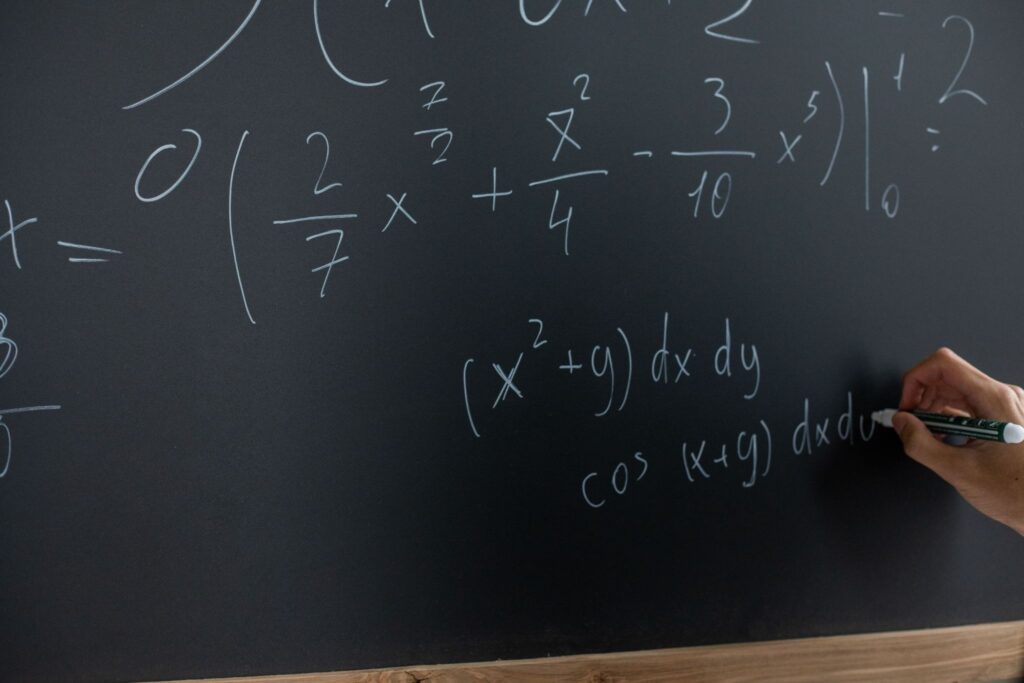
Biography is convenient because it consists of obstacles that are understandable at any age, and decisions that can be debated.
Younger children are quite content with the story of a nursery with formulas on the walls and a toy whose move could not be calculated for a whole century. A teenager is more interested in the mechanics of prohibitions: why a man's permission was required for a trip, why a sham marriage was necessary, and what made an entire university award a degree in absentia. The pivot to the present day also works—ask which prohibitions look natural today, but in a century and a half will seem just as savagery. For a child who becomes interested, the adjacent material about scientists from Russia, there is both the creator of the periodic table and the man who turned down a million-dollar prize.
Such conversations are based on words that are never used in kitchen chit-chat: department, recognition, proof, persistence, justice. Palme School accepts students from four to seventeen years old and builds the curriculum around the specific child, starting from their first words and progressing to conversations about science and books in Russian. You can make sure the format is right for your family at two free lessons. During the first one, the methodologist will speak with the parents, determine the child's level, and suggest a group matching their ability. The second one will take place in a mini-group, where the child will have a class with the teacher and decide for themselves if they find it interesting.
The words attributed to her
Around Kovalevskaya, as around any prominent figure, numerous aphorisms have accumulated. Some of them trace back to the memoirs of those close to her, while others appeared much later. Below is an analysis of several well-known phrases, which is useful in itself and as an exercise in verifying quotes.
It is impossible to be a mathematician without being a poet in soul.
The most famous of the phrases attributed to her. It dates back to the memoirs of her Swedish friend and co-author Anna Charlotte Leffler, published shortly after Kovalevskaya's death, and sounds different in various retellings. There is no direct record of these words by the author herself, but the thought itself is quite consistent with how she combined science and literature.
Memoirist's retellingMathematics reveals what cannot be seen with the eyes
This phrase circulates on the internet attributed to Kovalevskaya, but it is not found anywhere in her letters or published texts. Most likely, we are dealing with a later condensation of her musings on mathematics as a science of imagination.
Source not foundThe story of the wallpaper, told by itself
Not a quote, but a plot known from her own «Memories of Childhood.» This is the sole source of the story, with no other evidence, so it is more accurate to say that she herself told it this way about her childhood.
There is original textPrincess of Science
The nickname that stuck to her in the Swedish press after she began lecturing in Stockholm. There are no claims to a title on Kovalevskaya's own part behind it; it is a journalistic formula that has outlived its authors.
Newspaper turn of the epochHow to check such quotes together with a child. You need to look for the source, not the phrase itself. If a letter, book, speech, or someone's memoirs are not mentioned near the quote, and there are thousands of repeats online, you are almost certainly looking for a retroactive attribution. This skill will come in handy far beyond the history of science.
Home
Kovalevskaya's path to science consisted of roundabout maneuvers. For the right to leave to study, she entered into a fictitious marriage, in Berlin she studied at Weierstrass's home since women were not allowed in the lecture halls, and Göttingen awarded her a doctoral degree in absentia in 1874, just to avoid a scandal at her defense. The theorem on the existence and uniqueness of solutions for partial differential equations bears her last name alongside Cauchy's. For almost ten years after her diploma, there was no work for her in Russia; Sweden provided a professorship, where in the summer of 1884 she became the world's first female professor of mathematics. She carried the century-old problem of top rotation through to the end, for which the Paris Academy honored her with a prize. She lived for forty-one years.
Frequently Asked Questions
What happened to her daughter?
Sofia Vladimirovna, born into the Fufa family in 1878, was orphaned before reaching the age of thirteen. The girl was raised by family friends in Russia. Her adult life turned out quite respectably—medical education, medical practice, translation work—and she died in 1952. Her mother's archive survived largely thanks to her efforts.
What is the Cauchy-Kowalevski theorem in simple terms?
It is about a guarantee. A partial differential equation describes, say, heat propagation or string vibration, and before any calculations, it is useful to know whether a solution will be found at all and whether there will be multiple solutions. The theorem specifies the conditions under which the answer to both questions is positive, and the solution near the initial data is unique.
Why is the case solved by her called a top rather than a gyroscope?
The name came from a toy, and there is no contradiction here. Mechanics call the problem of a rigid body rotation with a fixed point the top problem, because the toy behaves precisely according to these laws. A gyroscope, on the other hand, means a device operating on the same principle. Three cases with complete solutions are known, and each bears a name: Euler, Lagrange, and Kovalevskaya.
Is it true that she was the first female professor in history?
She holds a dual precedence, in mathematics and in Northern Europe. Women had held university positions before; in the eighteenth century, Laura Bassi was a professor in Bologna and received a salary, and Maria Gaetana Agnesi was appointed to a chair in mathematics there, which she never actually occupied. Kovalevskaya became the first woman to actually hold a professorial chair in mathematics and the first woman to hold a chair at a Scandinavian university.
Does the Polibino estate survive?
The house is still standing, now in the Pskov Region, and operates as the Sofia Kovalevskaya Estate Museum. The nineteenth-century interior has been restored, including that very nursery. Not everyone will be able to get there, but the museum materials are quite suitable for exploring what her childhood looked like with a child.
Which of her books can be read together with a child?
It is better to start with «Childhood Recollections.» There is estate life, a governess, family routines, and that very story about the walls papered with lecture notes, and there is no mathematics at all, so a teenager reads the book like an ordinary story from the century before last. «The Nihilist» will require an older reader and explanations regarding the historical setting.