


Names and identifying details of every student below have been changed.
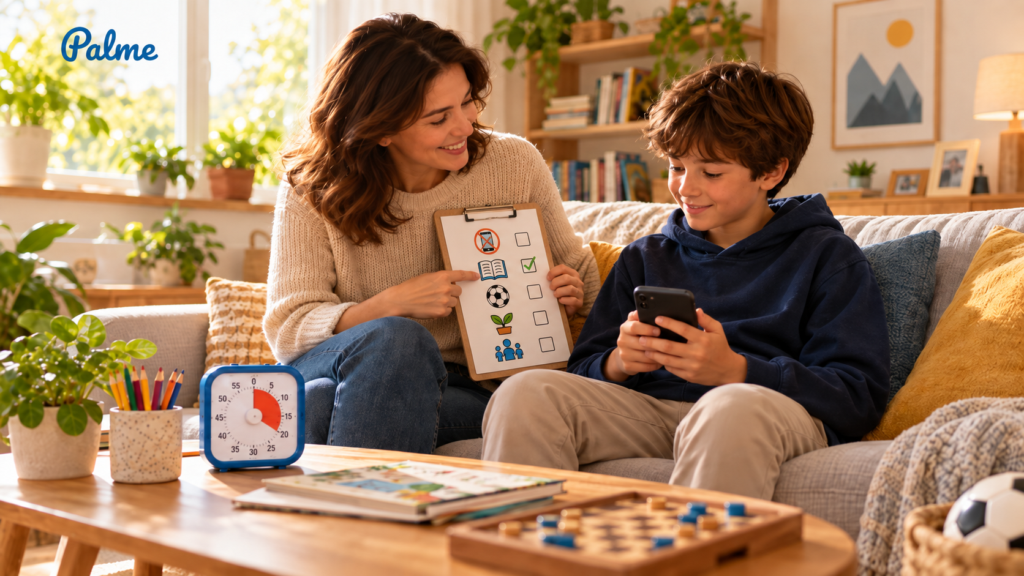
Seven days without the phone, and a mother in Austin describes it as the worst week of their year. Her son neither caved nor reformed. He waited her out, said almost nothing at dinner for seven days, and got the phone back on Sunday with the exact habits he’d had on Monday. Her details are changed here, as they are everywhere on the blog.
The week the phone went away
What had she done wrong, she wanted to know. Two things: she took something away without putting anything in its place, and the rule she enforced measured the wrong quantity.

A week without a phone teaches a child how to survive a week without a phone.
No other lesson is in it. Nothing about the phone changed, nothing about the pull of it changed, and the only new information in the house was that the adults would eventually give it back. Note what this is not. A break the child chooses is another animal entirely, and the AAP points out that a week away from social media can reset mood and sleep. Chosen is the operative word. Confiscated does none of that work.Why the obvious rule is the weak one
In January 2026 the American Academy of Pediatrics issued a new policy statement on digital media, and the shift inside it is the thing worth knowing. The focus moves away from counting hours and toward the quality of what a child is doing and the world around them while they do it. None of this is new caution. The Academy has said for years that there isn’t enough evidence that specific time limits help, and that household rules built around balance, content, and watching together track better with wellbeing than rules built around a clock. Read that twice if you have a timer app installed. The rule most families reach for first is the one with the least behind it. There is a reason the hour rule appeals, and it isn’t stupidity. Hours are countable. Content is arguable. A parent at nine in the evening wants a number they can enforce without a debate, and you’ve had ninety minutes ends a conversation in a way that what were you actually doing on there does not.What the guidance actually says
For the youngest children, numbers still circulate and are worth having as a starting point. Under about eighteen months, screens are discouraged apart from video calls with people the child knows. From two to five, roughly an hour a day of good material, watched with somebody, is the shorthand most pediatricians still use, though the Academy’s own answer on limits for young children treats it as a guide and not a threshold, and allows that a Saturday at a grandparent’s house is not a Tuesday.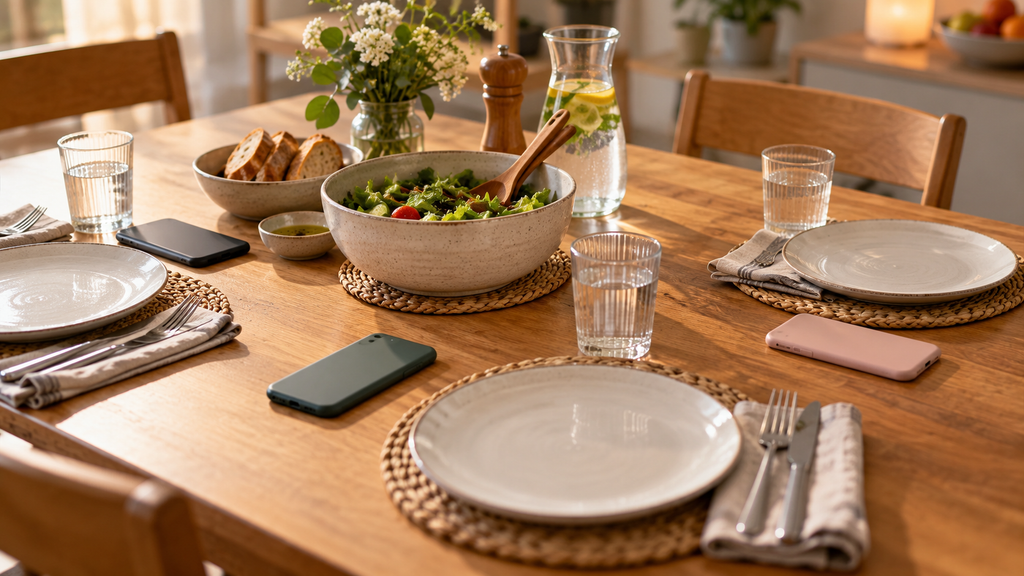
Stop counting hours. Start counting what the hours took.
Those four words carry the whole article. Sleep first, then movement, homework, meals, and the boredom that has nowhere else to go. If none of those are being displaced, an hour is not a problem. If sleep is going, twenty minutes is.The agreement, and why it goes on paper
Families that do well with this write things down, and the writing matters more than the specific rules. Invent a rule at nine in the evening, mid-argument, and it is a punishment. The same rule agreed on a Sunday afternoon, with the child in the room and objecting, is an agreement.Identical words. Entirely different object.
In the families I have watched make this work, four things go in, and the first matters more than the other three combined. Where phones sleep. Not in bedrooms, and this is the single highest-value line in any agreement anybody writes. It protects sleep, it removes the two-in-the-morning scroll, and it is enforceable without any argument about content.
When phones are away: meals, homework, the car if the car is where you talk. Short specific windows beat vague aspirations, and everybody can tell whether the rule was followed. What the adults agree to. This is the part most families skip and the part children notice first. If the rule is no phones at dinner, it is no phones at dinner for everybody, including the parent expecting a work message. And what happens when it goes wrong, decided in advance. Not a threat. A consequence everybody has already heard of, which is a very different thing at eleven at night. There is an AAP family media plan tool that walks through this. Any format works. The value is in the making of it, together, while nobody is angry.Removing without replacing is the classic error
Take away the scroll and you have created an hour of nothing. Nothing is not neutral. Nothing is uncomfortable, and the phone is the fastest available cure for it, so the hour usually ends where it started.

Take away the scroll and you have created an hour of nothing. Nothing is not neutral. Nothing is uncomfortable, and the phone is the fastest available cure for it, so the hour usually ends where it started.
Boredom needs somewhere to go. In the families where this works, the parent has thought one step past the removal: what happens instead, specifically, on a Tuesday, in this house, with this child. It doesn’t need to be improving. It needs to exist, be available without an adult organizing it, and be at least mildly interesting. A guitar in reach beats a guitar in a case. A book on the sofa beats a shelf of books upstairs. At least some of it should involve other people, because the strongest replacement for a solitary scroll is not a better solitary activity but a room with somebody else in it who is expecting something from you.
The part nobody’s phone is designed to help with
This is harder than any other habit you will teach, and here is why. Stopping requires inhibition, one of three core abilities, and the whole system is still building well into a person’s twenties. Our piece on executive function goes through all three of them, and the one on why children explode over small things covers what happens when that same brake fails in a different room of the house entirely. Notice also that the ability is under construction while the pull is at full strength, and the trajectories do not run in step with one another. Now consider what the child is inhibiting against. Autoplay, which removes the decision point entirely. Infinite scroll, which never presents a natural end. Notifications, which reset attention from outside at intervals the child does not control. Every one of those is a deliberate design choice, made by adults, tested on millions of people, to defeat exactly the ability your eleven-year-old is still growing.You are asking a half-built brake to out-argue a professional.
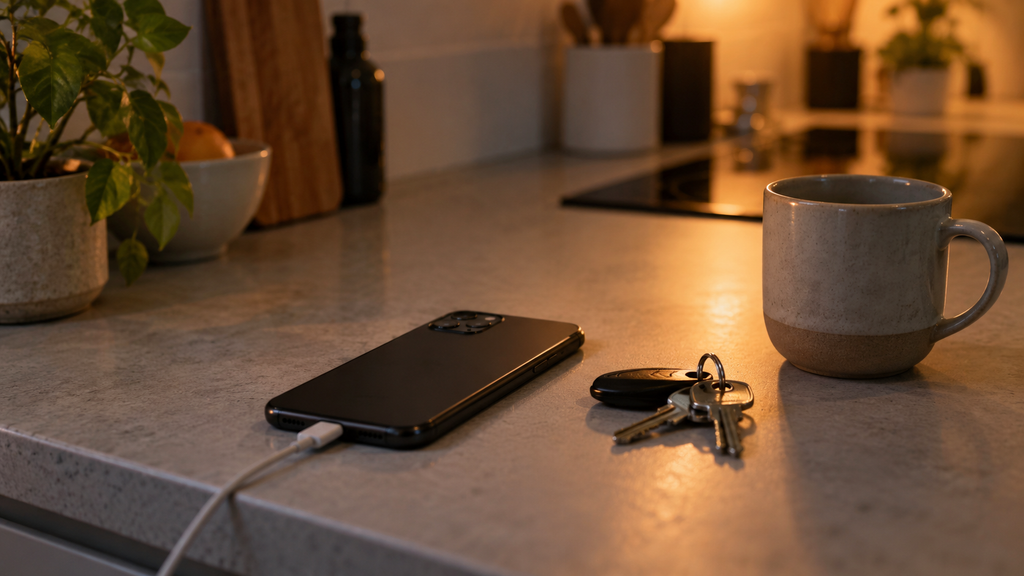
This is not a reason to give up. It is a reason to stop treating the failure as a character flaw, and to put some of the work into the environment instead, where a developing child has a fighting chance. A phone charging in the kitchen requires no self-control at all after the first week or so, once the novelty of resenting it has worn off. A phone on the pillow requires it every night, forever.What changes with age
My classroom shorthand follows, and it is not a developmental norm. Around eight or nine, the child mostly accepts the rule and mostly cannot self-regulate without it, which means external structure does nearly all the work at this age and should. A nine-year-old does not close an app because they have had enough. Nobody sensible expects one to. Eleven or twelve brings the arguing, and the arguing is good news. Negotiation means the child is engaging with the rule instead of simply obeying it. Negotiate back. Give ground on the things that don’t matter and hold the charger rule and the phone-free windows.
By fourteen external control quietly stops working, and the phone has usually become the main channel to the social world rather than an entertainment device. A ban here doesn’t remove entertainment. It removes a teenager from the room where their friendships live, a much larger thing to do and worth doing knowingly, if at all.
By sixteen you are advising rather than governing, and the only durable version of this is a young person who can notice for themselves that two hours went somewhere.
What to do about the arguing
Arguing is unavoidable, though a few things make it smaller. Give warnings with time attached, not instant demands. Ten more minutes respects the fact that a game or a conversation has a shape and cannot be exited cleanly at an arbitrary second.Separate the device from the offense. A phone taken as a general punishment for something unrelated teaches nothing about phones. It teaches that the phone is the currency the household runs on, and raises its value. Ask what they were doing before you react to the fact that they were on it. Watching a friend’s video, reading about something they care about, and scrolling because it’s there are three different activities wearing the same posture. Notice your own hand, too. Children calibrate to what adults do, and the average adult in the room has a habit at least as strong as the one they are trying to correct.
When it is more than a habit
Most of this is ordinary, and a few patterns are worth taking further. Sleep that is going and staying gone. Withdrawal from everything that used to matter, not just some of it. Distress that persists for months, not a rough patch. And a child trying to stop who cannot, which is not the same as a child who would rather not. Take that to a pediatrician or the school counselor, and take detail with you. What they do, at what hours, for how long, and what else has shifted in the same period. Worth knowing before you go: the research here is genuinely contested. A 2024 meta-analysis found no evidence that time spent on social media correlates with adolescent mental health problems, which does not mean nothing is happening, and does mean anybody selling you certainty is ahead of the evidence.What actually builds this
Self-control gets built by exercising it where failure is survivable, the same answer as for every other hard thing.
He still scrolls, and by his mother’s account he scrolls about as much as he ever did. He also sleeps now, which he had not been doing before any of this started.
The sleeping was what she had been worried about all along.
At Palme School we teach online, in groups of up to eight, two forty-minute classes a week, and the first two lessons are free. You can book those here, and there are printable materials for parents in our resource library.Frequently asked questions
For children under five there are still usable numbers: essentially none before eighteen months apart from video calls, and about an hour a day of decent material after that. Above that age no single figure fits every child, and the AAP does not set one.
Ask what the screen is displacing instead. Sleep and movement are the two that matter most.
Change the environment before you change the rules. Chargers out of bedrooms, phones away at meals for everybody, and something specific available to do instead.
Rules agreed in advance, in writing, on a calm afternoon, are enforced far more easily than rules invented mid-argument.
Rarely, and almost never on its own. A confiscation teaches a child to wait it out, and by adolescence it also removes them from where their friendships happen.
The exception is sleep. A phone out of the bedroom overnight is the one restriction that pays for itself.
The evidence is more contested than the headlines suggest, and a recent meta-analysis found no reliable link between time on social media and adolescent mental health problems. What is better established is displacement: screens that eat sleep cause problems through the missing sleep.
Sources
- American Academy of Pediatrics. (2024, April 23). The 5 Cs of Media Use. Center of Excellence on Social Media and Youth Mental Health. Retrieved September 4, 2026. aap.org
- American Academy of Pediatrics. (2025). Screen Time Guidelines. Center of Excellence on Social Media and Youth Mental Health. Retrieved September 4, 2026. aap.org
- American Academy of Pediatrics. (2026, January 20). Understanding the New AAP Digital Media Guidelines for Screen Time and Social Media. Center of Excellence on Social Media and Youth Mental Health. Retrieved September 4, 2026. aap.org
- American Academy of Pediatrics. (n.d.). Family Media Plan. HealthyChildren.org. Retrieved September 4, 2026. healthychildren.org
- American Academy of Pediatrics. (n.d.). Screen Time Limits for Young Children. Center of Excellence on Social Media and Youth Mental Health. Retrieved September 4, 2026. aap.org
- Best, J. R., & Miller, P. H. (2010). A developmental perspective on executive function. Child Development, 81(6), 1641–1660. doi.org
- Center on the Developing Child, Harvard University. (May 20, 2012). InBrief: Executive Function. developingchild.harvard.edu
- Diamond, A. (2013). Executive Functions. Annual Review of Psychology, 64, 135–168. doi.org
- Ferguson, C. J., Kaye, L. K., Branley-Bell, D., & Markey, P. (2024). There is no evidence that time spent on social media is correlated with adolescent mental health problems: Findings from a meta-analysis. Professional Psychology: Research and Practice. psycnet.apa.org
Palme School: Russian for bilingual children · Conversation school · Free materials for parents
Lily Rozberg has been teaching for sixteen years, first English in Russia and now Russian to bilingual children across the US and Canada. She writes for Palme School about heritage language, reading, and the things report cards do not measure.