

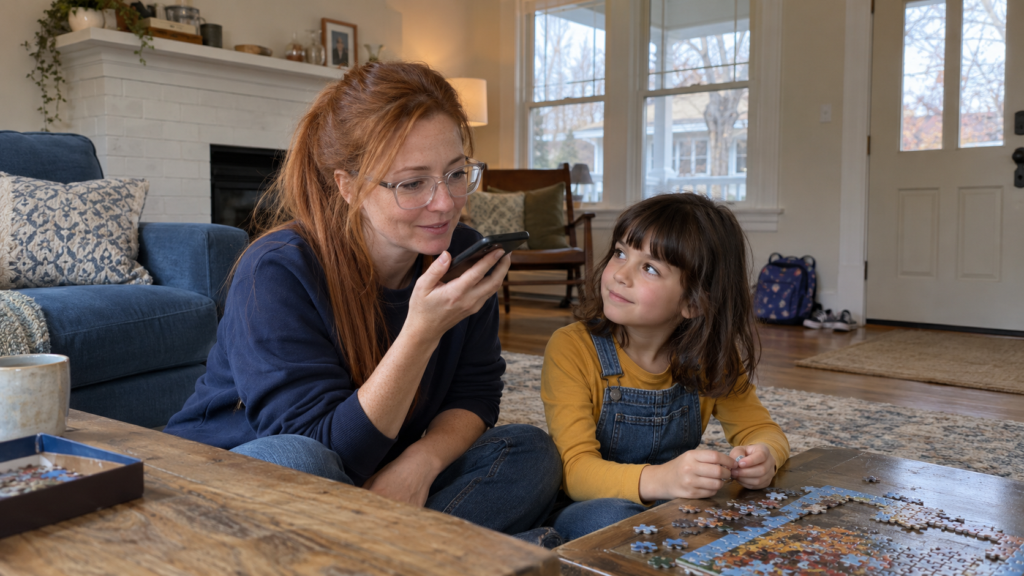

At the end of November, the mother picks up the phone and calls her grandmother. The conversation starts without asking how things are going; it immediately focuses on the main topic.
Mom, happy Mother's Day.
The child is nearby. He hears these words and stops. His question might be something like this:.
Why does my mother say «Happy Mother's Day» to her grandmother when she is my grandmother?
The conversation below will be useful for families where the child already calls mom Mom and grandma Grandma, but confusion still remains about who owes whom what. In such a family, mom may have two Mother’s Days: in May she is congratulated, and in November she herself calls her grandma. The child’s question arises right at the intersection.
Why did this happen in November?
In the USA and Canada, Mother's Day falls on the second Sunday of May. In 2026, it will be May 10.
In Russia, there is a Mother's Day, the last Sunday of November. In 2026, it will be November 29. Grandma lives by this calendar, and Mom calls her on her day.
Mamu is also celebrated in March, but that’s a different holiday; we have a separate one for that. separate article.
For me she is a grandmother
The question itself has already been covered. For her, this woman is a grandmother. Mom refers to her as «mam» and greets her on Mother’s Day.
A child may know that their grandmother is their mother, and still ask. It's one thing to know, but it's another to hear a mother call her mom out in public.
There are no mistakes in the matter. For him, she is a grandmother; that's the way it is. It's possible to figure out who she is to Mom right now, while the conversation is going on.
My little girl
Listen, what will Grandma say? She might just say «thank you.» Or she might say «thank you, darling.».
If the word «daughter» is heard, draw the child's attention to it. If the phone is on speakerphone, he will hear it himself. If not, repeat what the grandmother said later.
Daughter. That's what they call the daughter. Grandma said that to the mother because the mother is her daughter.
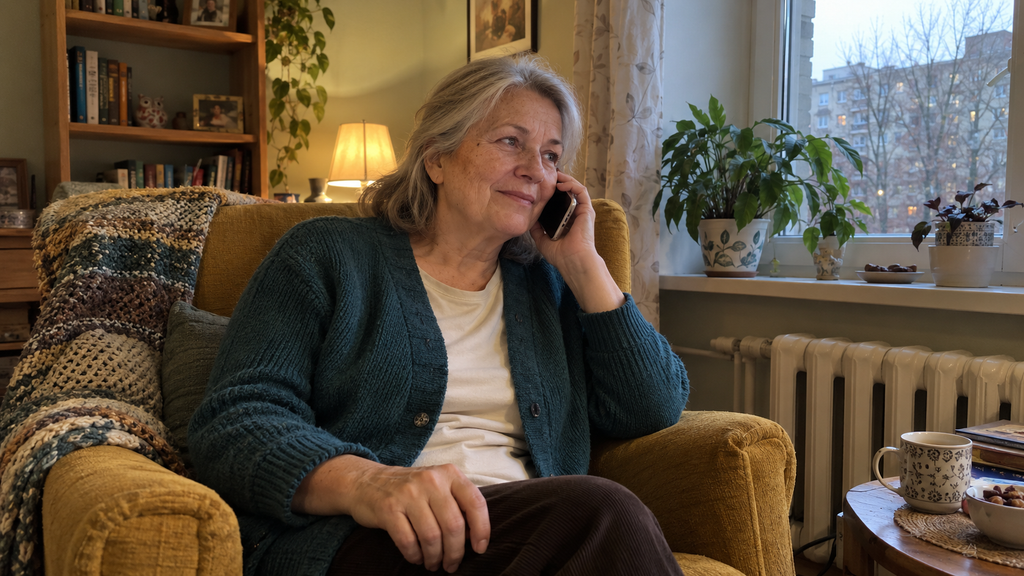
For a child, this may be news. Mom has a mom, and she's on the other end of the phone right now.
If the grandmother answered briefly, nothing is lost. You can still communicate without that word, and that’s what follows.
How to say it in Russian
It is better to try to talk about the connection in the context of the situation that the child understands. In his own context.
You are my son. I am your mother.
Now take a step forward. Ask him. And who is Grandma for me?
The answer «She’s your mom?» shows exactly the connection that’s needed. «Grandma is mom’s mom» also works. If they say it in English, your mom is grandma, accept it and suggest saying the same thing in Russian.
There is no need to demand that the child build the entire chain of relatives. The grandson, granddaughter, mother-in-law, and mother-in-law will wait. Today we need one thing: to understand that the word «mother» in the family does not only belong to him.
If the child is still confused, don't insist. Just say it yourself, briefly. My grandmother is my mother. We can return to this conversation another time.
If there are two grandmothers, it’s convenient here to show how they are distinguished in Russian. Mom’s mom and Dad’s mom. The child has most likely already heard these words at home, and now it’s clear where they come from. Mom’s mom is on Mom’s phone today. Dad calls Dad’s mom, and for him she is also Mom.
Who is telling whom what
Below you can play with the three people from this article. The child chooses who speaks and to whom, and sees the word that will result. The word «mama» will appear twice there.
Three people from this article. Click on the one who is speaking, then on the one to whom they are addressing, and see what word comes out. There are no points here.
A child in your family: sondaughter
The word «mama» appears twice here. The child says it once, the mother twice.
If the child also wants to say something
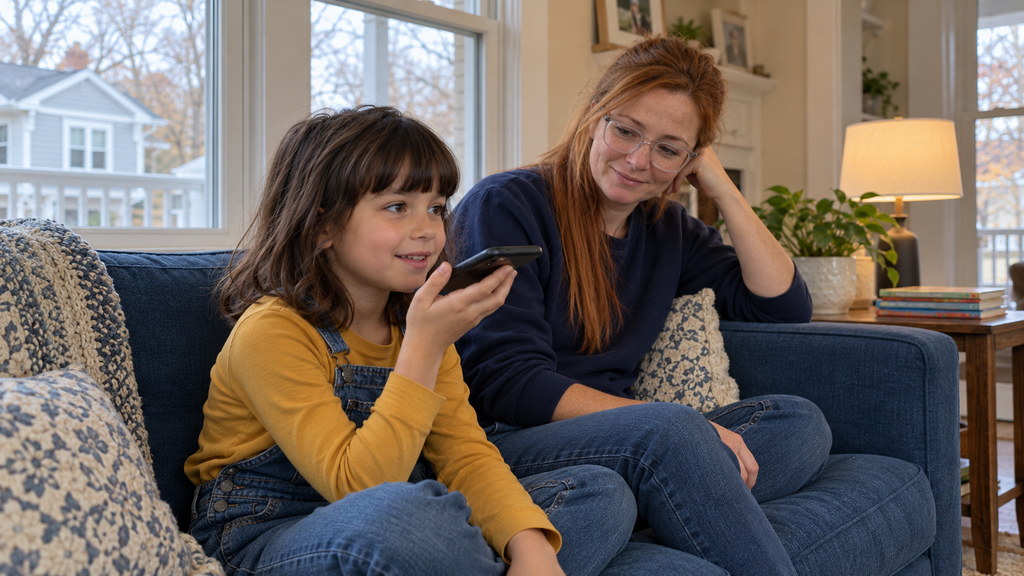
Sometimes a child asks for a phone. When the mother says hello, he wants one too. Let him say, a short «Grandma, happy Mother’s Day» is enough; there’s no need to correct the endings at that moment. He wanted it, he said. He didn’t want it, he listened.
What remains after the call
The conversation ended, the phone was put on hold.
It all started with the question of why mom congratulates grandma on Mother's Day. The answer to it is short, and the child heard it in mom's «mam» and, if lucky, in grandma's «dochinka» as well.
For him she is a grandmother. For Mom she is a mother. As we discussed in Russian, we called the other relatives by their names. An article about the family's words.
Frequently asked questions about Mother's Day
Why is Mother's Day in the US and in Russia celebrated on different days?
In the US and Canada, Mother's Day falls on the second Sunday of May; in 2026 it will be May 10. In Russia, the holiday is set for the last Sunday of November; in 2026 it will be November 29. These are two different holidays with the same name; each country has its own date. Families who live between two calendars can celebrate both or choose one.
Since when in Russia do they celebrate Mother's Day?
In Russia, Mother's Day was established by a presidential decree on January 30, 1998, and has been celebrated every last Sunday of November since then. There is no additional day off for Mother's Day.
Is March 8 considered Mother's Day?
No. March 8 is International Women's Day; in Russia, women are celebrated on this day, including mothers and grandmothers. Mother's Day in Russia is a separate holiday, in November.
We wrote about the 8th of March holiday in a separate article, and about how relatives are called in Russian, in An article about the family's words.