

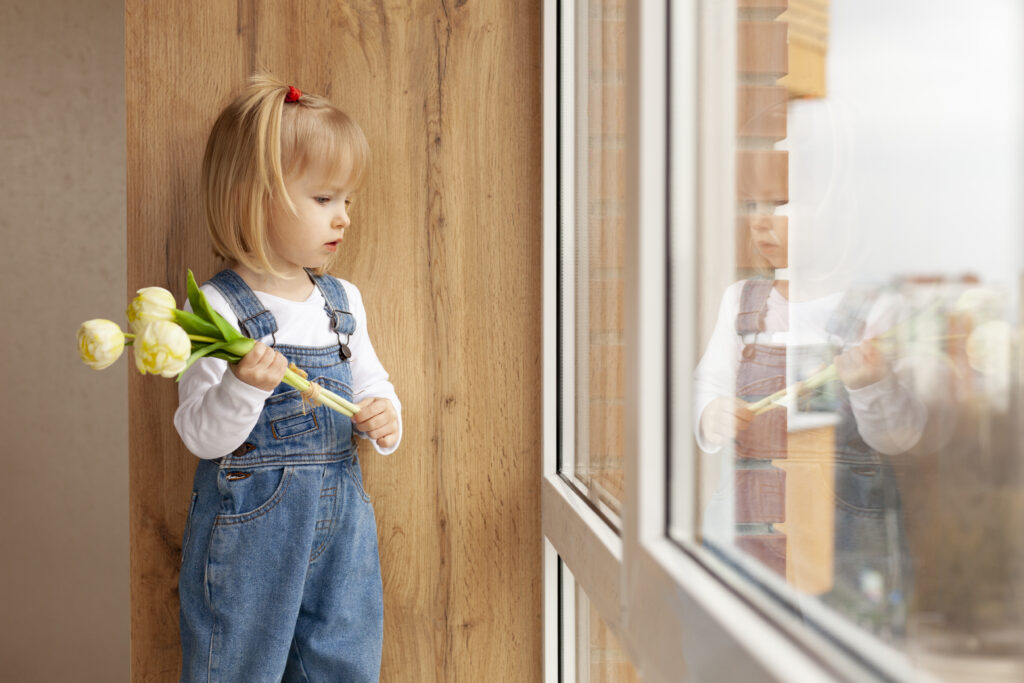

Mom asks, «What season is it?» The child looks out the window. Snow. Says «winter.» Mom sighs.
They were studying. «Zima» hung on a card next to the Christmas tree. But «winter» comes faster. Because at school, in books, with friends: «winter.» At home, «zima» is heard at most once a week.
Based on the experience of Palme School Seasons: one of the first topics where bilingual children get lost not in the words themselves, but in the adjectives and weather-related vocabulary around them. A child knows «winter.» «Wintery,» «cold,» «it's snowing»: these are already more difficult.
Four words
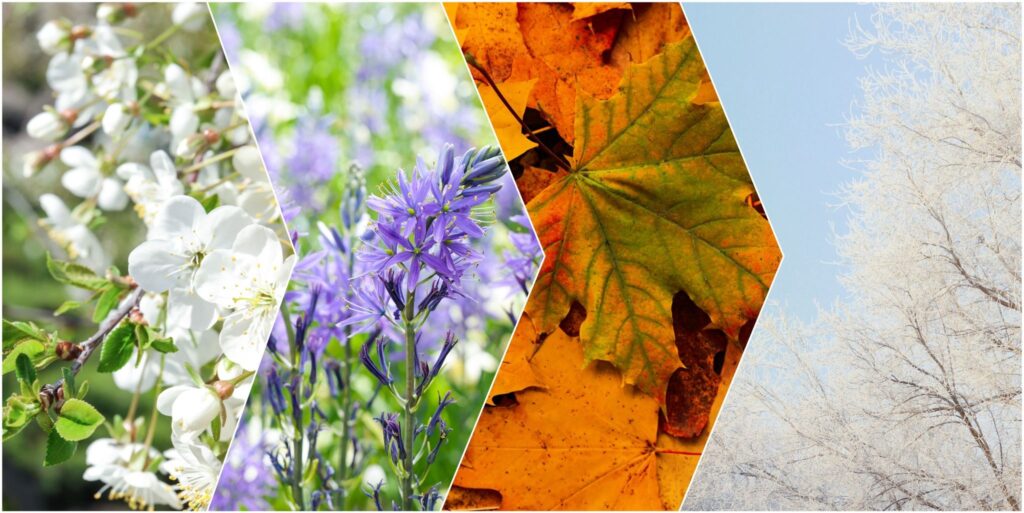
winter. Spring. Summer. Autumn/fall.
Stress: winter and spring: on the last syllable. Summer and autumn: on the first. That's the whole rule.
In sentences, they change: «It is winter now.» But «I love winter»: no, «in winter» is correct. Or «in summer we go to the sea», «in autumn school begins.» There is no preposition, only the form of the word changes: in winter, in spring, in summer, in autumn.
This specific form: in winter, in summer, in autumn: bilingual children don't know it. They say «v zima» or «v winter.» This is a predictable place for errors.
| Season | In Russian | When form« | Adjective | In English |
|---|---|---|---|---|
| ❄️ | Winter | in winter | winter | Winter |
| 🌸 | Spring | in the spring | spring / springtime | Spring |
| ☀️ | Summer | in summer | summer | Summer |
| 🍂 | Autumn | in autumn | autumnal | Autumn / Fall |
Adjectives and weather
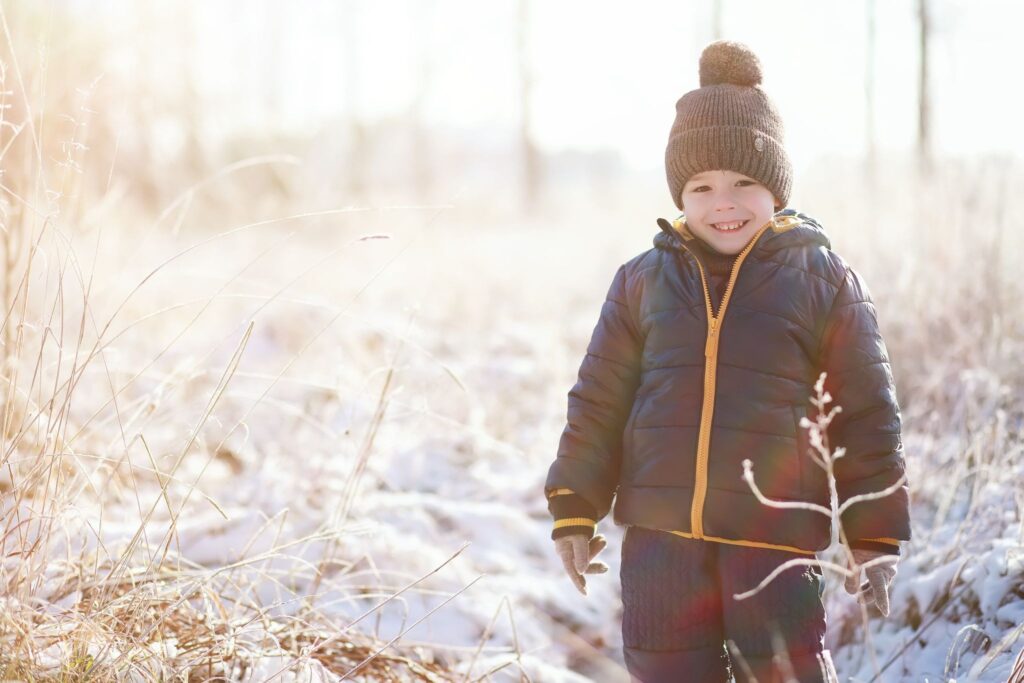
This is real work. Each season brings a whole dictionary.
Winter: wintry, cold, frosty. It is snowing. It is cold. We put on hats and scarves. We go sledding.
Spring: spring-like, warm, sunny. Snow is melting. Trees are blooming. Birds are arriving.
Summer: summery, hot, sunny. It's hot. We're going to the sea or to camp. Vacation.
Autumn: autumnal, rainy, cool. Leaves turn yellow and fall. School begins.
Bilingual children often know weather words in English but struggle to switch. «Snow is going» instead of «it's snowing» requires separate training; it's not a word-for-word translation.
| Season | Weather and nature | Clothing | What are we doing |
|---|---|---|---|
| Winter ❄️ | It's cold. It's snowing. Frost. | Fur coat, hat, scarf, mittens | We're going sledding. We're building a snowman. |
| Spring | It's warm. The snow is melting. The trees are blooming. | Jacket, sneakers | We are walking. Birds are flying in. |
| Summer | Hot. Sunny. Sometimes rainy. | T-shirt, shorts, sandals | We're going to the sea. Vacation. |
| Autumn | Cool. Rain. Leaves are falling. | Jacket, boots, umbrella | School is starting. We're collecting leaves. |
How the seasons live in a family

Tima, 7 years old, Portland. He confused adjectives: he said «winter weather» instead of «winter weather.» Mom came up with a simple solution: every time they got dressed or looked out the window, she would name the season and one word about the weather. «It's winter today, it's cold, let's put on a fur coat.» Three weeks later, Tim himself started commenting on the weather in Russian.
Winter
Winter
When?
in winter
cold · snow · frost
Winter jacket · Hat
sled · snowman
Spring
Spring
When?
in the spring
warmth · melting snow
The trees are blooming
Spring jacket
Summer
Summer
When?
in summer
hot · sunny
sea · vacation
summer dress
Autumn
Autumn / Fall
When?
in autumn
rain · leaves falling
start of school
Autumn jacket
A grown-up says: «Oh, autumn, the leaves are falling.». Another adds, «Yes, autumn is so beautiful.» A third asks, «And which season do you like more: summer or winter?» The child sees that words are alive and useful. One source is not enough for this.
Correcting in the moment almost never works. It's better to add the correct word next to it and move on. «Yes, winter, зима! Cold, isn't it?»
Conversation with Grandma as practice. Grandma in Russia asks: «What's the weather like there now?» The child answers: «Winter, cold, snow.» Three words in Russian: already a conversation.

At classes at Palme School The seasons are included in the curriculum for the fifth block, along with weather and seasonal clothing. Children don't just repeat words; they answer questions, describe pictures, and talk about the weather outside their window. The word is needed right now: that's when it's remembered. The first two lessons are free.
in winter, in summer, in autumn
Exactly: in winter, in spring, in summer, in autumn. These are special forms without a preposition. «In the winter» or «in the summer» is incorrect. Just remember the four forms: in winter, in spring, in summer, in autumn.
Why is the child saying «winter» instead of «зима»?
Because he hears «winter» much more often: at school, in books, from friends. The brain takes the quickest option. It helps not to correct, but to add alongside: «Yes, winter, zima!» — and continue the conversation.
How to learn adjectives - winter, summer, autumn?
Through situation, not through a list. «Put on a winter jacket.» «Summer day, hot.» A word is remembered faster in context than in a table.
«Холодно» is an adverb, meaning «coldly.» "Холодный" is an adjective, meaning "cold."
«Kholodno» (cold) refers to weather: «It's cold outside.» «Kholodnyy» (cold) is an adjective, describing an object: «Cold tea,» «a cold day.» It's normal for children to confuse these forms, and they will outgrow it over time.
There's no difference between "осень" and "fall/autumn". They all refer to the same season. * **"Осень"** is the Russian word for the season. * **"Fall"** and **"Autumn"** are the English words for the season. Think of it like this: * If you're speaking Russian, you say "осень". * If you're speaking English, you say "fall" or "autumn". Both "fall" and "autumn" mean the same thing in English. "Autumn" is a bit more formal, while "fall" is more common in everyday conversation, especially in American English.
*Ni kak* — it's the same thing. Autumn is equal to fall and autumn. You can show: «fall, autumn, leaves fall.» Leaves in the Russian word «padat»« (to fall) and in the English »fall" — are almost the same.