


Numbers in Russian: why a child says «eight» instead of «восемь»
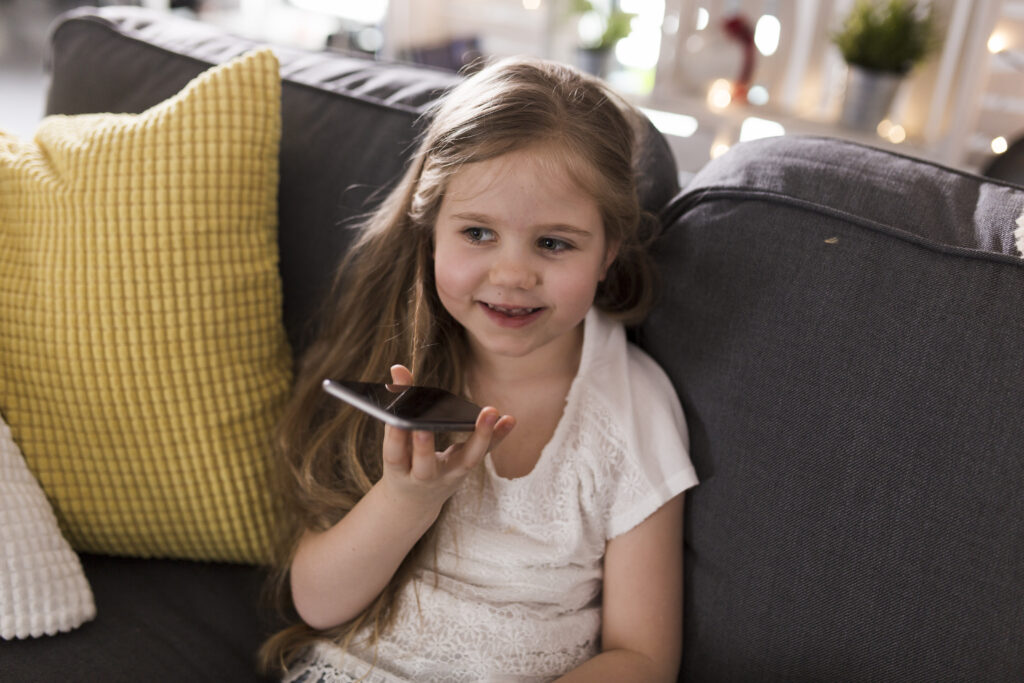
Grandma is calling. She asks: «How old are you?» The child looks into the camera. Pause. «Eight.».
Mom sighs. They taught her. The flashcards were on the fridge for three months. The child knows «eight.» But when Grandma looks and waits, «eight» flies out.
This isn't about memory. It's about which word is faster.
Why do numbers «go away» in English?
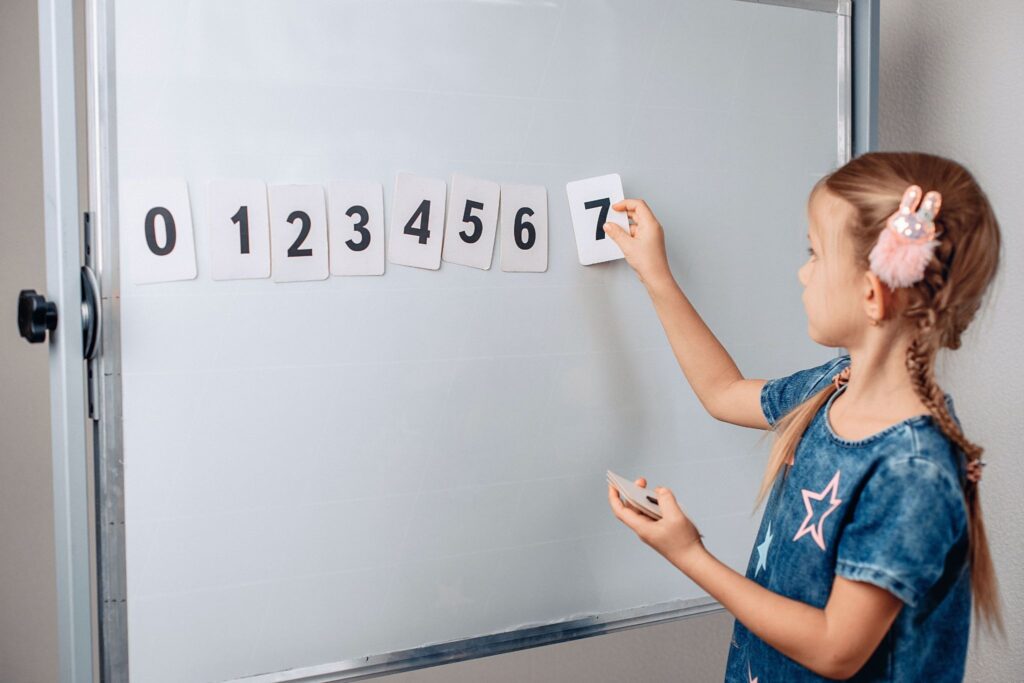
Arina, 8 years old, Seattle. Math at school: excellent student. At home, Mom asks how many apples. Arina says «five.» Not because she doesn't know «five» [in Russian]. She says «five» twenty times a day. «Five» [in Russian] maybe twice a week.
The brain doesn't choose the right word. It chooses the fast one.
At school, at the store, at games, In cartoons, the numbers are always in English. At home, they are almost never called in Russian. That's the whole secret.
The mistake almost all mothers make

They sit down with the child. They repeat the numbers from one to twenty in order. The child repeats. Mom is happy. A week later: «eight» again.
The problem is that a list without context is remembered passively. A child might recognize a word when they hear it, but they can't recall it themselves at the right moment. These are different skills.
Second mistake: correcting in front of grandma. The child says «eight,» the mother intervenes: «Say it in Russian.» The child blushes. The next time, he simply remains silent. Silence is worse than «eight.».
What works: numbers in real-life situations
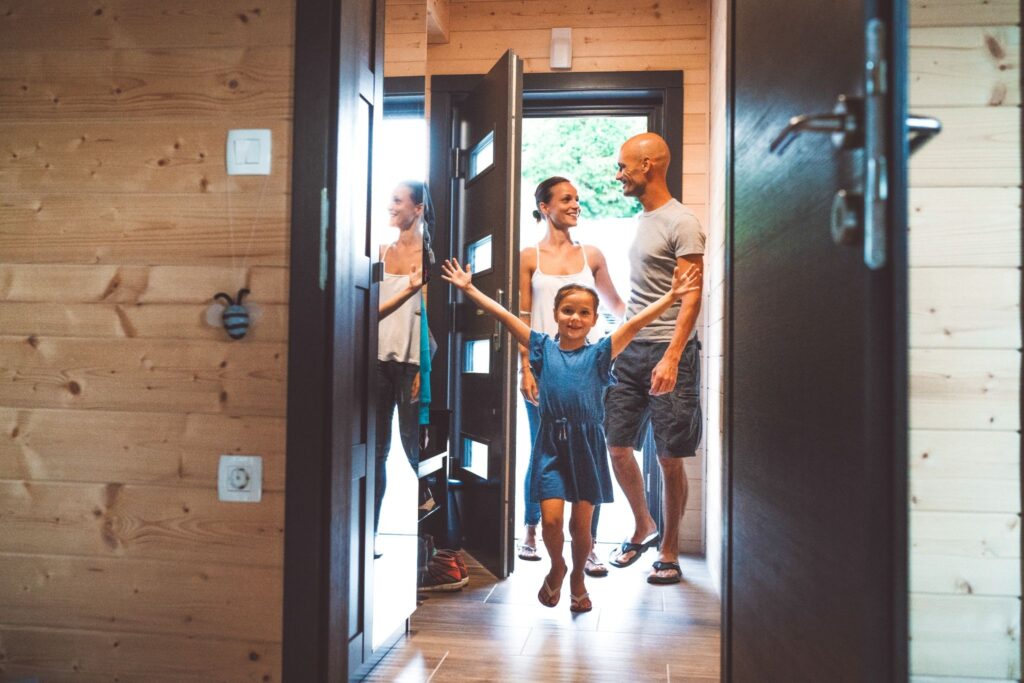
Nikita, 7 years old, Toronto. Three weeks ago, he was stuck on «eleven.» Mom came up with a trick: in the elevator, they called out the floors in Russian. Every time. No explanations, just out loud. Two weeks later, Nikita started counting the steps himself; Mom hadn't asked him to.
Exercises don't work. Situations where you need the number right now work.
Elevator. One, two, three: you just go up. A child hears numbers in motion, not in a notebook.
Shop. «Get four bananas.» Action, not a list.
Parking outside the window. Count the cars. The child chooses what: red ones, trucks, ones with the letter A. Their choice: what interests them more.
The age of relatives. «Grandpa is sixty-eight.» This is not an abstraction. This is a real person. Children remember this better than any flashcards.
Before calling Grandma: «She'll ask how old you are. What will you say?» The child answers. That's it. During the call: no hints. Just let him say it himself.
When home games are no longer enough
Games help when a child understands numbers, but does not speak. This is a passive reserve, and it can be converted into an active one through regular practice at home.
But if a child confuses numbers, says «eighty» instead of «eighteen,» and cannot state their age in Russian even after preparation: Regular practice with the teacher.
And the next level: how numbers work with nouns. One table, two tables, five tables. The form of the word changes depending on the number. This is already grammar, and it's difficult to learn this systematically.
Dialogue that happened in class
Teacher: «How old are you?» Child (pauses): «Eight.» Teacher: «Great. And how many children are in our group?» Child counts aloud: «One, two, three, four.» Teacher: «Four. Good job.».
No list. No rote memorization. The numbers appeared because they were needed right now.
That's exactly how numbers are embedded into spoken language. Palme School They are included in the first block of any program and are immediately used in dialogues, rather than memorized from a list. The first two lessons are free.
| Digit | In Russian | Digit | In Russian |
|---|---|---|---|
| 1 | one | 11 | eleven |
| 2 | two | 12 | twelve |
| 3 | three | 13 | Thirteen |
| 4 | four | 14 | fourteen |
| 5 | five | 15 | fifteen |
| 6 | six | 16 | sixteen |
| 7 | seven | 17 | seventeen |
| 8 | eight | 18 | eighteen |
| 9 | nine | 19 | nineteen |
| 10 | Ten | 20 | twenty |
| 30 | thirty | 60 | sixty |
| 40 | forty ⚠ | 70 | seventy |
| 50 | fifty | 80 | eighty |
| 90 | ninety ⚠ | 100 | hundred |
| ⚠ Exceptions: do not follow general logic | |||
| Group | Numbers | Stress Rule | Example |
|---|---|---|---|
| 1-10 (most) | two, three, five, six, seven... | Stress on the first syllable | TWO, THREE, FIVE |
| Exception: 1 | one | Stress on the last syllable | One, one, one |
| Exception: 4 | four | Stress on the second syllable | four |
| 11-19 | eleven, twelve... | Stress on -NA- (penultimate syllable) | eleven, twelve |
| 20-80 (except 40) | twenty, thirty, fifty... | Stress on the first syllable | Twenty, thirty |
| Exception: 40 and 90 | forty, ninety | Special words, no rule | Forty, ninety |
| 100 | hundred | One syllable | Car service station |
At what age should one start learning Russian numbers?
There's no special age. A two-year-old child will already count the steps aloud if an adult is doing the same nearby. The main thing is not when, but how: not as a list, but in life.
Why does the child know numbers but say «seven»?
Because «seven» is heard around it much more often. The brain doesn't choose the correct word, it chooses the fast one. «Seven» is mostly used at home, and only when mom specifically asks.
How to help learn numbers in Russian at home?
Don't set aside time, but incorporate it into your day. Floors in an elevator, apples in a bag, cars outside the window. Five minutes every day works better than an hour once a week.
Why are the numbers 11-19 so long?
They have their own logic: one for ten, two for ten, three for ten. Eleven, twelve, thirteen. When a child hears this, numbers are remembered faster.
Why are «sorok» and «devyanosto» unlike anything else?
Historical exceptions that have no common logic. They are simply memorized separately. The consolation: there are only two of them.
Do I need to learn all 100 numbers at once?
No. First 1-10, then 11-20, then the tens. Compound numbers come naturally when each individual one sounds confident.
When are there few home games left?
When a child confuses similar numbers, like seventeen and seventy. When they only speak Russian if asked, but switch to English in regular conversation. This is for the teacher.