

A bilingual teenager from Chicago receives the phrase «I love you» from a friend in a chat. He looks at the screen, frowning. «Wait, why is the «I» flipped? Isn't that an »R' backwards?" At the exact same moment, somewhere in Boston, a woman in her forties who decided to learn Russian after a trip to her husband's grandmother in Georgia opens her textbook to the first page. On page 33, there are incomprehensible symbols. Half of them seem to be familiar Latin letters, but next to them it says they sound completely different.
These two scenes happen daily all over the world. Cyrillic at first seems like chaos because the eye catches letters that visually resemble Latin ones but sound different. «Р» looks like P, but is read as R. «Н» looks like H, but is read as N. «У» looks like Y, but is read as U. The brain, accustomed to English, automatically reads each word through familiar associations and immediately stumbles.
The good news is that these pitfalls are finite. There are only 33 letters in the Russian alphabet. About a third of them look and read similarly to Latin letters. A third look similar but sound different. And the last third consists of unique characters that are not in the Latin alphabet at all.
Here's another piece of good news: compared to other difficulties of the Russian language, the alphabet is a walk in the park. The American Foreign Service Institute, which trains its diplomats in foreign languages, estimates Russian at 1100 study hours to reach fluency. Of these, mastering the letters takes about 10-15 hours, which is one and a half percent of the entire journey. Most textbooks and online courses allocate one to two weeks of regular study for the alphabet. This isn't marketing; it's a realistic pace that adults and teenagers can maintain.
In this article, we will go over a seven-day study plan. Each day has its own theme, and the workload gradually increases: first easy letters, then tricky ones, then unique symbols, and then practice on real texts. If you are the parent of a bilingual child or An adult looking for a clear answer to the question "how to learn the Russian alphabet", the material should help. And one last thing before we start. The plan won't make you a Cyrillic expert in a week. It will give you a foundation on which it will be convenient to build reading, vocabulary, and writing skills later.
There are 33 letters in the Russian alphabet. They are arranged as follows: А, Б, В, Г, Д, Е, Ё, Ж, З, И, Й, К, Л, М, Н, О, П, Р, С, Т, У, Ф, Х, Ц, Ч, Ш, Щ, Ъ, Ы, Ь, Э, Ю, Я
Let's go in order.
The Russian alphabet has 33 letters. This is more than English (which has 26) and Spanish (which has 27). Ten letters represent vowel sounds, twenty-one represent consonants, and two have no sound of their own. These are the hard sign (ъ) and the soft sign (ь). Their function is auxiliary: the hard sign separates adjacent letters, and the soft sign softens the preceding consonant. They themselves are not pronounced.
The main thing to accept right away is that Cyrillic is not «Latin in disguise.» It's an independent writing system that traces its lineage back to Greek letters and appeared around the 9th century. Due to the visual similarity of some characters, the temptation to read a Russian word as a set of Latin letters is very strong. Seeing «РЕСТОРАН,» an English-speaking brain wants to pronounce it «PECTOPAH.» You shouldn't do this. The sooner you switch your internal voice to Russian mode, the faster these illusions will disappear.
To master learning Cyrillic in seven days, we'll divide all 33 letters into three groups by difficulty.
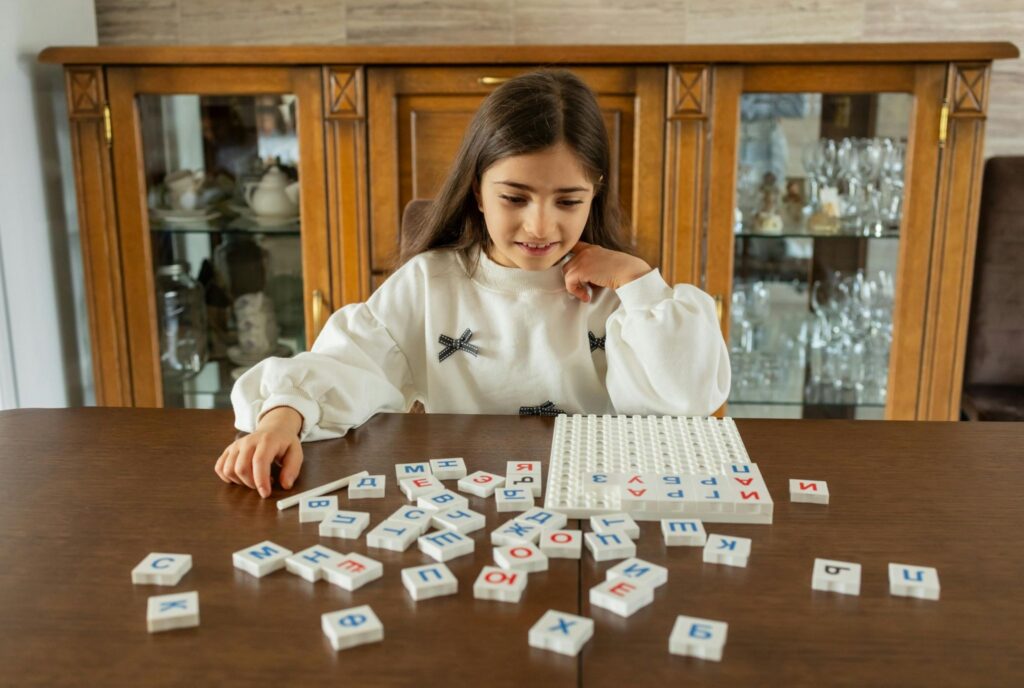
Group 1: Ten letters with shapes and sounds close to Latin ones. The full composition of the group can be seen in the visual block below. These are easy wins that take up the first two days of the plan.
Second group: seven «false friends.» Graphically they resemble Latin letters but sound completely different. It's these seven characters that cause the most errors for beginners. The list is highlighted in the visual block. Work with this group takes days 3 and 4.
Third group: sixteen letters that have no Latin equivalents. Their form is unusual to the eye accustomed to English script. Paradoxically, precisely because of their dissimilarity, they are confused less than the «false friends» from the second group: the eye immediately recognizes them as new symbols. A specific list and sound of each letter are in the visual block. Days 5, 6, and 7 are allocated for the third group.
Seven-day study plan

Below is a detailed plan for each day. On average, the workload takes 45-60 minutes and can be conveniently split into two sessions: 25-30 minutes in the morning and 25-30 minutes in the evening.
The plan is adaptable. If Day 1 goes smoothly, you can incorporate part of Day 2 by evening. If, on the other hand, it's difficult, it's okay to spread one day over two. The main thing is to not skip topics or miss practice.
Letter groups by difficulty level
To visually see which letters belong to which group and how they are read, look at the visual block below. All 33 letters are divided into three categories. For each letter, an approximate pronunciation is given using English transcription.
This block is convenient to keep in front of your eyes during the first week. After a few days of regular use, the associations will be memorized, and you will stop peeking.
Days 1 and 2 letters similar to Latin

This is the easiest start. Ten letters of the Russian alphabet look almost the same as Latin ones and are pronounced similarly. It's useful to learn them first because they give a quick win and maintain motivation.
A, E, K, M, O, T are pronounced almost identically to the English A, E, K, M, O, T. The letters I, Y, B, D, G also belong to this group. All of them often appear in simple words: «dom» (house), «brat» (brother), «mama» (mother), «gorod» (city), «kot» (cat).
What to do these days: Find a simple alphabet chart with pronunciations (free resources are available on RussianPod101 and Memrise) and say each letter out loud. No more than ten minutes at a time. Then take the letters you’ve learned and try to read the following words: «CAT,» «TOM,» «MOM,» «ATOM,» «HOUSE.» Your eyes will gradually get used to the font.
Here’s a quick tip. Write each letter down on paper several times. Not on a keyboard or in an app, but by hand. Motor memory works better for language learning than purely visual memorization. Dedicate one line in your notebook to each letter.
Days 3 and 4 false friends

And this is where things get really interesting. Seven letters in Russian look like their Latin counterparts but are pronounced completely differently. These are the main sources of confusion for English speakers.
The letter B looks like the Latin V, but it is a different letter. It is pronounced like the Russian B, which is similar to the English V in the word «vase.».
The letter N looks like H, but is read as N. The word «нос» is «nos», not «hos».
The letter R looks like P, but is read as R. «Russia» begins with a rolled «r», not a «p».
The letter C looks like C, but is read as S. «Syn» means «son,» not «cyn.».
The letter U looks like Y, but sounds completely different. Its sound is closer to the English OO in the word «boot.» «Utro» is «ootro,» not «ytro.».
The letter Х looks like X, but it's a completely different sound. It has an exact match in the Scottish «loch» or German «Bach.».
The letter E looks like E, but at the beginning of words and after vowels, it is read with a slight «y» sound at the beginning (like «ye»).
What to do these days? Use flashcards or the Anki app, with a Russian letter on one side and its Latin transcription on the other. Shuffle the order, don't go alphabetically. The goal is to train the reflex: upon seeing the Russian letter 'С', your brain should no longer immediately associate it with the English 'C'. After two to three hundred repetitions, the automatic process will shift, and letters will be read correctly at first glance.
Simultaneously, start looking at the Russian text around you. City names on a map, article headlines, album covers on streaming services, product descriptions on marketplaces. The goal here is not to understand the meaning, but to practice letter recognition speed.
Days 5, 6, and 7: Unique Letters and Practice

The last three days are dedicated to letters that are completely absent in the Latin alphabet. They look unusual, but that's precisely why they are less often confused: the eye immediately realizes that this is something new and doesn't try to read it in English.
Among the unique letters, there are several subgroups.
Simple consonants: Z, L, P, F. They sound predictable. Z like Z in «zoo,» L like L in «love,» P like P in «pat,» F like F in «fan.».
Sibilants: Zh, Ch, Sh, Shch. This group requires special attention because English has similar, but not identical, sounds. Zh is close to the «s» in «pleasure.» Ch is close to «ch» in "chair." Sh is close to 'sh' in "shoe." Shch is a softened version of Sh.
Vowels with iotization: Я, Ю, Е, Ё. These letters have a short «y» sound within them. When they are at the beginning of a word or immediately after another vowel, this «y» is clearly heard, resulting in the sound combinations «ya,» «yu,» «ye,» «yo.» If a consonant comes before such a vowel, however, the «y» disappears, and the consonant is pronounced softer.
Special letters: Ы, Э, Ц, Ъ, Ь. The sound Ы is unique, there isn't one in English. It's pronounced with the tongue pulled back slightly. Э is like the E in «echo.» Ц is like TS in «cats.» Ъ and Ь don't have independent sounds but affect neighboring letters: ъ separates, ь softens.
Day 5 is an introduction to unique letters. Day 6 is reinforcement through flashcards and reading short words. Day 7 is Practice on real textsmenus, advertisements, signs, article headlines.
By the end of the seventh day, you should recognize all 33 letters on sight, understand how they are read, and be able to slowly sound out an unfamiliar Russian word. Not perfectly, and not quickly, but be able to read it. This is the basic mastery of the alphabet.
How to use Anki flashcards
One of the most effective tools for memorizing the alphabet is Anki. It's a free application for computers, iOS, and Android that uses the principle of spaced repetition: the program itself calculates which letter it's time to show you, based on how confidently you remember it. Those that are forgotten appear more often, and those that are already familiar appear less often.
For the Russian alphabet, you can download a ready-made deck or create your own. Ready-made ones are available in the Anki open library; search for queries like «Russian alphabet» or «Cyrillic letters.» Creating your own deck is also not difficult: 33 cards, with one letter and its pronunciation on each.
Below are examples of what the cards might look like. This format can be used as a template when creating your own deck.
Each card is structured simply: the front shows the letter, the back its pronunciation, an example word, and a category. You can copy this format when creating your own Anki deck.
The optimal way to work with Anki is 10-15 minutes per day, not all at once, but in several short sessions. Morning after coffee and evening before bed are the ideal times. The sessions are short, so they fit into the day without strain.
If a child is young and Anki seems boring to them, there are child-friendly alternatives. For example, Duolingo with its Russian for English speakers course, Drops with its visual flashcards, or simply paper flashcards that the child colors themselves. The main thing is that the «ask, answer, check» principle, repeated many times, is applied.
The most common beginner mistakes

When beginners tackle the Cyrillic alphabet, they encounter typical difficulties. Awareness of these helps avoid these pitfalls.
Reading Russian letters through English transliteration. You see «РЕСТОРАН» and «PECTOPAH» spins in your head. This is a normal stage in the first few days, but you can't let it drag on. The faster your brain switches to «Russian reading mode,» the easier the following weeks will go.
Ignoring handwritten script. Most students limit themselves to printed letters, believing that this will be enough. But Russian handwriting differs from print more than English. A capital «т» in a note from a native speaker might look so that you read it as a Latin «m». A capital «д» is easily confused with the number «9». If you don't plan to write by hand yourself, you don't need to master the full scope of handwriting. But it's worth spending half an hour on Introduction to uppercase forms Useful: otherwise other people's notes and signatures will confuse you.
Trying to learn all 33 letters in one day doesn't work. The brain can't process such a large volume of new information, and it's all forgotten within two days. Spreading the workload over a week yields significantly better results.
Studying letters without saying them aloud. If you work only with your eyes, without articulation, you will get strange asymmetry: you will understand the word «hello» on paper, but you will not be able to pronounce it aloud. Therefore, from the very first day, you first say each new letter, and then write it down. And pronounce every word you read aloud, even if it's only three letters long.
Skipping practice with real texts. Flashcards and apps are a useful tool, but without reading actual Russian texts, the alphabet won't stick. Starting from day 5, be sure to incorporate simple texts: signs, city names on a map, article headlines.
These mistakes are normal. Every student goes through them in the first few weeks. The main thing is not to panic and keep practicing.
How do we teach the alphabet at Palme School

At Palme School, we're We teach Russian to children aged 4 to 17.. The alphabet is one of the first topics we cover, a subject that bilingual children from Russian-speaking homes go through, even if no one has ever taught them to read or write it. Our approach doesn't entirely align with methods for adults: a young child needs much more movement, imagery, and play for information to stick.
With the youngest children (ages 4-6), we teach letters through images and sound associations. The letter A is associated with «watermelon,» and the teacher draws a watermelon with the child. The letter B becomes «butterfly,» and the child colors a butterfly. Each letter gets its own character or object through which it is remembered. After several weeks of this work, the child begins to recognize letters outside of games, in regular texts.
With schoolchildren (7-12 years old), we use a mixed approach. Part of the time is spent working with printed flashcards, part with word decryption tasks, and part with handwriting. The latter is especially important: motor memory reinforces letter shapes more firmly than pure visual memorization. Children write letters from a model, then without a model, then they form words and sentences from them.
With teenagers (13-17 years old), the format is already close to adult. They easily compare Cyrillic with Latin, notice similar letters and pitfalls themselves. At this stage, real texts are added to the lessons: fragments of songs by their favorite artists, memes from social media, posts by bloggers. Teenagers remember what is personally interesting to them, so we select content for each individual.
Important detail. The alphabet is not a separate, isolated topic for us. From the very first lessons, letters are integrated into simple words, simple words into phrases, and phrases into short dialogues. This way, the alphabet immediately becomes a tool, rather than an end in itself.
The program is flexible. You can enroll at any time. The child will be placed in a group according to their level or receive an individual lesson. The first two lessons are free, so you and your child can see how we work and decide if the format is suitable.
Is it realistic to learn the Russian alphabet in one week?
Yes, if we're talking about recognizing letters and basic reading. Experienced methodologists agree that it takes an English speaker about 10-15 learning hours to master the Cyrillic alphabet. With a daily schedule, these hours fit perfectly into seven days.
By the end of the week, you'll be able to read most Russian words aloud, even if you don't always understand what you're reading. Fast and automatic letter recognition comes later, requiring months of calm, regular practice.
What is more difficult, Cyrillic or hieroglyphs?
Cyrillic is much simpler. In Chinese or Japanese, you need to memorize thousands of characters, while Cyrillic has 33 letters. Alphabetic writing systems, to which both Cyrillic and Latin belong, are initially designed to quickly learn the basics and then simply combine letters into words.
It won't work with hieroglyphs, as each character has to be memorized separately.
What's the best way to start learning the alphabet: with sounds or with writing?
The best option is to work with both at once. Sound without form won't enable you to read. Form without sound won't enable you to speak.
The ideal way to approach a new letter is as follows: look at what it looks like, listen to how it sounds, repeat it aloud after the narrator, and write it out by hand several times. This immediately engages your vision, hearing, speech apparatus, and hand motor skills. Any one of these senses on its own yields much weaker results.
Is it necessary to learn handwriting?
It achieves the goal. If you need Russian for conversation, travel, or chat correspondence, handwriting can be tackled later or skipped altogether.
But for those who are planning to move to a Russian-speaking country or send their child to a Russian-speaking school, the manuscript becomes essential. Without it, you won't be able to keep a school notebook, leave a note, or fill out papers by hand at the bank or doctor's office.
What are the best apps for learning the alphabet?
Among the popular free options are: Duolingo (for those who prefer a game format), Memrise (with native speaker audio), Anki (for spaced repetition), and Drops (visual flashcards).
Paid options like RussianPod101 offer a more structured course, but free resources are sufficient for learning the alphabet.
What to do if the family speaks Russian, but the bilingual child doesn't want to learn the letters?
This is a common situation. A bilingual child already has Russian ingrained by ear, and the idea of sitting down and learning the letters seems like extra work to them.
Try a different approach: give them a reason why they’ll need to learn the alphabet. For example, reading the caption under a meme in a family chat, understanding what their grandmother wrote in a letter, or figuring out the menu at a Russian restaurant where you’re vacationing. As soon as reading has a real purpose, the desire to learn the letters comes naturally. Coercion, in this case, actually backfires.
How much time a day should be spent learning the alphabet?
Ideally, 30–60 minutes, split into two sessions. Long study sessions lasting two to three hours are not very effective because the brain doesn’t have enough time to process the material. It’s better to have short but frequent sessions.
For children, time is even shorter: 15-20 minutes at a time for younger children, 30 minutes for school-aged children.